
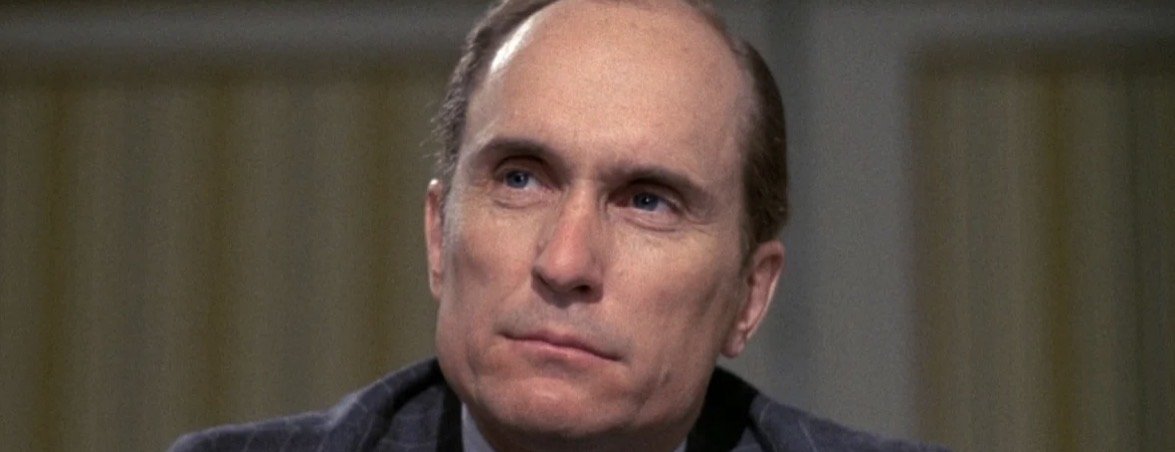
Robert Duvall is gone at 95. Decades of breathing fire into movies that, frankly, could have crumbled without him. He wasn’t just an actor — he was the moral and emotional gravity of every scene he touched. And now he’s gone, and we feel it.
I mean — let’s not kid ourselves. He was Boo Radley in “To Kill a Mockingbird,” yes, the silent, ghostly presence that made Gregory Peck’s Atticus real. But he wasn’t satisfied being the quiet one. He became Tom Hagen, the unshakable consigliere of “The Godfather,” walking into the room with an eerie calm, making Brando look like he needed him — because he did.
Then there’s Kilgore in “Apocalypse Now.” Who else could make helicopter-riding, napalm-loving madness feel so insane, yet so precise? That scene — the napalm in the morning — it’s horror, comedy, and bravado all wrapped into one, and it’s pure Duvall. The swagger. The laugh. Duvall absolutely owned it.
Or how about “The Outfit,” in which Duvall’s Earl Macklin — freshly out of prison — navigates a deadly web of mob politics, betrayal, and calculated payback. The film is a taut, low‑key crime thriller that emphasizes strategy, loyalty, and the quiet tension of underworld power struggles rather than flashy violence — a ’70s gem and one of the most underrated and underseen entries in New Hollywood’s canon. If there’s one Duvall performance you might want to catch up on tonight, it’s this one.
And don’t even get me started on “Tender Mercies,” which, despite its Oscar success, seems underrated all these decades later. Mac Sledge, beaten down, whiskey-stained, looking for redemption — Duvall deeply inhabited this character. That’s the Oscar-winning magic.
While Robert Duvall delivered many unforgettable performances across his career, the one that stands tallest for me—if not the most iconic, then certainly the most rewarding—was his portrayal of Augustus “Gus” McCrae. His work in the sprawling, eight-hour 1989 television miniseries adaptation of Lonesome Dove captured warmth, humor, grit, and heartbreak in equal measure. Adapted from Larry McMurtry’s celebrated novel, the series remains a superb Western, and Duvall’s Gus is its emotional center—a performance of rare depth that, for my money, represents his finest hour.
And then “The Apostle,” released in 1997, his own passion project — a full-on plunge into the psyche of a flawed preacher. He wrote it. He directed it. He bled into it. That’s the kind of devotion we’ll never see again.
I could go on and on: “The Great Santini,” “Network,” “THX-1138,” “True Confessions,” “The Natural,” “Rambling Rose,” “Falling Down,” “Open Range,” “Sling Blade,” “A Civil Action,” “We Own the Night.” He was even great in one of his very last roles, starring as Robert Downey Jr.’s father in “The Judge,” and as the powerful, old-school Chicago political patriarch in Steve McQueen’s “Widows.”
And here’s the truth: Robert Duvall was not a star in the celebrity sense. He was a magnetic force. He anchored movies. He could disappear into a role and still dominate it. That’s the thing about him — you didn’t watch him act, you watched life itself in the shape of a man who knew it deeply mattered.
The likes of Caan, Hackman and Duvall — whom we have all lost in a short period of time — are a dying breed in Hollywood. The classic, tough, character-driven actors who brought a lived-in experience to every role.
Cinema has lost another one of its titans. And yet, unlike so many, he left behind a treasure trove of work that will keep haunting us. Rest in power, Robert Duvall. You were, simply, indispensable.

The wheels are already turning to lock in a sequel to Greta Gerwig's 2023 blockbuster, and it sounds like an inevitability: "There's no way “Barbie 2” doesn't happen."