


Here’s Puck’s Matt Belloni with a very interesting study which he rounds out a sprawling research study as proof that we’re living in the Venice, Telluride, and the Rotten Tomatoes Mirage.
He’s spoken to a slew of industry sources who tell him that, contrary to the narrative, Venice and Telluride didn’t really deliver the knockout Oscar contenders the media would have you believe this year. Sure, the ovations were long, the press reactions euphoric, and the Rotten Tomatoes scores sky-high. But the truth? None of these movies feel like the kind of undeniable, season-defining contenders we’ve seen in years past.
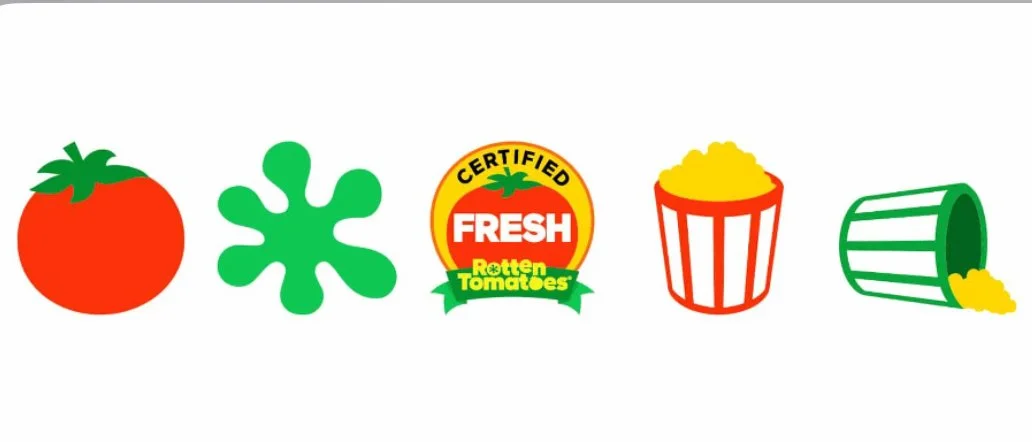
This is the festival game now: hype inflation. Perfect RT scores. Glowing headlines. He claims this is a case of Hollywood’s marketing machine working hand-in-hand with a broken aggregator. Rotten Tomatoes. Once seen as a democratizing tool, Rotten Tomatoes has morphed into something closer to a studio asset. Its “fresh/rotten” system strips nuance, and the site—owned by Universal and Warner Bros. since 2016—has become a playground for score manipulation. Embargo strategies, handpicked critics, and influencer-style awards pundits are now integral to the rollout.
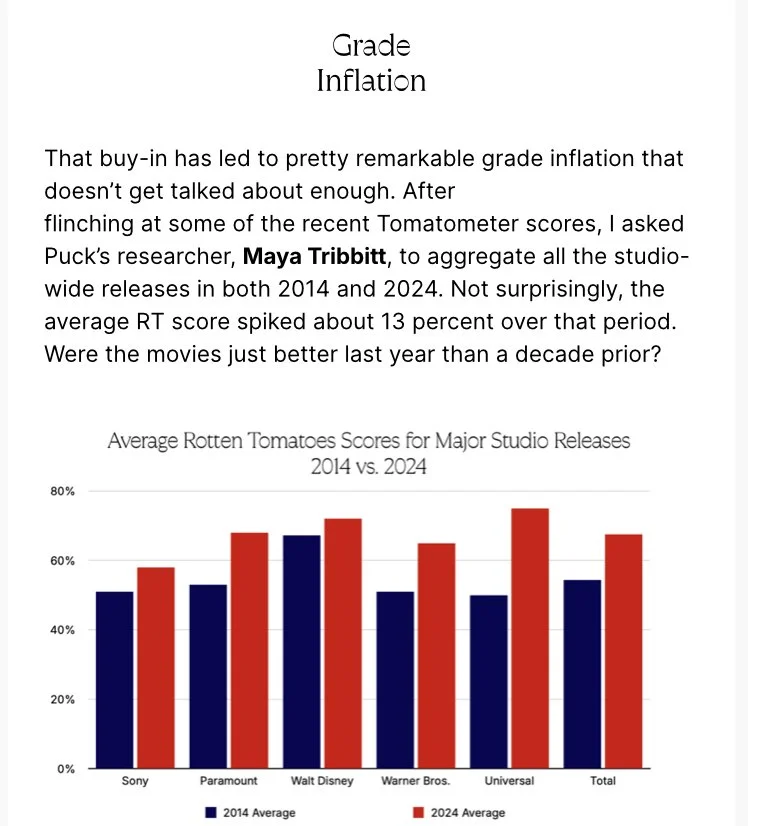
What Belloni’s saying is what I’ve been preaching for a few years now, Rotten Tomatoes increasingly lumps seasoned critics in with awards bloggers, fan writers, and Substackers of dubious credentials. The result is grade inflation on a massive scale. A Puck study comparing 2014 to 2024 shows RT scores climbing by 13%, compared to only 5% on Metacritic—a sign the hype economy has fully infected the site.
Real film criticism, the kind that interrogates a movie rather than sells it, has been eroded by the rise of awards punditry. Many of the “critics” on RT today are Oscar bloggers who thrive on access, soft Q&As, and campaign invites. The system rewards positivity, punishes dissent, and produces the glossy consensus studios crave. Everyone wins, except the audience, who gets fed recycled spin.
The higher Rotten Tomatoes scores we see today don’t necessarily reflect better movies. A decade ago, films that became awards-season staples often carried flaws, risks, and ambitions that critics didn’t shy away from calling out. None of this is new. Critics in all fields are getting softer, less willing to puncture the cultural balloon for fear of losing access or inviting backlash. However, in Hollywood, where marketing is everything, Rotten Tomatoes has become the crown jewel of a rigged system.
Does it matter? Maybe not if you already know the game, but for general audiences, RT remains the dominant barometer of “quality.” That’s the problem. A fake metric has become a real one—there’s a blurring the line between journalism and marketing.

Marvel's "Ghost Rider" just hired one of the best cinematographers working today. Linus Sandgren will serve as DP on Shawn Levy's MCU flick, and, most notably, the project will be shot on film.