
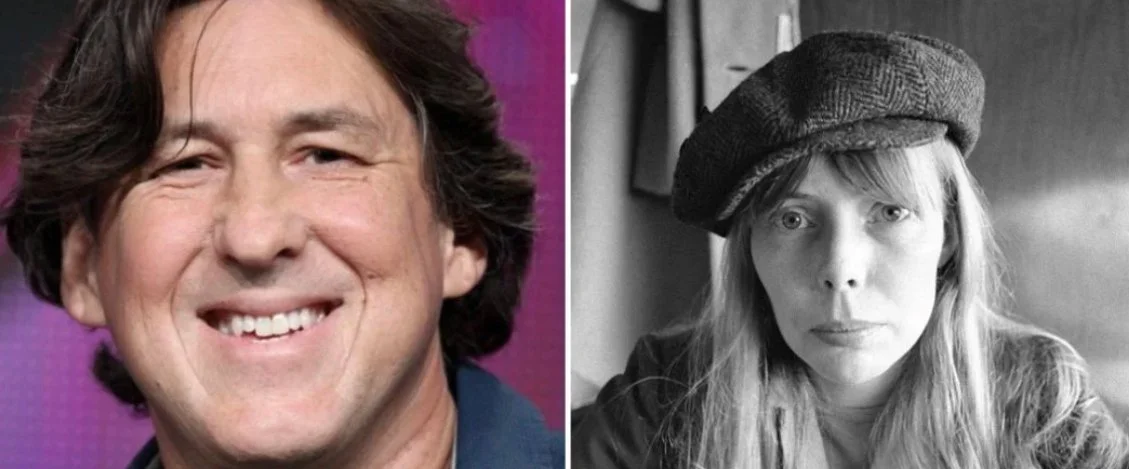
As previously reported, Anya Taylor-Joy is reportedly in talks to portray Joni Mitchell in a new biopic. She would play the singer-songwriter during her peak years, while Meryl Streep is set to take on Mitchell later in life — specifically around the time she suffered a brain aneurysm in 2015.
Taylor-Joy secured the coveted role over Kristine Froseth (“The Buccaneers”), whose audition was described as “fantastic.” However, Taylor-Joy’s higher profile — along with her resemblance to Mitchell — ultimately gave her the edge.
Cameron Crowe is writing and directing the project, though it’s not yet attached to a studio. In a recent interview with The New York Times, Crowe offered an update:
We’re going to make it next year. There’s not a lot I can say about it. Soon I’ll be able to speak more definitively about who’s in it and how we’re gonna do it and everything. I actually had a dream of a structure of how to tell that story […] It’s been incredibly inspiring — the most I’ve interviewed anybody, the deepest-tissue kind of conversations I’ve had with any artist, and I’ve found it invigorating and can’t wait to make the movie.
Crowe had originally hoped to begin filming in March, ahead of Streep’s Devil Wears Prada sequel. But after his Los Angeles home was damaged in the January wildfires, production was delayed. Filming is now scheduled for 2026, marking Crowe’s first narrative feature in over a decade.
In the ‘80s, ‘90s, and early 2000s, Crowe was one of Hollywood’s most celebrated writer-directors, with films like “Say Anything,” “Jerry Maguire,” “Almost Famous,” and “Vanilla Sky.” His career stalled after a series of flops, including 2005’s “Elizabethtown,” 2011’s “We Bought a Zoo,” and 2015’s “Aloha.” For years, he pursued a Marvin Gaye biopic, but it fell apart over casting and financing challenges.
The Mitchell project, however, carries special meaning. Crowe, who interviewed Mitchell in 1979 while working at Rolling Stone, has remained close friends with her for decades. He and Mitchell have been collaborating on the script for more than three years, with the film said to avoid the structure of a “traditional” biopic.

Marvel's "Ghost Rider" just hired one of the best cinematographers working today. Linus Sandgren will serve as DP on Shawn Levy's MCU flick, and, most notably, the project will be shot on film.