
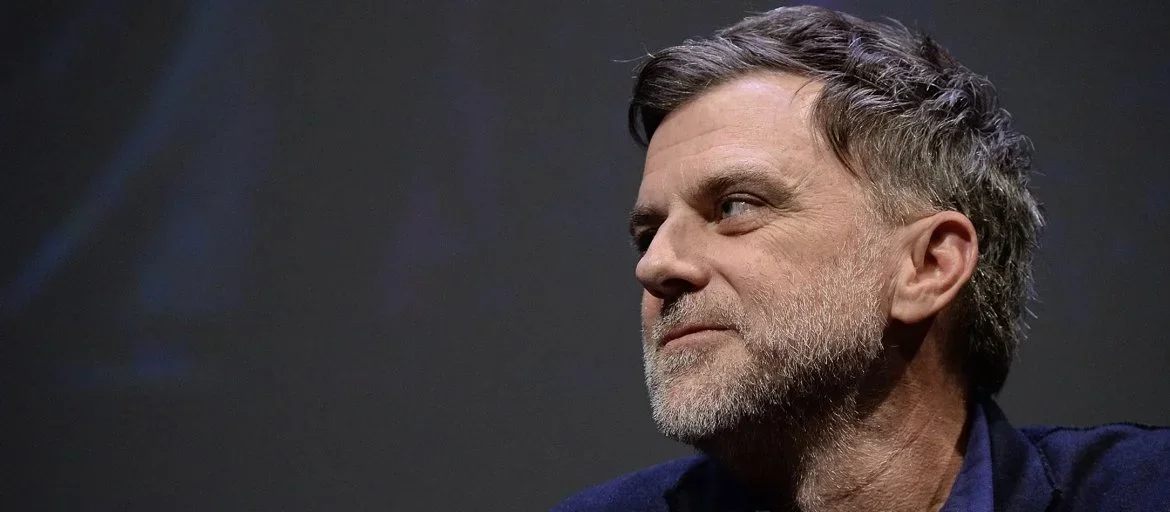
A few years ago, I started a conversation with our readers. The topic? Who is the current master of the medium? The one who stands tallest above the rest. Paul Thomas Anderson seemed to be the consensus pick, although five years since, I wonder if things have changed.
It’s a question that’s lingered ever since, especially in light of “One Battle After Another” dominating cinephile conversations these last few weeks. However, before we jump the gun and hand him the crown, some context is necessary.
Cinema, like any art form, moves in cycles. Each generation has its own “master” — a filmmaker who recalibrates the language of the medium, who makes work so vitally influential that the rest of the field can’t help but play catch-up. Since the rise of auteur theory in 1950s France, there’s always been one who leads. Some filmmakers who have had their turn at the crown include Godard, Fellini, Bergman, Antonioni, and Coppola.
Each filmmaker above redefined the grammar of cinema in their respective time. However, by the aughts, a new contender started to emerge. With “Boogie Nights,” “Magnolia,” and “Punch-Drunk Love,” Paul Thomas Anderson arrived, and he hasn’t really left. If you ask me, PTA has held the crown since the release of “There Will Be Blood” in 2007. Sure, there have been challengers, but Anderson’s consistency, singularity, and influence have set him apart.
In our own critics’ decade polls, PTA has dominated like no other modern-day director.
“There Will Be Blood” ranked #2 of the 2000s.
“The Master” #6 and “Phantom Thread” #8 of the 2010s.
“Boogie Nights” and “Magnolia” both placed top 10 for the 1990s.
So where does that leave us now? PTA hasn’t released a formative, decade-defining film these last eight years. Although “Licorice Pizza” was a pleasurable treat, it was more of a personal, pandemic-shot project for the filmmaker than an ambitious swing. However, based on early word, “One Battle After Another” could absolutely change that.
Does PTA have much of a challenge? One can certainly make the case for Martin Scorsese. While PTA is undeniably one of contemporary cinema’s most visionary auteurs, Scorsese’s mastery feels more wide-ranging, encompassing and enduring. What strengthens Scorsese’s case is that, six decades on, he hasn’t stopped delivering acclaimed work. Over the past 15 years, films like “The Wolf of Wall Street,” “Silence,” “The Irishman,” and “Killers of the Flower Moon” have all been widely praised—even if detractors remain.
As for Christopher Nolan’s case, it is both compelling and contentious. On the pro side, his ability to combine large-scale spectacle with ambitious storytelling is unmatched—few directors working today can draw audiences to theaters with original ideas like “Inception,” Interstellar,” or even a three-hour biopic like “Oppenheimer.” Yet the argument isn’t without caveats. Nolan has his fair share of critics often pointing to the occasionally stilted dialogue, emotional detachment, and cold formalism that remains recurrent in his films. Still, in terms of influence and cultural dominance, Nolan may very well stand alone at this particular moment.
The only filmmakers who come close to those three are Steven Spielberg, Christopher Nolan, Alfonso Cuarón, the Coen brothers, Quentin Tarantino, and David Fincher. A case can certainly be made for Spielberg, though the question remains: has anything he’s directed in the past 15 years truly measured up to his career peaks? Personally, I’d say no—but others would point to “West Side Story,” “The Fabelmans, or “Lincoln” as evidence to the contrary.
Internationally? One name remains unavoidable: Michael Haneke. Even without a film since 2017’s “Happy End,” his influence is everywhere — the chilly formalism, the moral ambiguity, the tightly wound provocation. Haneke’s fingerprints are all over modern European cinema, even in films that pretend they’ve moved on. However, it pains me to say that his name might have to be taken off since, by all accounts, he is now retired.
Other than Haneke, you have the likes of Pedro Almodóvar, Apichatpong Weerasethakul, Mike Leigh, Park Chan-wook, Bong Joon-ho, Lars von Trier, Lee Chang-dong, Jia Zhang-ke, Hirokazu Kore-eda, Nuri Bilge Ceylan, Ruben Östlund, and Lucrecia Martel.
Now, it’s your turn. The criteria? Reputation, influence, recent output, and, above all, whether the medium would look different without them.

Paul Greengrass’ "The Uprising," starring Andrew Garfield, opened to $3.2M from 2,068 theaters this weekend. Yikes. The budget hasn’t been disclosed, but is said to be in the $20-$30M range.