




I had high hopes for Noah Baumbach’s “Jay Kelly,” and it only works decently well. It isn’t a masterwork, but it sneaks up on you, and by the end, you find yourself oddly persuaded by its saccharine. It’s middle of the pack Baumbach.
The reviews are okay, but nothing great; 65 on Metacritic, and 83% on Rotten Tomatoes
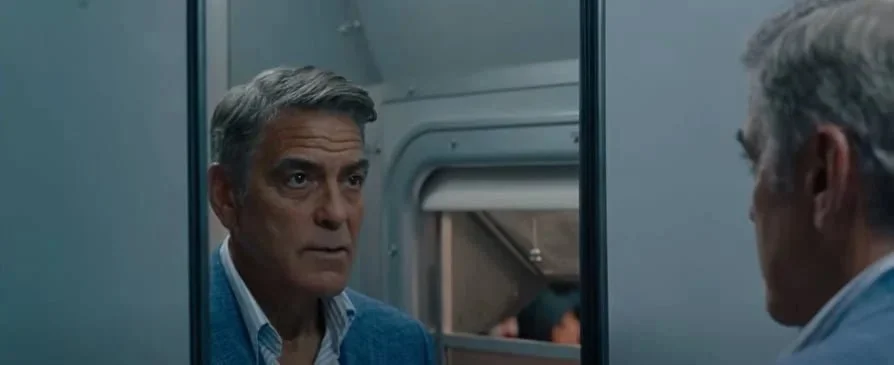
It plays like a reckoning: a movie star looking back on a life spent under the glare of the spotlight, and if George Clooney isn’t literally playing himself, he might as well be. He is the anchor, the heartbeat, holding a film that sometimes drifts into self-conscious sentimentality.
Clooney plays the title role, an A-list movie star in his sixties, apparently suffering from a midlife crisis deep enough to make him go through random flashbacks of his life’s most regreted moments. He decides to accept a lifetime achievement award at an Italian film festival, ostensibly for his career, but really as an excuse to track down his college-bound daughter, who happens to be in Italy with friends. What begins as a glossy little road trip soon turns into something deeper, something more honest.
Along for the ride is his longtime manager Ron, played by Adam Sandler in a performance of quiet charm and unexpected warmth. Together, they navigate Europe, and the journey forces them to confront their own insecurities, their compromises, their regrets. Sandler is great here: understated, tender, and somehow grounding.
If there are flaws, they reside in the script. This time Baumbach co-wrote with Emily Mortimer, who also appears briefly on screen, and maybe that was a mistake. The movie often feels overly neat, too polished, and a little too aware of its own cleverness. You can see the actors hitting their marks, delivering lines that are supposed to be funny, poignant, or revelatory. There’s schmaltz, and there’s the occasional dabble into self-consciousness.
The film does close on a surprisingly moving note, dipping into legacy, family, ego, and the cost of a life wasted. In the end, it works because it’s anchored in performance, and because Baumbach, even at his most commercial, can still dig beneath the surface. It’s a screwball dramedy, yes, with all the flaws that implies, but the emotions somehow land.
Not perfect, in the least bit, but far more effective than it has any right to be.

Gerwig says her Netflix-bound "Narnia" is not a retread of the past movies; instead, she "wanted a rock opera," starting from scratch with C.S. Lewis's origin story, the one in which Narnia is actually born.