

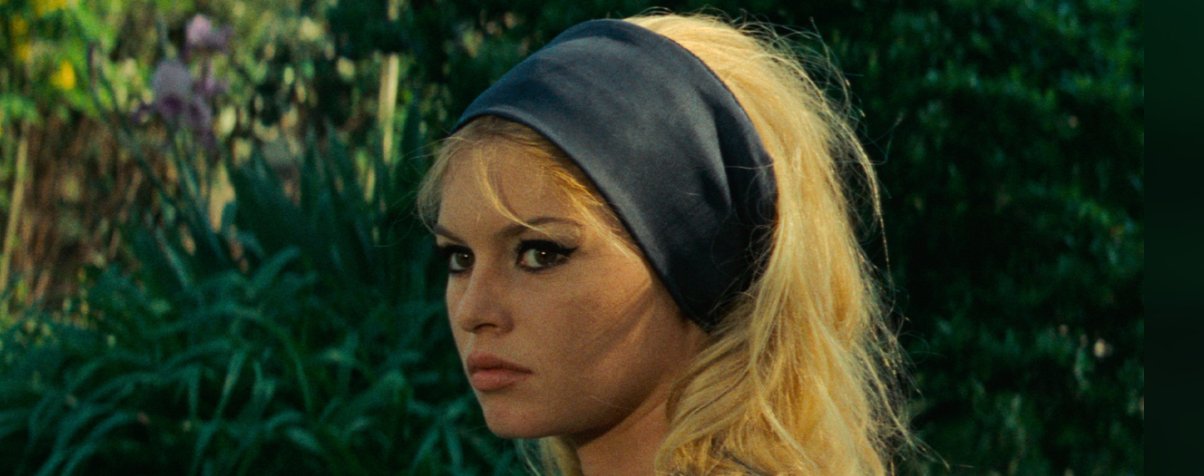
Brigitte Bardot, the defining French screen goddess of the 1950s and 1960s, a pioneer of animal rights activism, and later a public figure whose political positions divided France, has died at the age of 91.
Few figures in cinema inspired sexual freedom quite like Bardot. Her persona bordered on the mythic. The parties, the paparazzi, the suicide attempts, the eventual disgust with cinema — all of it has been documented exhaustively, dissected in films, documentaries, and even dramatized series.
Bardot was less an actress than a phenomenon. Her body, her voice, her strange, almost childlike intonation became inseparable from a new image of womanhood that detonated bourgeois morality. Roger Vadim’s “And God Created Woman” (1956) scandalized audiences and altered cultural behavior. The film failed initially in France, only to explode abroad, forcing its reappraisal at home. Bardot played a young woman who desired freely, without guilt or romantic justification — unprecedented on screen.
Her most enduring performance came in Jean-Luc Godard’s “Contempt” (1963), a film she openly despised for decades. It remains her finest cinematic hour, whether she acknowledged it or not — that breakup scene with Michel Piccoli, unfolding in real time over 30 uninterrupted minutes, is remarkable.
Yet, despite the admiration of New Wave figures like Truffaut, Chabrol, and Godard, Bardot worked surprisingly little with the era’s great auteurs. Her filmography is short, uneven, and, aside from Vadim and Godard, largely devoid of masterpieces. Did she even love cinema? The question remains open.
Still, moments endure. The skirt-lifting provocation in “En cas de malheur” (1958). Her ferocious courtroom monologue in Clouzot’s “La Vérité” (1960), so powerful it reportedly drew applause from the crew, and is the only film Bardot was proud of. The playful chaos of “Viva Maria!” with Jeanne Moreau. None rival “Contempt” or “And God Created Woman”, but all contribute to the myth.
Her acting career lasted barely two decades — starring in around 47 feature films, mostly between 1952 and 1973, and many of which I shrugged.
Elsewhere, her legacy was political. Bardot’s outspoken positions on immigration, religion, feminism, and sexuality led to repeated convictions for incitement to racial hatred and homophobia. She attacked modern feminism, and expressed views that alienated many who once admired her. She never softened, never apologized, never attempted rehabilitation.
One look at comments today, especially on Reddit, reveals comments brimming with vile insults directed at Bardot; it’s easy to be a keyboard warrior these days, but her legacy will remain intact, while these fleeting attacks fade into obscurity.
Bardot was many things — liberator, provocateur, activist, reactionary, myth. She left cinema early, but cinema never left her behind. Before Catherine Deneuve arrived, Bardot stood alone.

The film will stream for free, worldwide, on The Guardian's website in late November. That's a bold distribution move, and it tells you exactly what the filmmakers want here. They want eyeballs, as many as possible.