

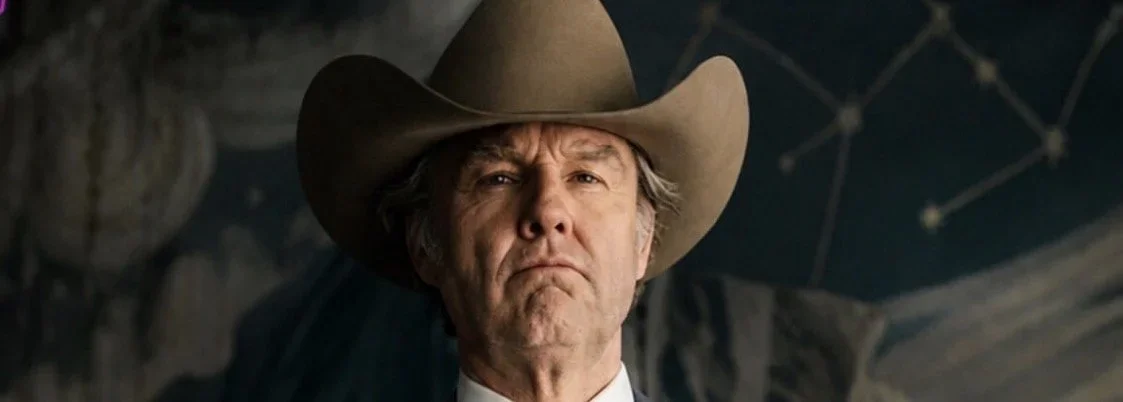

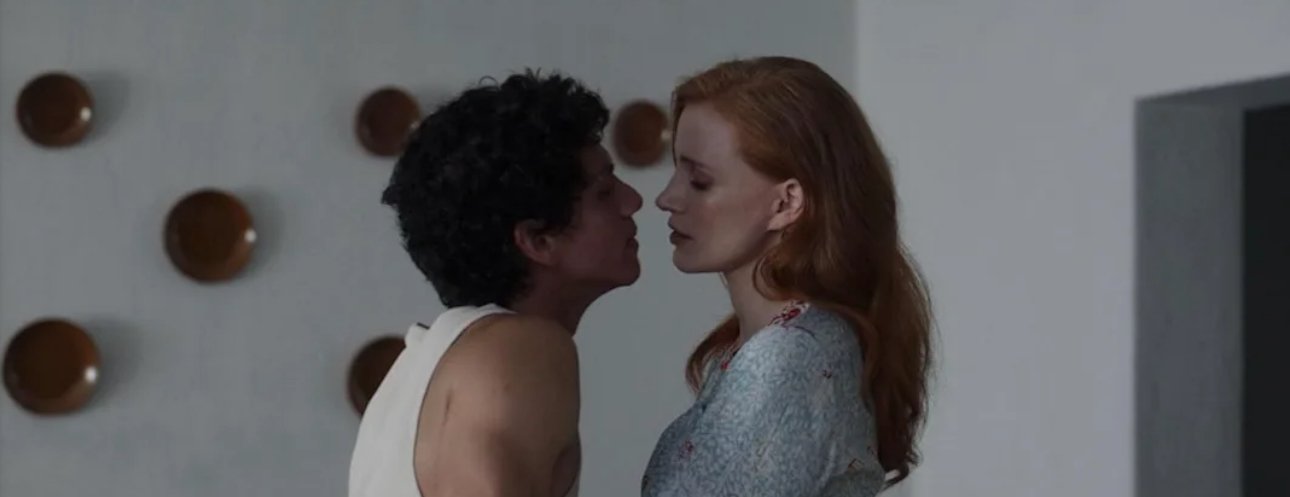
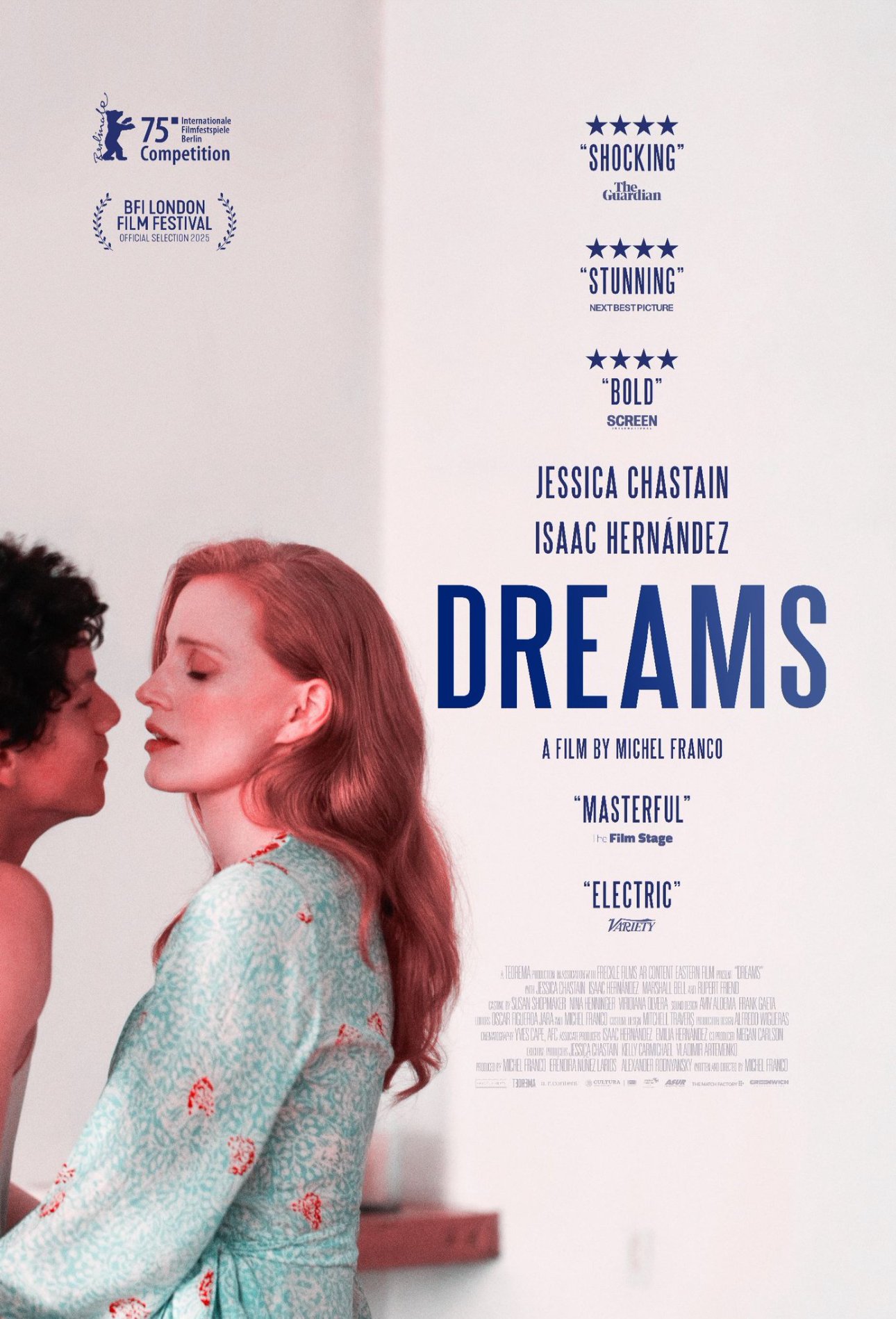
Here’s a trailer for Michel Franco’s “Dreams,” starring Jessica Chastain, Isaac Hernández and Rupert Friend, which can be seen below.
The erotic drama debuted at the 2025 Berlin Film Festival, where it left without any prizes from the Todd Haynes–led jury, and earlier this year it ultimately landed a distribution deal with Greenwich Entertainment. The film arrives in theaters on February 27, 2026.
I used to be a skeptic of Franco’s brand of morose cinema. However, his last two films — “Sundown” and “Memory” —were very good, and “Dreams,” which world premiered in February at the Berlinale, looks very promising.
In fact, the film barely screened at any North American festival after Berlin. There was a bow at Hamptons in October, a few regional fests like New Hampshire and Montclair, but that’s about it. I look forward to finally catching up with it soon.
In “Dreams,” Chastain portrays a privileged San Francisco arts benefactor who has been insulated from hardship by her influential father. Deeply invested in the ballet world, she becomes involved with a far younger up-and-coming dancer (Hernández) during a supposed work trip to Mexico City. The affair spirals when he attempts a perilous, unauthorized border crossing to reach her. Predictably, the situation unravels. _
Deadline’s review of “Dreams” claimed Franco is “skewer[ing] woke hypocrisy” — though it’s unclear what exactly that even entails. It’s obviously a very topical film that will bring in much debate whenever it gets released. Raves also came in from IndieWire, THR, The Guardian, and Screen. Meanwhile, The Playlist hated the film.
If you haven’t been keeping up with Franco’s recent work, it’s worth a revisit — these films have flown under the radar. His stark, Haneke-like worldview isn’t for everyone, and he certainly has his detractors, but there’s no question he’s been honing his craft in recent years.
The shock value is still there, but it’s more controlled now, more deliberate. Franco seems less interested in provocation for its own sake and more focused on crafting a sustained, suffocating mood. It’s been a quiet evolution, but a significant one.
Franco, who’s had three of his last four films premiere in Venice competition, was once a regular at Cannes, with four earlier films debuting across the festival’s key sections. He first appeared in Directors’ Fortnight with “Daniel and Ana” (2009), won Un Certain Regard with “After Lucia” (2012), and took Best Screenplay in competition for “Chronic” (2015). He returned in 2017 with “April’s Daughter,” which earned the Jury Prize in Un Certain Regard. Over the years, Franco has quietly become one of Mexico’s more interesting auteurs.

I’m now predicting a $50M domestic opening weekend for this movie, which will only further cement Cregger’s drawing power after “Barbarian” and “Weapons.”