


Yesterday, 1-2 Special acquired North American rights to Ildikó Enyedi’s “Silent Friend,” which stars Tony Leung, Léa Seydoux, Luna Wedler, and Enzo Brumm. One of the best films of this year’s fall fests is no longer orphaned.
Many titles, however, still remain without a home, including Jonathan Etzler’s “Bad Apples,” Steven Soderbergh’s “The Christophers,” Olivier Assayas’ “Wizard of the Kremlin,” and Romain Gavras’ “Sacrifice.”
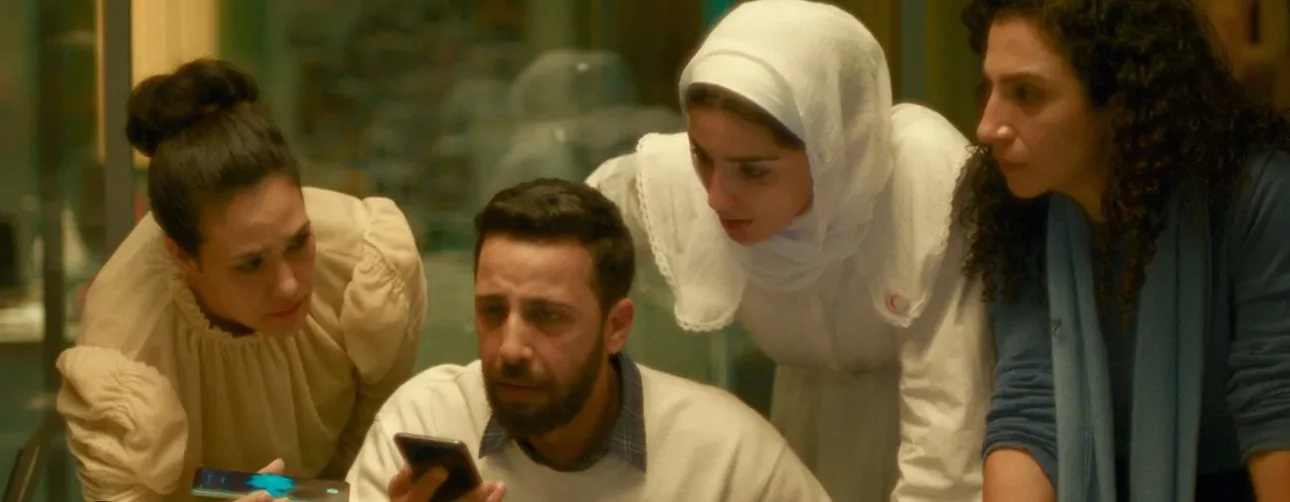
The biggest title yet to be picked up is Kaouther Ben Hania’s “The Voice of Hind Rajab.” The film, which won the Grand Jury Prize at Venice, and had Brad Pitt, Joaquin Phoenix and Javier Bardem, hop onboard as producers, reconstructs the killing of a five-year-old girl in Gaza using her real voice. Despite being distributed in Europe by The Party Film Sales, it has yet to find U.S. distribution.
Turn out, even films with Venice acclaim and Oscar buzz can languish without a U.S. home, highlighting a persistent tension between critical acclaim and commercial viability in politically charged cinema.
I’d like to believe that the reason no buyer has acquired ‘Hind Rajab’ has to do with the film simply not being that good — which was my initial assessment when I saw it a month ago: a manipulative, ethically dubious, and oddly conventional tackling of the tragedy. However, the reviews have been too strong, the Oscar buzz too widespread, distributors to be worried about a lack of quality.
Yes, ‘Hind Rajab’ is Tunisia’s official Oscar submission and will very likely be in contention for Best International Feature, standing a strong chance of being nominated. But if we learned anything from last year’s “No Other Land” — another film tackling Gaza (that one a documentary) — it’s that U.S. studios are reluctant to hop onboard such politically charged projects. “No Other Land” would go on to win the Documentary Oscar without a distributor, which was quite unprecedented.
“I don’t think a single Palestinian film has ever gotten mainstream distribution in the U.S.,” said Cherien Dabis, who formed her own distribution company, Visibility Films. “No one’s really been willing to take a risk on proving that these films could be seen widely.”
Distribution logistics also play a role. While European and Arab-world rights have been acquired, U.S. distribution requires a partner willing to handle both the financial and logistical challenges of a theatrical or streaming release. That includes organizing awards-qualifying runs in key U.S. cities, managing potential PR risks, and ensuring the film reaches a large enough audience to justify the investment. Even with strong Oscar buzz and critical attention, distributors may fear that the film’s commercial prospects are limited.
I heard a rumor in Toronto that Netflix was interested in acquiring ‘Hind Rajab.’ The streamer currently has no International Feature contender, but there have been hesitations — as with other studios — to take on this film given the delicate political climate at the moment.
All told, this year’s —and last year’s— festival circuit has highlighted a familiar pattern: Palestinian, and even in some cases Israeli, films struggling for distribution. ‘Hind Rajab’ is just the latest example of an industry dilemma — critically acclaimed yet financially precarious. Whether it ultimately finds a U.S. home remains uncertain.

“Hope,” Na’s first film in ten years — his last one being the exemplary “The Wailing” —is a gloriously messy, blood-soaked sci-fi epic that may become a cult classic despite—or because of—its polarizing nature.