


Ever since it premiered at the Telluride Film Festival, to positive reactions, Scott Cooper’s “Springsteen: Deliver Me From Nowhere” has seen its stock dwindle as more press have watched the film in the ensuing weeks.
I’ll admit it, huge Springsteen fan here. I own the entire discography, hundreds of bootleg recordings, lost count of the number of times I’ve seen him live, but this film — it’s just okay. Semi-wasted potential.
Now we have Variety reporting that the film has a $55M budget and is projected for a weak opening weekend of $10M. Those middling reviews (67% RT) certainly won’t help, and neither will audiences who, just by watching the trailer, will come to expect a rock and roll biopic — which this film certainly isn’t. Rather, it plays more like a brooding folk tale.
The film is based on Warren Zanes’ excellent “Deliver Me From Nowhere: The Making of Bruce Springsteen’s Nebraska,” an incredible book that tries to dig deep into the mind of Springsteen as he battles his inner demons while recording his landmark album. If you’ve read it, then you know the story being told here, and it’s a fascinating one.
Tackling the making of Springsteen’s “Nebraska” album, ‘Deliver Me From Nowhere’ is not a token biopic, but more of a portrait of a single, turbulent year in the life of a musician grappling with severe depression while recording his bleakest album. It’s as much about mental health struggles and the inner demons that create haunting art as it is about any rise-and-fall story we’re used to seeing.
For Cooper, the draw wasn’t the stadium-filling Springsteen, but the artist behind Nebraska, a raw, haunted acoustic album that stands out sharply in his catalogue. “I resisted making movies about the likes of Elvis, Miles Davis and Chet Baker,” Cooper admitted, highlighting Hollywood’s tendency to push directors to repeat past successes. Yet Zanes’ book, centered on this particular, turbulent period, proved irresistible. “Because Nebraska is always teaching me something,” Cooper explained. “And this is a film about many things, but it’s about a man who’s wrestling with how honest he can be in his work and the courage to look inward and deal with the personal trauma.”
Cooper and White had the luxury if having Springsteen on the set almost every day of the shoot— an unusual circumstance that almost never happens on biopics.
“Bruce was so giving, so open, and checked-in frequently,” Cooper said. The director remembered a crucial early conversation: “He said to me, ‘Scott, the truth about yourself often isn’t pretty.’ He said, ‘I know that you won’t sand the edges off because you never do in your films. I want a Scott Cooper movie, and I’m always here for you.’” Cooper described the experience as a “great bill of honour and love,” a moment in which Springsteen revealed things he had never shared with anyone before.
That said, I think many of the problems I have with this film reside in Cooper — a decent filmmaker, but nothing more than that. I can’t say I’ve ever connected with any of his films, which include “The Pale Blue Eye,” “Crazy Heart,” “Black Mass,” “Hostiles,” and “Out of the Furnace.” His films are just not that visually interesting to me, and his storytelling abilities are fairly standard.
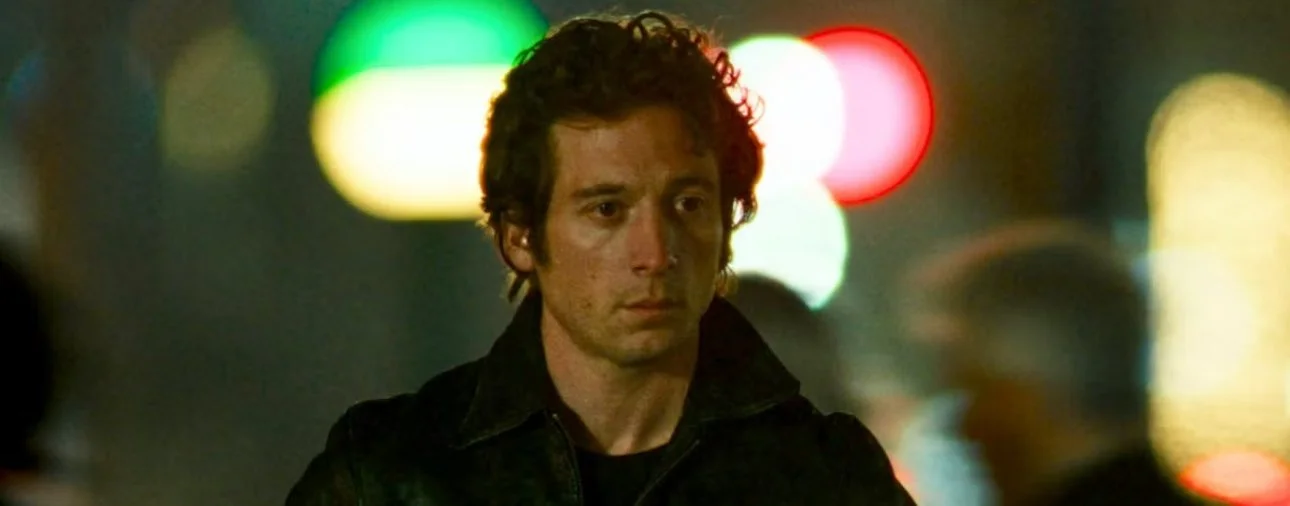
In ‘Deliver Me From Nowhere,’ Jeremy Allen White plays Springsteen as a brooding and morose figure who can’t quite make sense of all the dark thoughts roaming around his brain. Jeremy Strong yet again steals scenes, this time as Springsteen’s manager, Jon Landau. And really, when is Strong ever not great? Their friendship is the true heart of the film.
The “Nebraska” story might just be the most fascinating time period of the singer’s career. During that time, Springsteen was going through a severe bout of depression — he just didn’t know it. He created art through it, battling his inner demons by recording the spooky “Nebraska” tracks with a home recorder, alone in a bedroom — a matter of months from a breakdown.
So it goes: one of the outtakes that emanated from the Nebraska bedroom sessions turned out to be a song called “Born in the USA.” A few years later, Springsteen would go on to re-record it in a proper studio with the E-Street Band, and the rest is the stuff of history. Of course, given that Cooper tries to steer away from this being a greatest-hits biopic of the singer, “Born in the USA”–era Springsteen is not covered at all. It’s all about “Nebraska,” and I get that — it’s a much more interesting story to tell.
What I like about the film is how small and grounded, almost stripped down, it feels — it’s not really what people will be expecting in a Springsteen biopic, and that’s a good thing. This against-the-grain approach mostly works and keeps you invested, but again, I just don’t think Cooper was the right man for the job. Much like many of his films, it’s a tad too on the nose, and the filmmaking, frankly, isn’t that exciting.

Marvel's "Ghost Rider" just hired one of the best cinematographers working today. Linus Sandgren will serve as DP on Shawn Levy's MCU flick, and, most notably, the project will be shot on film.