


It’s going to be six years since Martin Scorsese’s “The Irishman” was, briefly, released in theaters by Netflix.
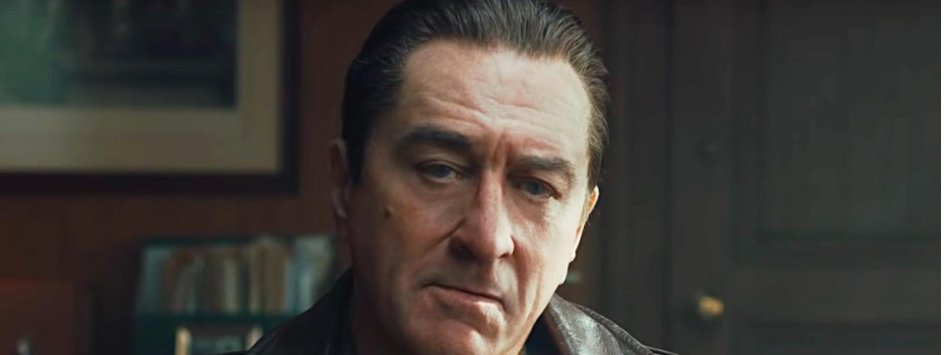
There’s still ongoing, heated debate over Scorsese’s decision to de-age Robert De Niro, Al Pacino, and Joe Pesci in the film, most of it has been negative. Over the weekend, Michael Mann claimed he would use de-aging — not to mention AI — technology for “Heat 2,” which brought back, for many, memories (or nightmares) of “The Irishman.”
Last year, actor Gabriel Byrne believed whst Scorsese did was a failed attempt at the technology (“it didn’t work”) and said that the “de-aging process is [still] at a very exploratory stage.” A few months later, George Miller added his opinion to the ‘Irishman’ debate. The filmmaker claimed that watching Scorsese’s film turned him off from using the technology on “Furiosa.”
There’s no doubting that de-aging technology will get better, which means it’ll most likely make the de-aging done in “The Irishman” look more ridiculous in the years to come. It’s a real shame because, although it suffers from overlength, the story in “The Irishman” is absorbing — especially the scenes between Pacino and De Niro.
So, what went wrong with the de-aging in “The Irishman”? Well, for one, de-aging De Niro by 50 years, having him play a 28-year-old, was misguided — you could still tell that it was an old man by the stiff walking. The body language did it in for me. Scorsese casting younger actors in the roles would have made more sense. ‘Irishman’ makeup artist Bill Corso discussed this on the Dan Gould Hour podcast and mentioned how Scorsese refused to have his actors wear markers on their faces, and didn’t even want to use body doubles for the younger versions. A clear mistake.
At the end of the day, “The Irishman” was a film that Scorsese and De Niro had wanted to make for a long time — decades. Scorsese had mentioned that they considered casting younger actors, but then it wouldn’t have been the two of them making a film together, and I guess that would have defeated the purpose of the project.
When I saw “The Irishman” in 2019 at its NYFF premiere, I described it as Scorsese’s “eulogy to gangster cinema.” The film has this beautifully melancholic feel to it. It’s “Goodfellas,” but directed by the wise and older man who gave us “Silence.” A culmination, meditation, and tribute to every Scorsese/De Niro/Pesci collaboration.
Al Pacino is also remarkable — his Jimmy Hoffa’s final moments still break your heart. De Niro’s Frank stands by his side as life fades, offering one last, oddly profound piece of advice: “Never put a fish in your car; you’ll never get rid of the smell.” It’s a perfect end note to Pacino’s performance, which balances comedy and tragedy with incredible precision.
So, almost six years later, how does “The Irishman” hold up for everyone? I’ve always seen it as a fascinating reckoning with Scorsese’s own past and the inevitability of death. I don’t believe Scorsese will ever make another straight-up mob movie again in his career because this one plays like a final statement on the genre.
In the long run, though, will the film’s reputation endure? Decades from now, will people look past the digital wrinkles to appreciate the thematic richness and sheer audacity of the work, even if the de-aging remains a quirky footnote in its history? The greatness of “The Irishman” might too vast to be erased; the effects may date it, but they might not define it.

Gerwig says her Netflix-bound "Narnia" is not a retread of the past movies; instead, she "wanted a rock opera," starting from scratch with C.S. Lewis's origin story, the one in which Narnia is actually born.