



Daniel Day-Lewis appeared this morning at the BFI Southbank for a career-spanning Q&A with critic Mark Kermode. The three-time Oscar winner —“There Will Be Blood,” “Lincoln,” “My Left Foot” — spoke with his usual honesty, particularly when it came to that last film, which earned him his first Academy Award back in 1990.
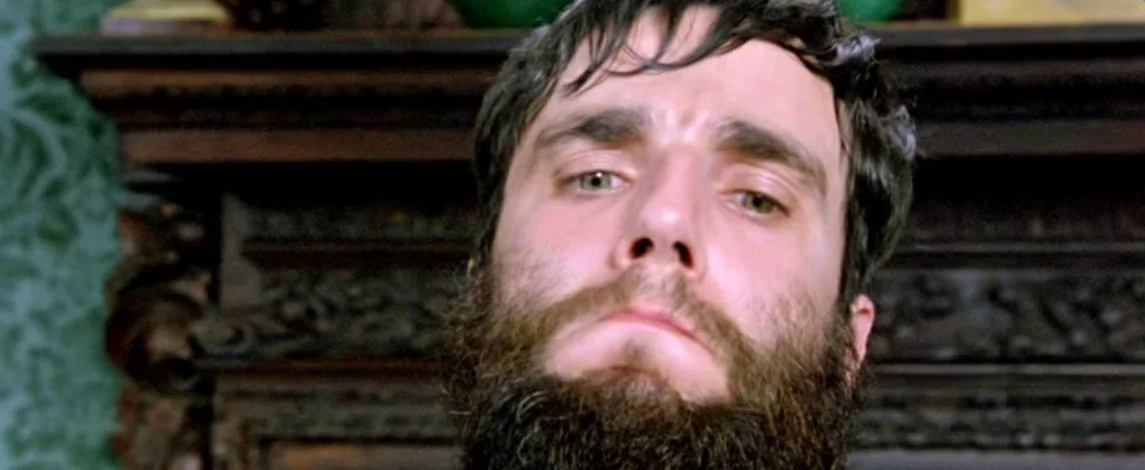
In “My Left Foot,” Day-Lewis portrayed Irish writer Christy Brown, who was born with cerebral palsy and could only control his left foot. It’s one of those performances long hailed as one of cinema’s great achievements — a masterclass in physical and emotional embodiment. However, as Day-Lewis admitted on stage, he “certainly wouldn’t be able to make that film today.”
“At the time, it was already questionable.” Day-Lewis explained that he prepared for the role with the help of disabled individuals at a Dublin clinic. “They made it clear to me that they didn’t think I should be doing it,” he said. “I said, ‘Well, I understand what you’re saying, but I do think it’s an important story, and at this time, it could possibly get made if I do it.’ It was a fairly flimsy justification for doing something that I just wanted to do.”
And yet, that “something” led to one of the most stunning performances in modern film history.
Day-Lewis once again went full method for his performance, subjecting the film crew to the demands of his extreme process. On the set of “My Left Foot,” crew members had to feed him, just as Christy Brown was fed, and even carry him between takes. Off set, Day-Lewis would visit restaurants in his wheelchair and remain in character, fully inhabiting Brown’s physical condition.
It’s worth remembering that “My Left Foot” was made at a time when acting was still about transformation, about becoming someone you’re not. Today, that notion feels almost radical. We’ve reached a point where gay characters must be played by gay actors, trans characters by trans actors, and even wheelchair-bound characters by actors who are, in real life, wheelchair-bound.
Acting, at its core, is make-believe. That’s the entire point of the craft. Putting ideological restrictions on who gets to portray what doesn’t just limit opportunity — it limits creativity itself.
Sean Penn said as much earlier this year in an interview with The New York Times, reflecting on his Oscar-winning turn as Harvey Milk in “Milk.” Penn claimed that “Milk was the last time I had a good time [on a film set],” adding, “It could not happen in a time like this. It’s a time of tremendous overreach. It’s a timid and artless policy toward the human imagination.”
And Penn’s right. The current climate has become so cautious, so policed, that it’s hard to imagine a performance like Day-Lewis’ in “My Left Foot” ever being greenlit, let alone celebrated.
Times have changed, but Day-Lewis shouldn’t feel any regret. His portrayal of Christy Brown remains an extraordinary accomplishment — the kind of fearless performance that defined an era when actors were allowed to act.

Gerwig says her Netflix-bound "Narnia" is not a retread of the past movies; instead, she "wanted a rock opera," starting from scratch with C.S. Lewis's origin story, the one in which Narnia is actually born.