
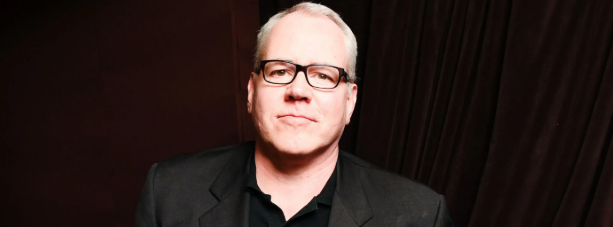
Here we go, Bret Easton Ellis has decided to address the backlash to his review of “One Battle After Another.” He claims Variety’s “innocuous” reporting of his comments lacked nuance and resulted in the overwhelming blowback he received.
If you recall, Ellis argued that the film has been inflated to a near-mythical status in Hollywood—a sentiment he vehemently disagrees with. And not, he insists, out of contrarianism alone, but because of what he sees as a cultural moment that conflates art with ideological alignment.
Ellis’ frustration is in the film having become a litmus test. He believes the film represents a broader cultural phenomenon: the way media sometimes warp discourse around art. When a film becomes emblematic of a political or social worldview, criticism is no longer evaluated on its aesthetic merits alone but on its perceived allegiance. Ellis sees “One Battle After Another” as a casualty of this system.
He goes on to state that Hollywood is increasingly insulated, inhabiting a bubble disconnected from the lived experiences of the broader American population. In such an environment, a film can be lauded or derided less for its intrinsic qualities than for the cultural narratives it seems to support. Critics—particularly those who see themselves as arbiters of “progressive taste”—can inadvertently turn entertainment into a battleground for identity and ideology. To him, it’s art reduced to politics.
Ultimately, it sounds like Ellis is calling for a return to aesthetic judgment over ideological signaling. He challenges film critics to recognize that a film can be flawed regardless of the worldview it seems to champion.
Ellis makes it clear that he’s a longtime fan of PTA, calling him one of the great filmmakers of his generation. In fact, he called “There Will Be Blood” “maybe the best film of this century.” So, whether you agree with him or not, it’s classic Ellis — sharp, bold, and completely unmoved by the hype. We need more voices like his in film criticism, not fewer.
Here’s the transcript of Ellis’ thoughts, via his podcast, on the ‘One Battle’ blowback:
These articles are about how I’m saying the movie isn’t very good—and God forbid you say “One Battle After Another” isn’t good in Hollywood. Blasphemy! How dare you say that! Take it back! How dare you possibly not like this masterpiece of where we are in America right now! Well, I didn’t.
The reaction from the entertainment press—which, to the surprise of nobody, is super liberal and left-leaning—was predictable. What I was trying to say, I guess, is that they overrated the movie because it aligns with their political ideology. And I do believe that. One of the reasons I believe that is that I have had so many people contact me, telling me that they didn’t like the movie at all—and I’m talking about left-wing people. In fact, one of the biggest surprises was this young leftist Hollywood guy who texted me and said, “Thank God you didn’t drink the Kool-Aid on this movie.”
I really have been surprised. People whom I haven’t spoken to in three or four years—or even seen—contacted me by phone, email, or text, telling me that they completely agreed with me on my take of the movie. I’m surprised and not surprised by that because I feel like this movie has become a litmus test—but it shouldn’t be. It’s just the moment in which it has opened. And I have to tell you, I also think the right- and conservative-leaning people have kind of misread the film just as much as I think people on the left have overpraised the film, because it really seems to capture this nightmarish vision they believe America is going through right now—when there is a vast majority of people who don’t agree with them at all, and they think that everything is great, improving, and getting better than where it was.
So, you have the left and the entertainment press propping this movie up to such an absurd degree that it felt unnatural, and I felt that I had to call that out. The people who contacted me about how they were disappointed by the film, I think, were, for the most part, coming from an aesthetic place. Some of the more liberal people who contacted me, honestly, it was just a movie they didn’t like and respond to. Whereas conservatives misread it. I don’t think the film is totally or necessarily about any specific political ideology. I think it’s a good story, with interesting characters. It’s a zany comedy with this kind of action melodrama that revs up in the last third of the film.
I feel somewhat justified, or vindicated, though I don’t want to be over a movie—and my innocuous reaction to it—by the number of people who have gotten in contact with me who don’t like the movie and somewhat feel the same way I do. In Hollywood, if you don’t bow down to this film and consider it the masterpiece that the press does, then you’re a traitor to the cause. You’re a right-wing MAGA piece of sh*t if you dare criticize this movie, or PTA, or whatever. It’s a ridiculous moment we’re in. If this movie had come out at a different point, I think the response might be different—but we’re in such a highly charged moment right now that any piece of art, any movie, is now viewed through this lens. If “One Battle After Another” came out at a much more neutral period, I think everyone would be okay with it—but I don’t really think it would be getting the reviews it’s received now.
Hollywood is increasingly moving away into this small room that the rest of the country simply doesn’t inhabit. They are not aligned with the majority of this country—but that is what’s happened […]
Horrible year for American movies. It must be, for this to be front and center in awards season talk, and “best movie of the year” talk. I dip my toes into the current American movies situation, and it’s pretty bad out there. We are in a drought. So, if I were an American film critic, and I watched 80 movies a year, then maybe “One Battle After Another” is up there.

Snyder has mentioned in the past how “Sucker Punch “never really got finished correctly,” and that it was “not really the correct cut.” The extra footage is actually already shot.