
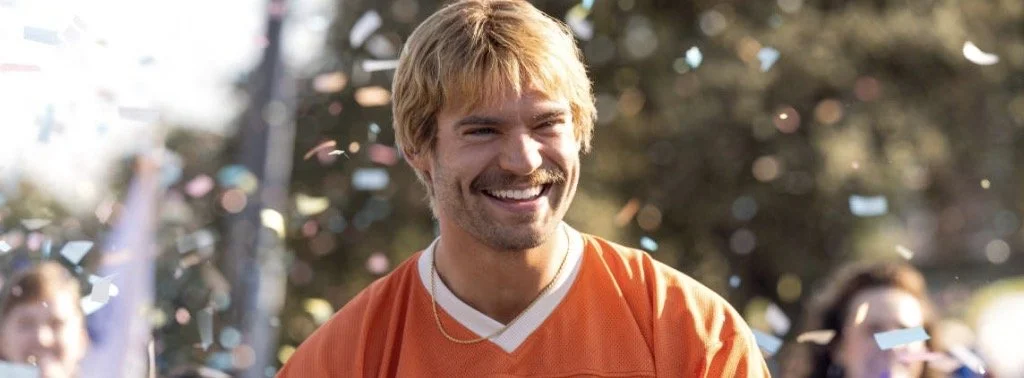


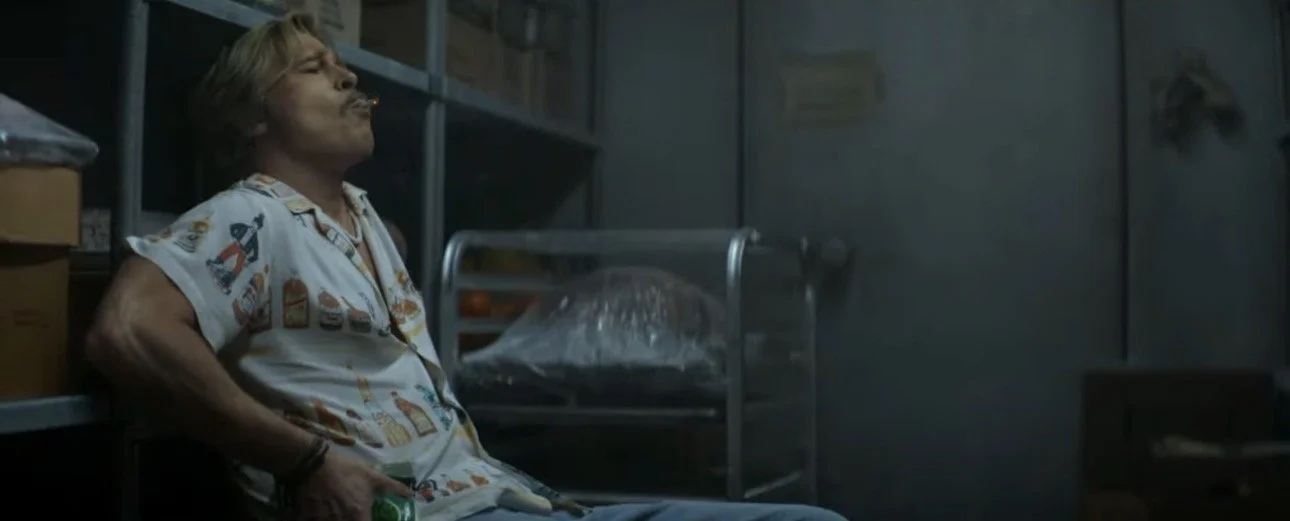


Last Tuesday, Quentin Tarantino contrasted the experience of watching TV shows, like “Yellowstone,” which he says he forgot about immediately after finishing, to watching films. In his opinion, some modern-day TV shows effectively use “cinematic language,” but are hampered by episodic restrictions, and lack of big payoffs:
I’ll see a good Western movie and I’ll remember it the rest of my life. I’ll remember the story, I’ll remember this scene or that scene. It built to an emotional climax of some degree […] There’s a payoff to it. But there’s not a payoff on this stuff. There’s just more interconnectional drama. And while I’m watching it, that’s good enough. But when it’s over… I don’t remember any of the details of it.
What does Tarantino think about the limited series format? I find it to be way more “cinematic” than, say, a five-season run of a great show. Fassbinder’s "Berlin Alexanderplatz" is one of the great feats of cinematic television, ever. Ditto Krystof Kieslowski’s “Decalogue” and Ingmar Bergman’s “Fanny and Alexander.” They all had a concisely driven beginning, middle and end. There was no waiting for the next season, and for that reason they were memorable.
Here’s Vincent Canby’s 1981 New York Times review of "Berlin Alexanderplatz” which perfectly explains why it should be referred to as “cinema”:
In all superficial ways, "Berlin Alexanderplatz" is not much different from the sort of mini-series that have occasionally fascinated American television audiences. When it was shown in Germany, "Berlin Alexanderplatz" was divided into 13 segments, totaling 13 1/2 hours, plus a two-hour epilogue. This compares with our "Winds of War" (seven segments, 18-hour total), "Roots -- the Second Generation" (seven segments, 14 hours), "Roots" (eight segments, 12 hours) and "Shogun" (five segments, 12 hours).
In "Berlin Alexanderplatz" Fassbinder has created a huge, magnificent melodrama that has the effective shape of a film of conventional length. There's never before been anything quite like it, possible because no filmmaker of comparable stature has ever tried to work on such a grand scale, with the exception of Erich von Stroheim when he attempted to realize his vision of "greed."
Fassbinder was way ahead of everyone in having the vision to use the small-screen to make a different kind of cinema. In a way, Bergman, Kieslowski and Fassbinder paved the way for David Lynch to create his 18-episode “Twin Peaks: The Return,” which also managed to create cinematic language out of serial television.
I doubt there are many out there who managed to watch ‘The Return’ or ‘Berlin Alexanderplatz’ in a single sitting, this would be an impossible undertaking as it would take the entirety of a day to complete. If you start viewing it at 6am, you’d only finish your watching at midnight. More recently, NYC’s MoMA decided to host a retrospective screening of ‘The Return,’ splitting its 18 episodes into three consecutive days of 6-hour screenings.
With that said, how exactly do you separate cinema and television, especially when made by masters of the craft like Lynch and Fassbinder? Does theatrical distribution actually matter in evaluating them as one big 18-hour movie? “Twin Peaks: The Return,” “Berlin Alexanderplatz” and “Decalogue” have appeared on Sight and Sound’s greatest films of all-time list.
One thing that works against the “limited series” being one whole piece of cinema is that t tends to have every episode build to its own crescendo, with its own individual emotional space. So, the momentum might be completely different to that of a movie. Compare that to the 4+ hour “Once Upon a Time in America,” where all four hours work within a single movement, as opposed to eight separately paced "movements" in, say, HBO’s masterful Steve Zaillian directed “The Night Of,” each episode concluding with their own mini climax.
More recently, Alfonso Cuaron kept insisting that his recent Apple TV series, “Disclaimer,” was “not TV” and actually “cinema,” or a “seven-hour long movie” as he claimed, but the show was hampered by the same problems, limitations, that I refer to above — each episode ended with a cliffhanger. The narrative “movement” of the series was very much TV.
That's why something like “Twin Peaks: The Return” could be considered as more of a movie. Each episode on its own is weird and jaggedly paced and left up in the air, but when watched in close proximity to each other, it flows brilliantly.
“The Night of” would be one of the more recent examples of an exceptional limited series include which might constitute cinema, the others that spring to mind include Craig Mazin’s “Chernobyl,” Mike Nichols’ “Angels in America,” and Cary Fukunaga’s “True Detective” (season one, obviously). What am I missing? This was an off-the-cuff list that could be missing a few titles.

“Hope,” Na’s first film in ten years — his last one being the exemplary “The Wailing” —is a gloriously messy, blood-soaked sci-fi epic that may become a cult classic despite—or because of—its polarizing nature.