— Sacha Baron Cohen (@SachaBaronCohen) July 8, 2018
Zach Cregger's “Resident Evil” landed roughly $9M in Thursday previews with excellent early audience reaction, and the weekend projection has climbed to $65M — possibly higher.
Pitt and Ayer disagreed so much on the tone of the film that each prepared separate versions. Ayer's "broader cut" tested better, but Pitt's more “esoteric” version drew the support of producer Damien Chazelle .
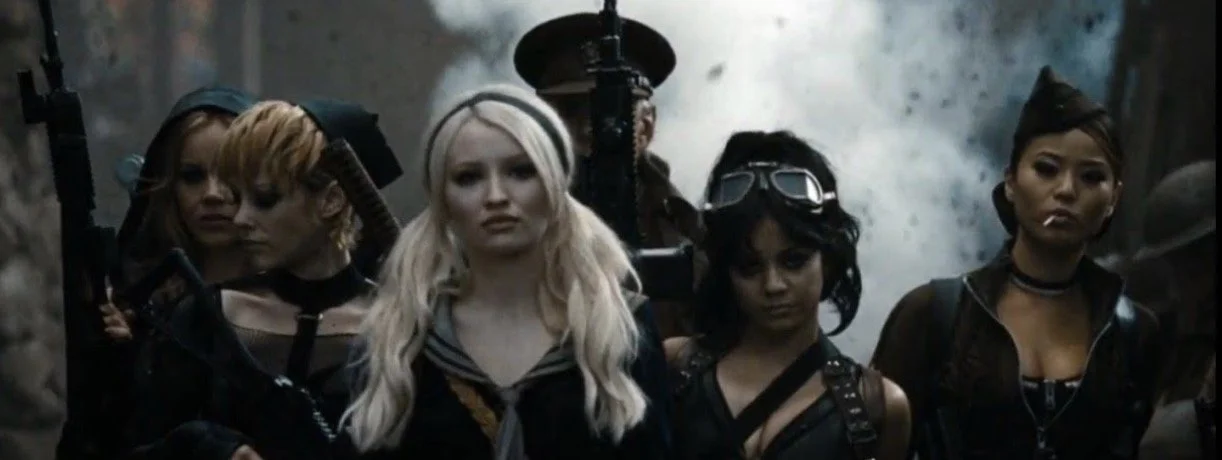
Snyder has mentioned in the past how “Sucker Punch “never really got finished correctly,” and that it was “not really the correct cut.” The extra footage is actually already shot.
The budget for "Resident Evil" was $75M, and the film is supposed to have a $90M+ worldwide weekend. Cregger was paid $20M to direct the movie. Money well spent.
This year’s 12th edition of the Scary Movies festival at Film at Lincoln Center premiered Ari Aster’s extended version of “Midsommar” this past Saturday.

— Sacha Baron Cohen (@SachaBaronCohen) July 8, 2018
Yorgos Lanthimos is a director who doesn’t mind bewildering and angering audiences. With "Dogtooth" and "The Lobster" he made brilliantly dissected and scathing satires of the patriarchal family. He was it again last year with "The Killing of A Sacred Deer," which all but confirmed him as a sort of Bunuel for the 21st Century. I thought that film was his least successful attempt at provocation, but his latest entitled "The Favourite" looks fantastic.
There are no winners in Lanthimos’ world, so beware.
He stole a lot from The Shining in his last movie, this one looks like "Barry Lyndon," at least in the visual department.
Simon Pegg is recognizing the dominance of the Marvel/Star Wars/Disney machine for what it is -- merchandising our childhood properties to provide a safe comfort zone. Of course, his comments are nothing new, if you've read this site you know how I feel about mainstream cinema's current lack of challenging content. Pegg's insistence that many adults today refuse to grow up is dead on, superhero movies are comfort food, but this is escapism that has gone too far.
“But there is a side to me that likes films that have nothing to do with spaceships, too.” Besides, he says, science fiction was more substantial during his youth, containing serious adult themes beyond the sparkly effects. Nowadays, a lot of what gets called nerd culture is just “children’s entertainment. The adult population is going to see films about superheroes and spaceships – myself included – and there’s a strange kind of infantilisation that’s going on. These are the preserve of our childhood, but now we don’t have to grow up until we are 30, or even 40.”
Is that dangerous? “Yeah! It makes us all out of touch with reality. It seems amazing to me that there’s probably more discussion online about the next superhero movie than there is about immigration. Maybe now the state of the world is getting harder to ignore and people are starting to wake up to it a bit. Or maybe people will just feel even more powerless and think: ‘I can’t do anything, I might as well just watch this film and get away from the awfulness of it all.’ But the awfulness is festering more and more as we sit in the darkness watching these bright colours.”
I always go back to this quote from Alan Moore about comic book movies:
"To my mind, this embracing of what were unambiguously children's characters at their mid-20th-century inception seems to indicate a retreat from the admittedly overwhelming complexities of modern existence," he wrote to Ó Méalóid. "It looks to me very much like a significant section of the public, having given up on attempting to understand the reality they are actually living in, have instead reasoned that they might at least be able to comprehend the sprawling, meaningless, but at-least-still-finite 'universes' presented by DC or Marvel Comics. I would also observe that it is, potentially, culturally catastrophic to have the ephemera of a previous century squatting possessively on the cultural stage and refusing to allow this surely unprecedented era to develop a culture of its own, relevant and sufficient to its times."
[
]

It looks like a major legal battle is about to go down between filmmaker Michael Moore and disowned producer Harvey Weinstein over "Fahrenheit 11/9," Moore's upcoming Donald Trump documentary.
Last week Moore revealed, on 'The Late Show with Stephen Colbert,' that he was teaming up with film exec Tom Ortenberg, to distribute 'Fahrenheit 11/9.' However, Deadline's Mike Fleming Jr. is now reporting that Harvey Weinstein "paid just north of $2 million out of the $6 million pledged in a docu deal Moore used to get the film to this point."
The movie was completed right before the ensuing sexual assault allegations that have since been made against Weinstein.
In what will most likely be a hotly contested legal bloodbath, Weinstein and his brother Bob are demanding their money back, but "Moore and his WME reps want them to step aside, chalking the loss up to the price of scandal." In other words, Moore finds it morally wrong to pay back a predator like Weinstein.
If you remember, Moore's 2017 Facebook essay titled “Use This Moment To Create A World Without Harveys" called Weinstein a "sexual predator"and "sociopath."
"A Weinstein source [has it] that what he is asking for is to be allowed to continue funding the film as producer, but if that isn’t possible, he should recoup his share of the money that he has paid into a project."
"The Weinsteins and Moore set up a company called Fellowship Adventure Group and released [2004's "Fahrenheit 9/11""] through Lionsgate, and went on to gross over $222 million globally to become far and away the biggest grossing documentary of all time."
Fleming goes on to hint that "Fahrenheit 11/9" is not going to be finished until next year and is aiming for a Cannes premiere.
Official synopsis of Fahrenheit 11/9:
"Michael Moore's Fahrenheit 11/9 is a provocative and comedic look at the times in which we live. It will explore the two most important questions of the Trump Era: How the f**k did we get here, and how the f**k do we get out? It's the film to see before it's too late."
[Deadline]
Director Sebastián Lelio's“A Fantastic Woman” starred a trans woman in the lead role. The film was about the prejudice that comes when you are different but want to feel normal. What was unique about the film was the casting of an actual trans woman, Daniela Vega, in the lead role. Clearly something that the producers of the now controversial “Rub & Tug” didn't think about when they decided to cast Scarlett Johansson as a trans person in that upcoming movie.
I thought the controversy, which is being deemed as "ciswashing" on social media, was ridiculous, especially given the fact that there currently aren't any box-office-friendly trans actors in the industry that could carry a modestly-budgeted film into money-making glory. Johansson gives a producer the bottom line that he needs. It's as simple as that. If I were a producer, why would I cast a no-name trans person to lead a film which I'm pouring millions into?
THR decided to ask Lelio what he thought about the ciswashing controversy, and his response was refreshing, especially given the toxicity in social media towards Johansson:
“It’s true [that] cultural representation has been scarce so far. And it’s also true that the gesture of casting a cisgender actor to play a transgender role can be aesthetically or ethically debatable — but it should never be prohibited,” says Lelio.
Trans actors have voiced their displeasure towards Johansson, but Lelio doesn’t agree with the backlash at all:
“When I decided to cast Daniela Vega to play Marina in ‘A Fantastic Woman,’ it was an act of artistic freedom, not political correctness. I wasn’t telling the world that transgender roles should be played by transgender actors. I was only doing what I felt was right for my film.”
“If I said transgender roles should only be played by transgender actors, I would be implying that Daniela Vega shouldn’t play a cisgender role. And I believe she has every right to play a man or a woman,” he added.
Val Kilmer briefly appeared in Tomas Alfredson's infamously awful "The Snowman," arguably the worst film of the last few years. Not only was the film BAD but, adding insult to injury, Kilmer's voice was dubbed in the most obvious and terrible way. Who could seriously approve this?
The overdub was due to Kilmer's throat cancer surgery, which left his vocal chords in a totally demolished state. Kilmer even confirmed, in a Reddit AMA five months ago, that following "a healing of cancer," he had a swollen tongue which made his voice sound... peculiar.
In our review for "The Snowman" this is what was said of Kilmer's performance:
"The most baffling element in front of the camera is Val Kilmer. It's hard to describe what exactly he is doing. You just have to see it to believe it. It's the weirdest performance I've seen in ages." Kilmer also confirmed that he's suiting up for "Top Gun: Maverick which will start shooting later this year.
His voice has probably gotten better since then, because Kilmer is set to reprise his "Top Gun" role as Iceman in the upcoming "Top Gun: Maverick."
"I'm officially in the sequel to TOPGUN," Kilmer wrote on social media, adding "[I'm] looking forward to working with Tom, Joe (Kosisnski) and Jerry (Bruckheimer), all such unique pros."
Tom Cruise will also be back for the sequel, which he even promoted the first day of filming on May 31 with a photo of him back in a jumpsuit.
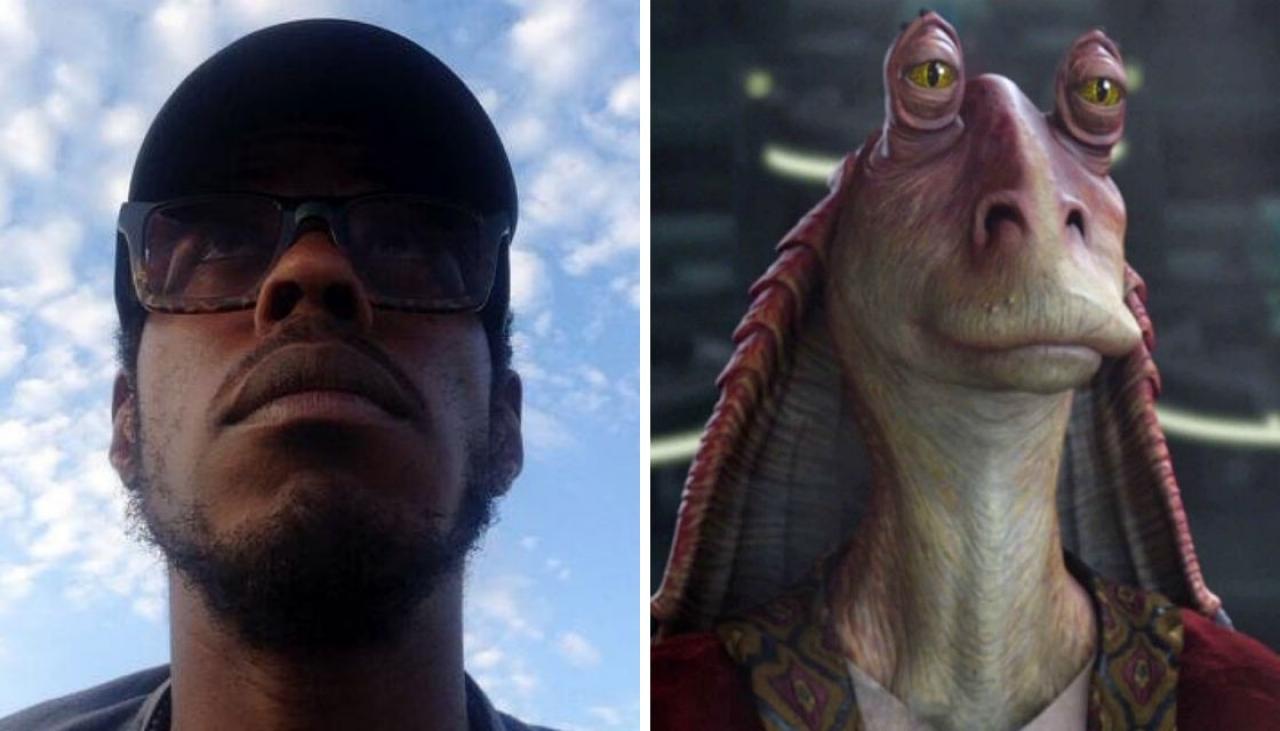
Ahmed Best, who played Jar Jar Bins in "The Phatom Menace," was recently interviewed by The Wrap and revealed the very dark and depressing days he had some 20 odd years ago when "The Phantom Menace" was released to major fan backlash. In fact, Best was so depressed that he actually contemplated killing himself.
“20 years next year I faced a media backlash that still affects my career today.This was the place I almost ended my life. It’s still hard to talk about. I survived and now this little guy is my gift for survival.”
“There were a lot of tears, there was a lot of pain, there was a lot of shit I had to deal with. Everybody else went on. Everybody else worked. Everybody else was accepted by the zeitgeist. To be honest, failing and being black is very scary, because we don’t get a lot of chances, you know? I didn’t get another chance after Jar Jar.”
Best's story clearly didn't sit well with "Guardians of the Galaxy" director James Gunn who quickly went to Twitter to rant, and what a rant it was:
“People responding to this post saying, ‘Yeah, it wasn’t the actor’s fault! It was the writer’s!’ are missing the point,” Gunn said. “Critique it. Don’t like it. But spewing hate and bile at individuals just doing their best to tell a story, even if the story sucks, is lame. Don’t watch it!”
‘Star Wars’ (or any movie) may be important to you, but it doesn’t belong to you. If your self-esteem depends on how good you think the current ‘Star Wars’ is, or your childhood is ruined because you don’t like something in a movie, GO TO THERAPY.
Best isn't the only "Phantom Menace" casualty. I'm sure you all remember 10 year-old Jake Lloyd, who played Anakin Skywalker, and his revelation in a 2012 interview that fan backlash led him to quit acting for good. It didn't stop there, Lloyd also ended up having a short stint at a psychiatric facility. Yikes.
Jar Jar Binks became the laughingstock of many "Star Wars" fans in the summer of 1999. However, I, for the life of me, could not tell you how Ahmed Best looks like or that he even played Jar Jar. I'm assuming hardcore SW fans must have known who he was, but wasn't his performance CGI/motion capture?
Jake Lloyd's story, however, is horribly sad. People went after a little kid.
Variety is reporting that Keri Russell will be joining the next Star Wars installment. FX’s “The Americans” recently concluded with a fantastic finale titled "START." For all the flaws I nitpicked throughout that show's six seasons, I do find it to be a tad overrated, the final season had some incredible moments, no thanks to Russell who has grown and matured, like fine wine, as an actress. The 42 year-old actress has also aged beautifully. There are no real details about the role, but the trade claims she will be involved in a lot of “action-heavy fight scenes.”
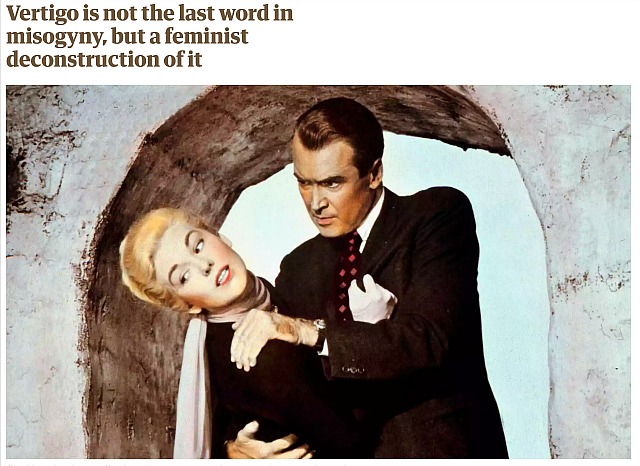
David Thomson doesn't to want to let go of his newlyfound distaste for Alfred Hitchcock's "Vertigo," so much so that he has responded to Anne Bilson's Guardian rebuttal.
If you remember, Thomson, in a London Review of Books essay about Hitchcock's classic, theorized that Hitchcock’s 1958 film has aged terribly in the post-Weinstein #MeToo era. He also mentioned Hitchcock’s creepy attitudes toward women on-screen (and his off-screen behavior toward Tippi Hedren). His conclusion? Fugghebadboutit. "Vertigo" won't be maintain its #1 position on the prestigious Sight and Sound poll when the next one comes out in 2022.
Billson's rebuttal was thoughtful, concise and everything Thomson's essay was not. She claimed that, on the contrary, Hitchcock “created many strong and perceptive female characters [and] that many of his male characters [were] weak and vacillating.”
“For a so-called misogynist, his films feature a lot of intrepid heroines,” Billson wrote. “Even when the women are nominally just love interests, they are unusually plucky and quick-witted.”
Now Thomson has replied, in a back and forth that might not end anytime soon. Yes, his rebuttal is a little more thoughtful and understanding than I expected it to be but he seems to go back to "Vertigo" again and the way Kim Novak is portrayed: “I enjoyed Anne Billson’s article and I agree with a lot of it. But I find it hard to see [Kim Novak‘s] Judy Barton in Vertigo as a ‘strong’ character."
“After all, she has come to San Francisco to survive. She is not quite young any more and there are hints of failure along her way. So she gives herself to a fanciful and very cruel plot. She is being hired (and paid surely) to destroy two people — Madeleine Elster and Scotty Ferguson. There seems every likelihood that she has become Elster’s mistress in that process."
“In other words, she is a tool, being manipulated, and giving up her self. So when she starts to fall for Scotty, she cannot admit it. And after that, dumped by Gavin, she lingers in San Francisco, as if to wait for Scotty to notice her, as Judy. But then she has to be Madeleine again. With further disaster, including her death.”
“It’s hard to think of a clearer case of victimhood. or a film so in love with romantic tragedy.”
His complaint was about "female victimhood." ISN'T THAT WHAT THE FREAKIN' MOVIE IS ABOUT?!
It's quite ironic that Thomson put "Blue Velvet" on his list of 10 greatest of all-time for the Sight and Sound poll. Talk about a film that treats its main female character like complete and utter garbage. Maybe Thomson should reassess his position on Blue Velvet before he goes and attacks Hitchcock. What a hypocrite.
Wrote this for The Playlist, in which I talk about a recently found lost interview with Stanley Kubrick where he actually explains the ending of 2001: A SPACE ODDYSEY.
I think the overall wow factor of this 2001/Kubrick finding is the fact that he actually explains the ending in his own words. We all know what happens, and it's even explained, more or less, in the book as well, but this is nevertheless an amazing find.
“I’ve tried to avoid doing this ever since the picture came out. When you just say the ideas they sound foolish, whereas if they’re dramatized one feels it, but I’ll try. The idea was supposed to be that he is taken in by god-like entities, creatures of pure energy and intelligence with no shape or form. They put him in what I suppose you could describe as a human zoo to study him, and his whole life passes from that point on in that room. And he has no sense of time. It just seems to happen as it does in the film.”
He continues, “They choose this room, which is a very inaccurate replica of French architecture (deliberately so, inaccurate) because one was suggesting that they had some idea of something that he might think was pretty but wasn’t quite sure. Just as we’re not quite sure what do in zoos with animals to try to give them what they think is their natural environment. Anyway, when they get finished with him, as happens in so many myths of all cultures in the world, he is transformed into some kind of super being and sent back to Earth, transformed and made some kind of Superman. We have to only guess what happens when he goes back. It is the pattern of a great deal of mythology, and that is what we were trying to suggest.”
The act of “whitewashing” isn’t new in Hollywood, it’s been there since the industry began. From the controversial blackface in D.W. Griffith’s “The Birth of a Nation,” to a very white Natalie Wood playing the Puerto Rican Maria in “West Side Story.” My two infamous examples of whitewashing would be the casting of legendary Hollywood actor Mickey Rooney as Mr. Yunoshi in “Breakfast at Tiffany’s.” Rooney wore makeup and a prosthetic mouthpiece in his blatantly racist portrayal of Audrey Hepburn‘s arrogant and bitter Japanese neighbor. It has been rumored that Bruce Lee was so offended by the role that he walked out, not even midway through the film at a screening.
Another “hall-of-famer” in the whitewashing department would probably be Peter Sellers’ incredibly silly portrayal of Hrundi Bakshi in Blake Edwards‘ “The Party.”
However, with all that being said, the act of Whitewashing wasn't a controversial topic until more recently, what with social media et all. and last year's backlash of Scarlett Johansson‘s casting in her supposed-to-be Japanese “Ghost in the Shell” leading role was the definitive example of what could happen when an angry mob specifically targets a whitewashed casting.
Well, poor Scarjo seems to be in trouble again for wrongful cultural appropriation.
Portraying “Major Mira Killian” aka “Motoko Kusanagi," Johansson is now being accused of “ciswashing” for agreeing to play the part of real-life trans massage parlor owner Dante “Tex” Gill in the upcoming "Rub & Tug," which will be directed by, guess who, "Ghost in the Shell" director Rupert Sanders.
Johansson’s response to her detractors? “Tell them that they can be directed to Jeffrey Tambor, Jared Leto and Felicity Huffman’s reps for comment.” Yikes.
The trans-twitter community isn't happy. They want her head.
The Twitter outcry.
Nicolas Winding Refn writing an essay on Donald J Trump?
That's exactly what the controversial, and altogether goofy, filmmaker did for The Guardian in a penned piece that is full of salty statements:
“For the past six months, I’ve been shooting in America, and it seems increasingly clear we’re now living in a dystopian reality TV show. America has always had a tendency towards the operatic but, fueled by the hand grenade of insanity that is Donald Trump, it’s reached new heights of hysteria. This means even the smallest developments are heralded as either the end of the world or the second coming.”
However, Refn seems to change course after that paragraph by describing the era of Trump as “thrilling." going on to say, "we are appalled by what we witness unfolding each day – essentially, the destruction of the American way of life by its own administration – but we’re also inescapably gripped by it. This is a very exciting time in our history.”
Refn is excited at the prospect of a possible Trumpocalypse happening in America because “Even Trump’s fierce arrogance and distaste for his fellow man is good. It’s revealed how many people and politicians share such a view, and our exposure to such hypocrisy is healthy,” says Refn.
Oh, but there is a cure for all this according to the Danish filmmaker, Cinema!
“Cinema has become like Chinese food: it gives you cheap, instant pleasure, like an orgasm, but it’s not very healthy or interesting.”
He continues, “The future must be different. I want it to be an uncontrolled place of beautiful chaos, where everyone can create their own universe and is free to speak their own mind, without being overseen by big business. A place of free speech and free access.”
Claude Lanzmann has died, at the age of 92. The director of "Shoah" passed away on Thursday, July 5 in Paris, according to the famous director's entourage who spoke with France's Le Monde:
"Claude Lanzmann died this morning at his home, he was very very weak for a few days," said a spokesman for the publisher Gallimard.
Lanzmann was the author of a dozen films, including, the1985 groundbreaking documentary on the Holocaust "Shoah" which dealt with the extermination of the Jews in Europe during the Second World War. His latest film, "The Four Sisters", the fifth from his "Shoah" series, came out this Wednesday, July 4th.
His work as a filmmaker was therefore marked by the memory of the Jewish genocide, making him a figure for holocaust cinema and his obsession with the subject matter of memory.
Lanzmann has had a fascination with the holocaust his entire life. His seminal eight-hour 1985 documentary "Shoah," was the final and indisputable statement on the tragedy. No offence to Steven Spielberg of course. "The Last of the Unjust" was a recent spiritual sequel to "Shoah,"
a series of interviews Lanzmann concocted over the years, some that didn't make "Shoah" and others that were never even thought to have existed. At 92, Lanzmann seemed to still be haunted by the genocide that killed six million Jews, so much so that it became
an entire career's obsession, a seeker of truth and a way for him to release all the tension and demons that have lured inside him for the last 6 decades.
His contributions to not just non-fiction film, but historical documentation are massive and almost impossible to describe in just a measly 500-word article. Legendary is the word that comes to mind.

BBC's Head of Comedy puts Monty Python's lack of originality down to a surfeit of education and racist bias— John Cleese (@JohnCleese) June 20, 2018
Unfair ! We were remarkably diverse FOR OUR TIME
We had three grammar-school boys, one a poof, and Gilliam, though not actually black, was a Yank. And NO slave-owners


I will always fight, with every last fiber of my being for Alfred Hitchcock's "Vertigo," a movie which I consider to be the greatest of all-time.
A few weeks ago, I did, however, ask readers to consider David Thomson’s 6.21 London Review of Books essay (“Vertigo After Weinstein“), which made the outrageous case that Hitchcock's masterpiece hasn't age well because of its "male gaze" perspective, even going as far as using the word "predator" to describe Hitchcock's intent in the film. Yes, it was Thomson basically sayingthat our post-Weinstein world should disapprove of Hitchcock's classic.
Pff, give me a break.
As I mentioned in that article:
"Thomson's lost his mind. He's clearly politicizing a great movie, saying it hasn't aged well because Twitter would surely deem it sexist, a male-gazing love-affair. I still think "Vertigo" is the greatest movie ever made. The film is such a profoundly beautiful statement. Its dream-like atmosphere, about two people who are not sure who they are, but keep looking for answers, can easily be the same description used for David Lynch's "Mulholland Drive." It's one of the 4 or 5 most transcendent cinematic experiences I've ever had."
"We live in an age when everything needs to be politicized. Even renowned film scholars like David Thomson, whose writings I studied and admired during my tenure at film school, has decided that "Vertigo," well, it's just not "woke" enough for today's world."
I can only do so much in my defense of Hitchcock and "Vertigo," with Jeffrey Wells also writing an impassioned plea to stop the hysterics.
In a 6.28 The Guardian article, Anne Billson counter-argues Thomson, even if she doesn't necessarily mention him by name, and claims that Hitchcock celebrated women in his movies, making them the heroines, the ones with a pure soul and that the men were weak:
“For a so-called misogynist, his films feature a lot of intrepid heroines,” Billson writes. “Even when the women are nominally just love interests, they are unusually plucky and quick-witted.”
“While some critics see the film, released 60 years ago, as proof of Hitchcock’s sexist creepiness, a closer look reveals that strong women and weak men were often at the heart of his work.
She is correct with that assessment.
The gist of Thomson's article was to acknowledge his doubts that "Vertigo"could remain #1 when Sight & Sound critics vote again in 2022. The poll is the most celebrated and prestigious of film polls. There is none more important. In 2012 "Vertigo" dethroned Citizen Kane's 50 year reign at the top.
The results were as follows:
Vertigo (191 mentions)
Citizen Kane (157 mentions)
Tokyo Story (107 mentions)
The Rules of the Game (100 mentions)
Sunrise: A Song of Two Humans (93 mentions)
2001: A Space Odyssey (90 mentions)
The Searchers (78 mentions)
Man with a Movie Camera (68 mentions)
The Passion of Joan of Arc (65 mentions)
8½ (64 mentions)
Boots Riley. What a name. What a director. No, really. I didn't have the chance to review "Sorry to Bother You" at Sundance, but its upcoming release this coming Friday has me thinking this ambitious, wild movie deserves some praise on print.
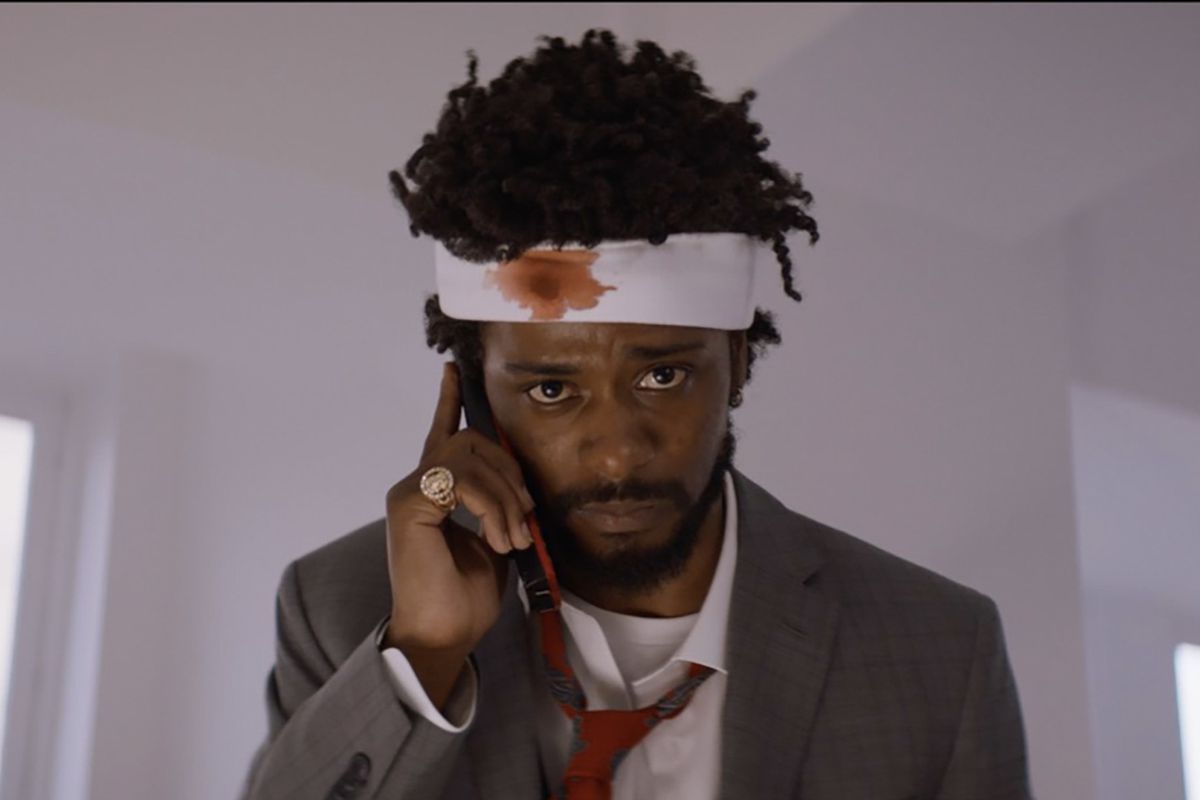
This being Riley's first feature, an outrageous vision of political and societal resonance, "Sorry to Bother You" can be quite a mess at times, but that's part of its brilliance. Riley has his young, unemployed Oakland protagonist Cassius ("Atlanta" scene-sealer Lakeith Stanfield), living with his girlfriend, Detroit (Tessa Thompson), an artist, political activist, in his uncle’s minimalist garage. There literally is no room in there for more than two people. Cassius' luck changes when he gets a job as telemarketer for a company that wants him to be white on the phone, or at lest that's what his cubicle neighbor (Danny Glover) tells him. Use your “white voice” Glover exclaims in a small but hilariously on-point performance. And then, suddenly, Cassius becomes successful. the white voice works. He is promoted to the higher ranks of the company, a higher-echelon-ed firm that represents it, where he sells contracts for hire. His success is so pronounced that he is given a high-level condo, but not without alienating his activist girlfriend in the process, especially after Cassius is introduced to A controversial tech billionaire (Armie Hammer having the time of his life here).
Trust me, whatever the plot description I have given may sound like, the film gets crazier as Riley pushes it much further, piling subplot after subplot until the film damn-near collapses in its final frame. Activism, art, the media and the country's racism are front and center here as the director has a lot to say, maybe too much, but subsequently succeeds in giving us a movie that will most likely last. Riley invents his own kind of genre, one I truly haven't seen before or as Richard Brody recently called it "social-science fiction." In other words, "Sorry to Bother You" is Boots Riley's own brand of resistance. Bless his rebellious heart. [B+]
The allegations of sexual harassment and assault against Kevin Spacey have put a complete stall to his career. Following the allegations made by “Star Trek: Discovery” actor Anthony Rapp, which was followed by Spacey’s widely criticized apology and coming out, more stories emerged about the actor’s pattern of behavior from journalist Heather Unruh, filmmaker Tony Montana, actor Roberto Cavazos, Harry Dreyfuss, and more. Netflix acted swiftly, halting production on “House Of Cards” season six, and saying nothing will move forward if Spacey is involved.
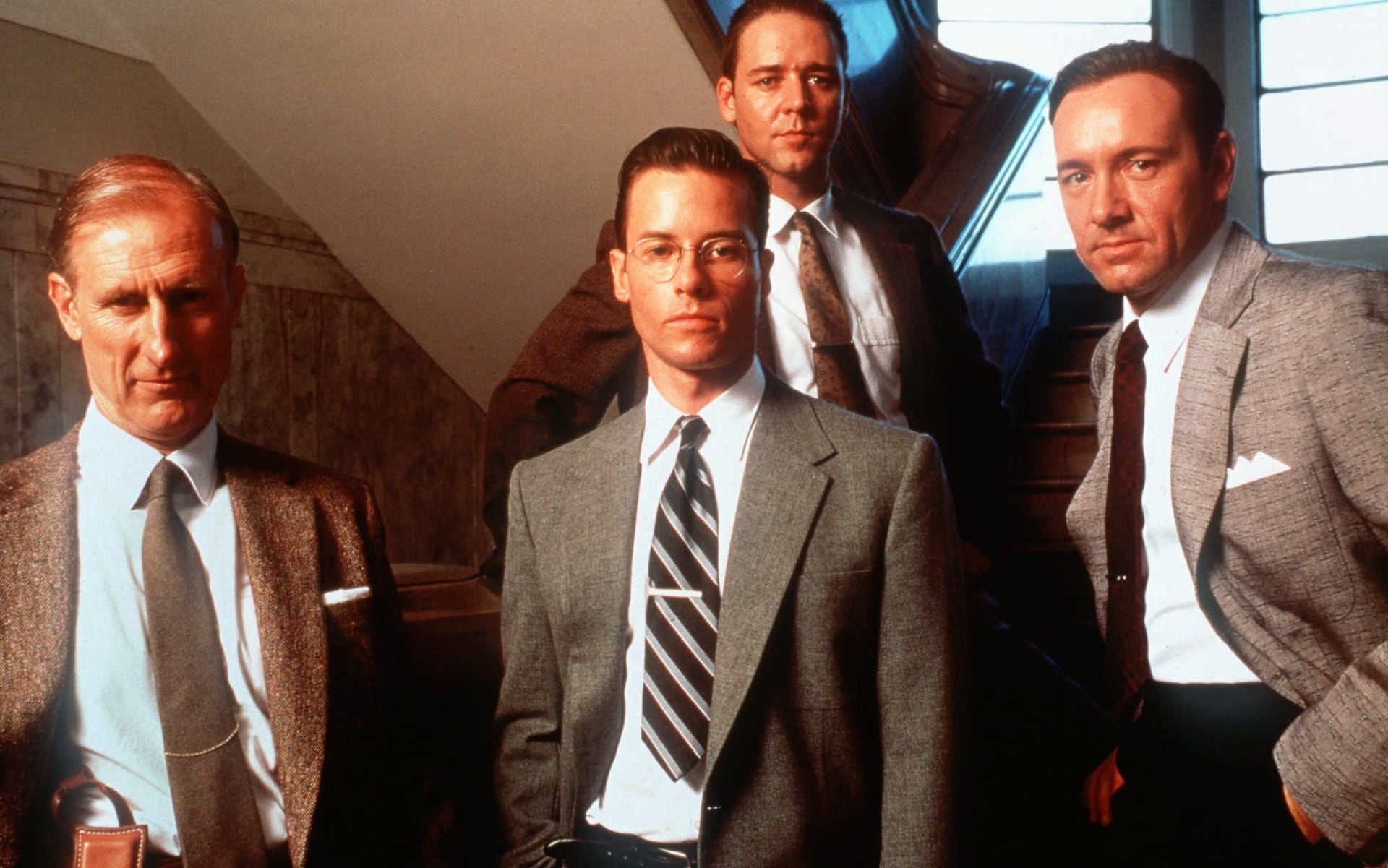
Suffice to say, the foreseeable future looks very grim for the 58 year-old actor. Add Guy Pearce to the list of sleazy Spacey stories as the Australian born actor told an Aussie rag that Spacey was "handsy" on the set of the classic 1997 Neo-Noir "L.A. Confidential":
“Yeah … yeah. Tough one to talk about at the moment. Amazing actor; incredible actor. Mmm. Slightly difficult time with Kevin, yeah,” Pearce says. “He’s a handsy guy.”
“Thankfully I was 29, and not 14,” he continued.
Ouch.
[Source]
I remember rushing with Jeffrey Wells to an early morning screening of “We The Animals” at Sundance. Why? Because Eric Kohn's IndieWire rave from the previous day's screening, in which he graded the film a rare A, had mentioned that it was "this year's ‘Moonlight.’” Of course, that wasn't the case. The film barely shares any similarities to Barry Jenkins's film. No, what director Justin Torres' film actually steals from is Malick naturalism, or maybe even Benh Zeitlin's "Beasts of the Southern Wild."
Read more
Is A24 actually going to release this film before the year is done? That would be wild considering they've only just started marketing it — barely — and without much info beyond the title change and brief teaser.