Writers Guild Nominations 2018

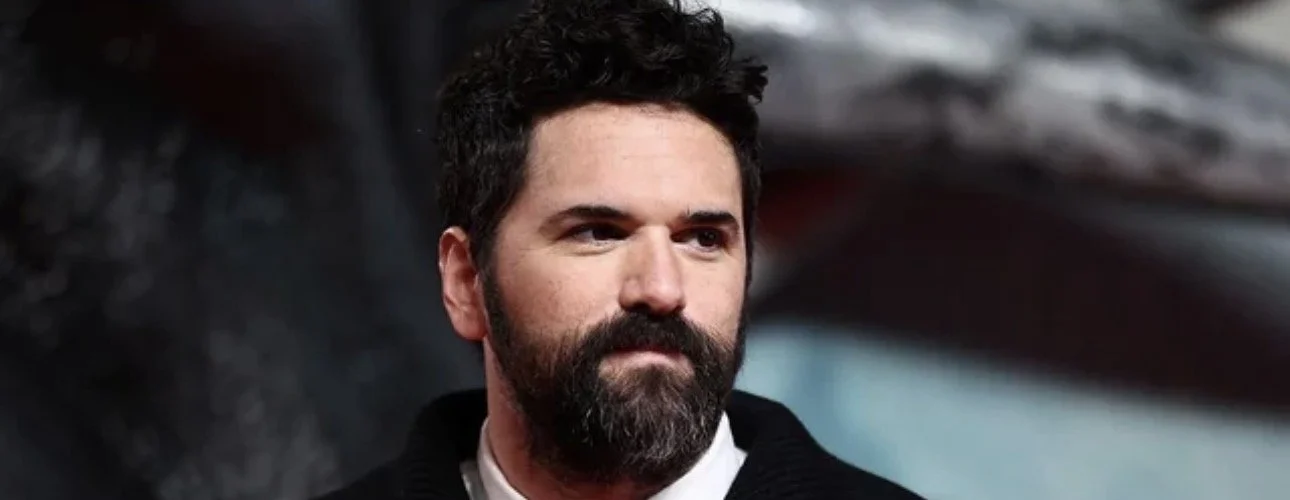
Dan Trachtenberg is in talks to write and direct an MCU movie for the Mutant era. Per the report, it's a theatrical feature. It's also a single-character film, not an ensemble piece.
Miike has directed a whopping 114 films and TV productions. Almost nobody has seen all of them, and if you have, you're not just a completist—you're a madman.
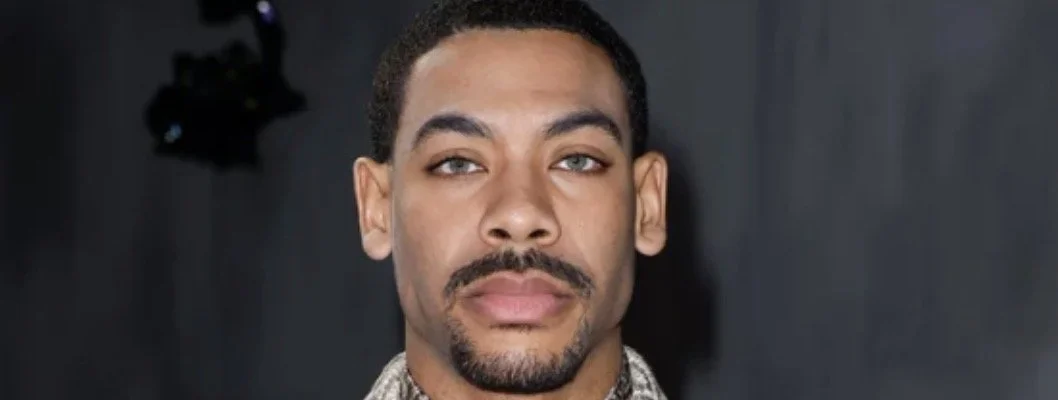
Netflix and Lionsgate are teaming up on “Fairytale in New York,” a new action thriller starring Aaron Pierre, with “Sisu” helmer Jalmari Helander directing. Netflix will distribute and Lionsgate will produce.
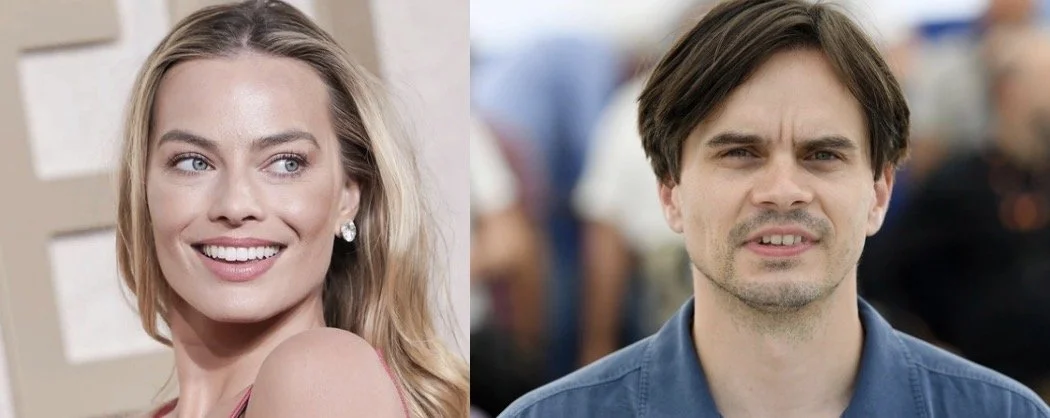
Borgli and Robbie had been talking about her starring in his next film, and she's now committed to shooting it sometime in 2027, which means it will likely come out in 2028.
This year’s 12th edition of the Scary Movies festival at Film at Lincoln Center premiered Ari Aster’s extended version of “Midsommar” this past Saturday.


Join me (ITZMOE on YouTube) and other Snyder fans as we take a photo in front of Warner Bros. with a #ReleaseTheSnyderCut sign while wearing our Zack Snyder shirts/ DC shirts, & costumes to (peacefully) show our support for the release of a Snyder cut of Justice League! After we take the photo, we will all share it on ALL of our social media so hopefully it will spread and get it to Zack himself so he can see it, like he saw the “Thank You Zack Snyder” video I made!PLEASE DO NOT BRING ANY SIGNS. I will have the #ReleaseTheSnyderCut sign and that is the ONLY sign that we want in the photo so the focus will be on that, so instead of bringing a sign, just wear any shirts you have supporting Zack, DC, or Justice League cosplay you may have.**ABSOLUTELY NO SHIRTS/ SIGNS INSULTING WB/ JOSS/ ETC. WILL BE ALLOWED IN THE PHOTO!*** We want to show support for Zack Snyder, so we want to focus on our support and love for him and his work, NOT dissing others, so DO NOT bring shirts/ signs insulting others or you won’t be allowed in the photo. We don’t want to embarrass Zack and give Zack Snyder fans a bad name. We want to show him how much we appreciate him and make this a photo that he would be happy to share. PLEASE share this around everywhere so we can have a large group in the photo supporting Zack and his JL cut!!!

I wrote about the 11 best movies of 2017 for The Playlist [HERE].
If you want to bypass the commentary and go straight to the list, here it is:
“Get Out” (Jordan Peele)
“Call Me By Your Name” (Luca Guadagnino)
The Florida Project" (Sean Baker)
“Columbus” (Kogonada)
“The Big Sick” (Michael Showalter)
“Phantom Thread” (Paul Thomas Anderson)
”The Disaster Artist” (James Franco)
”Nocturama” (Bertrand Bonello, France)
“Good Time" (Josh and Ben Safdie)
”Wakefield” (Robin Swicord)
”Faces Places” (Agnes Varda)
I could have easily made this a top 20. Know what? Here are ten other titles that shouldn’t be neglected:
“Personal Shopper” (Olivier Assayas), “A Ghost Story” (David Lowery), “Brawl in Cellblock 99” (S. Craig Zahler), “Menashe” (Joshua Z Weinstein), “Three Billboards Outside Ebbing Missouri” (Martin McDonaugh), “Baby Driver” (Edgar Wright), “Ingrid Goes West” (Matt Spicer), “War for the Planet of the Apes” (Matt Reeves), “Icarus” (Bryan Fogel), “Happy End” (Michael Haneke), Colossal (Nacho Vigando).

In 1958, the top film of the year was “South Pacific,” the film adaptation of the Rodgers and Hammerstein musical which starred Mitzi Gaynor as a nurse stationed overseas during World War II. In second was the comedy “Auntie Mame,” which starred Rosalind Russell as the titular Manhattan socialite who takes her orphaned nephew into her whirlwind life. In third was the adaptation of Tennessee Williams’ “Cat on a Hot Tin Roof,” starring Elizabeth Taylor in the lead role as Maggie “The Cat” Pollitt.
Original interview published on The Playlist.
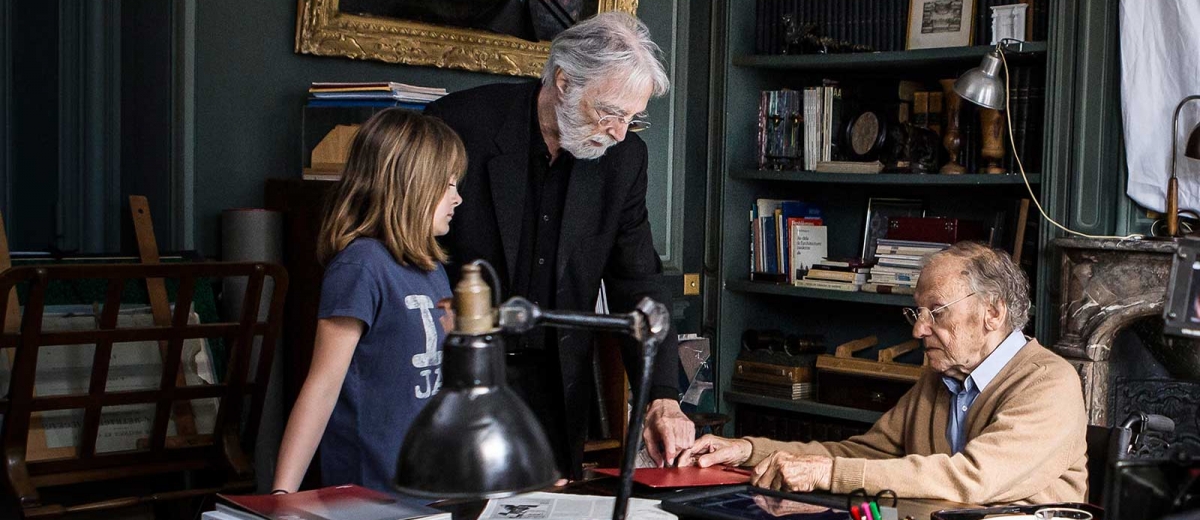
Michael Haneke’s “Happy End” will be divisive, but it’s also the film that he needed to make at this stage in his career. It’s a sort of reinvention that tackles his obsessive, familiar themes, but feels purposely polarizing and creatively freeing in its lack of a narrative structure. Yes, “Happy End” even has comedic moments, a rarity for the venerable Austrian filmmaker whose reputation has been that of heavy, morosely-driven dramas.
The film stars Isabelle Huppert, Jean-Louis Trintignant, and Matthieu Kassovitz and revolves around a dysfunctional family that’s falling apart. Each has their own problems and yet they represent what is wrong with the bourgeoisie these days: all pent-up, airless frustration over the most unimportant topics. In fact, this is Haneke’s most meta-movie, a self-referential farce about all the themes that he’s tackled so far in his illustrious career. The film is reminiscent of Luis Bunuel’s provoking cinema of the 1970s and might as well be called “The Discreet Charm of the Bourgeoisie.”
We spoke to the writer-director at the Toronto International Film Festival about social media, Donald Trump, immortality and Jean-Louis Trintignant faking cancer.
This is a fascinating movie, how did the themes and story come to you?
There are many stories in the film but what clicked was the story of this girl whom I read about in the paper. This 14-year-old Japanese girl poisoned her mother and broadcast it on the internet. That really fascinated, and I told myself this could be a really good idea for my next movie.
Was it your intention for this to be a commentary, maybe even formal accusation, on social networking?
No, it didn’t come with that intention. These days we are almost forced to speak about social media because it is integral in all our lives. We cannot live in society without using social media. I even must use it for my profession, to phone, send texts, email, to be updated on everything. Youngsters tend to spend hours upon hours communicating with different forms, this gives them a distraction. My generation was forced to learn it. With youngsters it’s like mother’s milk, they’re more at ease with it, but there’s also a sort of dependence to this media that is sinister.
It seems to have positive consequences, but it also is deteriorating a part of society.
I can’t really say. It’s different. Every invention since the beginning of time have had negative traits. With social media it’s a little too early to really have an opinion on it. It’s new, it’s a historic development in our existence as human beings since everything has changed in the last decade because of it. We’re just at the very start and there are endless possibilities that come with it.
I didn’t know too much about Snapchat before watching “Happy End.”
I did some research, tried to see what was happening, spoke to “specialists” to be knowledgeable. I then opened a Facebook account to be inside the madness and to see what this technology people were using was all about. It’s the same as making a movie about a doctor and going to a hospital for research, but it isn’t my way of living or enjoying life.
Do you still use that Facebook account?
No. I don’t understand it. Intellectually, I “get” it, but emotionally I don’t understand the point of it, this desire to have followers everywhere. It doesn’t enrich me. If we use it to promote a business, that’s another thing. There are youngsters that use it to promote a blog and make money — why not? But for me, there’s nothing interesting in being part of this Machiavellian chain of horror. I used it to learn about an atmosphere that is typical for this generation.
Some people like to use it to find old friends they haven’t spoken to in years.
Most of the people I know or knew my age don’t use Facebook.
Right before the Cannes premiere, which I attended, we didn’t really know what the movie was going to be about. There were rumors that it’d be about the immigrant crisis or at least that would be used as a backdrop, but it only shows up near the tail end of the film.
Oh no, that wasn’t my goal at all. I wanted to show our mental problems, that we are interested just in ourselves, and that we always concentrate on “me, me, me, me.” That’s what I’m seeing these days, it’s part of people’s lives, these narcissistic tendencies. We are blind consumers, we try shut off everything that is disagreeable to us, we ignore what makes us scared. We reap what we sow. Naturally, we try to avoid confrontation or argument at any cost because it bothers us, we don’t care about anything else but our problems. However, each of us as a responsibility within society and within humanity. These little social media wars that happen on a daily basis eventually lead to larger, more destructive wars.
It’s the “me” generation and there is so much at our disposal, but it doesn’t seem to be used properly.
We have access to everything, but we see nothing. Before the internet, it was television media. At the start of the 20th century, there was nothing. A little peasant living in the mountains would know about his village, the mountains around him, maybe once in his life he’d enter a big city. Today this same peasant is in his village, he has a television, he has the internet, but he thinks he knows everything, but he knows even less than back in the day. All he sees are photos, videos, and he reads a few opinionated articles from journalists that he doesn’t even know personally. The only things we know about are our experiences, the things we must confront day in and day out, and in that sense, social media is very, very dangerous because people “think” they know everything, but it’s an illusion, they know nothing, or not more than before. They have an opinion on everything despite not having experienced it. What do I know about Bali or Afghanistan? I know what they told me on television or on the internet from journalists who wrote their own opinion about it. It’s not reality, I didn’t smell it, I didn’t feel it. Yes, it’s shocking to see images of people starving, but what’s lacking is the experience.
Politically and cinematically it becomes an entirely different but similarly dangerous experience.
Without the function of the media, a political figure like Trump would have never been elected. The development of the internet is going so fast, so fast that it’s surpassed all of us. For example, we had to use a movie camera, which was developed for the last 100 years, to make a movie. The camera operator knew what he had to do with the equipment, he was professional and trained. Now with technological developments, where each half-year there is a new kind of camera, the camera operator now has a technical assistant and if there’s a glitch, the camera operator will say it’s the assistant’s fault and vice-versa. This all means that even in moviemaking we’re all still experimenting. We can’t fault the camera guy, everything is going so fast that it surpasses even the smartest of experts. That doesn’t mean I’m against it, all we will discover we need to discover. Even biologically, what we will see the next 100 years, we might be headed to a kind of immortality because we can change everything. Already now, we can change hearts and other organs. It will only evolve and become better. This immortality might complicate things for humanity and bring about a lot of problems. Imagine having to take care of a bunch of 100-year-olds, having to feed them — there will be shortages. Eventually, there won’t be solutions for many of the negatives that comes with technological advances, just look at the atomic book, we haven’t found a way to contain people that have it.
Now anybody can make a movie because cameras are everywhere.
I find that fantastic. It’s a democratization of cinema, and I am absolutely convinced that many that would otherwise never have the opportunity because of financing can now make an excellent movie. Now a person that has no education whatsoever, if he’s talented and has that camera, he or she can make an extraordinary movie, they might even have the advantage of having a uniquely original perspective on things as compared to some mainstream directors who might have a limited vision of things. The lower class can now make movies as well and tell their own stories and I find that very exciting. Technically, there isn’t a good way or bad way to use a camera, it’s the way we use it that makes it exciting art.
You’ve had the reputation of making films that are somber and morose but I find there to be a lot of comedic elements in “Happy End.” It’s also a sorta spiritual sequel to “Amour.” [Laughs]
It’s something that I purposely tried to include in this film. “Happy End” is, in fact, a farce. We are not allowed to have a tragedy anymore [laughs] Well, the end of “Amour” was metaphorical and I wanted to talk about the same story in a more concrete way because it was a personal story that I went through with my own family. It was a therapeutic need for me to tackle it again, and to, as you said, make it a “spiritual sequel.” [laughs]
I was saddened to hear about Jean-Louis Trintignant’s cancer diagnosis.
Yes, but I heard from him yesterday and it was all a joke [laughs]. I don’t know, I’ll see him next week and will let you know. Sometimes when he doesn’t want to do press for film festival he just says, “I can’t, I have cancer” [laughs].
“Happy End” is now playing.
“I had a 48-minute chat earlier today with critic Jeffrey Wells over at Hollywood-Elsewhere If you ask me the most interesting portion happens during the first eight or nine minutes, when we mainly discussed the “woke” support for Jordan Peele‘s Get Out. Again, the mp3. Here are selected transcriptions:
Read more
Three major releases (The Great Wall, Suburbicon, and Downsizing) that were box office bombs and were not received well by critics or fans.
Damon did The Great Wall just for the $$, but Suburbicon and Downsizing seem like good ideas on paper, with a respectable pedigree.
All 3 could be on a list of worst movies of 2017 actually. Then there’s also all the backlash he received for his relationship with Harvey Weinstein and his comments after bout sexual assault/harassment.
Also, his Dad died this month.
One positive I guess, he probably had my favorite cameo in Thor: Ragnarok.
He got $20M for Great Wall. Think he’s okay with that. So not all was lost for Damon this year. Moral of the story: Money is everything?
“Going to the movies has become like a theme park,” she told Radio Times magazine. “Studios making bad content in order to appeal to the masses and shareholders is like fracking - you get the best return right now but you wreck the earth.
“It’s ruining the viewing habits of the American population and then ultimately the rest of the world. I don’t want to make $200m (£150) movies about superheroes.”
"Asked whether she would ever consider making a film about a superhero, she said she would consider it, but only if they had “really complex psychology”.
There are plenty of cinephiles that are worried about the current state of American cinema at the moment. The most popular complaint seems to be aimed directly at the influx of superhero movies currently populating, or for many polluting, the cinematic landscape. Many directors have come forth in recent years criticizing the superhero genre including Clint Eastwood, Ridley Scott, Alejandro Gonzalez Inarritu, David Cronenberg, William Friedkin, Terry Gilliam, Mel Gibson and, even, Roland Emmerich!
You can now add Jodie Foster to that list of high-profile filmmakers as the 55-year-old writer-director-actress, in an interview with Radio Times (via Daily Mail) magazine, recently compared the superhero genre to fracking.
“Going to the movies has become like a theme park. Studios making bad content in order to appeal to the masses and shareholders is like fracking – you get the best return right now but you wreck the earth,” she said.
Yikes. And if that isn’t bad enough, she went on to say that these American-produced superhero movies are not just polluting the United States but the rest of the world as well. “It’s ruining the viewing habits of the American population and then ultimately the rest of the world. I don’t want to make $200m (£150) movies about superheroes,” she added.
Foster, recently directed an episode of Netflix‘s “Black Mirror,” but says that it ain’t easy to be a filmmaker in Hollywood these days unless you are part of the untouchables club such as Steven Spielberg or Clint Eastwood, adding there is a “lack of respect” for most other directors.
Conversation has instantly sparked around Foster’s comments, and it didn’t take long for “Guardians of the Galaxy” director James Gunn to issue a fascinating response on Twitter:
I think Foster looks at film in an old-fashioned way where spectacle film can’t be thought-provoking. It’s often true but not always. Her belief system is pretty common and isn’t totally without basis. I say not without basis because most studio franchise films are quite soulless – and that is a real danger to the future of movies. But there are also quite a few exceptions.
For cinema to survive I believe spectacle films NEED to have a vision and heart they traditionally haven’t. And some of us are doing our best to move in that direction. Creating spectacle films that are innovative, humane, and thoughtful is what excites me about this job.
But, to be fair, at least from Foster’s quotes, she seems to see filmmaking as something that’s primarily about her own personal growth. For me, that may be part of why I do this, but spending many millions of dollars on a film has to be about more than that – it’s communication – so my experience is merely one spoke on that wheel. But I respect Foster and what she’s done for films and I appreciate her different way of looking at Hollywood’s landscape.
Yes, a thoughtful, courteous response that cuts to the heart of the issue and, in a way, it seems like Gunn does agree with Foster’s assertion that “spectacle films” are often empty. But Gunn says the solution isn’t necessarily ditching the $200 million superhero film, but, rather, transforming it.
Gunn, after all, gave a bit of heart and soul to ‘Guardians’ and even fought the MCU bigwigs to have his “Awesome Mix Tape” included into the original movie. Of course, he’s one of the few exceptions to have responded in a mannered, adult way to Foster’s criticisms, as fanboys on social media were going nuts over the last few days. To which I say, all the better for it. After the Disney/Fox deal, Foster has reopened the debate on the superhero movie at a relevant and important timeframe as the industry is slowly, but surely becoming monopolized by sequels, reboots, remakes and, more to the point, a influx of superhero movies, which are, as Foster correctly asserted, “soul killing.” Maybe the fracking analogy isn’t far off.
Now, the directors are chiming in on their best films of 2017. Indiewire asked more than 43 well-known directors' to reveal their best of the year:
Guillermo del Toro’s Top 10 Films Of 2017
10. “Brawl in Cell Block 99”
9. “Ingrid Goes West”
8. “Tigers Are Not Afraid”
7. “Good Time”
6. “The Meyerowitz Stories”
5. “Get Out”
4. “Three Billboards Outside Ebbing, Missouri”
3. “Dunkirk”
2. “Lady Bird”
1. “A Ghost Story”
Denis Villeneuve’s Top 8 Films Of 2017
“Dunkirk”
“Those Who Make Revolution Halfway Only Dig Their Own Graves”
“The Square”
“Three Billboards Outside Ebbing, Missouri”
“mother!”
“Downsizing”
“The Beguiled”
Neill Blomkamp’s Oats Studio Short films
Xavier Dolan’s Top 8 Films Of 2018 (Unranked)
“Call Me by Your Name”
“Lady Bird”
“The Shape of Water”
“The Killing of a Sacred Deer”
“Wind River”
“The Post”
“It”
“Three Billboards Outside Ebbing, Missouri”
Pedro Almodovar's Top 8 Films Of 2017
“Phantom Thread”
“BPM (Beats Per Minute)”
“Three Billboards Outside Ebbing, Missouri”
“You Were Never Really Here”
“Zama”
“A Ghost Story”
“Colossal”
“The Killing of a Sacred Deer”
Luca Guadagnino's Top 20 in alphabetical order:
“A Fantastic Woman,” by Sebastian Leilo
“After the Storm,” by Hirokazu Kore-eda
“Alien Covenant,” by Ridley Scott
“Austerlitz,” by Sergei Loznitsa
“The Big Sick,” by Michael Showalter
“Cinema, Manoel de Oliveira and Me,” by Joao Botelho
“Dunkirk,” by Christopher Nolan
“Eight Hours Are Not a Day” (restored re-release), by Rainer Werner Fassbinder
“Faces Places,” by Agnes Varda
“I Am Not Your Negro,” by Raoul Peck
“Logan,” by James Mangold
“Logan Lucky,” by Steven Soderbergh
“The Lost City of Z,” by James Gray
“Mrs. Fang,” by Wang Bing
“On the Beach at Night Alone,” by Hong Sang-soo
“Paddington 2,” by Paul King
“Split,” by M. Night Shyamalan
“Twin Peaks: The Return,” by David Lynch
“The Venerable W,” by Barbet Schroeder
“War For the Planets of the Apes,” by Matt Reeves Paul Schrader's top 10 of 2017 1. “Detroit”
2. “A Fantastic Woman”
3. “The Florida Project”
4. “Jane”
5. “A Quiet Passion”
6. “Lady Bird”
7. “I, Tonya”
8. “The Post”
9. “Wormwood”
10. “The Big Sick”
/https%3A%2F%2Fblueprint-api-production.s3.amazonaws.com%2Fuploads%2Fcard%2Fimage%2F542854%2F40e7f6e0-00dd-4791-ab6e-edb74254577b.jpg)
You know I love Daisy Ridley. Disney and co. picked a fantastic actress to carry the Star Wars franchise into the future. Her role as Rey could have easily deviated into uninvolving territory but she's kept us intrigued and glued on her in both "The Force Awaken" and "The Last Jedi," but don't expect her to continue on as Rey after the saga concludes in 2019 with JJ Abrams' “Star Wars: Episode IX.”
“No,” she tells Rolling Stone, "For me, I didn’t really know what I was signing on to. I hadn’t read the script, but from what I could tell, it was really nice people involved, so I was just like, ‘Awesome.’ Now I think I am even luckier than I knew then, to be part of something that feels so like coming home now." When asked if a door is still left open she says “No, no, no. I am really, really excited to do the third thing and round it out, because ultimately, what I was signing on to was three films. So in my head, it’s three films. I think it will feel like the right time to round it out.”

Ridley Scott's been going I-don't-give-a-fuck in his interviews for “All The Money In The World.” The 80 year-old director has even gone as far as criticizing “Blade Runner 2049,” saying the film was “too fucking long,” and saying he'd cut off half an hour, at the very least of the released cut.
“It’s slow. It’s slow. Long. Too long. I would have taken out half an hour,” Scott told Al Arabiya. It wasn't more than 24 hours before Villeneuve publicly defended his film and responded to Scott's comments. Talking to Screen Daily the Quebecois director said “There was a first version that was more substantial but after it came down to that length it was obvious what needed to be done. Then we were just removing little bits, trying to refine the cut, but it always stayed that length,” “The producers were afraid I would cut too much and they told me not to focus on the running time. They didn’t want me to feel any pressure and wanted me to make the movie I needed to make. They didn’t compromise that. Alcon are the real deal. They are movie-lovers.”
So, there you have it. I tend to agree with Scott that the film was a half hour cut away from being a great movie, but the shades of brilliance were nonetheless eyepopping, no thanks to Roger Deakins' masterful visuals and Villeneuve's risk-taking narrative. There should be more movies like "Blade Runner 2049" in Hollywood, but there aren't, risk-taking is dead. Enjoy every artful statement that comes from the big studio system because it's becoming a dying breed.


This is all Rothman’s idea, by the way. He’s going to pour millions into this campaign because he believes “Brand New Day” is a great movie.