Toronto dispatch: Glenn Close storms to the forefront once again in The Wife


Women dominate Toronto this year. Among the exemplary performances we’ve seen in the last 10 days: Frances McDormand in “Three Billboards Outside of Ebbing, Missouri,” Sally Hawkins in “The Shape of Water,” Emma Stone in “Battle of the Sexes,” Jessica Chastain in “Molly’s Game,” Margot Robbie in “I, Tonya,” Saoirse Ronan in “Lady Bird,” Judi Dench in “Victoria and Abdul,” Annette Benning in “Film Stars Don’t Die in Liverpool,” Jennifer Lawrence in “mother!” And yet, for all the well-jusitfied enthusiasm each of those actresses has inspired, another legend might tower above the rest.
Despite being nominated six times, Glenn Close has never won an Oscar. Factor that into the equation as you calculate her chances for her masterful turn in  Björn Runge’s The Wife, A late-screened stunner that has taken Toronto by storm. As Joan, the wife of a newly-announced Nobel Prize-winning novelist Joseph (Jonathan Pryce) whose career she has supported while setting her own ambitions aside, Close is magnificent and exudes a hypnotic screen presence.
Runge’s film opens as the couple first receive news that Joseph has won the prize. They jump up and down on the bed like giddy children as he chants “I won the Nobel Prize.” As the significance sinks in and the full implications bear down, Joan abruptly stops celebrating and leaves the room. Things don’t get any better once they arrive in Sweden in preparation for Stockholm ceremony. Joan is clearly deeply annoyed by something and we can only guess what. As more and more troubling details gradually spill forth, we learn more about their lives together and it’s not a pretty picture. Her husband has been self-obsessed partner, an inattentive father and has had a string of affairs over the years — and those deficiencies don’t even scratch the surface. Complicating a tense situation further, a aggressive biographer who’s intent on chronicling Joe’s life (Christian Slater’s best role in years) has stalked them all the way to Stockholm. He knows this couple’s biggest secret and is threatening to expose it.
As fraught with drama as this powder keg of heightened circumstances may be, make no mistake, The Wife is more than an actor’s showcase. The film itself is indisputably superb, a ticking time-bomb of simmering tension which benefits from the audience knowing as little as possible in advance. It’s rare female-driven films that understands women so well, you might guess that it was conceived by a woman — and you’d be right twice. Screenwriter Jane Anderson has adapted the novel
by Meg Wolitzer with magnificent brilliance, with a striking nuance and wealth of subtle shadings that reveal the slow peeling onion of the film’s core mystery. Pryce, in a reprehensibly villainous role, has possibly never been better, but it’s Close who commands the film with a performance for the ages. When Joan is not lacerating her husband with volleys of icy precision she manifests a lifetime of rage and frustration with a silence that speaks volumes on screen.
Unlike Joan, whose life as The Wife was so cruelly overshadowed, Glenn Close has given the world a lifetime of iconic women who never failed to astonish us. She’s fiercely embodied the power of unbridled womanhood over the course of three and half decades of cinematic classics — Reversal of Fortune, Dangerous Liaisons, Fatal Attraction, The Big Chill, Damages and (coming soon) Sunset Boulevard. Yes, she is unquestionably due, and Joan Castleman might just be the role she was born to play.

R.I.P Harry Dean Stanton

Could James Franco make it to the Oscars with his account of one of the worst movies ever made?

Though many highlights at TIFF this year that have people talking are arriving after already wowing audiences in Telluride and Venice, we’re happy to report some standout debuts have been creating their own excitement.
The great performances keep coming: “Battle of the Sexes” features another triumphant performance by Emma Stone as tennis great Billie Jean King in a multi-layered account of the events that led to her match with rampant male chauvinist Bobby Riggs (Steve Carrell). “First Reformed,” Paul Schrader’s best film in 20 years, has a pastor sensitively portrayed by Ethan Hawke going through a dangerous identity crisis as the world around him dissolves into nothingness. It’s heavy, heady stuff with a powerful final scene that astonishes. Another mid-life crisis is featured in Mike White’s “Brad’s Status” which has Ben Stiller, back in “Greenberg” mode, accompanying his teenage son to college interviews in Boston as dad struggles to cope with his own personal failures. Narrated by Stiller’s Brad, the film has one of the more effective uses of voice-over color-commentary in recent cinematic memory, using its main characters vulnerable psyche to paint a picture of neurosis that sounds like a Woody Allen picture. And, of course, Judi Dench is in the line-up for Best Actress yet again this year, elevating conventional entertainment in “Victoria and Abdul,”
Guillermo Del Toro, fresh off winning the Golden Lion in Venice, is back home in Toronto where he resides, screening his masterful, surreal and dreamy “The Shape of Water” at the Elgin Theatre. The fact that some of the film was shot at the Elgin, a vintage cinema with beautiful architectural design, made the Canadian premiere of the film even more like a homecoming.
If anyone could possibly manage to steal a bit of thunder from Del Toro’s premiere on Tuesday, it may be James Franco whose “The Disaster Artist” finally screened a full 8 months after premiering at South by Southwest and bypassing every other festival until this week. Franco’s movie is a love letter to awful cinema, very much in the same vein as Tim Burton’s “Ed Wood.”
In 2003, “The Room,” a film financed by self-proclaimed impresario Tommy Wiseau for $6 million, was supposed to be the culmination of his imagined talents, his ultimate artistic statement, and the capstone to his suspiciously vague career. But what turned out instead was what many consider one of the very worst movies of all time.
Wiseau wrote, directed and financed “The Room” in a vain attempt to salvage his own 500-page novel that no publisher wanted to touch. However, the resulting mish-mash was so bad that it has defied categorization to become a cult-classic comedy disaster. The film was such a compellingly inept trainwreck that it seemed too bad to be real. Were Wiseau’s intentions truly genuine? Did he really set out to make a good movie or was he aiming for outrageous satire? As told in the memoir by Wiseau’s best friend Greg Sestero (Dave Franco) upon which the film is based, we discover the horrifying truth that their intentions were sincere. This deadpan passionate delusion adds immeasurably to the allure and charm of the picture.
The fact that Franco and company — which includes Seth Rogen, Zac Efron and Kristen Bell as collaborators in the hapless menagerie — have decided to put on a straight face and take it all very seriously, brings a hilariously endearing vibe to the festivities. Wiseau was an L.A. oddball whose age, source of income, and nationality were blatantly fishy. He claimed his entire family haled from New Orleans, but his distinct Eastern European accent belied that tale. Unlike most directors, his only prior claim to fame in the public eye had been as street vendor in San Francisco. One way or another Wiseau somehow amassed a fortune as a real-estate entrepreneur and invested $6 million in his folly “The Room.” Though universally ridiculed, it enjoyed an unexpected resurrection as a cult classic in its own right, with recurrent, raucous screenings worldwide.
Wiseau himself has been fairly quiet about the Franco’s film, but he more or less gave his stamp of approval by showing up to the premiere in Toronto. Franco said “We were unsure of what he was going to think, especially because he said, [mimicking Wiseau’s accent] ‘Greg book only 40 percent true,’” recalls Franco. “It was like, well, that’s what we based it on, so what are you going to think about our movie? I was like, ‘So, Tommy, what did you think of the movie?’ And he said, ‘I approve 99.9 percent.’ And we were like, ‘What was the 0.1 percent? He said, ‘I think the lighting, in the beginning, a little off.’ [Laughs]
The Disaster Artist therefore arrives as a double-dip of cinematic devotion separated by 15 years and a million gasps. It’s a valentine to movies that went wrong in all the right ways, an ode to the stinkers which we love and can’t live without. That it succeeds so effectively is thanks to Franco’s affectionate directing and dead-on performance as Wiseau. Post-screening a gang of Oscar bloggers gathered around pondering the mind-blowing possibility Franco could garner a nomination for this performance. It’s absolutely not out of the question. The role is much more than just a one-note take on an enigmatic and absurdly misguided individual. It manages to explore unexpected layers about the reckless lunacy of movie-making that we often forget exist when the outcome works out well. Can Tommy Wiseau circuitous path at last lead him to the Oscars? I say, why not.

JJ Abrams directing Episode IX

I had included Abrams as the likely choice in my article for The Playlist 12 filmmakers who could direct Episode IX

Official statement:

"J.J. Abrams, who launched a new era of Star Wars with The Force Awakens in 2015, is returning to complete the sequel trilogy as writer and director of Star Wars: Episode IX. Abrams will co-write the film with Chris Terrio. Star Wars: Episode IX will be produced by Kathleen Kennedy, Michelle Rejwan, Abrams, Bad Robot, and Lucasfilm."
“With The Force Awakens, J.J. delivered everything we could have possibly hoped for, and I am so excited that he is coming back to close out this trilogy,” said Lucasfilm President Kathleen Kennedy."

"Molly's Game" and "I, Tonya"

If Telluride has been the place to find the next Best Picture winner, 11 years running now, TIFF has always been the go-to place to give us a sneak peek at potential acting contenders. On Friday that was just the case. Three indelibly great and promising female performances had people talking.
You’ve most likely already heard about Greta Gerwig’s semi-autobiographical “Lady Bird/”. Funny, tender and heartbreaking, its premiere at Telluride made it the toast of the fest. Last night the film had its TIFF premiere at the Ryerson, where Gerwig’s film was thunderously received. It’s destined to become a coming-of-age classic and is powered by a performance from Saoirse Ronan that feels all too real and humane.
In Aaron Sorkin’s directorial debut “Molly’s Game,” Jessica Chastain plays real-life “entrepreneur” and self proclaimed “Poker Princess” Molly Bloom. The narrative structure recalls Sorkin’s masterful use of Rashomon-influenced storytelling in “The Social Network.” Going back and forth between Bloom’s rise, as she arranged secretive multi-million dollar poker games for the rich and famous at luxurious hotels, and her eventual fall that we witness in the opening sequence when FBI agents storm Bloom’s apartment arresting her for fraud, the film is an ambitious attempt by Sorkin to fully flesh out a fascinatingly complex woman. As in every Sorkin screenplay, the dialogue cascades at a frenetic pace, but Chastain nails each beat she’s given with a performance that’s sexy, smart and mesmerizing to behold. Once again, she’s the best reason to watch any movie she’s in.
“I, Tonya” is a play-by-play account of what happened during the 1994 U.S. figure skating championship when Tonya Harding and her dead-beat loser of a husband hired a white-trash goon to break the leg of her arch nemesis Nancy Kerrigan. Margot Robbie plays Harding in all her blue-collar, low-rent glory. Harding was the outsider, a figure skater that lacked the class needed in a sport whose judges look for competitors to be elegantly poised. And yet, she was the first female American figure skater to attempt and successfully complete a triple axel in competition. 

The stunningly beautiful Robbie, who admitted at the film’s press conference that before signing on to the role that she didn’t realize the Harding/Kerrigan scandal was real, delivers the best performance of her young career. De-glamming to play a person that most of America found easy to hate in the winter of 1994, it’s not at all far fetched to wonder if Robbie could be rewarded with a nomination come next January. The 27-year-old actress is a superstar-in-the-making and this performance could just bust it wide open for her.

Allison Janney, playing LaVona Golden, her paraqueet bearing, alcohol swigging, chain-smoking and cuss-per-second-swearing mother and she's even better than Robbie here. Every time she's on-screen there's a cringe-inducing pertinence to this character and yt you can't look away. She's the mother from hell. A lot of the abuse that Tonya received at the hand of her mother seems to be the driving force at what director Craig Gillespie seems to be hinting is at the heart of Tonya's drive for success. She wants to prove her mother wrong at any cost.

The story does stick to the looney, incomprehensibly real facts, but refuses to assign any of the blame on Harding. The writer-director seems to be hinting that yes, Harding was typical white trash surrounded by more white trash, but that didn't necesarilly make her an accomplice as much as a naive girl completely aloof of the plot to crush Kerrigan's knees. The implication that it was Sean Eckhardt, played with spot-on schlubiness by Paul Walter Hauser, that concocted the whole scheme with her dead-beat abusive husband Jeff Gillooly, played by Sebastian Stan, can raise questions about the actual storie's credibility, but there also is no proof to think that Tonya actually wanted it to go down that way. 

Gillespie directs the hell out of this movie, using a 1980's soundtrack to launch his narrative forward. In fact, there barely is a scene were a song isn't frenetically playing in the background. The writer-director clearly took a page out of the Scorsese rulebook as the DNA of "Goodfellas" is imprinted all over his film. There are worse movies to blatantly copy this day and age and, quite honestly, Gillespie pulls it off and makes a highly entertaining film out of the most disturbing of American sports stories.

Notes from Toronto – Mudbound, The Florida Project, The Square, Call Me by Your Name

Now that Venice and Telluride have showcased a few of the likely and formidable frontrunners in our current awards season, all that’s left for this deluge of Oscar-friendly films before their arrival in theaters and screeners begin to stream though voter mail-slots is a final festival assessment in Toronto. After it wraps up its 41st edition on September 17th with the closing-night film, Olivier Nakache and Eric Toledano’s “C’est La Vie,” more than 250 movies will have been screened at TIFF in a span of ten days, and that’s despite festival heads Piers Handling and Cameron Bailey claim that they “cut out the fat” from this year’s edition by having 20% fewer movies in the lineup.
Okay, fine. Though this year’s lineup may be featuring some of the buzzier titles that have already made their bow at Telluride and Venice (“The Shape of Water,” “Battle of the Sexes,” “Three Billboards,” “mother!” “Lady Bird,” “Darkest Hour”), what’s most intriguing about this edition are the number of potential contenders that have not yet been screened at any festival. There’s Roman Gilroy’s “Roman J. Israel, ESQ,” Alfonso Gomez-Rejon’s “The Current War,” Aaron Sorkin’s “Molly’s Game,” Sebastien Lelio’s “Disobedience” and John Curran’s “Chappaquiddick,” among many more.
TIFF did have two films premiere as part of its opening night. The first being “Papillon,” a watchable remake of the 1973 classic set in the fictional prison known as “Devil’s Island.” Charlie Hunnman continues to prove just how talented of an actor he is as Henri (Steve McQueen’s original role), the falsely convicted prisoner with the butterfly tattoo that slowly, but surely, plots his escape from the deep pits of hell.
The official opener was a little on the lighter side, both in tone and execution. “Borg/McEnroe” is a dissection of the legendary tennis rivalry between Bjorn Borg and John McEnroe. It stars Sverrir Gudnasson, who is actually Borg’s son, and Shia LaBoeuf, in the role he was born to play, as the flamboyantly hot-tempered McEnroe. Despite their hatred on the court, the two players ended up in later years becoming friends. Borg was McEnroe’s best man at his wedding! If it’s possible to find political resonance in the “Battle of the Sexes” — an oafish loudmouth chauvinist challenging a prodigious but unappreciated talent -– there’s no subtext beneath “Borg/McEnroe.” Director Janus Metz Pedersen’s entertaining movie is basically a by-the-books account of the legendary 1980 Wimbledon finals match between the two legendary players. It’s all pure, pleasurable facade and is anchored by LaBoeuf’s performance.
Typically the first day of press screenings at TIFF is reserved for Cannes, Sundance and Berlin favorites, which has critics who didn’t have the chance to attend these fests scurrying all around the Scotia Bank theater to catch what they’ve missed.
There’s Dee Rees’ Mudbound, A complex and invigorating account of post-WWII racial tensions in 1940’s Mississippi, the film addresses with astute sensitivity the timeless racial struggles still at play in America. Rees, whose Pariah remains one of the most underrated films of this decade (Roger Ebert named it the best film of 2011), tells the story of two soldiers, one white and one black (Gareth Hedlund and Jason Mitchell), returning home to rural Mississippi, having seen the horrors of war and struggling to deal with racial injustices they must confront. They form a friendship that gets the townspeople talking. Neither man cares about the other’s skin color, they just need comfort in each other’s bruised souls,and Rees nails the touching friendship they build. “Mudbound” is truly one of the best movies of the year.
Fresh off its Cannes Triumph, Sean Baker’s “The Florida Project” will screen tomorrow, no doubt to more raves. After “Tangerine,” Baker sets up his camera with an eye towards uncharted America. This time his setting is the endless rows of makeshift motels that clutter the main avenues leading to Disneyland, distilling a moist, colorful, and shimmering visual atmosphere. The film, paradoxically decadent and disenchanted, mixes what Baker himself calls “pop verité” cinema, to create a hybrid of hope and misery that feels both transcendent and groundbreaking. On summer break, six-year-old Mooney and her ragtag group of friends look for adventure as they roam through the outskirts of a rundown motel while the adults around them struggle to make ends meet. Baker shoots his own “400 Blows” with a diminutive band of insolent misfits. A touching and funny Willem Dafoe is the hotel’s concierge and an Oscar nomination for the 62-year-old actor is not out of the question. Despite the flirtations with squalor, Baker never succumbs to the sirens of miserabilism. Instead, he prefers the fanciful fantasy of the children who, in their flight forward, can glean moments of happiness for themselves from the simple light of a blue sky.
Winning the Palme D’Or at this year’s Cannes Film Festival, Ruben Ostlund’s “The Square” has been met with a spirited mix of reactions. This is a movie that dares to challenge political correctness with its ferociously unhinged tackling of the human psyche. What exactly binds us to communicate and be civil with each other is the primary question its writer-director asks. In Ostlund’s world, the answer is much more complicated than one might ever expect. The brilliant moments in the film should come as no surprise to well-seasoned cinephiles, Ostlund was marked as a talent to watch after “Force Majeure,” his 2014 festival hit that put him on the mp with critics worldwide.
Although surprisingly it didn’t screen at Telluride, Luca Guadagnino’s “Call Me By Your Name,” continues to garner ecstatic reviews. With this love story between a seventeen-year-old Italian lad named Elio (Timothée Chalamet), and an American summer guest Oliver (Armie Hammer) staying at his parents’ cliffside mansion, Guadagnino has made one of the year’s best movies. Sensual, sexy, and touching, it’s a film that is simply told, but packs a wallop. The film is filled with intense emotions as Gudagnino lingers on the sheen of sweat that shimmers in an southern Italian summer filled with first love. Armie Hammer’s performance is a career-peak and merits every award destined to come his way this season. Ditto newcomer Chalamet who also stars in Greta Gerwig’s Telluride-crowning “Lady Bird.” This is an erotic and mesmerizing movie that exemplifies cinematic artistry in scope, theme and tone. 

Star Wars: 8 Director Rian Johnson Discusses Who The Last Jedi Is


In an interview with The New York Times,  Star Wars 8 diector Rian Johnson says the film's title is explained on the opening crawl of "The Force Awakens" and that Luke Skywalker is the last Jedi. There you have it folks. Although he says there is some "wiggle room" in there which surely implies Rey could be the next and last Jedi ....
"It’s in the opening crawl of “The Force Awakens.” Luke Skywalker, right now, is the last Jedi. There’s always wiggle room in these movies — everything is from a certain point of view — but coming into our story, he is the actual last of the Jedi. And he’s removed himself and is alone on this island, for reasons unknown."

[IGN]

10 Best Movies of Summer 2017


The full list of 18 can be seen on The Playlist


We’re right on top of things calendar-wise, right?…
A little late to the party, but, it’s become a recurrent trend every summer for journalists to look back at the movies that were released and, well, complain. The gist of some articles would be “don’t you remember the days when they used to release great movies in the summer”? 1982 and/or 1984 are usually mentioned and, in all honesty, those were pretty great years. In fact, they’re pretty much known as the peaks of summer movie seasons. This year, AFI is running a 1982 retrospective and, of course, a whole segment focuses on that incredible summer full of cinematic treats. Just look at the films that were released between May and August of that year: “E.T,” “Blade Runner,” “Poltergeist,” “Star Trek II: The Wrath of Khan,” “John Carpenter‘s The Thing,” “An Officer and a Gentleman,” “Fast Times at Ridgemont High,” “Porkys,” “Diner,” “Conan the Barbarian,” and “Tron.” Impressive.
Well, watch your back 1982 and 1984 because the summer movie season we just witnessed in 2017 will no doubt become stiff competition for your title. What’s astounding about this year’s summer movies is just how good they were despite people’s misconceptions that we are somehow living in this kind of cinematic doomsday filled with one dreadful movie after another being released on a weekly basis. Quite the contrary, almost every weekend this summer saw the release of a cinematic delight, with films by Christopher Nolan, Edgar Wright, Kathryn Bigelow, Steven Soderbergh, Sofia Coppola, the Safdie brothers, Bong Joon-Hoand Ridley Scott to name a few. So embrace it, people. Relish in the cinematic treats we got this year, it’s a just cause for celebration. The following are 18 great movies that were released between the months of May and August.
“Dunkirk”
Christopher Nolan‘s piece-de-resistance is delivered to us like a full-blown symphony. It certainly is the riskiest cinematic endeavor he’s ever attempted, a 107-minute war movie that shows more than tells. The dialogue is sparse, supposedly the final screenplay he ended up shooting with was his shortest ever, at just 76 pages, and rumor has it that it came to about 10 or so pages of dialogue. “Dunkirk” and its silent film-inspired images make it feel like a close relative to Sergei Eisenstein‘s “Battleship Potemkin.” Eisenstein and Nolan’s films are both staggering, visceral cinematic treatises on image and sound. Both convey a historical event through the use of brilliantly edited images and multiple narratives happening on-screen. The lack of dialogue makes “Dunkirk” almost minimalistic in style, a rare feat in today’s blockbuster-stuffed landscape. The sheer fact that a studio would invest in such an audacious artistic statement like “Dunkirk” does bring a glimmer of hope for the future of mainstream cinema. It’s quite simply the best movie we saw all summer.
“The Big Sick”
All hesitations you might have had about this Judd Apatow-produced film were thrown out the window once Kumail Nanjiani appeared in Michael Showalter’s millennial romantic comedy “The Big Sick.” Najiani, known for his supporting role in HBO’s “Silicon Valley,” doesn’t need to act as much as just be himself on-screen. The film is a touching and heartfelt personal account of his real-life relationship with his wife Emily Gordon (as played beautifully by Zoe Kazan), which was initially troubled by an undisclosed illness which left her hospitalized in a coma. “The Big Sick” is one of the best romantic comedies to come around in ages, a future classic of the genre. Sometimes the movie Gods align and everything in a production ends up working; the actors, the screenplay, the director, the photography. An effortlessly great film is born in the process. This is the best Judd Apatow movie and it wasn’t even directed by Apatow.
“Columbus”
Jin (John Cho), A Korean-born man arrives in Columbus, Indiana, one of the great architectural cities in the world, where his legendary architect father is in a coma. He meets Casey (Haley Lu Richardson) a young enthusiast of his father’s, who wishes to pursue her dreams outside of the small city but is burdened to take care of her recovering addict mother. The bond these two lost souls create in this magical city of Architectural heaven is not just touching but has a surreal aspect to it that makes the viewer feel as if they just got lost in a dream. Columbus, Indiana’s famous modern architecture is featured prominently throughout as Casey guides Jin to her favorite spots. Their corresponding conversations, filled with cigarette smoke, gradually become more detailed and more revealing. Director Kogonada, in his impressive debut, conveys emotion through site and sound. He turns out to be a master of not just visual setting, but of conversational filmmaking, and his “Columbus” might just be a masterpiece.
“Baby Driver”
Edgar Wright consulted with “Mad Max: Fury Road” director George Miller, the master of practical effects, for help on his car-chase movie “Baby Driver.” That tells you everything you need to know about the detail that went into making this tale of hot-rod heaven. The stunts in “Baby Driver” are INSANE. Wright filmed all of the action sequences on location, and what was on screen was 95% practical effects, with only 5% CGI for touch-ups. Because they shot in a city and working freeway, they had to rehearse on the Atlanta Motor Speedway and choreograph with Matchbox cars. The film tells the story of a talented, young getaway driver (Ansel Elgort) who’s forced to work on a heist for a crime boss (Kevin Spacey) and two for-hire crooks (Jamie Foxx and Jon Hamm). The film is a candy-colored mash-up of “Drive,” The Driver” and Michael Mann’s “Thief.”
“War For the Planet of the Apes”
What Matt Reeves has done in “War For the Planet of the Apes” is quite an accomplishment. The third, and presumably final, chapter in the ‘Apes’ series is one of the most entertaining movies of the year. The miraculous thing about it is that it barely has any dialogue. Sure, there are lines uttered here and there, but the fact that 99% of the apes can’t speak and the main human character, a teenage girl, is deaf, results in a film that relies heavily on visuals to tell its story. There’s no excess fat here, just pure unadulterated thrills that rely on the audience’s smarts to pull through. This is action, gloriously displayed on an epic scale, with a thrilling and groundbreaking blend of CGI and kinesthesism, especially in its breathtaking finale. Reeves has found a way to bring back expressionism and make “silent cinema” hip again this summer. Who’d a thunk it?
“Good Time”
A botched bank robbery starts off the madcap lunacy of the Safdie Brothers’ “Good Time.” Constantine Nikas’ (Robert Pattinson) brother lands in jail and, to try and find bail money, he embarks on the darkest and most surreal of Odysseys in New York’s underworld. Think a much more desperate version of Scorsese’s “After Hours” on speed and coke. The adrenaline-filled night is rife with madness and the most disturbing of violent actions. This is a richly textured genre exercise that is packed with one unforgettable scene after another, many of which may not have worked in any other director’s hands. The Safdies have created their most fully realized movie by making their most cinematic one, and yet still maintain the docu-style realism that has always been at the forefront of their singular vision. Pattinson is an enthralling lead, building up his character through facial expressions and bottled-up anger from the deepest, most bottomless pits of his soul. “Good Time” is high-class “gutter poetry.”
“Ingrid Goes West”
Matt Spicer‘s “Ingrid Goes West” dealt with our craze for social media in the most intelligent and assured of ways. The film has a career-making performance from Aubrey Plaza as an emotionally unbalanced, celebrity obsessed millennial who decides to head out west and stalk an Instagram celebrity (a pitch-perfect Elizabeth Olsen) to the brink of martyrdom. It’s one of the best dark comedies to come around in ages and smartly updates the stalker genre for the social media generation. It also captures a part of L.A. that as screenwriter and friend Matthew Wilder told me make it’s not just “a wacky satire but a documentary portrait of an L.A. with girls reading Joan Didion’s “The White Album” and sipping on their green cappuccino at Urrth Cafe, which has the spiritual mantra of “Another day, another avocado toast.” ‘Ingrid’ could become a defining movie of the current generation of click-bait, photo snapping millennials.
“Detroit”
In the last 10 years,Kathryn Bigelow has set a gold standard for us to judge her work by. Sure, her latest, “Detroit,” might not belong next to landmarks such as “The Hurt Locker,” and “Zero Dark Thirty,” but taken on its own merits, this is staggering and visceral filmmaking. The cushion of “Detroit,” when it really hits its stride, is when it deals with the infamous incident at the Algiers motel, where there young African-American men were assaulted and some murdered by Detroit cops. That’s when her movie is at its most gripping and unsettling. Officer Krauss, the main white cop who orchestrates all of this evil, as played by Will Poulter, is a man with no moral compass and it makes for some hard-to-watch brutality. It’s not hard for Bigelow to involve you in the story, but it is up to the viewer to decide if this is well-intentioned filmmaking or, as its detractors seem to be saying, manipulative coarsening. We’ll leave it up to you to decide, but there’s no doubt in my mind that Bigelow meant to provoke us and cause discussion and with that she certainly did.
“Menashe”
You have never seen a movie quite like Joshua Weinstein‘s “Menashe.” Shot by Weinstein on a low-budget, in near cinema-verite style, deep in the heart of New York City’s Hasidic community, it’s even presented in Yiddish with English subtitles. Talk about a gamble even for an indie production. The film chronicles the trials and tribulations of recently widowed Hasidic Jew Menashe (Menashe Lustig in his big-screen debut) whose community forces his son to be raised by his openly contemptuous brother in-law. Menashe’s endeavor to regain custody of his son is at the heart of the film’s narrative. This is a quiet drama that stitches together an ordinary life faced with impossibly tasked religious restrictions, yet Menashe persists. Weinstein’s film is a slice of America that you’ve rarely seen before on screen, a world that largely remains foreign to the mainstream, but one that Weinstein shows us a bird’s eye view of here.
“City of Ghosts”
A documentary about the ISIS stronghold in Raqqa, Syria, Matthew Heineman‘s “City of Ghosts” might be the definitive document thus far about the Syrian civil war.  Heineman received frontline access to the citizen journalist collective of “Raqqa is Being Slaughtered Silently,” a group which tries to defy threats against their lives by the terrorist organization and has as a goal to fight the misinformation and indoctrination of their people at the hands of this radical evil.  The deeply humane stories being told here are numerous and will no doubt cast a human perspective on this vast and infuriating war which is, underreported on a daily basis by the world media. The film’s final image, that of a journalist with a bounty on his head trembling in fear for his life, will haunt you for days.
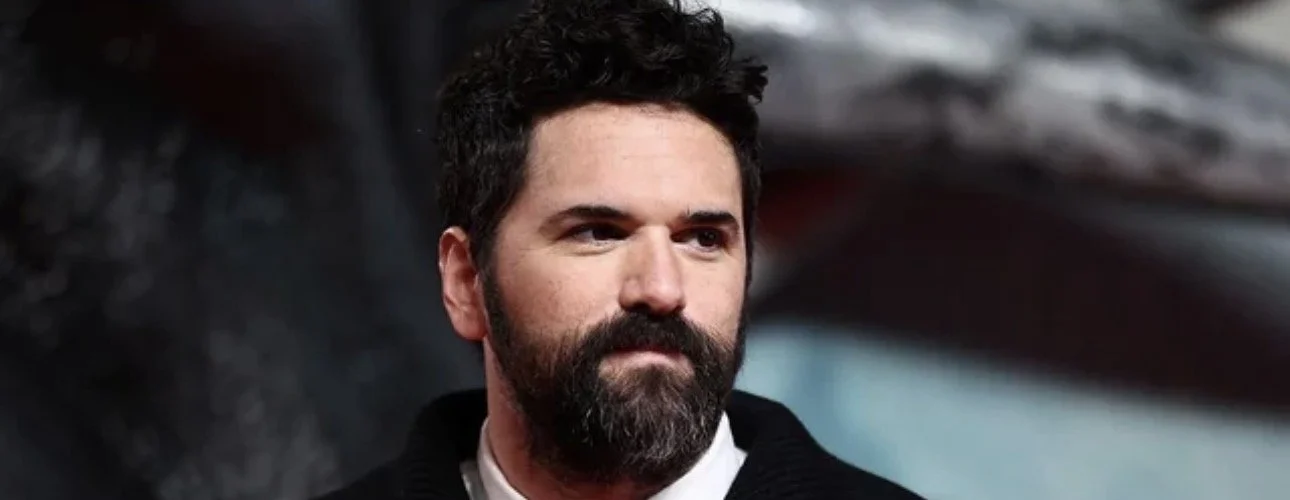
Source: Rian Johnson Will Most Likely Replace Colin Trevorrow as Director of Episode IX


EXCLUSIVE: Put Rian Johnson atop the short list of directors who might replace the recently departed Colin Trevorrow in Star Wars: Episode IX. Insiders said that nothing is done yet, but that prospect is certainly in the air right now. The Looperhelmer fit seamlessly into the Lucasfilm machine, which is no small feat given the number of star directors who’ve been chewed up and spat out under the “creative differences” line in exiting Star Wars movies.

[Deadline]

Colin Trevorrow Exits 'Star Wars Episode IX'


Here’s the official press release from Lucasfilm. MORE TO COME….
"Lucasfilm and Colin Trevorrow have mutually chosen to part ways on Star Wars: Episode IX. Colin has been a wonderful collaborator throughout the development process but we have all come to the conclusion that our visions for the project differ. We wish Colin the best and will be sharing more information about the film soon."

Colin Trevorrow is coming off his own worst nightmare: "The Book of Henry." I decided to catch a press screening of the film earlier last month because, well, I wanted to see some of Trevorrow's chops before the "Star Wars" storm hits next year. What I didn't expect was the worst movie of the year, which, as it stands now, "The Book of Henry" most definitely is. A sentimental, misguided, confused and jumbled mess of a movie. A horrid mix of genres that never adds up. I warned "Star Wars" fans to buckle their seat belts because there would be no end to the disruptors claiming that Trevorrow is not suited for Episode IX's director chair. 

In all honesty, Disney can probably make any sub-par filmmaker look competent enough. These movies are, after all, creatively controlled by them so the scope is very limited in how Colin could have frankly fucked this up. Sure, it's a little different with Rian Johnson as he has had a considerable impact on the creative process with Disney, but Colin not as important. We do know he was on a tight leash so this news wasn't unexpected.

During the filming of "Borat", the FBI started a file on Sacha Baron Cohen after receiving numerous complaints about a strange man traveling around the country in an ice cream truck


“[The FBI] got so many complaints there was a terrorist traveling in an ice cream van,” the actor said. “So the FBI got so many complaints that they started compiling a little file on us and eventually they came to visit us at the hotel. I obviously went missing when I heard because [the film crew] were like, ‘FBI’s downstairs. Sacha, disappear.’”

[US Magazine]

Matt Damon claims Donald Trump insisted on having a cameo in movies shot on his properties

It is no secret that Donald Trump likes to be in movies. The last year there have been stories unearthed about the 45th President of the United States threatening to sue Sharknado 5 because they chose Mark Cuban to play the President instead of him. 

Now comes another story involving Trump forcing people to include him in a cameo if they shot at any Trump hotels nationwide. 

“The deal was that if you wanted to shoot in one of his buildings, you had to write him in a part,” Damon, 46, claimed. “[Director] Martin Brest had to write something in Scent of a Woman — and the whole crew was in on it. You have to waste an hour of your day with a bulls— shot. Donald Trump walks in and Al Pacino’s like, ‘Hello, Mr. Trump!’ — you had to call him by name — and then he exits.”

Scorsese Wants Leonardo DiCaprio For Joker Origin Movie and Jared Leto is Not Too Happy


Image result for joker leto dicaprio

Nobody really knows if Joaquin Phoenix will be cast or not. Martin Scorsese being involved in the production of the recently announced Joker origin movie, and Todd Phillips slated to direct, we had a hunch that maybe, just maybe, Scorsese would bring along his trusted collaborator and partner in crime Leonardo DiCaprio. Well, Variety has all but confirmed that DiCaprio is being sought for the project:

"The answer involves a plan worthy of The Joker himself. Sources say Warners will make an ambitious attempt to use Scorsese to bring Leonardo DiCaprio into the world of comic-book movies. Certainly, Scorsese’s involvement in The Joker film, which The Hangover filmmaker Todd Phillips would direct, could elevate and diversify the studio's contributions to the genre, creating the potential to make awards-worthy films such as Christopher Nolan's The Dark Knight trilogy. There's no offer for DiCaprio, and sources say Scorsese's deal to produce isn't even done yet. The chances of landing DiCaprio could be slim to none. But the attempt in itself sends a signal to talent that Warners wants to hire serious filmmakers to make serious films."

Then there's the question of Jared Leto, who is currently the WB's go-to Joker. He doesn't seem to be too pleased by the WB's decision to make an origin movie of his character:

"This plan was not met with applause in all quarters: Insiders say Jared Leto, the actor who portrayed the Clown Prince of Crime in last summer's Suicide Squad and is slated to reprise the character not just for a sequel but for another spinoff movie (with DC villainess Harley Quinn), was caught off guard by the plans. Leto is said to have made his displeasure with the notion of multiple Jokers known to his CAA agents, and rival agency WME has been using the concern to court him."

Whatever grudges may be held about this project happening, it will surely be better than what we were given with "Suicide Squad." 

[Variety]

"Brad's Status"

Writer and director Mike White has built a career out of the eccentric neurosis that has been part of his persona since childhood. The 47-year-old filmmaker has a unique voice which can be seen and heard in HBO’s “Enlightened,” 2000’s indie sensation “Chuck and Buck, the screenplay for “The School of Rock” and just this month in a film he both wrote and directed entitled “Brad’s Status.”
In the latter, Ben Stiller plays Brad a middle-aged man going through a mid-life crisis as he tours his son (Austin Abrams) around prospective colleges in “Brad’s Status.” Narrating the film, Brad overthinks his status in life in comparison to those he went to college with. Stiller’s neuroticism fits perfectly for the role, in which he tries to pinpoint the exact moment where it all went downwards for him. His overthinking of life and exhausting pondering is superficial as he neglects the fact that he has lived a life of privilege.
The relationship he has with his son is complicated. There seems to be love for each other, but also an emotional distance that might categorically be blamed on Brad’s selfish motives. 
There are some fascinating conversations between father and son here, in which the onion layers are peeled and we start to understand Brad a little more. However, they are far and few, this is mostly a film in which we regrettably can't really stand the main character nor do we really care if he makes it out just fine in life. 
The film's unpredicatability is supposed to be a positive, but instead White's efforts to constantly one-up his audience prove ineffctive. The film does come from White’s deepest personal struggles with his own dad, but relatability to his story and film will depend on whether you can appreciate the neuroses that comes with the film.  
The existential angst in the film I found was very similar to “Enlightened,” Mike White's brilliant and sadly too-soon cancelled HBO show.  White has no doubt learned a lot from that show as many of the recurrent themes and narrative devices he used there come into in "Brad's Status." The melancholy, neurotic and depply perceptive narration is the main similarity one would notice, however the fact that Laura Dern's Amy Jellicoe in that show is so much more facinating and well-sketched than Stiller's Brad really makes a difference in terms of sheer curiosity and effect.
I do like where White is going though, with "Enlightened," "Brad's Status" and this summer's "Beatriz at Dinner," he's found a new way to express his auteur voice, maybe it takes a little bit of molding before he can hit the heights in cinema the same way he did on TV, but I am quite intrigued by what he will tackle next in his neverending search for life's purpose.