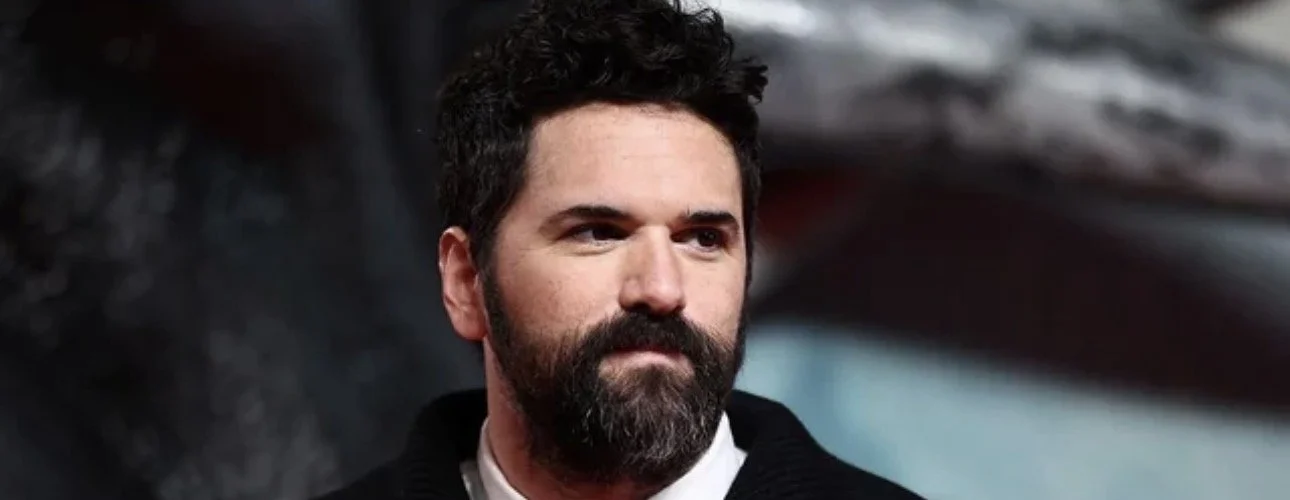
Directors Jon Shenk and Bonnie Cohen talk about the role of their ‘Inconvenient Sequel’ in the Trump-era

Image result for inconvenient sequel 600x200
There are movies that gain traction and relevance once political or social events happen. Bonnie Cohen and Jon Shenk’s “An Inconvenient Sequel” gained a lot since Trump’s recent withdrawal from the Paris climate accord agreement. In fact, the Paris accords plays a very big role in “An Inconvenient Sequel,” with the last half hour solely dedicated to the nitty gritty, behind-the-scenes look at how that essential international deal came to be.


“An Inconvenient Sequel” is Al Gore’s state of the union address, an alarming document of accelerating change and diminishing time. In fact, the notion that time heals everything and compels us to realize our mistakes is a key theme in Cohen and Shenk’s film. David Guggenheim’s 2006 milestone “An Inconvenient Truth” helped bring global warming to the forefront of the mainstream conversation. It even affected a shift in the political spectrum. If that original film felt like a lecture with Gore guiding us through a power point presentation, then this sequel is more cinéma vérité, following Gore in a rather passionate and angry mood throughout as he wheels and deals his way to save the planet. In a summer filled with superheroes, Gore turns out to be the most authentic and resonant of the lot.
I spoke to Shenk and Cohen about their movie and what its significance is now that we are in the Trump era
It was great seeing this film; how do you envision this in the world of the documentary? There are so many kinds of documentaries and this was clearly a kind of advocacy film.
BC: So the film came to us via Participant media, who made the first film. Advocacy is what they do, so we knew going into this that’s what we were going to be doing. There’s going to be an education to be had and an activism to be had within the film simply because of who the producers were. Jon and I like to make deep, emotional films, the last film we made was called “Audrey and Daisy” and before that “The Island President,” which was about the President of the Maldives. When asked, or given the great honor, of making the sequel to this incredibly important film that came out ten years ago, we thought okay how can we take it, own it and make it into something that’s going to have some emotion and some inherent narrative drama. That was a great challenge, we met Al in July of 2015, he is such a Southern gentleman and had us over at his house in Nashville. He showed us the lengthy version of the slideshow and it was immediately obvious to us, as soon as he started talking about all the places that he collects his information, the constant digging that he does all around the world to keep his slideshow up to date for whichever country he has a presentation in. We thought we could find some inherent drama if we started to follow him to all these various countries, have a snapshot of his everyday life. Al also has a whole other layer, he has in him personal drama, failure, and success, so we wanted to deliver something to the audience that was also more than just facts of the climate crisis.
How much access did he give you guys inside his life?
JS: Tons. I mean, you see it in the film where we made this decision to follow him everywhere. The drama that unfolded in Paris, at the climate accords, was just insane, it was almost like a political thriller in our minds and our lead character was clearly involved in trying to, you know, do everything he could to make the deal a success there. He didn’t say no to us too much. He pretty much was game for anything.
BC: He’s a great lover of cinema by the way. He’s seen everything and he loves documentary. Once he got that we were trying to make a “Don’t Look Back,” something that would show him in his real, authentic self, he got even more interested in helping us with the access.
JS: Of course, people he’d meet wouldn’t always say yes, but he’d tell us “we’re going to India and the ministers might not think the camera is the right thing to do in the meeting,” but he would help us make the case and we had a pretty high batting average with this film. So, to answer your question, we had a lot of access.
You mentioned “Don’t Look Back.” Was that one of your main influences with this film? I went into this movie with the notion that it might be centered around another slide show, but I was pleasantly surprised by how it really separated itself from the first movie with its cinéma vérité style.
BC: Jon is the DP, he shot the whole movie, he’s one of the country’s best “behind the scenes” photographers, so he’s not just capturing the scene for what it is he’s also thinking about the edit, so the combination of the slideshow, which Al was going to do, was very appealing to us, we found like we had kind of a rock star subject, he’s not Bob Dylan, but he’s Al Gore, and often in the past the public did not have access and we didn’t want that to happen again.
JS: D.A. Pennebaker was at our screening. It was such a thrill because this guy literally invented the idea of the “fly on the wall” documentary. I told him “I can’t believe you’re here” and he said “Jon, you’ve managed to do what great documentaries do which is that you’ve brought a person back to life and to come to see a movie like this on a week night is pure magic.” As you can imagine, my heart swelled.
“An Inconvenient Truth” really brought climate change to the forefront of the conversation, it really helped a new generation be aware of it. What were you hoping for with this sequel? It’s a companion piece, but it’s also its own film.
BC: I think the first film was a lightning rod that just went everywhere. It awakened the world community to global warming. I think people were scared, educated but scared, it was our hope with this film that we would jump off from there and that we would kind of take the science and update with what was going on with the climate crisis. As Al predicted in the first film, things have gotten a lot worse, but the huge difference from then to now is that we had, at least, some hopeful news that we could deliver, which was that the sustainability revolution was here and it was just a question of how quickly the world hops on the train and rides it. It’s not like we must throw up our hands anymore, we actually have it in us to do something about it. So, we felt, okay if people don’t feel paralyzed with fear and despair and if we can communicate it through Al’s passion that would hopefully translate to viewers.
What do you think has held the Paris agreement together even after Trump’s decision to leave the accords?
BC: I mean, it’s interesting, Al was really afraid other countries were going to follow suit after the U.S. decided to pull out. The truth is people have doubled down and they’ve not only stayed in but recommitted with further goals that they had had with themselves in Paris. We say it in the documentary, the American people will lead, but the truth is that mayors and governors and populations in this country have committed to keeping the goals of Paris and it’s possible for us to do it on the local and state level. Al now talks about how if you want to physically pullout of Paris there are so many steps along the way for you to do it, years to go by, that in order to complete a pullout of the U.S. with Paris, you would only be able to do it the day the next president takes office.
This was all show from President Trump.
BC: It’s like everything else he does.
JS: Well, he’s playing, as we all know, to what he thinks got him elected, which is these “working class” middle-country people that are suffering, the irony is that he is ultimately punishing these people because other people are looking at his announcement of Paris and saying “Hey, great, you don’t want to be in the solar panel business, we want to be in it.” China and India want to be in it, they will gladly take the jobs. You know, solar and wind are already employing far more people than the coal industry and it’s growing every day.
Gore says in the documentary that he was ready to serve in any way necessary during the Paris agreement. He’s been the voice for climate change and what we need to do for many years. It seems like he wasn’t sure if he would be able to serve and that his role might have been nothing, but it, obviously, turned out to be something. Was he surprised that he could effect this change in this particular area?
BC: In his more insecure moments he would be like “I don’t know why you guys came to Paris, I don’t know what we will even be doing there. I’m not part of a delegation, I don’t know what I’m going to be asked to do with anything, people may or may not ask me for advice.” So, it was unclear what was going to happen.
JS: This is coming from a man that used be at the highest levels of government for years. He was in a unique place where had all this dispersed experience, so to be able to utilize it to bring the first successful international agreement to fruition was just kind of amazing for him and, obviously, given the fact that we had cameras there for that was exciting.
BC: Yeah, he didn’t even ride by motorcade to the Paris meetings. He went to ride the subway [laughs]. That scene is in the film because it was unbelievable and surreal.

Christopher Nolan Wanted to Shoot 'Dunkirk' Without a Script

Image result for nolan dunkirk 600x200

Christopher Nolan's "Dunkirk" almost feels like a silent movie. Its closest sibling would be Sergei Eisenstein's "Battleship Potemkin," both convey a historical event through images and multiple narratives happening simultaneously on-screen.  "Dunkirk" is Nolan's symphonic opus, a staggering, visceral cinematic treatise on image and sound. There are barely any words in it. Its lack of dialogue has made it almost minimalistic in style, a rare feat in the blockbuster world.  What's even crazier is that Nolan originally considered shooting the WWII film sans script. THR reports notes that while doing research for the film, the venerable writer-director became so immersed in the details that he felt comfortable in thinking a script-free approach could work:


“I got to a point where I understood the scope and movement and the history of what I wanted the film to address, because it’s very simple geography,” Nolan then went to Emma Thomas, his wife and producing partner with the idea of shooting without a script “I said, 'I don’t want a script. Because I just want to show it,' it’s almost like I want to just stage it. And film it," his wife's response was clear and concise, she didn't think it was a good idea "Emma looked at me like I was a bit crazy and was like, okay, that’s not really gonna work,”

The final screenplay he did end up writing was his shortest ever, just 76 pages, rumor has it that it came to about 10 or so pages of dialogue. Yikes.

Source: Trump Threatened to Sue ‘Sharknado 3’ for Not Casting Him as President

Image result for trump funny

I can't tell the difference between reality and fiction anymore in 2017. Reality and fiction have been blurred forever more. 

They didn't cast him because they were looking for someone who could act like a president. Ok, all jokes aside, you can see how Trump's brain worked here. His arch nemesis Mark Cuban was cast instead as the President, and it seems that just made him snap. If you remember, Cuban questioned Trump's wealth in April of 2014, to which Trump vehemently replied by mocking Cuban as a "lightweight." So it happens, a few months later, they were both in the running for the role of President of the United States in "Sharknado 3." So, Trump sees someone who has slighted him, who is richer, younger and more successful than him, but, more importantly, who is deemed more "presidential" by the producers of Sharknado and well, you see my point ...

How close did we come to President Trump in Sharknado 3? According to THR, pretty close:
"And so it might have been for our 45th president. "We got pretty far," says Webb of the Trump negotiations. "It was serious talks." A contract was drawn up and sent to Trump attorney Michael D. Cohen — the same attorney currently under FBI investigation in connection with the Russia inquiry."
"But enthusiasm turned into weeks of silence from the Trump camp. Eventually, a reason for the stalling emerged. "Donald's thinking about making a legitimate run for the presidency, so we'll get back to you," Latt recalls Cohen saying. "This might not be the best time." With the production clock ticking, Asylum pulled the trigger on a backup plan, offering the role to Mark Cuban — a modest casting coup that Syfy trumpeted with a press release."
"Then we immediately heard from Trump's lawyer," recalls Latt. "He basically said, 'How dare you? Donald wanted to do this. We're going to sue you! We're going to shut the entire show down!' " Contacted by THR, Cohen acknowledges a dinner with Ziering to discuss casting Trump but says he has no recollection of the angry correspondence."

"Months before announcing his real-life candidacy, President Trump was in talks to play the president in Syfy’s Sharknado 3: Hell No! but after the role was offered to billionaire Marc Cuban, the now-president allegedly threatened to sue. In a Hollywood Reporter profile on the schlocky film series’ production history, casting director Gerald Webb recalled how negotiations with Trump “got pretty far” but then, as his June 2015 presidential announcement drew near, the real-estate mogul’s camp drew silent, saying “This might not be the best time.” When the filmmakers eventually offered the role to Cuban, producer David Latt recalled, Trump’s notorious lawyer Michael D. Cohen threatened action: “He basically said, ‘How dare you? Donald wanted to do this. We’re going to sue you! We're going to shut the entire show down!’”

Rewrites Happening on "Star Wars: Episode IX"

Image result for fisher 600x200 ix

Lucasfilm has hired U.K. TV vet Jack Thorne to work on rewrites for "Star Wars: Episode IX." It was, of course, bound to happen considering Carrie Fisher's untimely death, but nobody knows for sure if this rewrite does, in fact, have to do with the actress' sudden death. The original script was penned by Colin Trevorrow and, his "Jurassic World" co-screenwriter, Derek Connolly

Fisher's Leia Organa was supposed to have a major role in “Episode IX.”  They will have the job to try and find a way to properly "send her off," which will be quite the daunting task. How can they do it in such a way that it is not only artistically succesful, but also respectful to Fisher and her family? My take on it? Trust Disney, they've never been distatesful or arrogant about the way they operate. I just hope the creative process doesn't take a hit since it is clear that Lucasfilm clearly had Fisher front and center for Episode IX.

[THR]

The 2003 Variety article that announced Christopher Nolan as director of new Batman film, mentions JJ Abrams Superman script, a Wolfgang Petersen Batman Vs. Superman movie and Darren Aronofsky's Batman Year One project.

Image result for nolan 600x200 batman


Nolan on embarking into the Batman world:

“All I can say is that I grew up with Batman, I’ve been fascinated by him and I’m excited to contribute to the lore surrounding the character,” Nolan said. “He is the most credible and realistic of the superheroes, and has the most complex human psychology. His superhero qualities come from within. He’s not a magical character. I had a fantastic experience with the studio on ‘Insomnia,’ and I’m keen to repeat that experience.”

I guess Wolfgang Peterson thought "Troy" was a more interesting project. Do you blame him? I'm not too sure the tonal differences between the superheros, Batman and Superman, would have worked with this film. Just look at Zack Snyder's version, which, I suppose, did a suitably decent job at trying to convey both remarkably different color palletted-superheros 

“Batman Vs. Superman,” nearly went into production with director Wolfgang Petersen and a script by Andrew Kevin Walker (“Seven”) until Petersen instead moved to the Greek epic “Troy,” set to star Brad Pitt and Eric Bana."

Aronofsky's "Batman: Year One" had a homeless Bruce Wayne, Alfred as a car mechanic called 'Little Al', and the batmobile was a Lincoln pimpmobile. I'm not joking. It's one of the great "What if" projects in cinema history:

“Batman: Year One” is a Gen-X version of the crimefighter that is being developed by Darren Aronofsky and creator Frank Miller."


A J.J Abrams penned "Superman" directed by Brett Ratner? Oh, the horror:

"WB’s superhero project closest to the starting line is the J.J. Abrams-scripted “Superman,” with Brett Ratner directing and Jon Peters producing. The film will reintroduce a franchise that sputtered after four Christopher Reeve films, and WB is currently testing actors for its Man of Steel, with Josh Hartnett, Jude Law, Ashton Kutcher and Brendan Fraser among those rumored as aspirants to be fitted in cape and spandex."

[Variety]

First They Killed My Father Dir. Angelina Jolie | Official Trailer


I liked Angelina Jolie's "Unbroken," so much so that it almost made my ten best list in 2014. She clearly loves punishment delivered onscreen and does render it in artful ways. She tackles characters that go through severe mental and physical terror and "First They Killed My Father," her latest movie, seems to play along those lines.

Official Synopsis:
"Directed by Angelina Jolie, First They Killed My Father is the adaptation of Cambodian author and human rights activist Loung Ung’s gripping memoir of surviving the deadly Khmer Rouge regime from 1975 to 1978. The story is told through her eyes, from the age of five, when the Khmer Rouge came to power, to nine years old. The film depicts the indomitable spirit and devotion of Loung and her family as they struggle to stay together during the Khmer Rouge years."
“First They Killed My Father” hits Netflix on September 15th.

First They Killed My Father Poster

Did John Boyega Reveal Leia's "Star Wars: The Last Jedi" Fate?

Image result for FISHER 600X200

As we reported to you several months ago, Carrie Fisher's Princess Leia had a "significantly important" role in Episode IX (HERE). The tragic death of the actress has brought upon a lot of questions, most of which involve how to replace her in the ongoing saga. This follows on later statements from Episode IX director Collin Trevorrow in which he said that the actress’ passing would be treated “with love and respect” in Episode IX,

Lucasfilm were in the middle of heated meetings to settle the delicate problem at hand. All signs were leading to Fisher getting digitized and then the SW creative team pretty much decided to start from scratch in regards to "Episode IX," due for release in 2019. Now its star John Boyega, doing the round for his excellent new movie "Detroit," might have given us a little too much of a reveal as to what's to come:

“This movie, it sends her off in a very amazing, amazing way. She’s still kept alive in this franchise. You know, that’s the beauty of it, she lives forever in a sense.”


[Popcorn With Peter Travers]

'The Temple of Doom' is Steven Spielberg’s least favourite Indiana Jones movie (flickeringmyth.com)

Image result for temple of doom 600x200

According to Susan Lacy, director of the upcoming HBO documentary "Spielberg," the legendary filmmaker mentions that out of all four instalments in the Indiana Jones series, he likes the "Indiana Jones and the Temple of Doom" the least. The 1984 prequel to "Raiders of the Lost Ark" might have pushed its PG-13 rating to the limit back in the day, a heart is literally pulled out of a living human's chest, but I find it is a damn fine film filled with incredibly thrilling sequences. In fact, Temple" is the only one of the three following "Raiders" that feels like its own movie.  I'm surprised 2008's mediocre "Kingdom of the Crystal Skull" wasn't Spielberg's choice. 

Spielberg hasn't been shy about his discontentment with "Temple of Doom," he told the Sun-Sentinel back in 1989  “I wasn’t happy with the second film at all. It was too dark, too subterranean, and much too horrific. I thought it out-poltered ‘Poltergeist.’ There’s not an ounce of my own personal feeling in ‘Temple of Doom,’ ” 

Spielberg also acknowledges in the documentary that he made some "mistakes" with the World War II comedy 1941, which is far and away the worst film of his career. 

Back to Indiana Jones. I always thought the movies lessened in quality as they went along. "Raiders of the Lost Ark" is pretty much perfection, one of the best films of the 1980s. "Temple of Doom" is closest to the pulpy style of the serials that inspired Spielberg to make "Raiders of the Lost Ark" in the first place. "The Last Crusade" is too lighthearted, almost sitcom-like. Finally, "Kingdom of the Crystal Skull" was a pathetic attempt to bring back Indiana Jones and was basically a rehash of "Raiders." 

Why Wonder Woman Should Not Be Nominated For Best Picture

Image result for wonder woman 600x200

Warner Brothers will be focusing on an Oscar campaign for “Wonder Woman” this fall. They, of course, are the studio that produced it and own the DCU universe. I can only imagine how badly they would love to have a DCU film nominated for Best Picture, but it seems like they are going a little too far with this campaign. The consensus this past June was that “Wonder Woman” was the first “good” film from the DCU. Ok, fine, that doesn’t say much really. It seems WB might be, mightily, overreaching by pretty much implying that they believe “Wonder Woman” is Best Picture material. The backlash will no doubt happen because, well, “Wonder Woman” just isn’t that good. I can list 30 films that were released this year that were better than Patty Jenkins’ film. Hell, it’s not even close to being the best superhero movie of the year. That honor goes to James Mangold’s “Logan,” which, in fact, does deserve a Best Picture nomination.

To say that this was a very poorly thought-out PR move from WB would be an understatement. When "Wonder Woman" was released this past June, people made it out to be the second coming. Yes, it's miraculous that a comic book movie was made with a female director at the helm and an actress as its leading star and yet, its flaws are very present for all to see, including a third act that completely spins out of control with the usual CGI bang, that we've come to expect from a DCU, filled with bad shots, bad CGI and no human touch whatsoever. As for the directing, yes it was good, but not Oscar-worthy. Patty Jenkins didn't deserve to go 15 years between her last movie, "Monster," and "Wonder Woman." I want her to make more movies in the future and I am ecstatic that she is being given so much power for the just announced sequel to "Wonder Woman" set for July of 2019.

There's a very good reason why comic book films don't get Oscars. They are pulpy, silly in concept, and usually shaky in terms of quality for critics/adults, hell, even "The Dark Knight" had a somewhat infuriating last 20 or so minutes, but it's still a great, momentous movie. A woman should, of course, be nominated for Best Director but only when the picture is truly worthy of it or, more implicitly, when something artistic and truly groundbreaking as a work is accomplished. Why should we fast-track progress just because it feels good to be a part of it, that's just dishonest, pandering, and actually works against progress? All this teaches people is that quality is not important, it's who you are (or what you were born as) that matters. In fact, despite my objection at "Wonder Woman" and Jenkins being rewarded,  I really hope three female directors are remembered come awards time with nominations: Kathryn Bigelow for "Detroit," Julia Ducourneau for "Raw," Dee Rees for her upcoming "Mudbound."

What do you think about Wonder Woman's Oscar chances? Give us your take in the comments section below.

"A Ghost Story"


The 21st annual Fantasia Film Festival, held every year in Montreal, has come and gone and, yet, it was, once again, filled with indelible treats that highlighted a broad range of genre cinema.

Over the course of its three magnificent weeks, the festival managed to premiere an eclectic mix of movies, but none has captured the conversation more than David Lowery’s “A Ghost Story.”

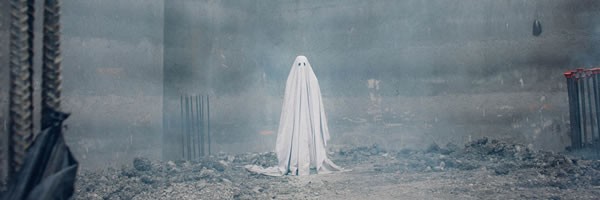
One of the most audaciously original narratives I have seen this decade. “A Ghost Story” was shot with friends Rooney Mara and Casey Affleck as a personal side project while Lowery was also filming "Pete’s Dragon," the film is not, in any sense, “scary” as much as it is an engrossing meditation on life and death. The less you know, the better, but the film’s official synopsis is perfectly put together to tell you all you need to know: “This is the story of a ghost and the house he haunts."

We spoke to Lowery at Montreal’s Fantasia Film Festival, in an extensive and in-depth interview, about his latest film, Robert Redford, Rooney Mara's distaste for pies and A Ghost Story's beautiful mysteries.

What gave you the idea of shooting such a small, personal and, even, experimental film?

It began with the image of the ghost. That was an image that preceded the inception of the film. It was an image that I’ve been waiting to use, one way or another, for a very long time. I found the concept of a bed sheet ghost, separate from the confines, to be incredibly beguiling and it had all sorts of emotional qualities. It was funny, it made me laugh, I think that was the beginning of it, it just made me laugh, but it was also very sad and it had a melancholy and a sense of loneliness to it. That was substantial enough that I could hang an entire movie on this one image. That was the beginning of it, I didn’t have a story, I didn’t have a narrative arc, but I did have that image.  When I sat down to begin writing last spring, I didn’t know where the story would go or how I would use that image, but I just started writing and that was the film that emerged from that. It was also all written in one sitting so it came out very quickly.

How many pages was the script? There doesn’t seem to be too much dialogue.

It was ten pages at first, very short, and then I expanded that a bit and added some dialogue so it grew to about 30 pages. It was drawn for the purposes of a traditional screenplay, but when you remove most of the dialogue there’s not much else there, just descriptions of scenes and sometimes the descriptions would get very complicated, very direct.

There’s a scene that shows up near the end with these new characters just talking about the film’s existential themes, aligning itself perfectly with the movie. Was the idea always there for the scene to happen?

I didn’t have any scene in mind for that part of the script. When I would write the screenplay, I was asking myself “what would I want to see happen next?” Then, I would write that scene. It was a very mechanical process in many ways, when I got to that scene you’re speaking of, the one in which this character holds forth this party about all sorts of existential matters, that just felt like the right time to dig into some literal content, I wanted to hear somebody speak at that point in the movie. It was a palate cleanser in many ways. It was an attempt to recalibrate the experience that the movie up to that point because at the 2/3 mark you’ve spent a lot of time sitting in silence and, as an audience member, I just felt like it would be nice to have traditional dialogue to grab onto, but it was also a wonderful opportunity to delve deeper into what the movie is doing and what it’s about. At that point, it takes a pretty big left turn and this monologue prepares audiences for what is to come.


I felt like I entered a Richard Linklater movie

Yeah, it’s like “Slacker” or “Waking Life.” There’s a brief moment where philosophical ideas are espoused in a very conversational setting. I love those movies. They were probably my introduction to philosophy even though I didn’t even know it at the time. To briefly carry that torch to and to participate in that tradition was really fun for me.

I do love how silent the film is. For example, there’s a scene where Rooney Mara eats pie to wallow in grief and it lasts for quite a few minutes. I didn’t even realize it lasted that long until someone mentioned it to me post-screening. I was just mesmerized by that scene, it’s a very touching portrayal of grief. I had read that Rooney had never eaten pie in her life before shooting that scene.

It’s true, I think, that’s what she told me and I’ll take her word for it. Amongst many qualities my film might have, it’s a documentary about the first and last time Rooney Mara ate pie [laughs], which is hilarious to me, it’s captured on film for whole time. I like that you didn’t realize how long that scene lasted, it’s wonderful for me to hear that because when I watch it I forget as well. I’ve seen that scene maybe eighty times at this point and every single time I’m able to get lost in it. That’s my favorite experience as a moviegoer, to be able to forget where I am or who I am or what I’m actually watching and become caught up in an individual moment. It’s a really wonderful phenomenon that cinema can provide and it is something that is harder to pull off, I think, than I initially thought, but in that moment we succeeded and despite of the fact that everyone talks about it. You know, it’s the “pie scene, “ it’s become one of the biggest talking points of the film, but the scene itself exists outside of that conversation. Everyone will go into this movie expecting that scene to occur and they’ll be waiting for her to sit down with that pie and then the scene will just happen, it doesn’t matter how much anticipation people bring to it or how many expectations they may or may not have, the scene itself does its own thing and does it on its own terms and all we can do is just sit back and decide if we want to take part in it or not, but it’s going to go on regardless and that’s a beautiful thing.

It also supports my theory that I could watch Rooney Mara practically do anything, even just read the phonebook, and it would still be gripping

A good actress can make anything amazing. The phonebook cliché is a true one because I think that it is true. I would happily watch Rooney do the most mundane activity because she can bring so much to anything. It’s also important to acknowledge she knew why that scene was in the movie; she knew what its intent was.  And so, she could have easily just sat down and eaten pie but she knew the register at which her performance needed to exist, she was able to make it what it is. Had it just been a casual scene in which her character was hungry and happened to eat too much it would have been a completely different experience and it wouldn’t have been as good. She brought the emotional wave to it that scene required. She made it transfixing. So, if she ever does read the phonebook it will, the degree in which we will want to watch it will depend on the context. I have no doubt she can find that context and run circles with it [laughs]


Did you or any of the cast know what was written in that little note?

Rooney does. Rooney knows what it says, but she says that she's forgotten. I kind of feel like she's just saying that because she knows the value of a secret and she likes to keep secrets. So I strongly believe that she knows exactly what it says and will never tell anybody, including me. It prevents me from answering the question in any satisfying way, but the answer lies with her and whatever is on that note went down with the house.

That's a beautiful thing though, to have that kind of mystery in the film. There's also "mystery" in the film's ending, a sort of dreamy ambiguity, do you know what it means?

I know what it makes me feel. It comforts me. It makes me feel at peace. The way at which it does that is unique to me, I don't know if it would work on others and, if it does, I don't know if it will follow that same path to that point for other audience members. I don't want to prescribe anything to an audience, I never want to be prescriptive and so, while I hope that audiences find  the ending of this movie hopeful and that they find solace in it, at the same time I don't want to presume that they will have the same experiences as I do nor do I want to diminish in any way the unique experiences that they may have, so I don't think the movie is a blank slate, I don't think that it has a particular point of view or that it's a very literal movie in any way, I don't want to tell people what they should take out of it. I feel that if a movie succeeds there are so many layers in which you can operate that the filmmaker never initially intended. They should all be valid interpretations, that's the nature of art. There's more going on in any given work of art than the artist could have ever possibly imagined. I hope that this movie is successful and I hope that people find things in it and I will feel very satisfied if they find the same things that I do.

Tell me a little bit about Casey Affleck. You guys did incredible work in “Ain’t them Bodies A Saint,” so I guess that left an itch for both of you to want to collaborate again.

We became friends after that film. We developed a few other things together, so working together was always paramount and was something we both wanted to do. We have this sci-fi film that we’ve both been working together on that will maybe happen one day. We just finished shooting the third film together called “The Old Man and the Gun” where he gets to share the screen with Robert Redford. When I got to the point of casting “A Ghost Story” he was the first person I went to, but I also wanted him and Rooney simultaneously because I wanted the chemistry they had. I knew they had a great chemistry together and I wanted both of them to be in this movie for that reason.

I heard “The Old Man and the Gun” is experimental like “A Ghost story.”

It’s weird to call it experimental because it’s not experimental in the way “A Ghost Story,” but for me, it was just as much of an experiment. Audiences will see "The Old Man and the Gun" next year and think that, in comparison to "A Ghost Story," it'll feel very much like a traditional movie. It'll feel like a completely different type of movie because it's fun, it's lighthearted, it is just a romp, in some ways, and, at the same time for me, that's an experiment. I think a movie that functions that way is experimental because I just don't normally think that way, particularly when it comes to this being funny, I have the acutest funny bone in the world, I enjoy laughing, I love laughing all the time. That was my goal. As much as I wanted to make a film that was delightful, it was still pretty experimental for me, but when you see it it'll feel relatively normal. It still has some weird stuff going on, it's very minimalist, there's not a lot of story there, but it definitely is more lighthearted than anything I have done and it's, in many ways, a love letter to Robert Redford. As much as it's about him and his career, it also has a meta quality that could also be described as experimental, but when you watch the movie people will be like "Wow, David made a really normal movie." But for me making a normal movie is somewhat "experimental." I'm curious to see how the finished product looks like because like all experiments there is a chance for failure and I haven't quite crossed the threshold of success yet.

The odds are in your favor because it's Robert Redford and you're back with Casey Affleck. Is the goal to bring it to Sundance?

It will be ready in time for that, but I think that's sort of like cheating, you know, a Robert Redford movie at Sundance [laughs] I mean, he's done it before. But for me, I just want to let it live its own life beyond that and so, I mean, I love Sundance and I'd love to play more movies here, it's truly a treat and an honor as a filmmaker to show your movies there, but I also feel like if I have Robert Redford, the founder of the festival, in my movie, I could probably step aside and let some other filmmakers take that slot. It would be unfair to all the other filmmakers in the world who want to show their movie there.

Capsule Review: "Baby Driver"

Image result for baby driver 600x200

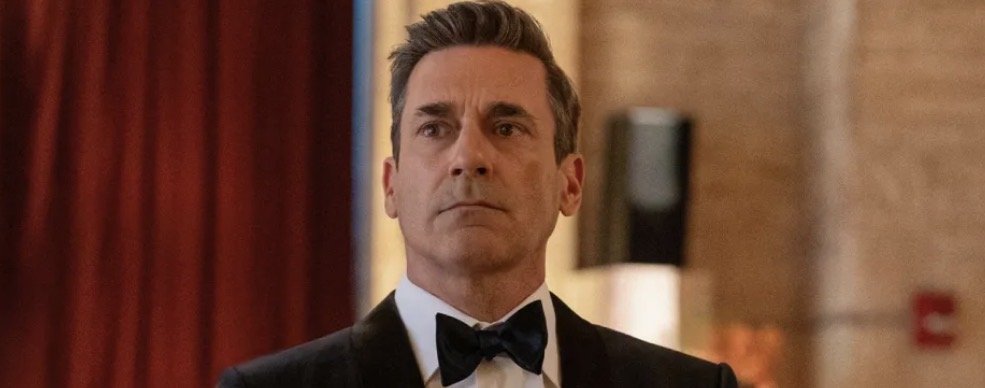
Edgar Wright consulted with “Mad Max: Fury Road” director George Miller, the master of practical effects, for help on his car-chase movie “Baby Driver.” That tells you everything you need to know about the detail that went into making this tale of hot-rod heaven. The stunts in “Baby Driver” are INSANE. Wright filmed all of the action sequences on location, and what was on screen was 95% practical effects, with only 5% CGI for touch-ups. Because they shot in a city and working freeway, they had to rehearse on the Atlanta Motor Speedway and choreograph with Matchbox cars. The film tells the story of a talented, young getaway driver (Ansel Elgort) who’s forced to work on a heist for a crime boss (Kevin Spacey) and two for-hire crooks (Jamie Foxx and Jon Hamm). The film is a candy-colored mash-up of “Drive,” The Driver” and Michael Mann’s “Thief.” In other, words, it's a cinematic delight. Wright doesn’t do boring, he’s one of the most visually interesting filmmakers working today and “Baby Driver” proves that once again. You can watch this film with no sound and still get sucked into Wright’s dream of a movie. It spins off the rails in its last 10 or so minutes but Wright drives the rest of film into sheer visual nirvana. Take that Marvel. [B+]


Oscar Contender and One of the Year's Best Films: "Call Me By Your Name"


What I wrote at this past January's Sundance Film Festival:

"The romance between a seventeen year-old Italian boy named Elio (Timothée Chalamet), and an American summer guest Oliver (Armie Hammer) staying at his parents’ cliffside mansion in southern Italy, Luca Guadagnino’s Call Me By Your Name was the film most people believed would survive through next year’s Oscar season, and for good reason. Guadagnino has made one of the year’s best movies — sensual, sexy, and touching, it’s a film that is simply told, but packs a wallop by the end of its 130 minute running time."

'The Emoji Movie' tops $25 million over US opening weekend

Image result for emoji movie 600x200

1. “Dunkirk” — $28.1 million ($102.8 mil.)
2. “The Emoji Movie” — $25.6 million
3. “Girls Trip” — $20 million ($65.5 mil.)
4. “Atomic Blonde” — $18.5 million
5. “Spider-Man: Homecoming” — $13.4 million ($278.3 mil.)
6. “War For The Planet Of The Apes” — $10.3 million ($118.6 mil.)
7. “Despicable Me 3” — $7.7 million ($230.4 mil.)
8. “Valerian And The City Of A Thousand Planets” — $6.8 million ($30.6 mil.)
9. “Baby Driver” — $4 million ($92 mil.)
10. “Wonder Woman” — $3.5 million ($395.4 mil.)

Luc Besson Doesn't Understand The Appeal of Superhero Movies

Image result for besson superhero 600x200

Luc Besson's filmography is fairly impressive for a director that's never really received his due with critics. He directed "Nikita," "Leon," and "The Fifth Element" back to back to back between 1990-1997. Fine. Those three films alone have allowed him to have enough creative freedom to direct whatever he wanted after those. The problem is the ensuing films weren't very good ("The Messenger: The Story of Joan of Arc," "Angel-A," "Arthur and the Invisibles," "The Family). He made somewhat of a comeback in 2014 with the underrated "Lucy," The Recently released "Valerian" was one of the most frustrating and dazzling movies, but what worked was quite spectacular. The visuals were astonishing, and it was some of the best use of 3D I've ever seen. It tanked. Nobody came to see it. Its $200M budget hasn't helped distributors and producers tied to the product unleash frustrated moans.

Besson has been doing the interview rounds in the U.K and it seems like a superhero movie will definitely never be on his agenda. I could have totally seen him tackle the genre, his visual prowess has always been his strength and that blends well with Marvel and DCEU films He has, more or less, taken a stab at comic book culture in an interview he did with Bleeding Cool:

"It’s very hard for me to identify with a superhero because he has a superpower, and I don’t have a superpower, all I can see is his power and say ‘oh, thank you so much for saving my life, me, poor little human being.’ I don’t like this relationship. I cant identify with the guy, I’m not like him.”