Scorsese on his long-delayed Sinatra biopic: "I think it's finally over. We can't do it."


Scorsese had previously mentioned that the Sinatra picture he wanted to make would feel like a combination of "Goodfellas" and "The Aviator." Well, it seems like that dream biopic will finally not be happening.

"We can't do it," Scorsese told The Toronto Sun. "I think it is finally over. [Sinatra's estate] won't agree to it. Open it up again and I'm there."

"Certain things are very difficult for a family, and I totally understand," Scorsese said. "But if they expect me to be doing it, they can't hold back certain things. The problem is that the man was so complex. Everybody is so complex – but Sinatra in particular."

"It's very hard [to write the script] because here is a man who changed the entire image of the Italian-American," he said. "And that's just one thing. Along with his political work, civil rights, the mob." 

"We can't go through the greatest hits of Sinatra's life," he said at the time. "We tried this already. Just can't do it. So the other way to go is to have three or four different Sinatras: younger, older, middle-aged, very old. You cut back and forth in time – and you do it through the music. ... So that's what we're trying for. It's very tricky."

Scorsese's longtime editor Thelma Schoonmaker has been on a bit of a campaign to get Bringing Out The Dead the "Recognition it never got"


"Bringing Out The Dead" is not for everyone. The movie's lack of a conventional narrative probably confused and alienated many viewers when it first came out in the fall of 1999. The way it uncompromisingly looked into the darkest corners of human nature with an unflinching eye probably didn't help it get any fans either, but these qualities are part of Scorsese's greatest films -- the confusion of "After Hours", the emotional indecision of "The Age of Innocence", the alienation of "Taxi Driver", the spiritual search of "The Last Temptation of Christ," "Kundun" and "Silence." "Bringing Out The Dead" is not easy to watch, and at times it's hard for the average viewer not to look away. But it's real, and it stays with you.

"Bringing Out The Dead" was the fourth collaboration between Scorsese and screenwriter Paul Schrader, based from the novel of Joe Connelly, and it touched on their familiar themes of faith, guilt, hope, and redemption. Using Frank (Nicolas Cage) as a lens to the dark and shady corners of New York's 'barrel of humanity', Schrader and Scorsese examined issues they tackled two decades earlier, in"Taxi Driver," such as decay, degeneration and the meaning of death and life in certain respects. Are these poor, miserable, drugged beings crawling the streets at night really alive. This time was New York of early '90s as opposed mid '70s in Taxi Driver.

Schrader's screenplay offers satisfying levels of complexity, so that ultimately, towards the end, when the main protagonist Frank, as played by nicolas Cage, does something totally unexpected and morally ambiguous, we understand exactly why he's doing it and can sympathize.

The film also feels like the last of something in terms of Scorsese's career. It came out in 1999 and felt like a final statement before the clock finally hit midnight into the new century. After "Bringing out the Dead", Scorsese went on to make 6 consecutive Hollywood epics ("Gangs of New York," "The Aviator," "The Departed," "Hugo," "Shutter Island," "The Wolf of Wall Street" and "Silence") which had him losing touch with the minimal character studies that defined a big portion of his earlier work. You see, I love my Scorsese films in many shapes, sizes and genres, but many forget that, beyond the mob movies and historical epics, he's a master at making these small, intimate, perfectly-toned, pitch black character studies. "After Hours," "The King of Comedy," "Taxi Driver," and, of course, "Bringing out the Dead" feel like a quadrilogy of alienation.

These films will stand the test of time and become more resonant as we continue to further isolate ourselves from the world around us and bury ourselves in the latest batch of gadgets and social networks that come our way. "Bringing out the Dead" feels, 17 years since since its release, like a prophetic wake-up call, a warning for the next generation, a call to stop the madness, take a deep breath and .... reflect.
Long-time Scorsese editor-extraordinaire Thelma Schoonmaker seems to agree with me as far as "Bringing out the Dead" goes. While promoting her work for Marty's latest picture, "Silence," she's also been, slyly might I add, talking about "Bringing out the Dead," which, it turns out, is one of her very favorite Scorsese films.
First up we have her mentioning the 1999 film to Den of Geek:

[Bringing Out the Dead] is the only one of his films, I think, that hasn't gotten its due - it was a disaster at the box office, as was King Of Comedy, as was Raging Bull. A lot of our movies!

I think there's a cult following for it - it sounds like you're one of them, which is great. But there's a following building. But what happened was, that film was about compassion, and it was sold, I think, as a car chase movie. When I saw the trailer I said, "Wait a minute! That's not what the movie's about!" I think people were made nervous by the theme of it, which I think is beautiful. I think it'll get its due.

Maybe if this film is digested by a lot of people, maybe that will allow it to come back - there are similar themes in it. We made [Bringing Out The Dead] after Kundun, and of course the Dalai Lama's big thing is compassion - it's a word he uses in almost every sentence. And so it's a beautiful film, but it was hard for people to take, I think. Unexpected. But I think it's great..

Then she continued her campaigning by speaking to Uproxx about the film:

“That is the one that has never gotten recognition. But I can’t tell you how many people talk to me about that movie. There is a ripple that’s going on. Bertrand Tavernier, the really wonderful French director, just wrote a review of it again. I have friends, when they have friends over for dinner, they make them watch it. It never got its due because it’s about compassion. That’s why.”

The film was also marketed poorly, she says. It was sold as a sort of car chase film and likely, therefore, courted a viewership that expected something completely different. “The wrong audience went to it first and that was it,” Schoonmaker says. “We were done.” But that’s something she and Scorsese have become accustomed to, she says: the work not being appreciated in its time.

“Everybody hated ‘Casino,'” she reminds. “They would say, ‘It’s not ‘Goodfellas.” That’s right. It’s not. It’s Las Vegas. It’s not ‘Goodfellas.’ And now everybody loves ‘Casino.’ Now it’s a big cult film. ‘Raging Bull’ was a disaster and wasn’t recognized for 10 years. ‘King of Comedy’ was a disaster, now everybody loves ‘King of Comedy.’ This happened to so many of our films. But the one that’s never, ever come back is ‘Bringing Out the Dead.'

Is it time to give Terrence Malick another shot with his latest entitled SONG TO SONG?

song-to-song-ryan-gosling-rooney-mara-michael-fassbender

What we do know about Terrence Malick's latest, which was called "Weightless, but is now called "Song to Song":

Running Time: 145 Minutes

Cast: Ryan Gosling, Christian Bale, Cate Blanchett, Rooney Mara, Haley Bennett, Natalie Portman, Michael Fassbender, Val Kilmer, Benicio Del Toro, and Holly Hunter.


Plot: "Two intersecting love triangles. Obsession and betrayal set against the music scene in Austin, Texas."
Some sequences were filmed during the Austin City Limits festival a few years back, the actors performed in the midst of concerts by Arcade Fire, Iron & Wine, Fleet Foxes, Black Lips, and Patti Smith. 

How some cool silent film effects were done

Related image


Thanks Auir2Blaze

"The craziest thing about silent movie effects is that everything basically had to be done in camera.
If you were filming multiple elements to create a complex shot that contained multiple elements and you messed up one part, the whole piece of film would be ruined."

"There are a lot of other cool techniques that I didn't include. Maybe the most cutting edge one was the Schufftan process, which Metropolis was the first film to use."

"Another simple, but very effective trick, was suspending miniature models in front of the camera. These huge machines from Modern Times were actual models hung carefully in front of the camera to create a trick of perspective."

"And maybe one of the most famous special effects shots of the silent era, the parting of the Red Sea in the Cecil B. DeMille's original version of the Ten Commandments (1923) was actually pretty straight forward: Water was poured into a gelatin mold made to look like the sea, and the result footage was reversed to make it look like the water was rushing out."


[–]nc863id 524 points  
Another simple, but very effective trick, was suspending miniature models in front of the camera. These huge machines from Modern Times were actual models hung carefully in front of the camera to create a trick of perspective.
Is this to say that these shots were done in a single take using forced perspective? If so, I'm trying to wrap my head around how much depth of field these shots are exhibiting, considering how much closer the models would have to be to the lens than the action going on...which then makes me think of how small an aperture the lenses must have...which then goes on to how much light must have been needed to get a proper exposure, especially with film that must have been rather insensitive by modern standards...which then spins off onto a semi-related tangent about how difficult it must have been to properly and consistently light the model and the background separately.
Holy shit.

Carrie Fisher's Urn is a Huge Prozac Pill


Could it really end any other way? 

Staying badass, even after her tragic passing, Carrie Fisher has been ushered in an urn shaped like a giant Prozac pill.


Todd Fisher, Carrie's brother, explained the choice of urn to ET Online, saying it was his sister’s “favorite possession.”
“We couldn’t find anything appropriate. Carrie would like that,” he continued. “It was her favorite thing, and so that’s how you do it. And so they’re together, and they will be together here and in heaven, and we’re OK with that.”
“Carrie’s favorite possession was a giant Prozac pill that she brought [sic] many years ago. A big pill,” Fisher said. “She loved it, and it was in her house, and Billie and I felt it was where she’d want to be.

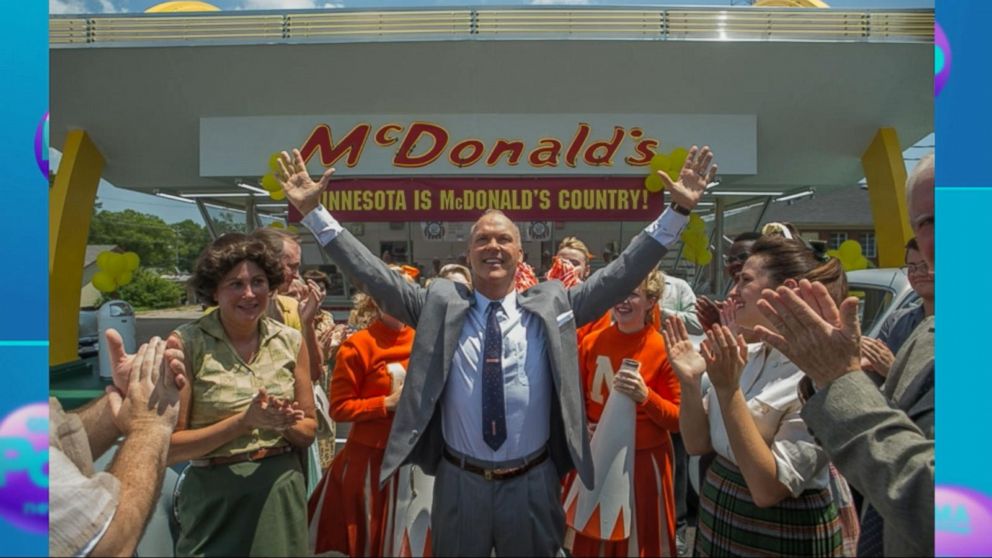
John Lee Hancock's The Founder

Image result for michael keaton ray kroc

I'm actually quite surprised that John Hancock's "The Founder" hasn't had any kind of traction this holiday season. It's a well-done and gripping portrait of the greed the seeps through the cracks in this country. Ray Kroc (Michael Keaton) plays the titular "founder," more of a schemer that found his way to stealing the labor of love built by the McDonald brothers in San Bernandino, California. They didn't want to franchise due to keeping their integrity intact and that, well, quality control when you franchise fast food is almost impossible. Kroc didn't listen to them, although he convinced them to have him open up another McD's location in a small Illinois town, he expanded. 19 States. Then he decided to replace ice cream-based milkshakes with powdered milkshakes, which got the brothers fuming and then he decided to real-estate McDonald's locations and the rest is, as they say, history.

Keaton deserves all the awards love for his portrayal of Kroc. He's been having quite the comeback lately, but this performance, just like the film itself, has been ignored by most, if not, all end-of-season awards. It's career-best work for Mr. Keaton. Yes, Hancock's film follow a familiar trajectory, but the story itself is fascinating nonetheless. There is plenty of stinging cynicism is Robert Spiegel's (Big Fan, The Wrestler) screenplay, the satirical aspects of the script are not far off from the times we live in today. The American dream, although a beautiful and resonant idea for the values of this country, can produce toxicity of the highest levels as seen here. If anything, I'd say the weak spot of the film is Hancock's direction, which just lies there and doesn't really do much in the way of augmenting the fascinating story at hand, but maybe that's what the film needed, a by-the-books, just-tell-the-story kind of approach.

So with all that being said, why has this film, but, more importantly, Keaton's performance, not gained any traction during awards season? Well, firstly, they didn't screen the damn thing for press here (Boston) until this week. How do you build buzz if no critic sees it. They only limited screenings of it to the major critics group members, but that's not enough to build buzz. At the moment Keaton is on the outside lookin' in for a possible Oscar nom, but he is well-loved and if enough industry people catch the film they will vote for him. I know it. His performance is better than most of the would-be contenders in the category.

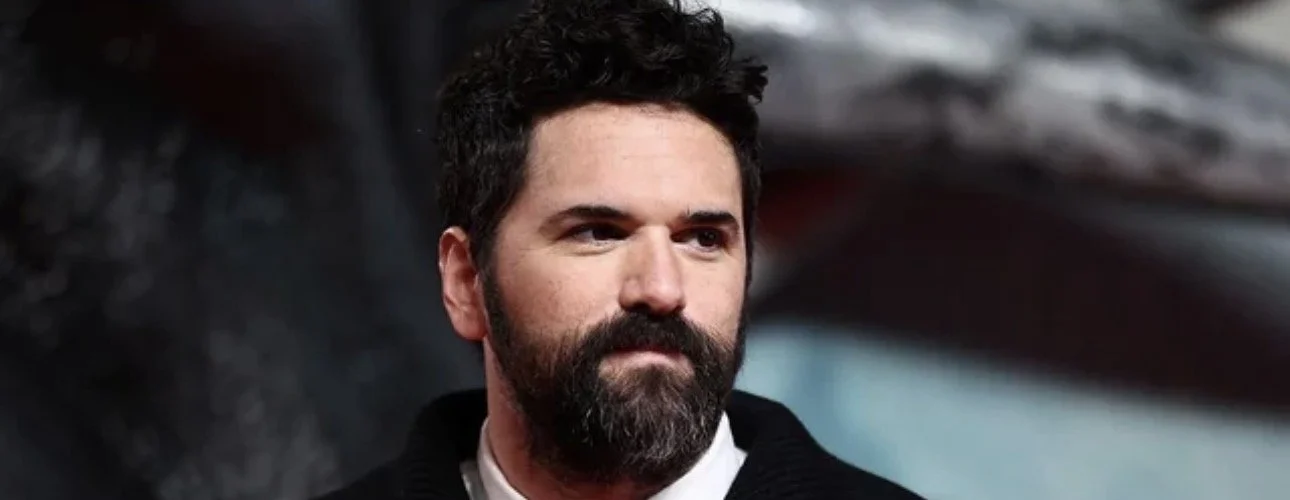
David Fincher's Advice To Young Filmmakers Is Just General Good Advice For Life

David Fincher's Advice to Young Filmmakers

"I always wanted to give a lecture at film schools. You go in and you see all these fresh faces, and you say: 'You! Stand up, tell me your story. Tell me what your film is going to be about.' And they start, and you go: 'Shut up and sit the fuck down!' And if they do, you go: 'You're not ready.' Because the film business is filled with shut-up and sit-the-fuck-down. You got to be able to tell your story in spite of sit-down and shut-the-fuck-up. If you are going to let something like that derail you, what hope do you have against transportation department? What hope do you have against development executives?"

This is from a book passage which can be found HERE

Scorsese on his cinematic future: "I'm Exhausted"


Martin Scorsese / photo courtesy Paramount

Of all the Martin Scorsese interviews I've read these last few weeks, I believe this might be the best one, right up there with Nick Pinkerton's Film Comment piece (Here).

Commonwealth Magazine which seems to be a faith based publication has an in-depth and deeply personal conversation with Scorsese in its latest issue.  I recommend you read the whole thing, but the most interesting tidbit for readers of this site might be Scorsese's thoughts on his future as a director and his religious beliefs.

On seeing himself making movies ten years from now?

 "I don’t know. Even though there’s an enjoyment with filmmaking, and it’s an obsession every time ... I’m exhausted. It’s like, I’ll never make another film! But I’m getting ready. DeNiro is talking to me. You know, it’s the old story: DeNiro and I, we’ve had this project in mind about an old hit man—a true story. He was about seventy-four years old; we happen to be seventy-four. It takes place in the 1960s. It’s about the price you pay for a life that you lead, and a sense of good and evil. So here we are."
"With any movie, the question is, do you really want to be there? You really have to have a story that you want to tell and that you feel you could tell. And also people that you want to be with. That’s the main thing. Life gets to be too short. Ultimately, the one thing I thought I could do in life was—how should I put it? I thought I could nurture the gift I was given by God, the gift of creativity.  Now, in terms of the results, whether they’re good, mediocre, bad—I don’t know. But it turns out it doesn’t matter. It’s about growing as a person, and in your creative work, if you can grow any further. Is there anything more to mine there? Take the analogy about fishing and the intellectual waters. How deep can you fish, you know? How deep can you do it? "

On Religion vs Science:
"It’s a matter of not accepting the certitude of scientific thinking, or even philosophical thinking. Yes, there are many problems with organized religions. But the certitude of who we are, and what this universe is, and this life—it just can’t be. This is an old man talking, but we might be in a world where younger people won’t even consider that which is not material, that which one can’t see, taste, or feel. And ultimately, when everything is stripped away in Silence, that’s really what’s left. It is the spiritual."

Apple's iOS 10.3 on the way already might have 'Theater Mode' option for texting during a movie


Source: The Guardian

"Sources also believe the software will include a 'Theater Mode' presented as a popcorn shaped icon that dims the display and disables features to make devices suitable for movie theaters."

"Apple also owns a patent for 'Theater Mode', which it had published in 2012."


"While the user is in the movie theater, the mobile device deactivates its cellular communications interface and/or automatically sets the device to a silent mode,' reads the patent published in 2012."

"When the user leaves the movie theater, the portable device enables phone communications and/or restores the ringer setting to the setting utilized prior to the device's deactivation."

I've been dreading this day ever since I heard "rumors" about Apple devising this app. No, you don't need to be texting during a movie. You should watch the movie and be courteous to those around you. If it's super urgent someone will call you or text you during the movie then step the fuck out of the theater when they do. Be courteous. The cinematic experience will go extinct because of "inventions" like these.

GoldDerby, A consensus of 24 Oscar pundits, claims these are your 10 Best Picture frontrunners


Source: Gold Derby

Gold Derby is usually pretty dead-on with their predictions. Over 24 Oscar "experts," which includes bloggers, critics, pundits, industry, have made the claim that these are the 10 films that will be fighting it out for Best Picture come Oscar time. My guess is that we will have around 8 nominees this year, which has been the average, but some are claiming we might actually have the lowest number yet with 6.

My own Oscar predictions (HERE) are not far off from these. Some of the exceptions: I don't believe that "Jackie" and "Silence" have the support to get nominated. "Hidden Figures" seems to be well-loved across the board and should be in contention. I also think "Sully" has a real shot, despite the Golden Globes snub. For Best Actress, Ruth Negga might sneak in and oust Annette Bening. The Best Actor lineup I have no problem with, but I think Tom Hanks might oust Viggo, we shall see, ditto Supporting Actress which looks dead-set. As for Supporting Actor, I'd take out Dev Patel and Hugh Grant, replace them with Michael Shannon in "Nocturnal Animals," and Kevin Costner in "Hidden Figures."


Michael Keaton didn't star in "Batman Forever" because the script "sucked"

Image result for michael keaton batman forever
I grew up on Tim Burton and those first two Batman movies. I was obsessed and continuously rewatching them. My fandom stopped once "Batman Forever" happened, which was met with a resounding "WTF?" I mean, it's one thing changing Tim Burton for Joel Schumacher as the director, but replacing Michael Keaton with Val Kilmer as Batman was the final straw for me. I wouldn't be a fan again until Christopher Nolan took over. I do, however, still think Keaton has been the best on-screen Batman we have ever had. He just nailed the caped crusader in a way that not even Christian Bale could.
Well, it seems like Keaton made the right decision because he claims that he didn't return for the series because the screenplay underwhelemed him.
“It sucked,” Keaton said about the script he read. “I knew it was in trouble when he [Schumacher] said, ‘Why does everything have to be so dark?’ ”
This isn't the first time Keaton bashes "Batman Forever." Per Screen Rant, in a 2014 appearance on CBS Sunday Morning, Keaton said he turned down a $15 million payday because “it sucked…Yeah, it was just awful!” 
Over the years, Keaton has had this to say about his time playing Batman:
"Having played Batman and being very proud of playing Batman. I never back off that. The idea was bold, interesting, and cool when Tim made it. I didn’t really put it together, Edward did [a superhero movie] too. I just go to work."