Jesse Konter's Top 10 of 2013


1. The Conjuring An instant horror classic. I had the liberty to catch the premiere here at fantasia film festival and I left the theatre with a overpowering ad overwhelming sense of uneasiness and foreboding. Lily Tomlin is phenomenal and its so fun and frightening to see her go mad. James Wan has made his horror masterpiece.

2. 12 years a slave
Steve McQueen is killing it. Obviously a lot of hype around this best picture Oscar winner. Just a superbly executed story that needed to be told. Fantastic use of sound on the score. (take notice during the boat scene).

3. The Spectacular Now
I love movies about troubled youths. This film is one of the best in years. It is spot on with the emotional depth of the characters. The two leads are fantastic, great chemistry. More very solid independent cinema.

4. American Hustle
David O. Russell has made his New York City/New Jersey crime classic. Although it does owe at least a nod and some stylistic elements to Martin Scorcese, it stands on its own as a classic NYC crime film. Christian Bale is captivating and he really nailed the voice of a New Yorker named Irving.

5. Nebraska Alexander Payne's latest is a black and white majestic wide angle view of the midwest. This film has all the usual existential angst and dark humor of payne, (pun intended). I am a big Bruce Dern fan but the entire cast is excellent. The mother character steals the show, I laughed out loud at literally everything she says.

6. Renoir
Normally I am not huge on biopics but this film is not only gorgeous but captures french rural life during WW1 superbly. The story deals with Pierre-Auguste Renoir the master painter in his golden years and his son Jean, the master filmmaker who returns home as a wounded soldier. Must see for any art or film buffs.

7. Inside Llewyn Davis
A minor work in The Coen's oeuvre but minor work from geniuses is still genius. Great live musical performances from Oscar Issac who acts in the lead as a struggling folk singer in greenwich village during the 1960's. Even if you don't like folk music you will enjoy the soundtrack. T-Bone Burnett never disappoints (just think O Brother Where Art Thou.)
Honorable mentions: Wrong Cops, Her, The Way Way Back.

8. Blue jasmine
Woody Allen's latest drama film shot in san Francisco. Cate Blanchett (who nabbed the oscar) and Sally Hawkins are great as usual. Andrew Dice Clay and Louis C.K are both surprisingly effective in non comedic roles. Great acting and great script, Woody' still got it.

9. This is the End Just when I was getting really sick of all those dudes. They nailed it. I love how the first thing they do is go to Carls Jr though full disclosure; I am partial to In and Out burger(Animal style!). Danny McBride is hilarious as a cannibal pimp. Definitely my favorite ending to a film this year.

10. Don Jon Impressive directorial debut film from Joseph Gordon Levitt. Internet porn addiciton...we've all been there, oh wait wrong blog. Basically you can't go wrong with Tony Danza as a lower middle class New Jersey dad, classic! Very solid independent cinema

By Jesse Konter

Summer Movie Preview Part Deux


A few weeks back I wrote a Summer Movie Preview in which I tried to pin down the studio films that looked the most promising this summer. That piece was met with mixed approval – some thought I should have included more big name blockbusters. It was indeed a mistake to leave out the new “Godzilla”, which finally gives Bryan Cranston a long overdue leading role in movies and looks like it could erase the bitter aftertaste of that god awful 1998 films starring Matthew Broderick. What were they thinking? Also “X-Men: Days Of Future Past” could either kick ass or put out a real stink bomb. Given that director Bryan Singer is back and he made the best X-Men film to date (X2) I have high hopes for this new one. Otherwise, I do stand by everything else that I selected. I have seen “The Amazing Spider-Man 2″ and it is in fact not very good. Also does anyone actually expect anything good to come from “Transformers: Age of Extinction”, “Teenage Mutant Ninja Turtles, “The Expendables 3″ and “Hercules”? I doubt it.
I’ve written a follow up to that first article but this time focusing on independent and foreign fare coming out in these dog days summer. I have seen a big chunk of these, whether at film festivals or advanced press screenings, while other promising fare I have yet to catch up with.

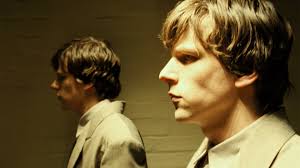
“The Double” (May 9th).
Jesse Eisenberg goes insane when a doppelganger of his appears at his work. Directed by Richard Ayaode (Submarine), “The Double” is a dark comedy that, despite fizzling out at its end, has shades of Terry Gilliam’s “Brazil” throughout its running time. Ayaode’s depiction of a future society is both bleak and humorous and unlike anything I’ve ever seen before. A dark comedy served black.
“Neighbours” (May 9th).
This indie and Hollywood partnered comedy is as good as the advanced buzz makes it out to be. Why? Well not only because it is one of the most outrageously hilarious things I’ve seen in quite a while, but also because of the way director Nicholas Stoller shapes his characters as not just merely stereotypes, but – shock – actual fleshed out human beings, which you rarely see in these sort of comedies these days. This has the potential to become a huge summer hit à la “The Hangover” or “The Wedding Crashers”.
“The Immigrant” (May 16th).
I loved James Gray’s “Two Lovers” which featured Gwyneth Paltrow’s last truly great performance and an always incredibly tense Joaquin Phoenix. In “The Immigrant”, Gray teams up with Phoenix once again, but this time with mixed results. The pacing is at times awkward and the story never really sets off. It is a shapeless and unsatisfying film, but has lots of passion and exquisite performances. I wouldn’t count Gray out just yet, he still has lots of talent and in the smaller moments of this film he really just takes your breath away.
“Tracks” (May 23rd).
The biggest applause I saw any movie get at the Toronto Film Festival wasn’t for “12 Years A Slave” or “Gravity”, but actually for John Curran’s “Tracks”, which is based on true events. In 1975, Robyn Davidson set out on a 1700 mile journey through the Australian outback with 3 camels and her faithful dog. Mia Wasikowska plays Davidson and she’s great. So is Adam Driver as the pushy photographer that follows her through this journey. This is a very by the books account of the story, but it gets the job done.
“Night Moves” (May 30th).
A much anticipated film for cinematic enthusiasts would be Kelly Reichardt’s “Night Moves”, a film about eco-terrorism that strips down the genre conventions and ends up giving us the bare bones of its topic. I deeply admired Reichardt’s past films (“Wendy and Lucy”, “Meek’s Cutoff”), but this one works because it moves along at a faster pace than the aforementioned. There are tense, gripping moments in “Night Moves”, and its performances – notably those of Jesse Eisenberg and Peter Sarsgaard – contribute to the film moving along admirably well.
“All Is by My Side” (June TBA).
Directed by John Ridley, “All Is by My Side” or, as people here tend to call it “The Jimi Hendrix Bio-Pic”, is a flawed mess of a movie that features a great performance by Outkast’s Andre Benjamin as Hendrix. I wouldn’t call this a Bio-Pic since it only covers a year in the life of Hendrix, but an important year nonetheless: 1966. That’s when Hendrix moved to London and found fame. However, there isn’t enough material in this one year to justify such a long, stretchy film. The bright spot is Benjamin, who’s phenomenal as Hendrix and sometimes makes you forget that it’s actually an actor playing the legendary guitarist. Will he get an Oscar nomination or any critics awards for this? Probably not, but he does prove he’s a fabulous actor.
“Snowpiercer” (June 27th)
Director Joon-Ho Bong became a household name in the indie circuits after making 2009′s great “Mother”. As the director of Snowpiercer, it’s his first foray in English language film. Harvey Weinstein fought an infamously long and hard battle with the director about the final cut of the film. Bong wanted a 2 and half hour cut, whereas Weinstein wanted it closer to 2 hours. They finally settled for the longer cut, but with the film getting weaker distribution in the U.S – They were both wrong. The film is indeed half an hour too long, but highly ambitious and fascinating, especially in its first 100 or so minutes, which are just really hard to describe. I won’t ruin anything but here’s a movie set in an apocalyptic future that will likely garner a cult following in the years to come.
“Life Itself” (July 4th).
Also known as “The Roger Ebert documentary”. I’ve read good press about it since its successful bow at Sundance earlier this year. Most critics have praised it as a very emotional journey and what I do know about the film is how unprecedented it is in its depiction of the final days of Roger’s life. Cameras were there in the final weeks with the approval of Ebert. Director Steve James is just the man to direct it, Ebert discovered -and was the first critic to back up- his landmark “Hoop Dreams” at Sundance exactly 20 years ago.
“Magic in the Moonlight” (July 25th).
The new Woody Allen movie. Given that the prolific director usually makes one film a year these days, you don’t always get a “Midnight in Paris”, “Blue Jasmine”, “Match Point” or a “Vicky Cristina Barcelona”. Sometimes you get a dud, like “Scoop” or “To Rome with Love”, which is why I’m not too sure what to expect with this new romantic comedy starring Colin Firth, Emma Stone and shot in the French Riviera.
“The Rover” (June 13th).
This looks amazing. Selected in Official Competition for this year’s Cannes Film Festival, “The Rover” is directed by David Michod, who made 2010′s intense Aussie drama “Animal Kingdom” which gave Jackie Weaver her first ever Oscar Nomination and was a surprising worldwide success. Guy Pearce and Robert Pattinson star and, if the trailer is any indication, we’re in for something very special here.
“Begin Again” (July 4th).
When “Begin Again” premiered at the Toronto Film Festival last year it began the biggest bidding war of any movie at the festival. Harvey Weinstein eventually got the last word and bought out everyone, and for good reason. “Begin Again” is a sweet and caring musical comedy that will be a big audience pleaser when it comes out this July. Directed by John Carney, who made “Once”, this is a movie that might not have the simple acoustic magic of “Once”, but is so consummately made that you forget all about its feel-good predictable trappings. With Harvey backing this one up, who knows maybe Oscar will call?
“A Most Wanted Man” (July 25th).
The last Philip Seymour Hoffman performance. It could be a memorable one too. Add in Willem Dafoe, Robin Wright, Rachel McAdams and you might have something interesting going for your movie. The screenplay is based on a John Le Caree novel about a Muslim that gets caught up in the international war on. The director is Anton Cobijn (“Control”,” The American”) a true original if there ever was one
http://www.awardsdaily.com/blog/summer-preview-part-two-outsider-art/

Redheaded Vixen's most memorable movie moments of 2013


Frozen 
With its combination of great music and amazing animation it showed the importance of family and taught us all valuable life lessons we should never forget, like don’t marry a guy you just met.

Starbuck 
For its balsy humour and true depiction of Quebec culture.

Before Midnight 
Director Richard Linklater's movie wasn’t afraid to “go there” as it depicted the true nature of the difficulties and differences in relationships, starring Ethan Hawke and Julie Delpy.

Dallas Buyers Club 
Director Jean Marc Vallee showed us the real struggles of people who are diagnosed with AIDS and depicted troubles that can apply to anyone who is diagnosed with an incurable disease.

Blue Is The Warmest Colour 
Although slightly too graphic at times, director Abdel Kechiche showed the high and ultimate heartbreak that comes with losing a love and how hard it is to get over your first love.

Summer Movie Preview 2014


This is the third year I’ve been doing the Sumer Movie Preview for Awardsdaily and it seems like every year the quality only diminishes. Think about it, most of the big name blockbusters that will rake up all the money in the world this summer are either based on a TV show, a superhero movie or a sequel to a movie that never really needed a sequel. So yes, this list does have a few of those and I’m willing to believe they will be good films, but while researching this list I was really trying hard to find stuff that will come under the radar and really aim for more than just cheap thrills. I found eight movies that peaked my interest.

22 Jump Street (June 13th)

I loved 21 Jump Street. That was just one of the funniest theatrical experiences I’ve had in quite some time. Directors Phil Lord and Chris Miller are really on a roll. They both made that incredible, well reviewed “Lego Movie” which came out earlier this year and now they’re back with this sequel to their 2012 hit. Channing Tatum and Jonah Hill – also on a roll these days – are back and ready to attack with this one and I personally cannot wait. The chemistry they had in the first one was really fun and loose and come on, this list doesn’t have to include just serious, Oscar bait material.

How to Train Your Dragon 2 (June 13th)

Let’s continue with the fun stuff. This can actually be a major contender for Best Animated Feature at next year’s Oscars (especially since there is no Pixar film coming out in 2014). The original film was really good and probably the best use of 3D in an animated movie that I’ve ever seen. It was also a great idea bringing back director Dean DeBois, he really did a fine job with the original.

Jersey Boys (June 20th)

I’m really curious to see what Clint Eastwood is going to do with the beloved Broadway play of the same name. He’s a great filmmaker that has slightly stalled of late with “J.Edgar, “Hereafter” and “Invictus”, not living up to the standards he set when he was on fire early on last decade with “Mystic River”, “Million Dollar Baby”, “Letters From Iwo Jima” and “Gran Torino”. I think he still has a few great movies left in his tank, but is this one of them? I’m not sure. I do believe this is Mr. Eastwood’s first crack at directing a musical so we can’t blame him for not taking risks.

Boyhood (July 11th)

This is probably the movie I’m most looking forward to. I don’t know many people who don’t like Richard Linklater. His vast, ambitious filmography really just speaks for itself. After he triumphed with “Before Midnight”, he brings us an even more ambitious film called “Boyhood”, which was filmed in a 12 year span. The story follows a boy’s life from the ages of 5-18. The cast includes Linklater regular,and fellow Texan, Ethan Hawke and, one of my favorites, Patricia Arquette. If the reviews from Sundance and Berlin are any indication, Linklater has just made another great movie.

Dawn of the Planet Of The Apes (July 11th)

2011’s “Rise of The Planet of the Apes” was such a surprising gem. Not only was it a really well made Hollywood blockbuster, but it left us wanting more. We will be getting more on July 11th, albeit with a different director at the helm as the original film’s Ruper Wyatt stepped down and in came Matt Reeves (“Let Me In”, “Cloverfield”) who will have the hard task of one upping Wyatt’s fantastic film. In this new film, the evolved apes will be battling human survivors in a battle of earth’s species.

Get On Up (August 1st) 

Given all the time and legal problems it took to finally get a James Brown bio-pic in the works, I was sceptical we’d ever get one. Well folks, we’re getting. It’s about time too since James Brown had one hell of a wild life – one that could easily translate cinematically. The director here is Tate Taylor and he made “The Help”, so all the Oscar cards are set for this one, even though I wasn’t a big fan of that film. We’re probably going to get something à la “Ray” or “Walk The Line”, very by the books but probably very well made. If early buzz and the trailer are any indication, Chadwick Boseman’s performance of James Brown could be worthy of a statuette.

The Giver (August 15th)

Meryl Streep and Jeff Bridges do Science Fiction? Yea, you heard it right. This has the potential to be really good. Not many people are talking about it. Add in vastly underrated filmmaker Philip Noyce (“Rabbit-Proof Fence”, “The Quiet American”) and the potential is truly there. This is based on the award-winning novel by Lois Lowry about a futuristic utopian society that gradually appears to be more and more dystopian.

Sin City: A Dame to Kill For (August 22nd)

“Sin City” came out in 2005, got critically acclaimed, built a loyal cult following, was a surprising box office success and – in my eyes – was the best film Robert Rodriguez ever made. Since then, plenty of imitators have tried to copy the film but they all failed (yes, I’m even counting “300”), most of them were based on Frank Miller novels. For almost 9 years now there’s been talk of a sequel but it just never materialized. So finally now we get our sequel and,judging by the trailer, it looks as visually sumptuous as the first one. Rodriguez is back in the director’s chair, so we’ll hopefully be getting a good shot of that dark pulp film noir that made the first movie so good.

http://www.awardsdaily.com/blog/summer-movie-preview/

Stanislav's Top 10 Movies of 2013


This is part of our 2013 "Year In Review" series, where our contributors get to share their favorite movies of the past year. Today Stanislav is checking in to give us his picks. 

1. The Act of Killing 

Definitely the best movie of the year and of the last several years, in fact. The movie that has possibly made me think more than any other one. It is not an easy watching experience, but an extremely enriching one. Halfway through I was wondering why I did not quit, but I am grateful I stuck to it. The plot is revolutionary in itself, a concept Kiarostami only dreams of. It is about a bunch of gangsters (or as they call themselves “free-men”) re-creating the killings against the “communists” in 1965-66 after the military coup in Indonesia. These killings (which were partially ethnic cleansing of the Chinese) took the lives of possibly several million people. The killers in this movie boast of having killed at least a thousand. They are given free rein to stage the torture sessions and murders as if they were in their favourite movies, be they westerns, gangster movies, etc. All through the movie, I was hoping for it to be some kind of satire, for it not to be real, but I knew all along that it was. The horror of this movie is not that it shows us a dark part of humanity’s history removed from us in time and space. What scared me so is that it allows us a glimpse – and a very personal one at that – into what it is like to be a person killing others for ideological reasons (or often for no reason at all) without questioning himself. Because it is clear that these people did not question, not until this movie at least. It explains so much of the horror committed in our world. But the movie goes further than this. It not only shows us, but staging these scenes allows the “actors” to see themselves, if only a little. It does more than I could imagine art doing as a meta-tool for self-reflexivity. Hegel’s remark that evil can also reside in the very gaze that perceives the world around it as permeated by evil comes to mind, and on so many levels. What is evil? What role does the gaze play in it? Only one thing remains clear to me: we all need to ask ourselves these questions. Everything else in my world-view was turned upside down by this film. Required viewing for everyone. Should be made mandatory in high school in my opinion.

 2. Her

The reason it is difficult to make science-fiction movies today is that they can no longer follow the structure of the old science-fiction flicks. And it is also why the few that succeed are very original. Her is a love-story between a man and his operating system. It is first and foremost a wonderfully acted, shot and edited emotional romantic movie. While discussions of technology’s effects on our ability to socialize are all the rage, this movie does not get bogged down in simplistic for or against arguments. It seems to not judge at all. It simply documents life as it… Not as it will be, but – really – as it is already. The slight exaggeration of a clearly delineated artificially intelligent ‘entity’ falling in love provides us with the ability to look into an interpersonal relationship as if from outside of a conventional relationship. But just as in Heinlein’s Stranger in a Strange Land – where through the eyes of a biologically human being raised on Mars we are allowed to observe human civilization – the main character is ultimately human, the relationship we see in Her is ultimately an interpersonal relationship in general, because we can no longer easily tell where the biological ends and the technological begins. Thus, granted the viewer accepts the premise, which I had no trouble doing, the rest of it is a very realistic depiction of life after the zero-point of radical transmutation of humans’ perception of the world around them as well as of their interactions – an apocalypse if such a word may be used, an apocalypse we are living at this moment. Without giving anything away, let me just say that it appears to me that Jonze wanted to use the operating systems in his film to show us where we can go, what abilities humans have.

3. The Great Beauty

The Great Beauty is a 21st century version of Wild Strawberries, but without being Bergman-esque in any way. It is about a man getting on in years who has the opportunity not many get to look back at his life and reflect. And like Dr. Isak Borg, our main character seems to regret the life he has lived and is continuing to live. Yet, the movie is definitely a comedy. It laughs at itself, laughs at its characters, laughs at its style. It is the ultimate art-house movie, but goes beyond this even and criticizes art-house. The director did a wonderful job, the dialogue cannot be improved upon, but what touched me most was the reflection upon the pursuit of beauty. The main character, who Servillo does a wonderfully funny job playing, is under the impression that he failed in this life-long pursuit of the great beauty, and although it is a shame he is not conscious of it, I believe that he is wrong.

4. Blue Is The Warmest Color

This one needs no introduction as it has taken countless prizes including the Palme d’Or. It is a simple and very well-told story of love and its decay. I think it could have been a little shorter than the three hours it runs, but pinpointing what could have been cut is very difficult, as each scene, especially the mundane ones, allow one to feel as if present alongside the characters. I did not especially identify with either of the characters, but I certainly felt what they were feeling. This was also due to Exarchopoulos’ sublimely engrossing acting. She certainly has an illustrious career ahead of her. Moreover, she was a great choice for Kechiche’s exploration of female sensuality (the shower scene among many is a visual masterpiece). While the sex scenes seemed a little over the top, I must remember here that I am a prude, and ultimately, I would not have changed them, because they are unique in cinema’s depiction of sex (be it same-sex or not). Finally, I am a sucker for powerful endings, and this one was both powerful and restrained at once, the restraint only serving to enhance the potency.

5. The Past 

Expectations were set very high for Farhadi’s new feature after A Separation. The Past does not deviate far from what we have grown accustomed to from him. No other director can make such a gripping mystery out of a family drama. This one is about what awaits an Iranian man when he comes back to France to sign the divorce papers after having not seen his ex or her children in years. However, it is not so much about him. The characters all take a back seat to the intertwined connections between them. It reflects wonderfully (for lack of a better word) a love that is simultaneous with frustration. A perfectly told story that pays careful attention to the details, such as moving supporting child acting, sets (and weather) that reflect the characters’ states of mind, and just-under-the-surface contemporary political undertones.

6. Inside Llewyn Davis 

The Coen brothers did something slightly different this time in my opinion. Like some of their best, a first viewing leaves you satisfied and not much more, but then with time you find yourself often thinking about the movie and anticipating a re-watch. This was a musical/comedy where a folk singer in early 60s New York shows us the inseparability of (mis)fortune and the choices we make. Llewyn’s bad luck does not surprise us once we get to know him a little, but the choices he makes steering him away from even a possibility of happiness do. For its duration, the film teeters on the edge of hope and despair. When Llewyn picks up his guitar and sings, our hopes are renewed, but we are quickly reminded that despair suits him better. The musical scenes are powerful. Oscar Isaac is a great singer. The cast is delightfully quirky (Goodman, Phillips, Driver and the rest all do wonderful jobs of portraying weirdoes). Inside Llewyn Davis just might not be fully appreciated until a couple of decades down the line.

7. Blue Jasmine

Another black comedy about exasperatingly down on their luck Americans. This one by Woody Allen. His other recent efforts have disappointed me considerably, but he has redeemed himself yet again with Blue Jasmine, the story of an East Coast socialite snob (Cate Blanchett) who – after her exceedingly rich husband (Alec Baldwin) is caught, sent to jail for his fraudulent financial activity and commits suicide while inside – goes west to stay with her floozy trusting hippy-esque sister appropriately named Ginger (Sally Hawkins). Jasmine has always disapproved of Ginger’s lifestyle, and continues to do so, even though the ground she thought was beneath her own feet is now obviously inexistent. Blue Jasmine is a portrayal of the sad consequences of people deluding themselves with notions of security and self-importance, and a very serious Cate Blanchett delivers a convincing performance embodying that delusion.

8. Frances Ha 

Frances (delightfully played by Greta Gerwig) is in some respects the modern female version of Llewyn Davis, although as cheery as he is gloomy. She also differs from Llewyn in that she does not have one anchor in her life (Llewyn’s music). She has no anchors, in fact. Frances represents so many young (but no longer so young) people I know today, the ones that believe they are younger than they actually are or younger than the world sees them. She is someone that probably never had a responsible adult ever take her by the hand and show her the ropes, and it is most likely almost too late for that now. What is beautiful about Frances is that despite her naivety (or perhaps rather because of it), she is exceedingly charming and upbeat. This charm does her no good, but it warms the audience’s heart. Frances Ha reminds us of two young Americans to watch: the very original director Baumbach and the enchanting actress Greta Gerwig.

9. Mud


After Take Shelter, Jeff Nichols showcases his diversity by delivering another complex Americana in Mud. It is about two young boys from poor Southern families who search for love and the truth and think they have found someone who will guide them in that search in Mud (played by Matthew McConaughey), a man who is hiding in the woods, seemingly from the whole world. As the film unfolds, and we learn a little about Mud, it turns out that he may actually not be the best guide for the boys, but they take their lessons as they can. Contrasted with the “wisdom” Mud tries to emulate is the wisdom of another character central to the film and its mood:  the river around which all of the action takes place. The river connects everyone and everything and yet also seems to be of another world. In Mud, Jeff Nichols has succeeded in telling another great story filled with symbolism.

10. Stranger by the Lake 

The Certain Regard directing award in Cannes went to this movie, which is usually a sign of something innovative. I failed to do my research before going to the theatre for this one, so let me warn you. There is lots of very graphic man-on-man sex, but as long as it is not a total surprise for you, the sex scenes actually add to a certain raw suspensefulness. Just do not watch it with any squeamish homophobes. The plot is very simple. It is about Franck, a young man looking for love, who finds lust on a summer beach in Michel, a man he witnesses drowning his lover. It would not be completely true to say that fear was the turn-on, and yet, Franck (played by Pierre Deladonchamps, who won the Cesar for most promising actor) continues to see Michel. At 97 minutes, it is a short movie that nevertheless feels like it takes its time to unfold, and I, for one, went from being slightly bored to being on the edge of my seat scared as hell. The last several minutes I must have been holding my breath too, because I distinctly remember breathing out as the credits started rolling. If you are looking for an uncomplicated thriller, and are not afraid of gay pornography, see it.

Nymphomaniac: Volume One +Two


You've really got to hand it to Lars Von Trier, every time one of his movies come out a sudden, intense, stifling conversation happens with all cinephiles. There's those who revile his work and find it pretentious, mean-spirited, gruesome and then there's those like myself who find his made to shock-frustrate-ponder style to be absolutely brilliant when it does hit the spot. Von Trier isn't perfect, he's made his fair share of duds but the core of his filmography (Breaking The Waves, Dancer In The Dark and Melancholia) is the stuff that dreams are made of. In fact, Von Trier is at his best when he makes us suspend our disbelief and dreams big things. The grotesquely dark song and dance numbers in "Dancer In The Dark" or the end of the world planet collision in "Melancholia" vividly come to mind. Here's a filmmaker that wants us frustrated and hating on him, just because it turns him on.

With all that being said his latest is a 4 hour epic about Nymphomania, more specifically a Nymphomaniac played by the ever so reliably brilliant Charlotte Gainsbourg who's become a sort of muse for the director with this being her third straight collaboration with Von Trier. You really got to hand it to Gainsbourg, the positions -sometimes literally- Von Trier puts the female actresses in his movies would probably not be accepted by many. I mean after all, wasn't it Bjork that decided to retire from acting after having to endure a -now- legendary feud with the director. Bjork was even quoted as saying “He needs a female to provide his work soul. And he envies them and hates them for it. So he has to destroy them during the filming. And hide the evidence.” Those aren't rose colored words folks, but they might explain the way Von Trier operates. All of his films have dealt with a female leads put into the most harrowing and inhumane of situations.

'Nymphomaniac' is really no different. Split into two volumes, with the first one already out and the second one coming out on friday, the films are an absurd series of sexual vignettes that only promote the harsh, frustrating style we've come to know from Von Trier. Gainsbourg plays Joe, a self diagnosed nymphomaniac that in both volumes recounts the erotic experiences she's had the last three decades from troubled, horny teenager to disturbed, criminally minded adult. It's a heavy voyage that justly needed to get split into two. After the first chapter ended I was happy I didn't have to sit through another 2 hours of tormented sexuality, I however happily dove into the second chapter a few days later but came out feeling the same way. It is probably how Von Trier intended to make you feel, downright dirty and wanting to take a shower immediately.

I know there are quite a few film fests that have screened the -now infamous- 5 and a half hour cut Von Trier intended to release worldwide, to which I say thank the heavens we didn't get tortured into that one and some sane studio head decided to split the film in half. Of course, I know quite a few people that would have sat through the entire damn thing but did they really know what they were getting themselves into? Of course I'm acting like the two Volumes are disastrous, which they are not, it's just that I'd like some sort of justification to be made for such a film with such little subtlety to be this long. I guess the answer lies in the fact that we are dealing with a director that is as explosively unpredictable as the characters he writes for the screen.

Both volumes have brilliant moments, one of which comes courtesy of a 10 minute acting lesson from Uma Thurman herself - a scene typical of Von Trier in its distressing, brilliant uncomfortableness. Another very funny one involves Gainsbourg, frustratingly not able to orgasm anymore, deciding to pick up two African guys who don't know a word of english and having sex with them. There are many other flashes of brilliance from Von Trier throughout both volumes but one wishes that he could have maybe taken the best scenes from both volumes and made one good 2 hour movie out of it. The subject matter and story are just not worth the 4 hours of investment and the feeling of excess is very apparent throughout the running time.

"Under The Skin" changes cinema in 2014


Jonathan Glazer's "Under The Skin" comes out in a week. It will polarize people, anger them, frustrate them. Others will get blown away by its vision and call it brilliant and say there hasn't been anything like it. If that's your type of movie then by all means go ahead and watch the film, because it is my type of movie and ever since I saw it more than 6 months ago I couldn't get it out of my head. It did cause the most walkouts out of any movie I've ever seen, and that's saying a lot, but again aren't you intrigued? I do think Glazer does push it a bit too far at times, testing our patience, but most importantly we get rewarded with a picture that is visionary and extreme in its uniqueness.

Much press will be made about how naked Scarlett Johansson gets in this picture, so I will come out and lay it to rest and state that yes she does get naked and yes it is needed for the kind of story that is being told here. One about seduction, humanity, extra terrestrial life etc. Have I lost you yet? I hope not.   Johansson is an alien sent to earth to seduce as many men as possible into her car and then kill them. The repetitiveness of the film's narrative might have turned off many but i had a blast watching Glazer's film. Its originality and absurdity is what I liked the most about it and of course Johansson who is just perfect for the part. She's had a real comeback of sorts lately with this and her voice work in "Her", indie queen in the making perhaps? maybe that's pushing it a bit too far but I like what she's been doing with her career of late and I do hope it continues the way I think it will.

What Glazer has accomplished here is quite remarkable and shouldn't be forgotten. He's made a picture that defies all cinematic conventions and has reinvented a new kind of language. He showed real promise with his first film "Sexy Beast" back in 2000, a cerebral and intense film that paved the way for Ben Kingsley's best performance. He followed it up with "Birth" which was kind of all over the place and not as successful as I wanted it to be and now he's really surprised me with this one, an out of left field vision that will really put many people off guard. I don't know if I've actually managed to convince you to see this film and I didn't really want to reveal too many details because a) there isn't so much to reveal plot-wise and b) whatever that needs to be revealed shouldn't really be revealed if you want to fully experience this film for what it is. After reading what I have to say about "Under The Skin" I think you'll figure out if this picture is for you or not.

Wes Anderson's world in "The Grand Budapest Hotel"


Wes Anderson's "The Grand Budapest Hotel" comes out with a storm of expectations. The 9pm showing I went to on the weekend was packed with 800 people waiting to see what his next quirky vision would be like. Suffice to say he didn't disappoint the least bit with this new one. It's not just the distinctive visual and narrative style that makes this an incredible achievement, it's also the fact that he has infused his obsessive dollhouse-like world with real heart and passion for character. Moreso than usual, something I haven't seen from a Wes Anderson film since quite possibly "The Royal Tenenbaums" back in 2001. It helps that the film is anchored by a remarkable Ralph Fiennes performance -maybe the best of his career?- a theatric yet compassionate performance that is filled with depth and persuasiveness. To mention Fiennes as a Best Actor contender this early in the game would be foolish and understandably irresponsible but he is so good in "The Grand Budapest Hotel" that it would be a real shame if he gets forgotten amidst the October-December awards shuffle of contenders.

It's not just Fiennes, the entire cast is uniformly good, as expected with any Anderson film, he even finds the time to sneak in long time collaborator Bill Murray for 10 minutes. It's just that kind of movie, one where anything goes and the fun comes in watching the director perform a balancing act with his odd narrative structure. And what a balancing act it truly is. In fact, in this and every other picture of his the story itself is only secondary to its execution. Anderson juggles three different timelines and eras and plays around with the assortment of characters he has created in his little dollhouse. From the fake sets to the lightning quick camera angles, to the OCD-like attention to detail, his movies are not for everyone but those willing to give Anderson a chance might get rewarded.

What I like best about Anderson's films is how they get better with each subsequent viewing. This one is no exception, the attention to detail and the uniqueness of it all will most likely make secondary viewing as essential as any of his previous films, particularly "The Fantastic Mr Fox" and "Moonrise Kingdom" which at first seemed distant but slowly revealed themselves as fantastic art by looking closer. Which is why having a final opinion on "The Grand Budapest Hotel" after one viewing is just not fair to its creators and to the film itself. There is a lot to digest upon first viewing and I find that with Anderson, moreso than any other director working today, watching his films a second time plays an essential and integral part in understanding his language and body of work.  What I do know is that this is probably the first great movie of 2014 - anything else of high quality come out?

The Long Take and "True Detective"


"A long take or oner is an uninterrupted shot in a film which lasts much longer than the conventional editing pace either of the film itself or of films in general, usually lasting several minutes. It can be used for dramatic and narrative effect if done properly, and in moving shots is often accomplished through the use of a dolly or Steadicam. Long takes of a sequence filmed in one shot without any editing are rare in films" -Wikipedia

That pretty much explains everything. The long take has long been one of the toughest shots to create in cinema. Firstly it takes lots of precision, a well calculated storyboard and a first class cameraman -amongst other things. Watching Episode 4 of HBO's brilliantly frustrating "True Detective" a few weeks ago got me back to thinking about this legendary cinematic shot. Episode 4 ends With Cohl and a gang disguised as police, trying rob a stash house, shooting one of the residents, and stirring up the neighborhood's inhabitants in the process, resulting in an outbreak of gunfire and chaos. With the actual police on their way, Cohle holds a guy at gunpoint and tries to escape the house and make his way through the projects. This is all done in one continuous 6 minute shot. Brilliantly devised by director Cary Joji Fukunaga and his ace cameraman Adam Arkapaw.


It really is just an amazing display of just how far we've come over the years, in that possibly the best shot of the entire year might come -not from cinema- but from Television. I'll ponder more on "True Detective" once the series ends but for the time being I wanted to delve more into the best single takes I've ever seen. One that comes to mind right away is the opening of Robert Altman's "The Player". The film's opening shot -which took more than 15 takes to nail- lasts for 7 Minutes and 47 seconds. Of course, any female will tell you this, it's not about the quantity but the quality and the quality on this one shot is incredible. A self-referential introduction to the world of make believe, the opening single take sequence to Altman's masterpiece is a formula bending ode to the classic single shot of "Touch Of Evil" (look below). Altman's wonderful analog parlor patter follows the scenery as the storyline unfolds between storylines. Clever quickly turns classic as the film is established something more visual flourish than acerbic satire.


.


Of course Altman or "True Detective" wouldn't have have been able to perform such brilliant feats without their groundbreaking predecessor Orson Welles' "Touch Of Evil", one of my very favorite films of all time and one of the best directed movies I have ever seen. The film opens with a three-minute, twenty second tracking shot. On the U.S.-Mexico border, a man plants a time bomb in a car. A man and a woman enter the vehicle and make a slow journey through the town to the U.S. border. Newlyweds Miguel Vargas (Charles Heston) and Susie (Janet Leigh) pass the car several times on foot. The car passes the border then explodes on site.


I can't name all of them but I'm only mentioning the ones that have really stood the test of time. Take the complexity of any long take and combine it with a moving vehicle and you get the mesmerizing 4 minute long take from Alfonso Cuaron's incredible "Children Of Men". A specially designed car was used that allowed crew to slip in and out of the vehicle , remove the windshield and replace it, and still get around the entire car as if it were really happening. There have been very few camera tricks as impressive as this one in the last 2 decades of cinema.


If "Touch Of Evil" is the grandfather of long takes then Martin Scorsese's "Goodfellas" is the next generation. Giving us the perspective of being alongside Ray Liotta as he brings Lorraine Bracco to the Copacabana club both propels the plot and the character into the gangster lifestyle. Shot eight times, Scorsese was forced to film this way since the club wouldn't allow them to enter the short way. The result is movie history.


"The Lego Movie"

 Was it Raphael that once said that "art is first and foremost visual"? Whatever the case is, many artists focus upon that which they find visually attractive, intriguing and interesting. As such, it shouldn't be the least bit surprising that beautiful women... the female body... sexually attractive women (or in the case of homosexual artists such as Michelangelo, Donatello, Caravaggio, etc... beautiful men... sexually attractive males bodies) are among the most painted subjects in the whole of art. Sexuality... Eros... the "erotic"... is one of the central themes of all art. If there is a difference in Modern art it is that artists have no longer needed to mask... or "perfume" the erotic/sexual content... to justify it by presenting it in the guise of a Biblical narrative (such as Adam and Eve or Bathsheba) or a Greco-Roman narrative such as Venus and Adonis, Danae, or Diana and Acteon.

All this and I'm about to talk to you about "The Lego Movie", which seems like a highly unlikely candidate to compare with Raphael's quote but it isn't. What directors Phil Lord and Christopher Miller (21 Jump Street) have given us is in fact a visual feast, of course there's nothing erotic or sumptuous about the images presented but it is a great example of what a modern movie can bring with an imaginative vision and real artists at the helm. Lord and Miller have made a movie so loaded with visual pleasure that it will take 2, 3, 4 viewings to fully grasp every hidden upon hidden visual quirk. In fact the plot of the film gets set aside for the sheer visual pleasure of the movie. You can watch "The Lego Movie" on mute and still enjoy it tremendously, which is not to say the dialogue doesn't work, it does. The jokes have an edge and are bitingly written by Dan Hageman and Kevin Hageman who both share a screenplay credit.

The plot on the other hand is secondary, you're not buying a ticket to "The Lego Movie" to get engrossed, you're going to the theatre to watch visual imagination unfurl in front of your very eyes. In fact if the damn thing weren't so visually arresting I wouldn't have even given a thought about writing this review. All this to say that yes, the glowing reviews this colorfully subversive film has been getting are all warranted. The artistic process here is very apparent and the work ethic clearly shown. What Lord and Miller's brick-blocked world of a film does is accurately and effectively recreate the creative space that is possible in animated movies, but really just movies in general. It's a landmark in animation that might just change the game and that's really saying something.

Phillip Seymour Hoffman 1967-2014


It was really too early for anyone to write such a piece on Phillip Seymour Hoffman, he had so many more years of brilliant acting left in him but alas the man had his demons and they got the best of him in the end. Let that not detract the fact that he was one of the greatest actors we are likely to ever see on screen in our lifetime. A man so engrossed with the characters he played and wholly dedicated to his art that at times he could carry an intensity that scared the living daylight out of you.

As Truman Capote in Capote Hoffman brought forth all the quirks and nuances of the great writer he portrayed. It was to be his only Best Actor win but what a performance, filled with depth and a sense of time/place that is very hard to match in any movie today. He elevated Benneth Miller's movie into an amalgam of fiction, non-fiction, tragedy and repentance. In The Master he fictionalized a Ron L Hubbard type of man and made him humane, caring and understandable. That scene where Hoffman interviews, questions, debates, Pheonix's character is as brilliant as any scene in any movie I've seen in the past few decades. Hoffman could do that.

Those are just examples of his brilliance. The way he took his job so seriously and with such heart, that doesn't come too often in Hollywood. He was a unique talent, an actor for the ages. I always looked forward to his next endeavor and to think it won't happen is a sad thought .

Lina Wertmuller's inglourious "Seven Beauties" (1975)


Lina Wertmuller's Seven Beauties is an ugly movie. I do mean it as a compliment. Wertmuller is a female Italian director who's films aren't the most heartwarming. She has consistently tried to break societal taboos over her long illustrious career, albeit with her films not always well received. Seven Beauties is the best film of her career and justifiably made her the first female director to ever get nominated for a Directing Oscar. Tackling the holocaust, WW2 and Italy's ugly role in this bloody war can be seen as something of a risk given Italy was still in a state of shame for what they had done at the time of the movie's release. The taboos tackled by Wertmuller were indelibly cringed in an air of shame.

The main character Pasqualino, playfully rendered by Giancarlo Giannini, is a POW that will do anything to survive in the prison camps. Even if it means sleeping with the obese, repulsive and hated Nazi commander. The scene in which he performs sexual favors to the commander is as disturbing as cringe-inducing as it is brutally funny. In flashbacks we see Pasqualino's life as a small time hood in Naples. These flashbacks are meant as a way for us to find out how he got into this very situation at the POW camp. Pasqualino ends up killing his sister's pimp, then -in an unforgettable scene- tries to find a way to dispose of the body, dissecting it with a chainsaw and placing its parts in a suitcase. Pasqualino eventually gets caught. Pleading insanity he is sent to an asylum where he lives out his days.

Wertmuller wanted to push buttons with her film. Make people as uncomfortable as possible. She tries to make the obese and ugly Nazi commander as obese and ugly as possible to make us cringe at how desperate Pasqualino truly is. Here is in fact a very desperate man that goes at arms length to get himself out of situations. Another example is the aforementioned dissection of the pimp, a brutally funny Tarantino-esque journey into hell. Wertmuller shoots these scenes with no restraint, she goes over the top purposely and some didn't take to heart her style back in 1975. Too bad, Seven Beauties is a landmark of cinema and clearly inspired Tarantino to re-write WW2  history himself with Inglourious Basterds.

Gabby Hoffmann in "Crystal Fairy And The Magical Cactus"


Gabby Hoffmann is so god damn good in Crystal Fairy And The Magical Cactus. Directed By Sebastian Silva, who also made the equally good Magic Magic earlier in the year, the film is one a kind and wholly original. Gabby Hoffmann is stunning in it. She is remarkable in every scene she's in as a free spiritied, zen-like woman who embarks on a road trip with 4 guys who are looking for the San Pedro psychedelic cactus in Chile. We've all met someone like Hoffmann's Crystal Fairy -yea that's her name- and the details she brings to her performance are really just remarkable. Same goes for director Silva who has made a film that deserves cult status in the years to come.

Jamie, as played by a neurotic and aggressive Michael Cera, is a coked-up drug enthusiast that just wants to find the cactus and scratch it off his bucket list. When Crystal Fairy abuptly embarks on his road trip with the guys tension ensues and the mission is almost scratched off. Cera and Hoffmann go at each other head on, Jamie is a nervous wreck meanwhile Crystal Fairy is at peace with herself and demands that Jamie just relax and let the moment seep in. A last minute reveal at film's end wasn't necessary but the rest of the film is incredibly real, all due to Hoffmann's elegant portrayal of hippy personified. In a year of great actresses giving amazing performances (Adele! Blanchett! Gerwig! Delpy!) Hoffmann deserves to be on the short list. Her performance is built to last,

The MPAA, NC-17 and politics

With Blue Is The Warmest Color getting the dreaded NC-17 rating and 50 Shades Of Grey almost destined to nab it in 2014, I was thinking back on some of the most memorable NC-17 rated films since the rating got introduced more than 20 years ago. Before that there was the X rating, which was just as bad and meant for a provocative experience to say the least .. Many of these films didn't even deserve the NC-17 they got. Martin Scorsese's upcoming The Wolf Of Street had to be trimmed down because the MPAA was about to slap it with an NC-17. Yikes. Even a master filmmaker like Scorsese is having a hard time dealing with the MPAA bullies.

Most of the time it has to do with the sex, other times it's .. actually 99% of the time it's the sex. You get Hollywood films where heads get blown off and those movies always get away with it easy, but you have two people having their genitals showing and the MPAA is up and arms over it. Talk about stupidity. I'd rather have my children watch two people having sex than a guy's head getting sawed off -Saw anyone? And then there is debate as to how violent movies are responsible for all these school shooting and mall shooting happening around our neighborhoods. Maybe if those kids were watching people having sex instead of a mindless Stallone vehicle maybe it wouldn't have turned out so bad.

Listen, I'm not for censorship of violent films. I just think it's funny that sex is still a scary thing in the States and that meanwhile out there in Europe there are nude women in bus ads. Talk about societal advancements, those Europeans got it going on. i just find it ironic that for a country that seems to be scared of sex -"oh the children", "GOD is looking down on you"- there really is less of a strict restriction from the MPAA on violent, big blockbuster movies. I mean, how shocking is it to watch a vagina? as compared to, for example, watching a woman getting her face busted in by her boyfriend in The Expendables (an R rated film by the way ..) Slapping an NC-17 rating on a film with sexually graphic scenes prevents some people from watching -for example- Blue Is The Warmest Color, which is one of the best films of the year or last year's underseen but brilliant Killer Joe.

Here are notable films that have gotten the rating since its inception back in 1990.

Bad Lieutenant
Lust, Caution
The Dreamers
Killer Joe
Romance
Shame
Where The Truth Lies
Bad Education
Showgirls

Kechiche, Adele and la couleur Bleu


There isn't much that's hidden in Blue Is The Warmest Color. The film's director Abdel Kechiche has taken much heat for not only having his film run more than 3 hours but also for shooting scenes of graphic sex involving his two female leads. It's more than just sex that runs through Kechiche's film but the sex is important. That's one thing I don't think people seem to be getting. Of course Kechiche shoots them in such a sensual, male-gazing kind of way and -yes- he seems to be getting away with a lot (no wonder his actresses said they felt used during the shoot). However I do think these sex scenes represent an integral part of the overall story.

Our two lovebirds Emma and Adele don't have much in common. Emma loves art and hanging out with pretentious-talking artists and doesn't really care about making as much money as possible in life. Whereas Adele -as much as she loves to read and talk art- is more earthbound and finds having a steady job and healthy salary to be of the up-most importance. That's why she pursues her passion of teaching at a daycare. These ideal are reinforced when we get to meet the parents of both young girls, they end up sharing the same common ideals. Adele's parents reinforce the question of yes, art is great but where does one's salary come from if you make it your living. Emma's parents on the other hand love art and don't mind that their daughter is putting it at the forefront of her life.

These two girls have practically nothing in common except for one thing, the lust they have for each other is tremendously intense. Sex drives their relationship. So much so that Emma finds Adele to be a kind of muse for her paintings. That is why I find Kechiche's reason for having such graphic sex scenes not out of the ordinary. Kechiche is trying to show us how these two girls can only connect in the bedroom. Outside there isn't much chemistry. Sure, they talk a lot about philosophy -Sartre!- and literature but one feels like Adele is being forced into these conversations more than passionately seduced by them. 

It is then no surprise that their union ends up fizzling out. Sex can no longer hold it together because at the end of the day it takes more than just passionate sex to make a relationship work. It takes a bond that is more than just about sexual desire. That is where Blue Is The Warmest Color hits its rough patches, we knew the end was coming and that Adele -still immature and baby-faced- would be heartbroken by a relationship that was all style and no substance. 

Crying ensues. The film picks up again once the two girls meet up at a coffee shop to bid their adieux's to one another. No clothes are taken off but the sexual chemistry is still there, Adele licks Emma's fingers and puts her hand between her legs. All this in broad daylight, in front of people. This scene is more sexual and provocative than any of the nudity-laced ones we had seen prior. Emma finds a way to control herself and tells Adele that it's too late. She knows that it takes more than just sex to make a relationship work. Of course, it is an important part of any relationship but Adele and Emma are two different people that somehow ended up in a relationship. Sex held it together. 

The color blue is firmly placed in almost every scene involving Adele. Emma's hair color is blue. From a scarf to the park bench where they have their first kiss, the color is subtly -or for some unsubtly- utilized to evoke the state of mind of her character. She is deeply and firmly in love and the color cannot escape her every move. It isn't up until the breakup that Kechiche decides to replace that color with red to show the vast emptiness that Emma has had on Adele's life. 

In the film's final scene we are in an art gallery at Emma's show, Adele shows up all dressed up and -to my eyes- not really sure why she is there. It is clear that Adele wants closure but how to get it. She sees Emma's circle of friends, her new girlfriend and the pretentiousness that reigns all around the room. That is more than enough for Adele to finally find closure. She knows this world is not for her, she is more than happy with her job teaching kids. In fact, just like her own self, she has graduated to teaching first graders. A subtle indication that she is growing up just like the kids she is teaching. A final shot of her walking away from the gallery is all we really needed to see to know she will be alright. 

Dallas Buyer's Club


The physical transformation Matthew Mcconaughey succumbs to in The Dallas Buyer's Club is one for the history books. Forget about the more than 40 pounds the actor had to lose to portray Ron Woodroof and think more of the way he completely delves into the mannerisms and tics of a homophobic, female loving, bigot that finds out he's HIV positive and has 30 days to live. That's what happened to Woodroof in 1985, just as the disease was taking its toll on not just the population but -SHOCK- Hollywood as well. In the early moments of the film lone star cowboys gather around the back shed of a rodeo to see the headline in the paper which reads "Ron Hudson dead of AIDS". Not many people wanted to believe it was AIDS that killed one of the most masculine actors Hollywood ever produced.

Woodroof wasn't a saint. In fact he was the complete polar opposite, a man so bigoted and endowed with his radical principles that even after the doctor tells him he's dying of AIDS he blatantly responds "I ain't no queer". So the story goes, Woodroof eventually realizes that he does have AIDS and is consequentially rejected by friends and co-workers. What must a man do next? That's where the story gets interesting. AZT was the big drug of the moment to combat the disease back in the 80's. The FDA was making clinical study after clinical study to look at the effects the drug had on AIDS patients throughout the country.

Woodroof tries it and finds his illness worsening. From there on in he travels to places as diverse as Mexico, Israel, Japan, China and Sweden to find the latest breakthroughs in medicine to combat his HIV -and others in the process. Opening up a Dallas Buyer's Club inside a rundown motel room gets Woodroof going and sets up a chain of events which eventually make him one of the top black marketers for AIDS medicine. The FDA obviously disapproved of his actions. Set out legal lawsuits against Woodroof to put a stop to his rebellious ways.

Directed by Jean-Marc Vallee, the film has a gritty, docu-drama feel to it. The momentum it builds up in its first half can however not be maintained in its second half. cliches come to Valee's film at a furious pace, so does the presence of Jennifer Garner who's vastly underutilized as a doctor that defies her peers' orders and backs up Woodroof's case. What makes this film are its performances. Jared Leto as a transvestite that becomes Woodroof's partner is a standout. But it's Mcconaughey, skeletal and gaunt, that gives us a fearless, impassioned performance that can be qualified as artfully resonant. He deserves every award that is coming his way. He has never been better.

A little note

Sorry for the lack of posting in the last few weeks, my hands have been pretty full of late but I plan on catching up with you very soon. I have still managed to catch up with a few goodies at the cinema and will tell you all about them in the coming week or so. 2013 is shaping up to be one hell of a movie year.

Better late than never; My Top Movies of 2012


1) The Master

P.T Anderson's masterpiece is almost unexplainable. A reinvention of the cinematic language with a never better Joaquin Phoenix. The backdrop is scientology but that's only the backdrop for a much more complex movie. Some of the time I was wondering what exactly was happening on screen yet I was never less than riveted. Bold, innovative and infuriating, "The Master" is a landmark movie but one that will likely divide its audience in half. Too bad, I was hypnotized by almost every single frame of its puzzling, schizophrenic narrative.


 2) Zero Dark Thirty

Forget about the Bin Laden raid which ends the movie. What counts in Kathryn Bigelow's film is how they actually got to the most wanted man in the world in the first place. The procedural work rivals that of "All The Presidents Men" and "Zodiac" but unlike those films feels current and relevant to its time. A great performance by Jessica Chastain infuses every frame and Bigelow, a great action director, proves her worth once again after her excellent "The Hurt Locker". What she does here is just tremendous.


 3) Killer Joe

William Friedkin's "Killer Joe" got the dreaded NC-17 rating upon its release. Rightfully so, a lot of the stuff we see is quite honestly shocking, especially its disturbing finale, which blurs the lines between good and evil. Matthew Mcconaughey is scary good as a crooked cop that rivals Harvey Keitel's pervert in "Bad Lieutenant" in a performance that will be talked about for years. Friedkin directs  with flair this tale about the dark side of humanity and how far we would go for the sake of greed. If you want to get provoked, just like all the other films on this list, seek this one out.


4) The Dark Knight Rises

Forget about the flaws -which includes an unworthy twist near the end- Christopher Nolan's conclusion to the greatest superhero trilogy ever told has many high points and an ending that satisifies the epic 8 year journey. Part of the problem people had with the picture was how unrealistic it was. I wouldn't consider putting the words realistic and batman in the same sentence, so why complain? "The Dark Knight Rises" was as close to a movie event blockbuster as we got in 2012 and even if it didn't meet the expectations set up by The Dark Knight in 2008, it came pretty close to matching that noir masterpiece.

 
 5) Prometheus

Ridley Scott's prequel to his "Alien" is the kind of movie I love. Filled with ambitious ideas about creation "Prometheus" can be seen as a great bookend to last year's "Tree Of Life". It is a deep, satisfying, visually rewarding experience. It asks questions that most filmmakers don't dare to ask and is acted and directed in such high fashion. I just wish Scott would forget the idea of making a sequel to a movie that asks us questions and dares to not answer them by letting us ponder it through long after the movie's end.


6) Looper

Joseph Gordon Levitt stars in director Rian Johnson's science fiction tale about loopers, time travel and murder in an original and visionary mind bender. Following it might be a mind fuck but the high that comes out of it is contagious. This is a brilliant movie experience, its an wholly original and entertaining idea, writer/director Johnson has managed to successfully transpose to film without, it would appear to a layman, pressure or interference from external sources.No matter how much of a good time you will have watching this film (and you will), Hollywood could stand to learn much more from it.


7) Rust And Bone
8) The Sessions

Here are two fantastic films that deal with sex in two very different ways. Hollywood, pay attention you migth learn a thing or two about real human interraction.

Marillon Cotillard excels as a woman that loses both her legs but still ends up finding love in the form of a mixed martial artist. Director Jacques Audiard proves that "Rust And Bone" was no fluke by making a hard edged film about tragedy, love and forgiveness. The sex here is frank, real and unflinching.

Who says paraplegics can't have sex. John Hawkes and Helen Hunt make a fantastic team in this true life story about a middle aged paraplegic that wants to experience sex for the first time and decides to hire a sex surrogate to fullfill his needs. "The Sessions" is sweetly rendered and never mocks its subject matter.


9) Moonrise kingdom

It took me a few viewings to fully grasp director Wes Anderson's small scale masterpiece. Just like any of his other films ("The Fantastic Mr. Fox","The Royal Tenenbaums","Rushmore") a second -or even a third- viewing of "Moonrise Kingdom" is mandatory to fully appreciate the little details that infuse every frame of Anderson's film. Story is secondary to the atmospheric 1960's world Anderson creates from scratch. His eyes and ears to detail are what makes him so damn good at what he does. Some may complain Anderson hasn't grown and matured in style over the years but I'll take his whimsical vision over most other so-called filmmakers.


10) Skyfall

For a film that happens to be the 23rd installment in a movie franchise that was supposed to run its course a long time ago, the latest James Bond thriller Skyfall is a surprisingly original treat. Daniel Craig's third outing as 007 is unlike any Bond movie we've seen before. It looks back on the first 50 years of Bond, then shows him to us again in a new light and sets him up nicely for his next 50 years. Just like Casino Royale the film could use a good edit but some of the scenes stand as some of the very best of the franchise. All credit must be given to director Sam Mended ("American Beauty", "Road To Perdition") and director of photography Roger Deakins.

11. Compliance, Craig Zobel

12. Brave, Mark Andrews

13. 21 Jump Street, Phil Lord

14. Seven Psychopaths, Martin Mcdonaugh

15. Jack Reacher, Christopher McQuarrie

16. In Darkness, Agnieska Holland

17. Haywire, Steven Soderbergh

18. Lincoln, Steven Spielberg

19. Premium Rush, David Koepp

20. Life Of Pi, Ang Lee

21. Miss Bala, Gerardo Naranjo

"Man With A Movie Camera"


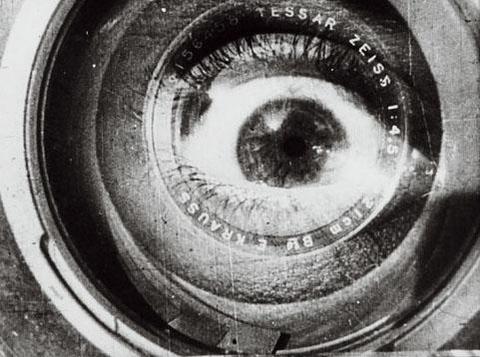
To think, Dziga Vertov's The Man With a Movie Camera came out more than 74 years ago. Things have changed in cinema since then, yet the influence Vertov's film has had on movies is immeasurably towering. Film was already entering the sound era and silent pictures were slowly dying, yet "talkies" weren't fully fleshed out and the quality of the product was lacking. There was something missing. It took Vertov's experimental film to pave the way for the next 80 years of cinema to come.

There aren't many films as influential as Vertov's masterpiece of sound and image. One can think of Jean-Luc Godard's Breathless in 1960 and its invention of the jump cuts but even that film can't compare to Vertov. "It stands as a stinging indictment of almost every film made between its release in 1929 and the appearance of Godard’s 'Breathless' 30 years later," film critic Neil Young wrote, "and Vertov’s dazzling picture seems, today, arguably the fresher of the two." Godard is said to have introduced the "jump cut," but Vertov's film is entirely jump cuts.

Before Man With A Movie Camera most films had shots that lasted for many seconds, if not minutes. The average shot length in 1929 was of 11.2 seconds. In the blink of an eye Vertov decided to make an experiment and have his shots last a much shorter duration. The average shot length of his film ended up being a mere 2.3 seconds, a feat completely unheard of back in 1929. To give you an example Michael Bay's Armageddon released in 1998 also has an ASL of 2.3 seconds.

Vertov saw how cinema was stuck in a tradition of being shot like a stage play. I can think of Josef Von Sternberg and his Marlene Dietrich pictures which, to my eyes at least, haven't aged very well because of the staginess and theatricality that infused their every frame. The same could be said with many of that films at that time that refused to break the wall of theatricality.

It wasn't just the ASL that was mind blowing, Vertov decided to make an experiment and to push the boundaries of what cinema can do. He combined his images of daily life in communist-era USSR with a soundtrack that melded perfectly with his images. It's as if the music was made to gel with the celluloid he shot. There isn't anything dramatically gripping in the film as much as there is a bombardment of contagious cinematic joy. The sheer rush of experimentation. In fact this experimentation still seems fresh by today's standards. 80 years later, Vertov's masterpiece still has a striking effect with a whole new audience.

"Gravity"


Gravity is eye popping stuff. Alfonso Cuaron has made a movie that is unlike any we’ve ever seen before. It’s almost as groundbreaking as Avatar minus the flaws Cameron’s film had. Cuaron's magic here is perfect. This is a straightforward blockbuster from an auteur who knows how to please. Cuaron's films have legitimately made him one of the best directors around (Children Of Men, Y Tu Mama Tambien) hell he even made high art out of a Harry Potter film. Prisoner Of Azkaban was by far the best one of the series, with its exceptional visuals. So who's to expect anything else but a great movie from Cuaron. He's made one here with Gravity. There are no eye popping, gut squirming villains in this space world. The villain here is just gravity itself in all of its nightmarish, scientific and subtle madness.

It would be unfair to reveal the secrets behind the plot but suffice to say a master is at work here and Cuaron has surely directed Sandra Bullock to her second Oscar Nomination – if not, her second win. Bullock is dead-on as an astronaut with not much to live for but her job, especially as she is still mourning the death of her daughter back at home. Corny stuff right? but you believe it and are affected by it. George Clooney plays her co-pilot in the space mission and he acts, well, like George Clooney in an astronaut suit. I'm fine with that. Some of the visuals here are tremendous, in a how-the-hell-did-they-do-it kind of way. It was supposedly a torturous experience for Sandra Bullock as she told us at the film's premiere in Toronto. Bullock was in a cubicle the entire shoot of the film and had to rely on her imagination to act out the scenes. It seems to have worked.

 Gravity is a film that relies on its visuals to tell a story. The hypnotic madness of space itself is continuously a theme that was delved upon before, most notably in Stanley Kubrick's 2001:A Space Odyssey. This is not as trippy an experience as Kubrick's journey into the human psyche but it relies on that film as a draft for its more entertaining aspirations. Some of Gravity's images have been firmly planted into my head since I last saw it in Toronto 3 weeks ago. It's a film that is meant to be seen on the biggest screen possible with the biggest speakers. The dialogue is minimal but the music -brilliantly composed by Stephen Price- drives the story along with its loud, penetrating beat.

The last 10 minutes of Gravity are as intense any film I've seen this year, in fact it'll make you appreciate the grounded feel of our beloved planet. There's something to be said about a film that takes place mostly in space with not much plot to speak for but the survival of its protagonists. What Cuaron and his brother Carlos -they wrote the screenplay together- have achieved is an immersive experience unlike any other we've ever seen before. Comparisons to Avatar will be made, but Gravity is a better, more artful experience. A 90 minute trip to space with the unrelenting feeling of wanting to get out alive.