
Spielberg's "Lincoln"


(PG-13) ★★★★

At first it isn't easy to succumb to Steven Spielberg's Lincoln - its darkly lit, talkative scenes aren't what we are used to getting in a Spielberg movie. The political talk is in every frame, this is a move that is more about dialogue than it is about action. A real shock given that this is a filmmaker known for popcorn entertainments raised to the level of art (Minority Report, Catch Me If You Can, War Of The Worlds). Lincoln is no such beast. It is quietly meditative with no rousing bombast or grand set pieces. The screenplay written by Tony Kushner brings us to 1865 a few weeks before the vote for a 13th amendment - this one would abolish slavery and free African American slaves. President Lincoln tries his damnest to convince Democratic delegates to vote for the amendment. It doesn't help that he is in the middle of a bloody civil war that has taken the lives of close to 600,000 Americans. We only see a glimpse of this war at film's opening, Spielberg is more interested in the war of words than in war itself. If you think this is a biopic of the President think again, this is a film about how the famous 13th amendment got passed.

Abraham Lincoln is slyly played by Daniel Day Lewis in another performance that will be remembered for the ages. His Lincoln is a man of many flaws but with enough heart, soul and drive to push the amendment forward. It has almost come to be a predictable thing to have a great Daniel Day Lewis performance but it is always highly welcome. Day-Lewis uses gestures and physical traits that are astonishing for his performance, the intensity that rages in his eyes is that of a man that is not playing Lincoln but IS Abraham Lincoln. He will surely be eyeing a third Best Actor Oscar come early next year. The film is full of great performances; James Spader, John Hawkes and Tim Blake Nelson play lobbysists aiding the president in  trying to turn democrats to their sides, Tommy Lee Jones as Republican Thaddeus Stevens is phenomenal and will likely be an Oscar contender as well. Stevens fought his entire life for an 13th amendment to happen and the sheer look on his eyes when it happens is triumphant stuff. Jones nails the role and brings about verbal fireworks to his juicy role that are too good to reveal - plus wait until you see his one BIG scene that takes place in the senate.

Verbal Fireworks. That is essentially the come-on for Spielberg's Lincoln. Don't expect visual stimulation in this picture, it is all about words and tactics uttered by these famous politicians. Some scenes might be a bit draggy but Spielberg tells the story in such an un-Spielberg kind of way. With an abundance of restraint and silence. Who'd a thunk it possible for the Hollywood director to have this kind of film in him. The first time I saw Lincoln I was taken aback, expecting something else and ultimately leaving the theatre a bit puzzled. The second time I saw the film -knowing exactly what to expect- I was wooed by the great cinematographer Janusz Kaminski's camerawork and by how the film simply told the story in such an intimate and un-bombastic way. That is essentially Lincoln, a quiet beast of a film that is never too showy and never too self-aware of its grandiose story. An important, interesting one in fact, that everyone should know about.

"Marley" gets the legend right


Bob Marley's life is very well known inside and out but Oscar winning Documentary filmmaker Kevin Macdonald's "Marley" thinks otherwise and has enough surprises in it filled with haunting revelations to make it a real stunner.  It helps that Macdonald uses breathtaking concert footage, archival treasures and interviews with almost everyone that has had an impact or was a friend to the legend. As far as Marley documentaries go, this is as full fledged a portrait of the man as we are likely to see in our lifetime.

"Marley" is a one beautifully crafted piece of work that can be enjoyed by fans and non-fans alike.
From his upbringing with a single mother in Kingston Jamaica to the identity of his dad, Norval Marley, a white marine that was very much absent in the singer's life. Some of the most fascinating parts of the doc have to do with Marley's dedication to his Rastafarian religion. "White people have Jesus, we have Rhasta Fari" he says in an interview. This belief entitles the Rastafarian to smoke a ridiculous amount of weed each day. Rastas such as Marley used it to get closer to their inner spiritual self and believe in the wisdom that came with smoking it.

The stories found in Macdonald's doc are highly fascinating. How Marley founded reggae through a single, unintentional chord. His roller coaster journey from Jamaica to America in search of a larger fan base. How he begged to revive Jamaica's government torn gang war, bringing a country together through his music and one landmark concert that resulted in two sworn enemies shaking hands on stage in front of of hundreds of thousands of Jamaicans. His fight with cancer and how he continued performing on stage despite his fluctuating health. However, most memorable is Rita Marley, his first and last love, with whom he had 3 children and how she stuck with him until the end despite his well known infidelity. The film states that Marley had 8 more children with several different mistresses, a total of 11 children that all agreed for this film to be made. Yet, despite all these facts, Rita Marley's memories of her partner are surprisingly beautifully remembered with compassion and -yes- a sense of true love.

The doc has a riches of archival footage including some magnificent concert footage of Marley and The Wailers performing in various different cities. We all know how it ends but Macdonald has ambition to burn, his documentary runs for a long 144 minutes yet the running time feels needed for it would  have probably been impossible to truly depict a life this grandiose and impressive in a shorter amount of time. Macdonald, a Scottish born filmmaker, who's been mixing it up lately with feature films ("The Last King Of Scotland", "State Of Play") and documentaries ("One Day In September", "Touching The Void") has already won one Oscar, he is almost -at least- guaranteed a nomination for Best Documentary with this one and judging by the contenders, his biggest comptetion will be well received films such as "The Central Park Five" and "The Queen Of Versailles".

"Looper"


(R) ★★★★

One thing you first notice in Rian Johnson's Looper is how it builds up its sense of dread with each successive, tension-filled scene. Nobody is safe here. The plot only builds up as layer after layer is revealed until the film's final shot. It's a hell of a ride and easily one of the best films of the year. Then why no mention of a possible Oscar Nomination for Johnson's visionary picture? You see, Science Fiction isn't something the academy has warmed up to in its 83 year history. Sure it rewarded Peter Jackson's The Return Of The King but what else did it reward before or after that? Looper is the kind of movie that can sometimes trip on its own ambitions but its originality is contagious, creating a new world we've never seen before. Credit must go to writer/director Johnson who after showing capable signs of competence in his first two films (Brick and The Brothers Bloom) finally hits one out of the park.

The film tells the story of Joe (Joseph Gordon-Levitt), a hit-man for an organized crime syndicate tasked with assassinating targets sent from the future.  They arrive from the future and bang with one shot they are dead. That is his job. Not complicated at all. That is until Joe's mob boss Abe (slimily played by Jeff Daniels) hints that the Rainmaker, a criminal mastermind from 2074, is closing the loops. That means he's sending Loopers back from the future to be killed by their younger selves. Just to hide evidence of the bloodshed. Joe's good buddy and fellow Looper Seth (an incredibly paranoid Paul Dano) is first in line to encounter his old self. He chokes, let's his future self go and is now being chased by Abe's gang with dire consequences. Joe is next and accidentally lets old Joe (a never better Bruce Willis) slip away. You see, Old Joe has a plan in mind. Find the rainmaker as a kid, kill him and set his future right.

You got that? I hope you do. It's a tremendously thrilling story that leads to Young Joe taking shelter at a family farm with a single mother (a tremendous Emily Blunt) and a kid that -you guessed it- might just be the Rainmaker. Joe is waiting for his future self to show up at this farm so he can shoot him, kill him and continue on with his work as Looper. The imaginative thought that went into the screenplay is a breath of fresh air that puts any other recent Science Fiction film to shame and Joseph Gordon Levitt -as good an actor as any around at the moment- does wonders with his role.  Don't expect a mind numbingly hammering experience such a the one experienced in Christopher Nolan's Inception, if you do pay attention to Johnson's linear story it can be followed and  make a lot of sense. No review should ruin the film's many surprises but suffice to say Looper's many twists are already being analyzed and debated by film fans. A sure sign that you've made a movie that is here to stay.

Ang Lee's "Life Of Pi"


(PG-13) ★★★½

"Life Of Pi" is a top notch visual achievement because director Ang lee infuses it with enough poetic imagery that even haters of the book will not help but appreciate the artistry at hand. Lee who's already been nominated 3 times and won once for "Brokeback Mountain" will surely get his fourth nomination for "Life Of Pi" which will only enhance his reputation as one of the most gifted filmmakers around. However I wouldn't put "Pi" in the same league as Lee classics such as "Crouching Tiger, Hidden Dragon" or "The Ice Storm" - the story's fairytale like familiarity almost sugar coats the impeccable 3D visuals. It is not just Lee that must be given credit for the visuals but also his cinematographer Cloudio Miranda. Remember that name, he might just get called up to the stage come Oscar time early next year. In fact, I'm predicting right here that Miranda wins it all on February 24th. He already performed visual miracles by making "Tron: Legacy" and "The Curious Case Of Benjamin Button" amazing looking pictures and with Ang Lee's new opus (out November 27th) he outdoes himself in terms of visual miracles. I mean really, this is just a stunning looking movie filled with images that are too good to be true..

The way Lee and Miranda shoot India in the film's setup is nothing short of gorgeous, focusing on every beautiful color and visual that comes their way. In this half hour we are introduced to our main hero Piscine -aka Pi- and the zoo that his parents have built up as a business. The religions that surround Pi confuse him, he sees himself as a believer in everything he sees. His dad -an atheist- is angered in the contradictions that surround his son's beliefs. The setup is slow but nevertheless complimentary for what's to come next. When the family has to leave India because of hard times, the film takes a dramatic turn. They hitch a ride with their zoo animals on a big ship to Canada where they will start a new life. Things -however- don't quite turn out that way. A magnificently horrific shipwreck happens that leaves Pi stranded on a tiny boat with a tiger he calls Richard Parker for 227 days. The way he must adapt to life with this dangerous animal is incredibly interesting to watch and no review should spoil that for you.

"Life Of Pi" flies high because of its amazing visuals and incredible use of 3D. None more apparent than in the film's middle section which lasts close to 75 minutes and involves -for the most part- just Pi and Richard Parker. That is when the film hits its peak and becomes a jaw dropping stunner. Lee and Miranda know that the way to grab an audience is not just by telling a story but by creating ravishing images that stick with you. The book had parts that you knew would translate very well from page to screen and had the potential to be true visual delights. Take for example the frightening scene where a storm of flying fish just suddenly appears out of nowhere and into Pi and Richard Parker's direction, or another scene where a slew of luminous jellyfish set the nighttime sea aglow with incredibly ravishing colors. Lee and Miranda handle Yann Martel's novel with the best possible care imaginable.

Martel's book had its hardcore fans but it sometimes struck me as too full of itself and with one too many ideas on its ambitious plate. Which is why the film's final third didn't necessarily work out the way I wanted it to. This is after all a movie that is a bit too facile in the way it plays with our emotions. I felt that at times it wanted to force tears out of me but alas that didn't work. Instead what I got was a film almost too prestigely wrapped-up for Awards season. No matter this is Lee's show as he brings us another visually sumptuous epic that does his name right. This is a crowd pleaser through and through and Oscar will be calling soon for both his and Miranda's triumph.

"The Sessions" The best and sweetest sex scenes of the year


(R) ★★★★

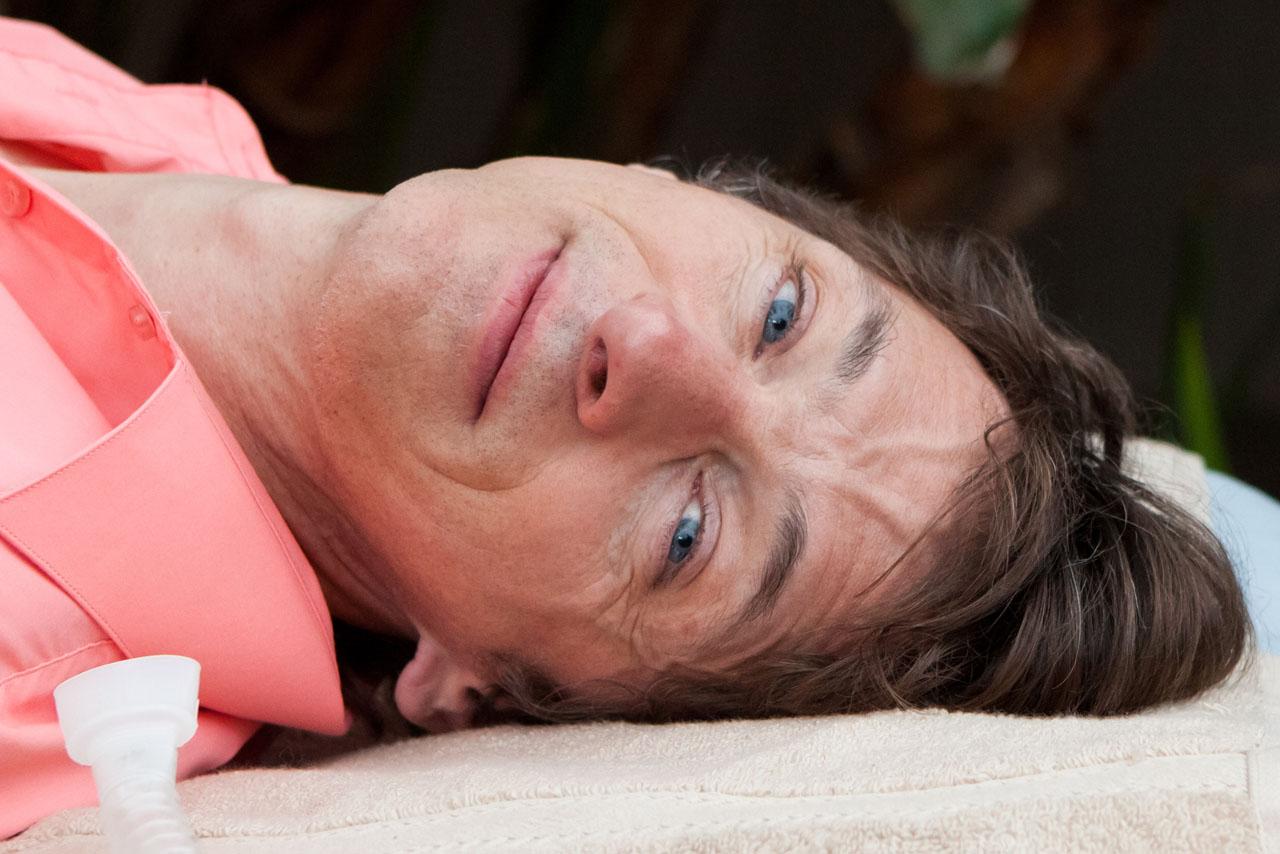
It doesn't take much to give in and enjoy Ben Lewin's fascinating "The Sessions". Based on the true story of California based poet and writer Mark O'Brien, the film deals with O'Brien's struggle with Polio and being forced to use an iron lung the rest of his life. It's not as grim a subject matter as you may think. O'Brien is played by John Hawkes, a man we will certainly see at next year's Oscar ceremony, in a performance that may recall Daniel Day Lewis' in My Left Foot but with more humor and playfulness. Having learned to twist his body, learn to breathe carefully and use a mouth stick to dial a phone and type, Hawkes gets all the mannerisms right and makes us believe that he truly is in this sort of state. It's no easy feat to act in a lying down position with an iron lung for an entire movie but if done well, this sort of showy performance usually spells awards for you.

O'Brien has been a virgin his entire life and decides to hire a sex surrogate to "de-virginize" him. That surrogate is Cheryl as played by Helen Hunt, in a supporting performance that will also be rewarded with a nomination. Hunt is spectacular bringing a sexy, fierce vibe that has been lacking ever since her "As Good As It Gets" triumph in 1997. The aforementioned sessions involving Hunt's Cheryl and Hawkes' Mark are the heart and soul of the picture. Cheryl has a 6 session limit with every disabled client she visits. The sex scenes are incredibly well handled and -dare I say it- the best and sweetest sex scenes I've seen all year in any picture. This is in fact the first movie I've seen where premature ejaculation is actually dealt with in a sweet, non joking way.  Hunt and Hawkes have chemistry to burn in those scenes. Which reveal secrets about both characters that we might not see coming. The screenplay is at its peak in these scenes, where every word counts and every gesture by these characters brings new depth to the story.

Mark is a believer. Visiting church every Sunday and getting the blessing of his priest -playfully played by William H Macy- to go on this journey to lose his virginity. One cannot understand why Mark would still believe in God given his physical state but he jokingly says there must be a god given the fact that someone must have had a sense of humor the day they created him. The playfulness that comes with this movie is a real treat. It's a small indie gem that gets all the details right. It's a testament to the way the movie is handled that the vibe is never menacing and that Mark's situation is never really handled in a way to manipulate your emotions or force you into tears. The film threatens to collapse in "TV movie cliches" and is shot like one too but the performances are just so strong and the story just so good that they elevate the movie into a true contender. "The Sessions" is an undeniably fascinating true story, one that makes you reevaluate your own life in ways you never thought you would. That's the sign of a great movie.
http://www.awardsdaily.com/blog/2012/11/05/the-contenders-the-sessions/

Pixar's newest treat


Sure, it might not be as good as past Pixar fare and sure, it follows a more traditional narrative structure and yes, it just didn't meet critical expectations BUT don't -and I repeat- DON'T discount Pixar's "Brave" as nothing but filler in the same category as "Cars 2" or "A Bug's Life". The film is too good to be shunned off and relegated to that low-leveled category. Let me explain why. Expectations can really kill the way you view a film. Before "Brave" even came out, the thought of another Pixar film coming to theatres gave critics and movie buffs a reason to smile in what would likely be another dull summer loaded with movie escapism and not too much food for thought. I mean, this is the same company that gave us some of the great animated films of the last decade and single handily brought us into -my opinion of course- the golden age of animation. Just look at the treasure trove of brilliant films this company has released since 1999; Toy Story 2", "Monsters Inc.", "Finding Nemo", "The Incredibles", "Ratatouille", "WALL-E", "Up" and "Toy Story 3".  An impressive list that is practically impossible to match by anyone else, safe maybe Hayao Miyazaki's brilliant filmography of the past three decades or Disney's brilliant run of films from 1989-1994.

In"Brave" what we have is Pixar's best animation to date. Its eye popping colors bring about dazzling visuals that would make any true film buff water in the mouth. The animation is so well drawn out and compared to earlier Pixar films, "Brave" blows them out of the water in terms of sheer technical achievements -Time's Richard Corliss has echoed my sentiments in saying it is "the most ravishing and complex pixar movie to date". However its narrative is safer, bringing about memories of some of Disney's so called "princess stories" yet infusing it with post 21st century material. This is Pixar's first film featuring a female heroine and not just any heroine; a redhead that has a killer talent for bow and arrow. Merida is her name and she is a headstrong free spirit that wants to "change her fate" (of being betrothed against her will) at nearly any cost. Merida will not be held back. The story comes with twists and turns that I didn't see coming, outstanding visuals and wait until you see Merida's three younger brothers,  redheaded baby triplets that just want to cause chaos everytime they're on screen.

This film doesn't have the dark, underlying adult themes of "Up" but it sure is a great time at the movies. Its scenes go from wacky, to dramatic to downright scary. Will it win the Best Animated Feature Oscar? It's too hard to tell but something tells me we shouldn't discount its chances. I mean, after all a "good" rather than "great" Pixar movie is still better than 99% of animated movies released in any given year. This is just a case of high expectations not being met. "Brave" isn't a film that vies for greatness - instead it is a lovely film that is intentionally Pixar's first foray into the "Fairytale" genre. However, It doesn't necessarily follow the rules of the genre; Merida would rather use her bow and arrow than chase boys or find her prince charming. The movie isn't about being in love or living happily ever after. It is more about one girl's quest to find self-fulfillment and identity in a world empowered by men. Don't listen to the naysayers or those who's expectations were too high to reach, let yourself get swept up into "Brave" and its magnificent colors.

When looking at the Best Animated Feature of 2012, one cannot discount Tim Burton's imaginative "Frankenweenie" which has enough critics backing it up and will likely get a well-deserved nomination. Burton's Gothic treat is his animated follow-up to "The Corpse Bride", which still is his ONLY Oscar nomination to date. Yes, it's very hard to believe especially with a filmography that includes "Ed Wood", "Sweeney Todd" and "Edward Scissorhands". "Frankenweenie" is Burton being Burton (You could see that as a good thing or a bad thing). Based on his 1984 short about a young boy named victor that loses his dog, Sparky, and uses the power of science to resurrect it "Frankenweenie" is a labor of love for Burton through and through. Shot in beautiful Black and White and laced with enough dark Gothic humor to satisfy his many legions of fans, the film will likely garner Burton a well deserved second nomination and maybe -just maybe- his first ever win.  Other contenders this year include well received fare such as "Paranorman", "Pirates: Bands Of Misfits" and the recently released "Wreck It Ralph".

http://www.awardsdaily.com/blog/2012/11/03/the-contenders-brave/#comment-1122849

Paul Thomas Anderson, Joaquin Phoenix and "The Master"


(R) ★★★★½

If you're ready to encounter a ticking time bomb on-screen then get ready for Joaquin Phoenix as Freddie Quell in Paul Thomas Anderson's flawed but brilliant The Master. No review can prepare you for what Phoenix does on screen in this movie. It is not only the best acting you will see all year but also a performance that will be talked about for ages. Not to take anything away from Philip Seymour Hoffman as a Ron L Hubbard-like biblical propagandist, Hoffman is brilliant too and will likely get his fourth Oscar nomination as Dodd. Anderson doesn't just direct The Master, he infuses it with so much cinematic juice that your eyes will likely explode in sheer delight of its colors and shots. Sure some critics are already bitching that Anderson (There Will Be Blood, Magnolia, Boogie Nights, Punch-Drunk Love) has made a film with no meaning and no direction but these same people are missing the point. The Master is episodic in nature, a shuffling of numerous, powerfully deliberate sequences -practically all taking place in Freddie Quell's head- that hit you hard when taken in as a whole. I came out of it both confused and affected.

Contrary to what many people are saying, this is not a film about Scientology. Even though Scientology does serve as a background, Anderson has slyly set up for us a character study involving Phoenix's Freddie Quell and his psychotic journey through hell. Every time Freddie is on screen you feel uncomfortable, an unpredictable character, a ticking time bomb waiting to explode at any moment. The anger and frustration that resides inside Quell is not healthy and severe medical attention is what he needs. He thinks he's found it in a man that is preaching a new gospel. Hoffman's Dodd is a well known scientists that has come up with his own religion, one that very much mirrors Scientology founder Ron L Hubbard's vision. Dodd sees in Quell a potential follower, a man knocked out by life and in need of a resurgence. A friendship develops and that is in fact the heart and soul of the film. Dodd and Quell need each other more than we are led to believe. They are first and foremost friends that are blatantly divided by their own beliefs. In one scene after the next we are only given glimpses of the bond that is developed between the two men.


Freddie's quirky mannerisms are memorable - a hunched posture, one eye widely opened more so than the other, a slurred speech from too much drinking and a broken walk. Freddie's alcoholism is severe. He has a drink almost every time we see him. Phoenix has created a character that will resonate with fans of cinema for years to come. The first 20 minutes of The Master focus on Freddie's failed attempts at life. His memorably preposterous stint with the navy is highlighted by a humping session with a sandwoman which leads to a jerk off session next to the beach. His job as family photographer at a retail store, which ends with him attacking a client nonsensically and losing his job. As a runaway in an undisclosed location filled with Asian workers which eventually leads to his own homemade moonshine poisoning a local old man and possibly killing him. Freddie being chased by the Asian workers, somehow getting away from them and eventually sneaking into a boat party that is populated by Dodd and his followers. The way I'm describing these events is the way Anderson presents them to us, in fragments - just like in There Will Be Blood's opening scenes, we are set up for a character study like no other and a man that is truly aggressive in nature.

The episodic nature of the film gives it the feel of a dream and much credit must go to cinematographer Mihai Malaimare Jr., who will likely deserve every award that will come his way at year's end. Anderson loses track of his film once his vision shifts to England but no matter that section still remains a thoughtful, enigmatic piece of his deliberately dreamy puzzle. We are left with enough question sto wet our appetites for a second viewing. The Master's many powerful moments combine to make it a masterful whole. It is a testament to Anderson's brilliance as writer/ director that you forgive the flaws that come with his work. He is truly the best American director working today because there is so much going on in every frame and such carefully planned out thought to his shots.  So much happens in the film's 138 minutes that the mind can't grasp everything at once. The relationship formed between Quell and Dodd is one that will be dissected for years to come. They form an unlikely duo that is the heart and soul of the picture. What's truly remarkable about the therapy Dodd uses on Quell -such as questioning, feeling walls/windows, controlling anger- is that it actually works for a glimmering moment, much more than any of the army's tactics.


Phoenix has shown signs of brilliance in past roles -most notably in 2009's underrated Two Lovers- but here he really outdoes himself. If Daniel Day-Lewis' towering performance as Daniel Plainview in There Will Be Blood left a shattering mark on cinema for decades to come, Phoenix's Freddie Quell will likely have the same lasting effect. Before The Master collapses in its final 10 minutes, there hasn't been anything better released in 2012. When it finishes there still hasn't been anything better in 2012. Its resonant images stay with you like a neverending wave at shore,  long after the lights have come up and the dust has settled. Here is an example of director and actor both at the peak of their powers making such powerful, relentless, united art that transcends anything that's come before it. Anderson's last 4 films have each been released 5 years apart, here's hoping we don't have to wait another 5 years for the master to release another one.

Oscar Watch; Richard Gere


Richard Gere, with his slick silver hair and squinty blue eyes, just turned 63 this past August. A stinging reminder that not only does time go by in the blink of an eye but also that this underrated American actor has never won an Oscar, let alone gotten nominated for one. Yes, that’s right. No nomination for his killer good role as lawyer Billy Flynn in “Chicago”, nada for his portrayal of Zack Mayo in “An Officer And A Gentleman”, the cheated-on husband in “Unfaithful”, Julian Kaye in “American Gigolo” or even as Clifford Irving in the underseen 2007 picture “The Hoax”. That might just change this year as Gere gives the performance of his career in Andrew Jarecki’s “Arbitrage”. In fact, Gere is so good as nasty hedge fund magnate Robert Miller that you still root for him to get out of his situation in one piece. Given that Miller is cheating on his wife with a french mistress, scamming his clients of millions of dollars and using his friend Jimmy as bait for the police, we shouldn’t be feeling that way about this corporate son of a gun.

Gere is magnetic, bringing ever ounce of nuance to his role and delivering a performance that’s nothing short of revelatory. No wonder critics have been screaming Oscar since “Arbitrage” got released way back in August. Does Gere have a chance at winning Best Actor? Of course not, especially with Daniel Day Lewis, Joaquin Pheonix and Denzel Washington vying for the top prize but Gere deserves to at least get nominated. In fact, a nomination would be more than welcome by many cinephiles, especially those that know just how good Gere can be when given the right script. “Arbitrage” is that script.

Written by Nicholas Jarecki, director Andrew’s half brother, “Arbitrage” is loaded with enough juicy scenes for Gere to show off his acting chops. That’s a good thing. Gere is going to need those scenes to carry him into awards season if there is any chance at even getting a nomination. Playing a money making scumbag that you really feel for isn’t the easiest thing to pull off in this day and age but Gere does it effortlessely, using his charismatic presence and brooding good looks to fully flesh out his character. Critics have been pretty unanimous in saying it’s one of his best performances, now it’s time for the academy to follow suit and honor this great actor.

http://www.awardsdaily.com/blog/2012/10/28/the-contenders-richard-gere-in-arbitrage/

Desplat and Original Score


Four time Oscar nominee and French film composer Alexandre Desplat isn't one to take it easy and have some rest. Some of his more masterful compositions reside in films such as The Tree Of Life, The Fantastic Mr Fox and The Queen. In 2012, Desplat is on a roll, composing for close to seven feature films (same number of scores he composed in 2011). Contenders such as Argo, Moonrise Kingdom, Rise Of The Guardians, Rust & Bone and Zero Dark Thirty will be stamped by Desplat's incredibly nuanced and visionary musical head.

What would Mr.Desplat be doing if he hadn't made it big in Hollywood you ask? "I'd look at the blue sky, eat cheese, tomatoes and figs, and at the end of the day, walk down for a swim in the sea. And then, I'd sleep," the composer was quoted as saying to the Wall Street Journal. Not far off to the sombre, sometimes melancholic mood Desplat creates with his compositions. Although as we speak his schedule will be much lighter in 2013 as he is due to compose only one film so far (Zulu).

It is then no surprise, given the amount of work and the reputation he has established over the course of just a decade, that Desplat is now a prime Oscar Contender in the Original Score category this year. In fact, the man can make Oscar History by getting nominated 3 times in the same category. An unprecedented feat that has the capable chance of happening if all the cards get played right.

His score to Ben Affleck's Argo brings you back to a time and place when the middle east was just starting to self destruct, his precariously whimsical notes in Wes Anderson's Moonrise Kingdom got critics and audiences all giddy with a tremendous high this summer and his upcoming score for Kathryn Bigelow's much anticipated Zero Dark Thirty promises to be just as good as the latter films if not better. Bigelow's highly anticpated film on the hunt for Osama Bin Laden is her followup to her Hurt Locker triumph in 2009.

The category will be loaded with contenders this year. With the already mentioned Desplat films vying for the big prize, Danny Elfman scored three films this year (Silver Linings Playbook, Frankenweenie, Hitchcock), John Williams -an Oscar favorite- is an almost certain nominee for Lincoln and Mychal Danna's exhilirating score for Life Of Pi looks like a top 3 contender. Be warned, the best score of the year doesn't always get nominated. Trent Reznor's incendiary work in last year's "The Girl With The Dragon Tattoo" did not get nominated. It was the best and most profusely thrilling score of the year yet got snubbed for lighter fare.

http://www.awardsdaily.com/blog/2012/10/23/alexandre-desplats-prolific-year/#comments

An Image "The Quiet Man"


Given all of its hodge podge, traditional glory, director John Ford's The Quiet Man -starring a charismatic John Wayne- is actually deeper than its looks might suggest. With its bright technicolor colors and wackily conceived plotting, you'd think Ford's film would be devoid of any actual substance. Well I'm sure your mind will get changed when you hear that The Quiet Man is a much studied film in feminist film classes. I kid you not. The 1952 film is a staple. If you want to know how female depiction in movies has changed over the years, this is a good example. That's what keeps me coming back for more whenever I see Ford's film on Television or have the oppurtunity to sneak in a screening. Listen, it's not like some of his classics including his masterful work in The Searchers - if you haven't seen it, watch it now ! The Quiet Man does the job done because of how the film interprets the relationship between ex-American Boxer Sean Thornton and the Irish lass played by Maureen O'Hara whom he meets in a remote village in the outskirts of Ireland. The Love/Hate relationship they build is the stuff of in depth feminine studies and freudian parallels, hell talk about deep.

Buster Keaton's lost gem


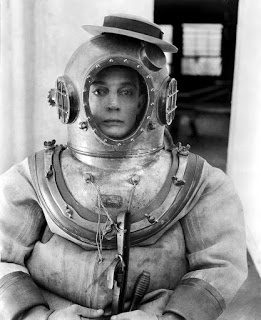
Keaton or Chaplin? This question, common among film enthusiasts, refers less to the cinematic values of the two and more to just personal preference: Not who is better, but who do you like more. Buster Keaton was always a man that had to compete against Charlie Chaplin. I mean how could he not? They were both silent movie stars that had an uncanny ability to take some of the simplest moments and turn them into comedy heaven. The critics championed Keaton and even placed The General -Keaton's masterpiece of the industrial age-on a number of all-time best lists ahead of Modern Times -also Chaplin's masterpiece of the industrial age. Audiences however put their hearts on their sleeves for Chaplin, an American movie star if there ever was one. Guy Crucianelli from Pop Matters states that Keaton was "the inventor" and Chaplin "the conjurer".

It's no surprise then that I find it very hard to choose between the two. The General is an astounding technical achievement, even more so now 90 years after its release. So it was pure melancholic joy to find out about The Navigator, a delightful Keaton feature from 1924 that has aged magnificently well. In fact THERE is one of the reasons why Keaton might just surpass Chaplin in my books. His movies have aged incredibly well. The set pieces in his films are just so brilliant and -dare I say it- too complicated to achieve in this day and age, even with the technological abilities we have. Which is not say that Chaplin's films have rusted, there is still -to this day- a stinging satirical punch to films such as Modern Times and City Of Lights.

In The Navigator Keaton's inventiveness is contagious. The story of a helpless, spoiled rich boy set adrift upon a giant ship with his equally helpless girlfriend has a clever story line and a series of excellent gags. The Navigator is actually the name of a ship and it mostly takes place on board this abandoned vessel (which Keaton bought outright when it was being scrapped). The reason it is abandoned (in the movie) and set adrift seems like it might matter at first as a kind of political plot but this all ends up not really being part of the larger movie. It's just an excuse to have the two on a big ship alone, with all the likely things that might happen as a result.

The gags are relentless -sometimes too much so- but those that work are lethal. The car ride proposal across the street, the pulley seesaw; the faint co-star in the collapsing deck chair (a precursor of his undressing scene in SPITE MARRIAGE); Donald Crisp's painting swinging back and forth outside the port hole; the pulleys and inventions for the organized breakfast (stemming from a similar sequence in his short THE SCARECROW); the underwater swordfish fight; the toy cannon attached to Buster's foot and of course the surprise rescue at the end.

Don't expect the political commentary of The General or the Brilliance of Sherlock Jr. but do expect Keaton being Keaton, which is enough to salivate the appetite of any true silent film junkie. The Navigator can be considered a lost gem in the Keaton canon - I had never heard of it until just recently- but its innocence and relentless pursuit to make its audience gasp and laugh at the same time is enough to make you think of a time when all the details mattered in comedy.

"Contempt", Godard and the decline of a relationship


You gotta love Jean-Luc Godard. He doesn't make it easy for a viewer to fully feel comfortable while watching any of his movies. He means to bring a sense of uneasiness and -sometimes- pure unadulterated frustration. His film Contempt is no exception. It explores many ideas that have been obsessed by Godard over the course of his illustrious career. In 1963,  Godard was permitted a big budget financed by an international production, the use of a CinemaScope camera, Technicolor, a pair of icons (Brigitte Bardot and Fritz Lang as himself) to star in the film, and almost total creative autonomy. It was known as his first -and last- foray into "mainstream" filmmaking, even though I wouldn't qualify it as a full on mainstream picture. However its intentions were unlike any popular movies in that Godard didn't play it safe at all and kept hitting his audience with more questions than answers.

What has fascinated me most over the years is how Contempt -Le Mepris in French- dealt with the end of a relationship. Brigitte Bardot's magnificent performance as Camille Javal -she was so good that her character's name was later believed to be her real name!- wife of the aspiring screenwriter Paul (nicely played by a young Michel Piccoli) merely confirmed the fact that Contempt was a personal film for Godard. The director hadn't had the greatest success with the women in his life and decided to portray the crumbling of a relationship on screen. To great effect might I add. The centerpiece here is the near-infamous twenty-minute long sequence that takes place between the writer and his girlfriend in their vast, open-plan apartment, in which jealousies, bitterness and petty arguments blow up and cool off amidst a series of seemingly mundane, everyday-like activities. There is clearly something wrong with Camille yet whenever Paul tries to ask why she shrugs it off and says "nothing" but we the audience know that Camille's love for him has faded and that she is only clinging at this point. Albeit by the way her answers to Paul are structured or by the way her mood changes - there is something very wrong here.


Not much happens in that scene, yet everything happens. It is then that we realize exactly what Contempt is about. Godard wants us to feel the pain that Camille feels, she is stuck in a relationship she no longer is excited for. Paul isn't into it either, his gestures and sentences show a kind of by the numbers feeling for his partner. Yet you feel for him when Camille finally blurts out that she no longer loves him. The daring ambition Godard gives out is palpable. He disses the film industry as well. Fritz Lang -playing himself of course- directs an adaptation of Homer's Odyssey, staying true to the spirit of the original. Producer Jeremy Prokosch -a hoot and a half- unhappy with the results, hires Javal to rewrite the script. Javal compromises the original's world of ideals with modern-day sensibilities. In essence, he parallels his own life to Ulysses'. Ulysses fights in the Trojan war because he is estranged from his wife Penelope, he delays coming back because of that. Penelope (estranged from him because of his behavior) is being unfaithful.

This is all part of the absurd joke that Godard plays on his audience and Contempt has been known as just that for many years - but I see much more in it than just a one joke pony. I see a Godard that was pained by unsatisfying relationships in his life and delved into their significances through his own art. His film captivates the viewer at unexpected times. It seems -from the outside- like a pompous piece of work with a thinly layered plot but it is much more than that. Contempt is fresh air. Contempt is about characters -whether it's the film director, the pompous American producer or the shot down couple- stuck in a world where there is communication breakdown. And there's no easy way out of it.

"Breaking Bad" and "Homeland" breaks barriers on the idiot tube

Truthfully. Is there anything out there right now in theaters as gripping as Walter White's absurd chemistry teacher gone bad story in Breaking Bad? Or Clair Danes' paranoid/bipolar CIA agent gone psycho in Homeland? I didn't think so. Homeland and Breaking Bad are doing at the moment what The Sopranos started 10 years ago; bringing the quality between the big screen and the small screen closer and closer together. There is no longer as big a gap as there used to be. It's not stretch to say that the two show mentioned are better than 90% of the stuff I see on a yearly basis in theaters. Is it the state of film that's crumbling? Or is it just that we are just  in the midst of the golden age of Television? I think it's both. Name me one great Hollywood movie you saw this year? (and NO foreign films don't count) .. Yea .. I didn't think so. Unless you -of course- consider The Hunger Games a masterful piece of cinema or better yet the cash grabbing violence in the Avengers as grippingly real as Walter and Gus' epic duel of wits.


In Breaking Bad Walter White's transition from loser/ high school chemistry teacher to Scarface-level insanity is almost too preposterous to believe. Here's a man that had nothing really exciting going for him in life and then came a medical diagnosis that put him in the ultimate of all mid life crisis's. A panic so severe that takes him on a meth-cooking journey to hell. Walt grows before our eyes in the series' 5 thrilling seasons and it is a testament to Bryan Cranston's acting chops that we believe his journey every step of the way. If you notice the quality and tension of the show only grows as each season goes along.  It's no wonder that Cranston - a veteran actor of more than 3 decades- won 3 straight Emmy's for his legendary portrayal of a monsterish anti-hero. Creator Vince Gilligan has consistently said that Walter's story is that of "Mr.Chips turning into Scarface" - he's not at all exaggerating. Walter White's story is one of those "you gotta see it to believe it" TV phenomenons that don't come on the tube that often. The direction is also better than anything I've seen in American movies, in fact Gilligan has persuaded quite a few film directors to make the jump to the small screen and direct his show. The list includes film noir expert John Dahl (The Last Seduction) and Rian Johnson (Looper).  Kudos must also go to Aaron Paul as Jesse, Walt's cooking partner and confident. Their friendship is that of highs and lows, fights and hugs and -ultimately- hidden betrayals. In fact, the entire cast is top notch from Dean Norris' Hank to Johnathan Banks' Mike the hitman. There's not telling what will happen in the series' final 8 episodes -which are set to air next summer- but one thing's for sure; the surprises have surely only started.


On the other hand Homeland is the rookie on the block. A show that only started its run in 2011 yet left such a lasting impression that it just won Emmys for Best Drama Series Best Actor and Best Actress, beating such stalwarts like Breaking Bad and Mad Men. In fact the show's surprising win left many "baddies" with a feeling of anger that their beloved show didn't get top prize. Know what? I bet they haven't seen a single episode of  the gripping Homeland, because if they did they'd realize just how good the show really is. With its mix of family issues and terrorist plots the series is a tightly knit puzzle that has irresistible tension. Claire Danes' Carrie - a bipolar CIA operative with enough obsessive thoughts to drive a therapist mad- is the heart and soul of the show. She reveals with each ongoing episode the hidden truths that hide in her deeply scarred soul. Carrie is keeping a close eye on Sergeant Brody -played by Damian Lewis- an AWOL prisoner of war that is finally found in Iraq and has Carrie second guessing his legitimacy and whether he might be a possible terrorist threat. It's a juicy plot that doesn't take the easy way out, everything you think is coming isn't. Twists are abound in Homeland but more importantly it's the way those twists are revealed -with such professional realism- that makes this show a keeper. Danes and Lewis -both respective Emmy winners- raise Homeland to the level of art with performances so good they make you forget these actors are just playing a game called "acting". If you've seen that happen in a Hollywood movie of late please mention that movie because my list is pretty empty.

Barton Fink's brilliance


Full confession; I’m nuts for the Coen Brothers. I mean, who isn’t right? Their kooky and dark style is the stuff of legend in American cinema of the last three decades. Joel and Ethan Coen are –pure and simply- American treasures. Then why did their rivetingly original work in “Barton Fink” not get nominated for Best Picture of 1991? Don’t get me wrong, the nominees were top notch; Jonathan Demme’s masterful “The Silence Of The Lambs”, Oliver Stone’s fictitious but gripping “JFK”, the landmark in animation that was “Beauty And The Beast” and Barry Levinson’s “Bugsy”. Did we forget the fifth nominee? .. Oh right ! This was also the year that Barbara Streisand’s middling “The Prince Of Tides” –starring a never worse Nick Nolte as a man that falls in love with his psychiatrist- got a questionable Best Picture nomination. Yikes, talk about missing the boat.

Oscar could have gone for riskier more memorable fare. I can name at least ten movies that were a hundred times more deserving than Streisand’s sap fest; John Singleton’s “Boyz N The Hood”, Martha Coolidge’s “Rambling Rose”, James Cameron’s “Terminator 2”, Ridley Scott’s “Thelma And Louise”, Terry Gilliam’s “The Fisher King”, Gus Van Sant’s “My Own Private Idaho” Luc Besson’s “La Femme Nikita” or, hell, even “What About Bob” starring a hilarious Bill Murray. King of them all, Joel Coen’s “Barton Fink” which resonates as deeply as any movie from 1991.

Coming off a surprising Palme D’Or win at the Cannes Film Festival, Joel Coen’s movie satirized the 1940’s film business. Playing the titular character John Turturro was magnificent as Barton Fink, a writer with values of not selling out his art - yet he gets offered a big time Hollywood contract to write a “wrestling picture” and can’t decline the money. He is an artist out of touch with reality, trapped in a city out of touch with reality. Ouch, no wonder Hollywood didn’t nominate this incendiary masterpiece. “Barton Fink” bites the hand that feeds it and then some. Turturro’s Fink cannot connect with wrestling whatsoever and gets a bad case of writer’s block in the process. We follow Fink wherever he goes and wherever he takes us; is it all happening in his subconscious?

This is a film that admirably –and confusingly- mixes reality and fiction into one solid blend. However the film is a hard sell; For all the things that do happen in this movie, nothing really happens: John Turtutto's Fink is thrust into one bizarre situation after another, confusing us in the process. To call this movie a mindfuck would truly be an understatement and I do however mean that as a big, fat compliment. It’s like the surrealism of David Lynch’s “Mulholland Drive” mixed with the trippy writer’s block of Spike Jonze’s “Adaptation”, two movies that were clearly inspired by “Barton Fink”.

This is a sly, nifty little film; taking something as drab and unspectacular as a run down hotel room and turning it into a cave full of tiny, distracting wonders. The hotel Fink stays in to write his “wrestling picture” is an important part of the Coen puzzle. Whether it’s the well chosen items on the wall, the maddeningly metaphorical paintings, the buzzingly annoying flies, the slurpy noise of peeling wallpaper or John Goodman’s insane next door neighbor, the Coens choose every small little detail for a reason – which is why multiple viewings of “Barton Fink” are a must and can in fact enhance your appreciation of the maddeningly intricate script.

The story was inspired by Joel and Ethan’s own bout of writer’s block. While trying to pen their gangster film “Miller’s Crossing”, the brothers suffered such severe writer's block that they took a break from writing. During the break they wrote “Barton Fink”. “Barton Fink” one upped their gangster classic by being the gutsiest, most artistically realized movie of their career. Later would come such classics as “Fargo” and “No Country For Old Men” but the Coen brothers have not made anything as narratively complicated or risky as “Barton Fink”. Oscar be damned, the film speaks for itself.

"The Grifters" and Academy awards nonsense


Let us not kid ourselves - 1990 was the year the academy got it wrong, very wrong. This was the year that an instant classic by one our greatest living directors got stripped of the big prize by a fairly well made western directed by a well respected 80's actor. Martin Scorsese's "Goodfellas" with its ambitious tracking shots, -now constantly ripped off- narrative structure and incredible performances lost to Kevin Costner's earnest, well meaning, sincerely decent "Dances With Wolves". We all know which film stood the test of time, in fact Scorsese's classic is still consistently revisited in film schools and is one of the most ripped-off films of the 1990's and Aughts. Whereas it turns out that Costner's film -which does have its fair share of fans- is nothing more than a well made western that seemed to come out in the right place and at the right time. To make matters worse, just look at some of the other best picture nominees; "Ghost"?, "The Godfather, Part III"?  And as much as I liked Penny Marshall's "Awakenings" I'd substitute it all 4 of the above mentioned films -including "Dances With Wolves"- to give a Best Picture Nomination to Stephen Frears' "The Grifters". In fact "The Grifters" is the one 1990 film that comes closest to achieving the greatness of  "Goodfellas". Honorable mentions would include Barbet Schroder's "Reversal Of Fortune", Tim Burton's "Edward Scissorhands", Joel Coen's "Miller's Crossing", Charles Burnett's underrated "To Sleep With Anger" and even David Lynch's kinky, twisted "Wild At Heart". ALL of these films were better and more lasting than 4 of the 5 nominated films.

Frears' film -which includes the best performances of Anjelica Huston and Annette Benning's careers- is a neo-noir served black. Lots of references to film noirs of the 40's and plenty of shadows cast from venetian blinds (a noir staple). In Frears' Los Angeles we look at three tortured, miserable souls that would do anything for the green. It's money that makes the world go round in Frears' film. He shows us greed and a pitch black portrayal of the human heart. This kind of subject matter was rather well dissected by the Coen Brothers in "No Country  For Old Men" yet "The Grifters" feels just as dark and complicated a movie with Oliver Stapleton's stark cinematography and source material based on author Jim Thompson's novel  (which he gets a screenplay credit for). The movie provides an unflinching and relentless window into a dark world most of us would rather pretend doesn't exist - but it does. The characters are subtle and believable; wicked little souls that carry no redeeming value or morals- no conscience. Most of it is so beautifully photographed that it looks like a series of postcards at times YET the feeling you get when watching the film isn't a pleasant one, this is a movie that means to brutally shake you and that it does.

As much as I loved how Annette Benning brought a sexy, dangerous vibe to the film, the artistic success of "The Grifters" would not come close to the high art it achieves without Anjelica Huston's career capping performance as Lilly Dillon. Dressed up in  blood-red or plain white tight dresses, and with a white perm that looks hair sprayed to a tee,  Lilly is a small time crook that fears she has passed over her grifting gift to her son - brilliantly played by John Cusack. I wouldn't reccomend being caught up in Lilly's toxic world, but watching it unfurl from afar is a cinematic thrill. Huston’s brilliant performance makes sure were there with her every step of the way. Her goal is to cash in as much as possible, that is more important to her than anything else, including her own son's life. In fact when things get rough Lilly tries to seduce him in a scene that cannot be described in words and brings a whole new layer to the film's already constantly peeling onion-like structure. It's there and then that "The Grifters" turns into an unlikely original. The film's constant twists and turns cannot prepare you for the seduction or the backstabbingly delicious climax that caps off a truly great film, in fact repeat viewings are a must for the black world Frears' shapes and molds. After every viewing you come out learning something new about these con artists; their motivations seem more real and their actions even more repugnant. "The Grifters" pulls out a rabbit from the hat and plays with its audiences heads, what more can you ask for in a movie?

How To Survive A Plague

How to Survive a Plague: A new documentary of the AIDS epidemic


By Jordan Ruimy

Here’s a movie that matters. David France’s "How To Survive A Plague" has a heavy topic surrounding it; the AIDS epidemic in 1987. Just 6 years after its sudden appearance, the virus had run rampant into the lives of many and something had to be done. After all, there was Institutional indifference, sluggishness and outright hostility towards gay people and the only real way to fight this was through demonstration.
Focusing mostly on the group ACT-UP (Aids coalition to unleash power) and its landmark fights for answers, the documentary aims to make you feel a time and place when confusion, anger, and sadness were at their peaks in the AIDS ravaged gay communities of New York City. President Reagan hadn’t even uttered the word AIDS until 1987 – even with deaths at an all time high - and no medical treatment even existed.

ACT-UP, to put it simply, acted up and with furious energy protested through the streets of New York City on a daily basis. These protests were meant to rile people, an in your face assault of the anger and punishment they felt about governmental isolation. They were loud and sent their messages through the streets at a time when AIDS was still a very taboo and risky subject to even mention. They woke up a nation of millions to the subject and helped deliver an euphoria of acclaim for their cause.

Some members of ACT-UP even went as far as delving into medical and scientific research in order to find some sort of cure, and others tried aggressively to change many pharmaceutical companies’ minds and policies. By 1996 new drugs came into fruition and ACT-UP’s efforts paid off admirably - but not before millions of deaths beforehand and countless corrupt policies by well “respected” public authorities.
It’s a documentary that will shock, touch and, most of all, anger its audience. Using mostly archival footage to tell its story, "How To Survive A Plague" talks about a time often forgotten in the public’s memory. ACT-UP’s efforts to change the game also ended up changing the world. David France knows that and with his endless years as a journalist, reporting on the epidemic in the 80’s and 90’s, and constant 3 decade research, he tries to bring as vivid and important a portrayal as any out there. It’s a documentary that shows the power a movement can have on society, social change and policy.

"Die Hard" and its Yipee-Ki-Yay legacy


Continuing on with my weekly column, we arrive at 1988. The nominees for best picture were "RAIN MAN", "The Accidental Tourist", "Dangerous Liaisons", "Mississippi Burning" and "Working Girl" – 5 excellent, well deserved choices. I’d –however- substitute “Working Girl” and “Dangerous Liaisons” for darker, more memorable fare such as Martin Scorsese’s “The Last Temptation Of Christ”, Pedro Almodovar’s tasty “Women On The Verge Of A Nervous Breakdown”, Charles Chrichton’s “A Fish Called Wanda”, Robert Zemeckis’ groundbreaking “Who Framed Roger Rabbit” or even Penny Marshall’s “Big”, featuring Tom Hanks at his playful, irresistible best.

However, and this might be a bit of a controversial pick, my top choice would be John McTiernan’s Die Hard. Just like last week’s 1987 pick –“The Princess Bride”- McTiernan’s movie already had one bad thing going for it; Its genre. The action genre isn’t exactly something the academy has warmed up to in the past. One can think of such non-nominated classics such as “The Terminator”, “The Killer”, “The Matrix”, “Speed”, “The Bourne Identity”, “Aliens”, “the Dark Knight”, “Enter The Dragon”, “Face-Off” and “Kill Bill”. All of these have aged wonderfully well and were more than deserving of a shot at best picture. The only exceptions that actually did get nominated are “The Fugitive” and Ang Lee’s artful take on the action picture “Crouching Tiger, Hidden Dragon”.

McTiernan’s “Die Hard” isn’t high art but it got the job done in high octane fashion and set the standard for what an action film should be like in the 21st century. It spawned numerous rip-offs in the 90’s and still does today, none of which have attained the excitement of McTiernan’s original. It is in fact not overblown to say that “Die Hard” is the perfect modern action movie, a film with well sketched characters and a script that just doesn’t let up. It might not make you think much but it does make you feel as excited and pumped up as any movie can. Bruce Willis’ John McClane is the film’s heroic action figure, yet at the same time Willis doesn’t play the role too seriously as if winking at his audience by saying “hey, this is just a movie”. It’s a snarky, perfect performance that eventually sent Willis into superstardom mode and spawned a slew of sequels afterwards.

Willis’ McClane is the average man caught in a non-average situation. We tend to recognize ourselves in his character; whatever he does we understand why he does it. He gets shot, he bleeds. He panics, he cries. He’s not a perfect man, he’s flawed and we look up to his flaws as being part our own. This sort of identity to the main hero is what lacks in many of today’s action movies (“The Expendables” anybody?) where we can’t identify with anyone, the heroes are cardboard and the viewer is isolated and ultimately disappointed by the experience.

For an action movie to be great its hero has got to be likeable and humane -Willis does that job very well here- but a great action movie has got to also have a great villain and Alan Rickman’s Hans Gruber is just that. Gruber is not a one dimensional terrorist; he is a manipulating, well versed and educated man that knows exactly what he wants to do. Gruber is methodical and is patient with his intentions. His charm and intelligence make him seem like someone who wouldn’t cause harm but he can. He is in fact very scary because he is very real. Rickman, with his well trimmed goatee, gives us a grueling, intense portrayal of evil.

The film is a great example of what happens when all the pieces of a film fall together in the right place. There are no flaws, no plot holes and no letdowns. Its 131 epic minutes are not wasted and don’t let up right up until its very last shot. In short, “Die Hard” puts you on the highest of highs and McTiernan reaches a peak he has since never attained again. His film redefines the “action movie” and the “action star”, presenting a new language to the genre and re-inventing the game with an incredible balance of character development and action. Of course Oscar didn’t come knocking, why would it anyways? Action movies are not the Academy’s thing and for good reason. They are –most of the time- loud, abrasive, dumbed down and ultimately artless films (‘The Expendables” anybody?) but sometimes a movie like “Die Hard” goes beyond genre and achieves something special through sheer perfection of the craft. Yipee-ki-yay indeed.

NOT Best Picture nominee 1987 "The Princess Bride"


1987 wasn’t a great year for movies, what with these 5 nominees in the running for Best Picture – THE LAST EMPEROR", "Broadcast News", "Fatal Attraction", "Hope and Glory", "Moonstruck". Not a bad bunch of films but none of which really stood the test of time, although I would still call Broadcast News a minor classic and far and away the best picture out of the bunch. However what the Academy failed to do then, and are still guilty of doing now, was not nominate a fantasy movie that ultimately became a classic (“Edward Scissorhands”? “The Holy Grail”? “King Kong”? “Pan’s Labyrinth”?) Rob Reiner’s The Princess Bride starts off what will be a weekly column for me as I will go through a film a week from 1987-2011 that never got nominated for Best Picture but should have had a shot at the big prize. There are plenty of contenders for every year and I encourage you to give your own choice in the comments section below.

One can understand why Rob Reiner’s The Princess Bride was such an enigma when it first came out in the fall of 1987. Here was a film that was supposed to be primarily aimed at a younger audience but ended up pleasing all ages with its deadpan, Monty Python-esque humor and a bold, satirical narrative that never took itself too seriously. That is not to say that we don’t fully invest ourselves in its fairy-tale like storytelling and genuinely good natured morals. In fact one is touched by the love story deftly told by a grandfather to his ill grandson about a beautiful princess called buttercup who gets kidnapped and needs to be rescued by her brave, young fiancée Prince Humperdinck.

What works in Reiner’s tale is that every character is a delight to watch, there isn’t a dull one in the bunch. From Wallace Shawn’s Vizzini –“Inconceivable !”- to Andre The Giant’s gentle Fezzik all the way to Billy Crystal’s hilarious cameo as Miracle Max, an old, Jewish wizard that disapproves of his wife (played by Carol Kane) and refuses to help Humperdinck in his voyage to save Buttercup. But most of all, the true heart of the story is Mandy Patinkin’s Inigo Montoya a heroic swordsman with a secret –"Hello My name is Inigo Montoya. You killed my father. Prepare to die."It’s an undeniably powerful line that brings real, humane feeling to Reiner’s screenplay and, with the depth Reiner brings to Montoya’s story, packs a wallop on the viewer’s emotions.


It’s not easy making a children’s tale these days and allowing adults to be as enchanted by it as the kids. Pixar has made it a habit year by year with its original tales and it is no surprise that their latest, “Brave”, had shades of Reiner’s film in some of its colorful, imaginative frames ditto “Shrek’s” fairy tale, satirical edge and –of course- the “Pirates Of The Caribbean” movies which didn’t have half the imagination of Reiner’s classic yet made 10 times the money by rehashing some of its ideas. “The Princess Bride” ran on an overdone, age old concept but brought freshness to its edges. It is a cliché to say that a movie, from start to finish, was a magical, transcendent experience but that is truly what this movie is. The laughs come with a sting and the world that we enter is so rich and mesmerizing that it is hard to have explanation of its surreal, dreamy impact.  The fact that this wasn’t nominated for Best Picture only makes it a better movie, it was a mistake not giving it its due in 1987 but it has stood the test of time and beyond. Inconceivable !

Oscar Watch 2012


Matthew Mcconaughey has never been nominated for an Oscar. It might be because not many people take the 42 year old actor so seriously, what with all the shirtless paparazzi shots taken of him over the years and the flamboyant partying he is so well know of doing. Well guess what? In Steven Sodebergh’s Magic Mike Mcconaughey is –yes- shirtless and does in fact still have that party animal instinct in him yet he resonates deeply in the viewer’s mind as Dallas, the owner of a male strip club that dreams of one day hitting it big with his business. It’s an incomparable, scene stealing performance that shows us the great depth the actor can have if given the right role. Dallas is a man that knows how to make money and understands the business he is in. It is also not a coincidence that Dallas is the first person we see in the movie’s opening scene – a memorable one that sets the pace for what is to come and has Mcconaughey teasing us with a finger waggingly hilarious intro. In fact, the movie – a slight cautionary fable at best- suffers when Mcconaughey is not on screen, which is a testament to the actor’s appeal throughout the movie. Ask anyone who has seen Magic Mike, they would most likely put Mcconaughey on top of their Best Supporting Actor shortlist. He’s that good.

The Dark Knight Trilogy


It's not easy being Christopher Nolan. You have the art-snob critics -or so I call them that- who practically hate the guy for his puzzle-like action films that really are, well, too puzzling and complicated for them and then of course you have Nolan's fanboy fanbase, an online community of wannabe film critics that think the guy is God, yet dissect his every frame with enough criticism to make any normal moviegoer just roll his eyes in laughter. Listen, there are just as many haters of Inception as there are admirers. Don't remember? That movie starring Leonardo Dicaprio as a dream invader in a screenplay that had more than its fair share of flaws -a Nolan trademark- yet had enough ambition and ideas to fill an entire thesis paper.

In 2008, Nolan put a landmark stamp on the superhero movie with The Dark Knight. It was the followup to 2005's Batman Begins and had an incredible, Oscar winning performance from Heath Ledger as The Joker. The Dark Knight not only ended up making close to 600 million dollars in the domestic box office but it also made critics go gaga all over its substance-filled frames. You see The Dark Knight was a kind of metaphor to 9/11 evil and condemned both sides in the war on terror. To defeat Ledger's Joker, Batman had to use in-heroic acts of violence, how much evil must one commit to defeat evil? Talk about deep stuff for an superhero action movie.

This all leads to The Dark Knight Rises. A film that comes with the highest expectations I've ever seen for a Hollywood movie. Expectations that were so high they were bound not to be met. I can safely tell you they are not met, which is not to say The Dark Knight Rises is a bad movie -it's actually a pretty damn good one. The problem is that there is no flashy performance here such as what the late Ledger did in 2008 nor is there the same relevance to our contemporary world, although Nolan does attempt to bring in an Occupy Wall Street themed rebellion to the forefront (it works at times). Bane is the villain and he is played with brutal elegance by Tom Hardy, an actor that has always taken pride in investing everything in his roles. For this movie Hardy packed on 30 pounds to play the bulking monster that is known in comic book lore as the one who broke Batman's back - I found Bane to be just as scary, if not scarier than the Joker.

Even though its flaws might be highly apparent -a useless twist at movie's end, a climax with ticking time bomb cliches, the complete uselessness of Marion Cotillard's character, uneven pacing-  The Dark Knight Rises more than makes up for these mishaps in ambition. Clocking in at 165 minutes, Nolan's movie goes well beyond anything you will see in The Avengers or Spiderman. For the sake of its sheer scope and ideas, Nolan's movie is the blockbuster to beat this summer in terms of artful ambition. That is why we are ever so attentively paying attention to it and have been highly anticipating its release ever since we laid eyes on its pre-production notes. Nolan's comic book world is served black with a touch of realism that is not easily found anywhere else in the Marvel world.

No need to spoil any of its dark, twisted surprises in this review but watch out for Joseph Gordon Levitt's superb performance as a cop turned detective who investigates Gotham's criminal undergrounds, he is sensational and IS the movie's true heart. The unlikely bond he shares with Wayne is more than meets the eye. Also beware of the dark, sexy vibe Anne Hataway brings as Catwoman, a burglar of the rich that turns into the unlikeliest anti-hero of the franchise. Even though the film is anticlimactic, the final 10 minutes more than make up for it in terms of sheer, hypnotic suspense. As Hanz Zimmer's great score is playing, we are treated to a conclusion that more than justifies the impeccable trilogy Nolan has created for us in these quickly passed 7 years. He's raised the stakes for the superhero movie and I highly doubt it will get topped.