


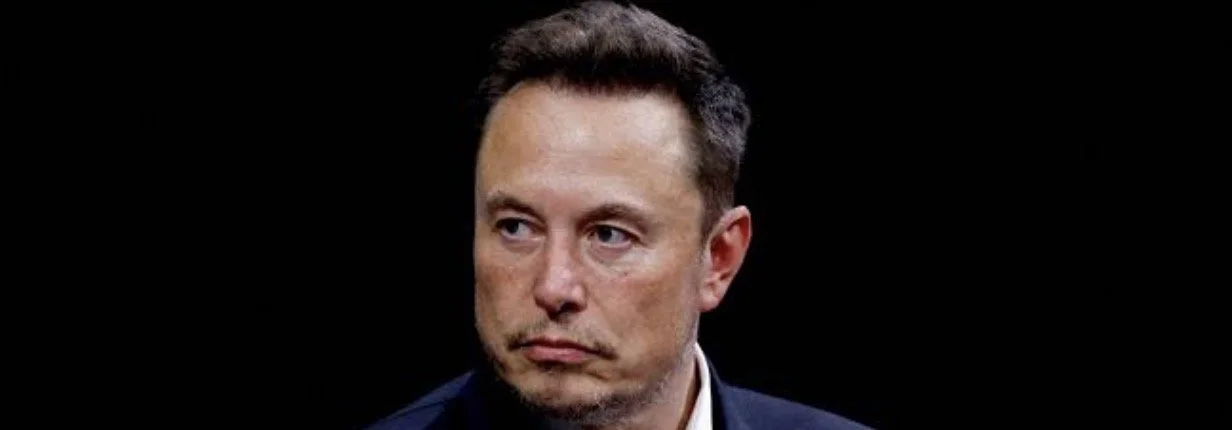
The review embargo has lifted on Alex Gibney’s “Musk,” and with that a teaser — and poster below — have been released as well.
I’m mostly in agreement with Ryan Lattanzio’s “B” grade IndieWire review — which is probably the same rating I’d give. Variety’s Owen Gleiberman is much more effusive in his praise. Other reviews include Next Best Picture (6/10), The Guardian (4/5). The Telegraph calls it a “hatchet job,” while Radio Times says “it’s far from a hatchet job.” At least THR acknowledges that “most people who sign up for the doc will have long ago made up their minds about Musk, so a one-sided argument won’t be a problem.”
The problem with “Musk” isn’t that it’s boring. It’s that it’s four hours long and, for much of that runtime, has surprisingly little new to say about Elon. Still, I can’t say that I was bored; here is such a fascinating figure of our times that telling his story, no matter how biased or unbiased it may be, and with this much detail, is of interest.
Gibney’s doc runs through the familiar Musk mythology — SpaceX, Tesla, Twitter, MAGA, AI — but rarely finds a fresh angle on any of it. There are no major revelations, no explosive disclosures that fundamentally alter our understanding of Musk. Instead, Gibney offers a fairly conventional biography of a man whose rise, influence and controversies have already been exhaustively documented. I went in expecting to learn something I didn’t know. For the most part, I didn’t.
The SpaceX and Tesla material is easily the strongest — Musk didn’t start either of them — and the film becomes considerably less interesting once it moves into the post-intermission Twitter/MAGA section. Musk himself emerges as an enormous ego: pushy, provocative, deeply self-aggrandizing. There is something genuinely fascinating about his instincts as a businessman and innovator, and the documentary works best when it explores that side of him rather than simply cataloguing his latest controversies.
Unfortunately, Gibney keeps returning to an AI-generated Musk being interviewed. Since Musk refused to participate, the filmmaker opted to essentially manufacture his own version of him, and the device is every bit as distracting as it sounds. It’s particularly bizarre in a documentary that otherwise wants to examine the consequences of AI and Musk’s role in the technology. Rather than adding anything, the gimmick repeatedly undercuts the film.
The structure doesn’t help. “Musk” isn’t particularly chronological, while his upbringing in South Africa is given surprisingly short shrift — maybe ten minutes at most. The film seems, initially, to be searching for some kind of larger critique of Musk, before gradually settling into a more straightforward takedown. By the second half, it begins turning him into a larger-than-life boogeyman, ticking off the familiar list of Musk’s transgressions without doing much to complicate or deepen them.
There’s worthwhile material here, particularly when Gibney focuses on SpaceX and Tesla and the extraordinary ambition behind both companies. But for a four-hour documentary about one of the most consequential and polarizing figures of the modern era, “Musk” feels oddly safe. I was hoping for something more than just watchable.


That sets up a real fight for #1 this weekend between "Clayface" and "You Can See Everything." If Fielder's documentary holds strong in its expansion, it has a legitimate shot at beating a DC movie