


We’ve already tackled the underrated films of the ’80s, ’00s, and ’10s. We might as well move on to the ’70s and ’90s next. I may get to the ’60s as well, but with Cannes around the corner—and two weeks of coverage ahead—it’s going to be a bit too hectic to fully extend this series. For now, the ’70s.
This was, and still is, widely regarded as the greatest decade in American cinema.
The “artistic revolution” began taking shape in the mid-’60s. By the end of that decade, the studio system had collapsed, paving the way for “New Hollywood” directors, who were given the freedom to pursue bold, personal, and often risky projects.
The films of the ’70s feel distinct from what came before—and what followed. Directors like Martin Scorsese, Francis Ford Coppola, Steven Spielberg, George Lucas, Robert Altman, Woody Allen, Peter Bogdanovich, John Carpenter, William Friedkin, Bob Fosse, Dennis Hopper, Terrence Malick, David Lynch, Hal Ashby, Paul Schrader, Michael Cimino, Brian De Palma, and Ridley Scott all came into their own during this era. At the same time, established filmmakers such as Sidney Lumet, Mel Brooks, John Cassavetes, Stanley Kubrick, and Sam Peckinpah were producing some of the finest work of their careers. Not to mention European émigrés like Roman Polanski and Miloš Forman.
From a critical standpoint, a useful benchmark is the critics poll I conducted three years ago. None of the films that made the top 50 on that list should be considered “underrated”—they clearly have strong and lasting support.
What about the overlooked standouts of the 1970s? For me, “underrated” refers to films that quietly came and went—movies that didn’t receive much attention at the time and are rarely discussed today. With that in mind, I decided to exclude The Parallax View by Alan J. Pakula and Sorcerer by William Friedkin, both of which are relatively well known—or at least I’d hope so. Digging through my archives, I uncovered 24 titles that truly deserved far more recognition than they received.
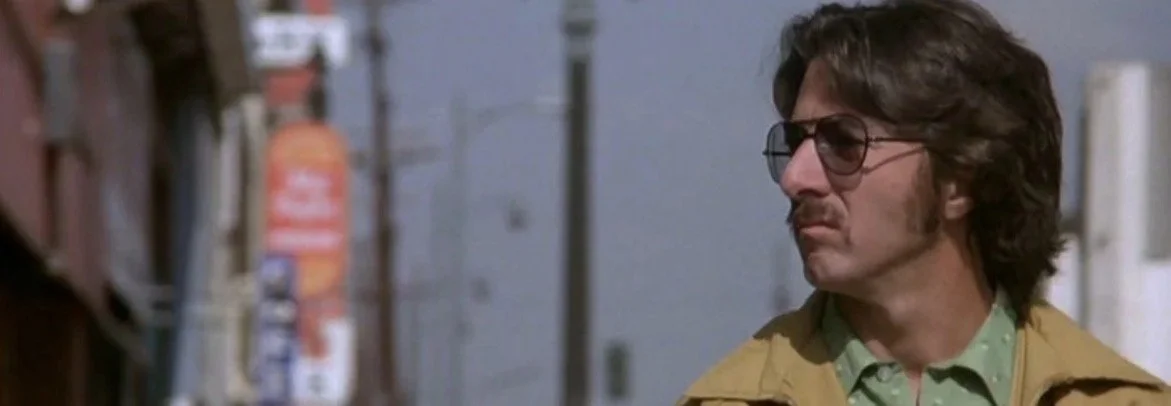
Elaine May’s A New Leaf, Alfred Hitchcock’s Frenzy, Peter Yates’ The Friends of Eddie Coyle, Arthur Penn’s Night Moves, John Houston’s Fat City, Michael Ritchie’s Smile, Robert Altman’s The Long Goodbye, Walter Hill’s Hard Times, Sam Peckinpah’s Bring Me the Head of Alfredo Garcia, Robert Altman’s 3 Women, Wim Wenders’ The American Friend, Paul Schrader’s Blue Collar, Dustin Hoffman’s Straight Time, Claudia Weill’s Girlfriends, George Romero’s Martin, Jerzy Skolimowski’s The Shout, Hal Ashby’s The Landlord, Nicolas Roeg’s Walkabout, Karel Reisz’s The Gambler, Robert Altman’s California Split, Michael Ritchie’s The Candidate, John Flynn’s The Outfit, Don Siegel’s Charlie Varrick, and Brian De Palma’s Phantom of the Paradise
Taken together, these films feel less like curiosities and more like overlooked landmarks of 1970s cinema—underrated masterworks that show the decade’s risk-taking.
“The Outfit,” directed by John Flynn and starring Robert Duvall, is a tightly constructed crime thriller about a hitman caught in mob betrayal, built on strategy, loyalty, and quiet tension rather than action. “Walkabout” by Nicolas Roeg is more poetic and abstract, using the Australian outback to explore isolation. “Martin” from George A. Romero strips the vampire idea down to something psychological, focusing on loneliness and delusion in decaying America.
Elsewhere, “Night Moves” by Arthur Penn and “Hard Times” by Walter Hill continue that same mood of moral uncertainty and drift, with Charles Bronson playing a drifter in the latter. And Robert Altman also made three underrated masterpieces in the decade—”The Long Goodbye,” “California Split,” and “3 Women”—not even counting his more well-known great films of the ’70s, including “MASH,” “McCabe and Mrs. Miller,” and “Nashville.”
Time for some recommendations. There are so many good ones. What are your undervalued films of 1970s?

DC's "Clayface" has earned an A- CinemaScore from opening night audiences. That's a very good grade for any movie, and an especially rare one for horror, a genre audiences tend to grade harshly.