
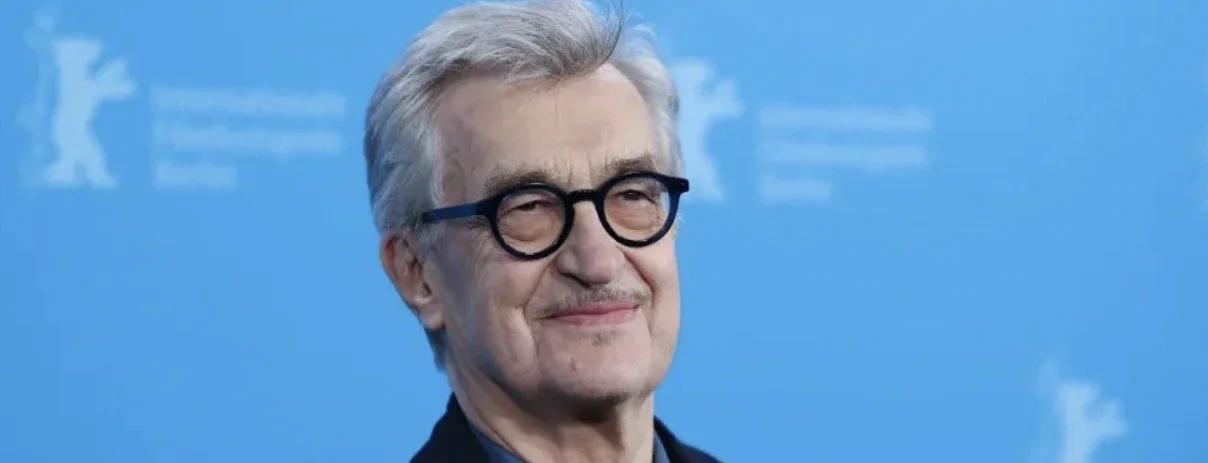
Scrolling through my feed, it seems the opening press conference for the 2026 Berlin Film Festival has landed jury president Wim Wenders in hot water—and for what? For choosing to remain politically neutral on Israel-Gaza.
This morning, Wenders and his fellow jury members were asked about the festival’s stance on the Israel-Gaza war, which has also remained neutral—no doubt in an attempt to avoid political entanglements.
A journalist, noting that the Berlinale has “been able to show [loyalty] with people in Iran and Ukraine,” used this to question the German government’s “support” of the Gaza war. “Do you, as a jury, support this selective treatment of human rights?” the journalist asked.
‘Zone of Interest’ film producer Ewa Puszczyńska was the first to respond.
Asking this question is a little bit unfair. Of course, we are trying to talk to people — every single viewer — to make them think, but we cannot be responsible for what their decision would be to support Israel or the decision to support Palestine. There are many other wars where genocide is committed, and we do not talk about that.
Her comments prompted Wenders to elaborate further, his argument was that filmmakers “have to stay out of politics.”
We have to stay out of politics. We are the counterweight of politics, we are the opposite of politics. We have to do the work of people, not the work of politicians. If we make movies that are dedicatedly political, we enter the field of politics. No movie has really changed any politician’s idea, but you can change people’s idea of how they should live. Cinema has an incredible power of being compassionate and being empathetic. The news [is] not, politics [is] not empathetic. But movies are.
Earlier, when the jury was asked if films have the power to change the world, Wenders responded, “Movies can change the world, not in a political way.”
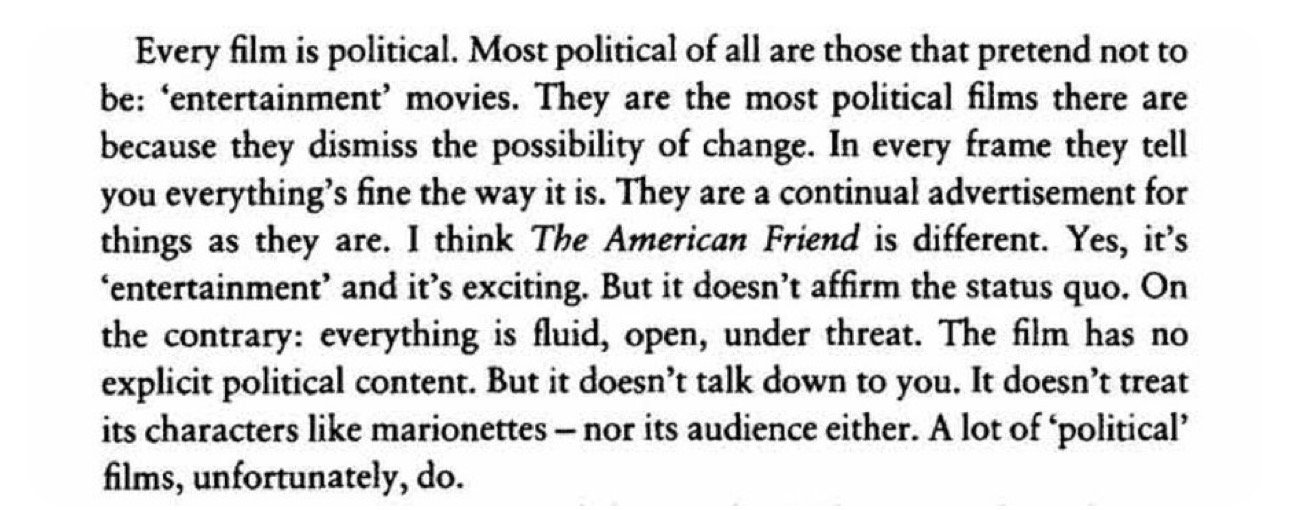
Of course, the internet being the internet, online sleuths found a passage from Wenders’ 1991 book “The Logic Of Images,” in which he wrote about how movies that pretend not to be political are the most political because they "dismiss the possibility of change".
There is definitely a conversation to be had about whether cinema is “political” or not—and whether artists and festivals should take a moral stance on conflicts. This debate has always raged on. Some argue that films are inherently political, reflecting society, history, and human struggle, while others insist that the screen should offer a space for reflection, imagination, and neutrality, free from the pressures of contemporary geopolitics.

Here's our first real trailer of Robert Eggers' “Werwulf,” and it might be the most Eggers movie Eggers has ever made.