





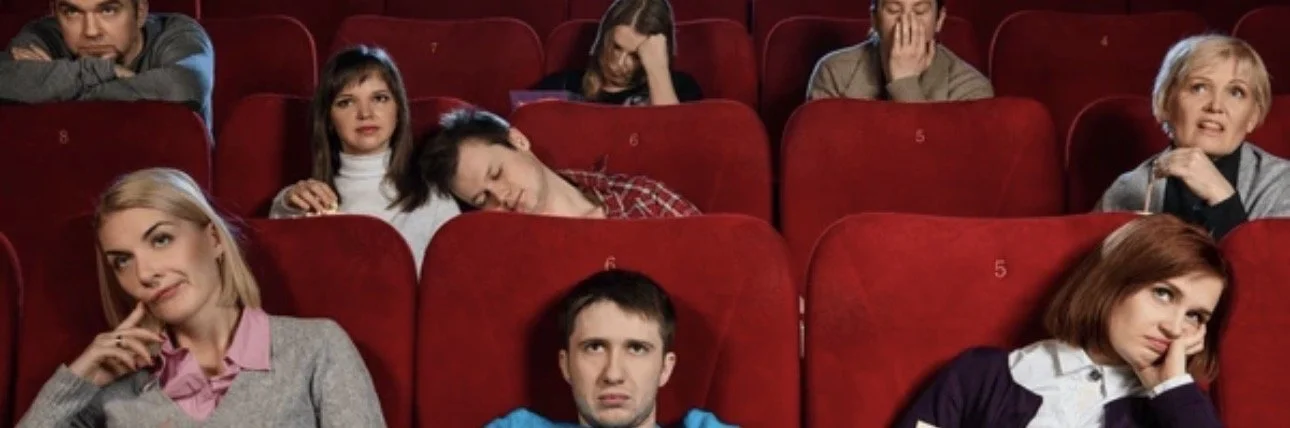
I just finished reading The Atlantic’s recent report on film-studies professors and, I won’t lie, a sense of dread set in almost immediately. Is this really where we’re at now? Because if it is, then cinema is facing a much bigger problem than bloated runtimes and superhero fatigue.
According to the piece, professors across the country are dealing with students who physically cannot sit through a movie without reaching for their phones. That didn’t shock me so much as it confirmed a suspicion I’ve had for years. What did shock me is that some instructors have simply stopped assigning full films altogether, resorting to selected clips because students aren’t retaining what they watch anyway. That’s immensely discouraging If you care about cinema as an art form — it feels damn-near existential.
One anecdote in particular made my jaw drop. A class screened François Truffaut’s “Jules and Jim,” a movie that runs just over 100 minutes—barely longer than a modern Marvel third act. Afterward, more than half the students failed a basic multiple-choice quiz, confidently insisting the characters hid from Nazis or got drunk with Ernest Hemingway. None of that happens. Anyone who has actually watched the movie knows this. Professors interviewed said this level of confusion would have been unthinkable ten years ago, and I believe them. They’ve noticed the problem accelerate sharply since the pandemic.
And this isn’t just a matter of shrinking attention spans. Many film classes still screen old black-and-white movies, and judging by the film studies courses I took in the aughts, not much has changed — plenty of students remain resistant to black-and-white films or anything with subtitles. What has changed, however, is students’ complete unwillingness to even try. In 2006, they’d watch and eventually just fall asleep. In 2026, they scroll on their phones or skip class entirely.
Yes, according to the report, the act of showing up has also become an issue. Many students now brush off the idea of in-person screenings, treating them like an inconvenience when movies can be streamed from a dorm room. However, here’s the kicker: even when given the option to watch at home, fewer than half of students even press play, and only about 20 percent make it to the end. These are film students—the ones who supposedly love movies, who want to make a career out of them. And when they do “watch,” it’s often at double speed.
Why would they choose to study film? It’s a puzzling decision. It might be wiser to consider a different major. Chances are, though, if attention spans continue to dwindle, schools may end up rebranding the program from “Film” to something like “Content.”
One line from the report sounds almost absurd, yet completely believable: “even students who want to become filmmakers don’t necessarily enjoy watching films.”
This is what happens when you grow up on smartphones, YouTube, TikTok, and infinite scroll—an ecosystem designed to destroy sustained attention. Today’s students were raised inside that machine. Asking them to sit still and focus on a two-hour French New Wave film without stimulation feels, to them, like a marathon. To them, “Jules and Jim” might as well be “Sátántangó.”
Some professors are trying to fight back, introducing courses centered on “slow cinema” and deliberately challenging films meant to rebuild patience and attention. I mean, sure—nothing cures a TikTok-fried attention span like an Apichatpong Weerasethakul movie. Others have waved the white flag, adapting their classes to short-form content and social-media-length projects because that’s the only thing students seem willing to engage with. Either way, something fundamental has shifted.
This isn’t really about runtimes or phones or laziness. It’s about whether cinema—as a sustained, immersive experience—can survive in a culture that increasingly resists stillness. If future filmmakers can’t sit through ‘60s classics, it’s hard not to wonder what kind of movies they’ll end up making—or whether the idea of loving movies, the way many of us did, is quietly slipping away.

Gerwig says her Netflix-bound "Narnia" is not a retread of the past movies; instead, she "wanted a rock opera," starting from scratch with C.S. Lewis's origin story, the one in which Narnia is actually born.