

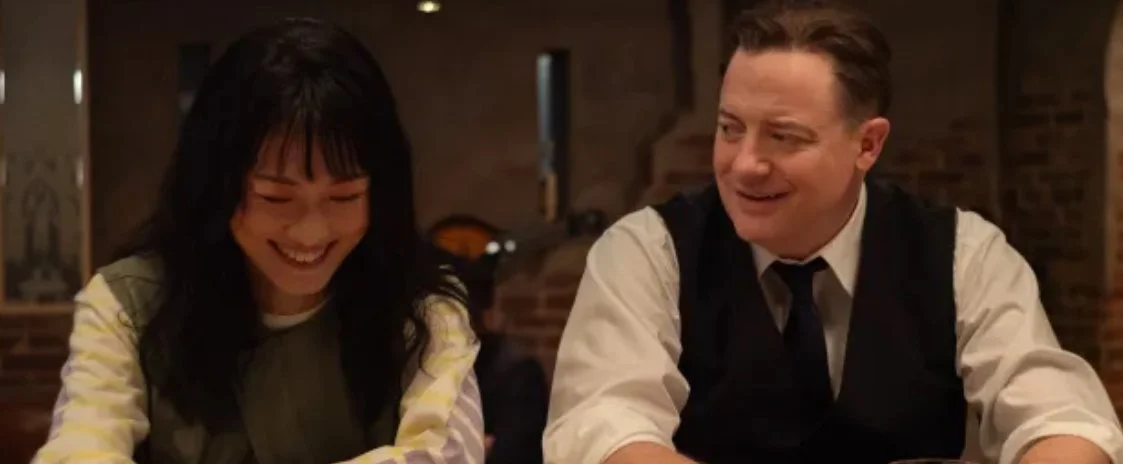
Brendan Fraser is back, of course, aiming for another Oscar, and Searchlight has chosen the Toronto International Film Festival for the premiere of his latest: “Rental Family.”
Set in Japan, this movie is a gentle, unassuming thing, a drama that hammers home loneliness, connection, and the ways we fake it—and sometimes don’t—when we try to care for one another. In short, it’s sentimental to a fault, sweet as cotton candy.
Fraser plays Phil, a middle-aged American actor who has drifted to Tokyo after a string of forgettable roles. His career, stalled and aimless, takes a sudden turn when he’s hired by a “rental family” service—a real Japanese business that lets you hire companions to act as anything from a father to a co-op gaming buddy to a wedding spouse. At first, Phil’s all professional about the new gig, but slowly, he starts to invest emotionally.
The story is bright, almost to the point of cloying, with a twinkly score by the lead singer of Sigur Rós and Alex Somers. It doesn’t linger on the darker implications—Phil’s work is ethically dubious, loneliness in Japan is barely sketched—it prefers the immediacy of connection: the small, human moments that hit the heart strings.
The film’s finest scenes involve Phil as a stand-in father to 11-year-old Mia, whose mother wants him to play the estranged father she never met. It’s awkward, a little ethically compromised, and yet very sweet. These are moments of real warmth in a film otherwise politely sentimental.
Fraser is the movie’s beating heart. There’s an openness in his performance—a mix of frustration, pain and boyish charm—that lends gravity to a script that often underwrites him. Other characters, like his boss Shinji and coworker Aiko, provide support but barely register; the film sometimes lingers on minor arguments longer than necessary.
“Rental Family” is, admittedly, sentimental, occasionally formulaic, and could have probed much deeper into the tricky terrain of performance versus reality, of love versus the roles we play to give it. It’s only with Fraser at its center and Hikari’s earnest, careful direction, that it finds its small pulse amidst the scriptwriting flaws.

Edward Berger seems to have settled on what comes next. His Lance Armstrong biopic, starring Austin Butler, is now holding casting calls, with production eyed for January.