

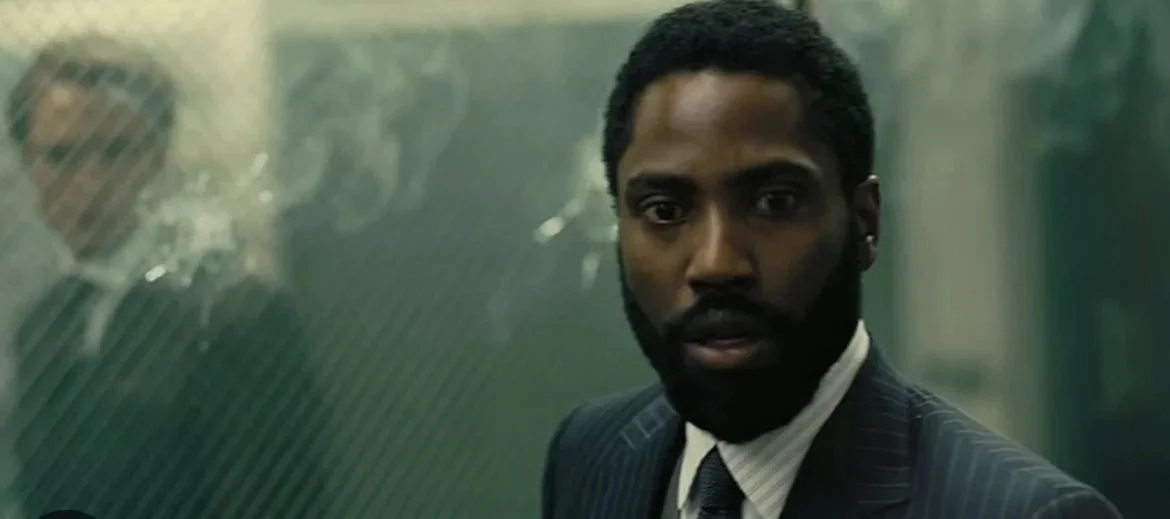
Here’s Inverse’s Mark Hill on the half-decade anniversary of Christopher Nolan’s most polarizing film: “5 Years Later, 'Tenet' Is Still A Divisive Mess.”
It’s been quite a turnaround for Nolan in the five years since “Tenet.” That film, so tangled it made “Inception” feel like a straightforward studio thriller, landed with a thud. But he rebounded spectacularly—first with the cultural juggernaut “Oppenheimer,” which swept the Oscars, and now with Universal allowing him to shoot his $250M adaptation of “The Odyssey.”
Back in 2020, critics and audiences alike wrestled with “Tenet”’s impenetrability. Fans countered with the refrain: “You need to rewatch it to get it.” I’ve rewatched it. A few times. Even on 35mm. And it’s still underwhelming.
Then again, filmmakers like Denis Villeneuve and Sean Baker have praised the film—Baker, who was initially lukewarm, says a rewatch convinced him it’s a masterpiece.
Fans argue that the film is simply too smart for its detractors, but “Tenet” isn’t smart—it’s busy. There’s no revelation in watching an empty world threatened with annihilation. At 153 minutes, it becomes Nolan’s most convoluted effort: a pseudo-scientific riff on time inversion grafted onto globe-trotting espionage, “Inception” on steroids.
The problem is baked into Nolan’s obsessions: mechanics elevated over people, the belief that a puzzle is more gripping than a story. “Tenet” amplifies those tendencies to a breaking point. John David Washington, denied even a character name, drifts through the motions of a spy thriller. Bullets leap backwards into guns while dialogue clunks along like it was recorded for a training video. Elizabeth Debicki flails as the abused wife whose only trait is motherhood; Robert Pattinson tries to smuggle some charm into the film but drowns under exposition. Kenneth Branagh devours the scenery with a dreadful accent, a villain so thin he veers ever so close into Bond parody.
Nolan himself has pushed back on the criticism. On “The Late Show,” he insisted:
You’re not meant to understand everything in ‘Tenet,’ it’s not all comprehensible. It’s a bit like asking me if I know what happens at the end of ‘Inception.’ I have to have my idea of it in order for it to be a valid productive ambiguity, but the point is it’s an ambiguity.
He told the AP that the film was intended as an experiment in cinematic immersion:
Of all the films I’ve made, it’s the one that’s very much about the experience of watching films. It’s about watching spy movies in a way. It tries to build on that experience and take it to this very magnified, slightly crazy place. A lot of that is about sound and music and this huge image.
Nolan has always been drawn to complexity, but I’m not convinced by his defense. Filmmakers like David Lynch or Alain Resnais can craft atmosphere-driven works where comprehension is beside the point. “Tenet,” however, doesn’t work on those terms—it’s a movie that batters its audience with sound and fury but offers little atmosphere to hang onto.
Five years on, “Tenet” hasn’t grown richer with time. It remains Nolan’s coldest, most exhausting experiment, a film that mistakes concept for story and spectacle for experience.

Marvel's "Ghost Rider" just hired one of the best cinematographers working today. Linus Sandgren will serve as DP on Shawn Levy's MCU flick, and, most notably, the project will be shot on film.