
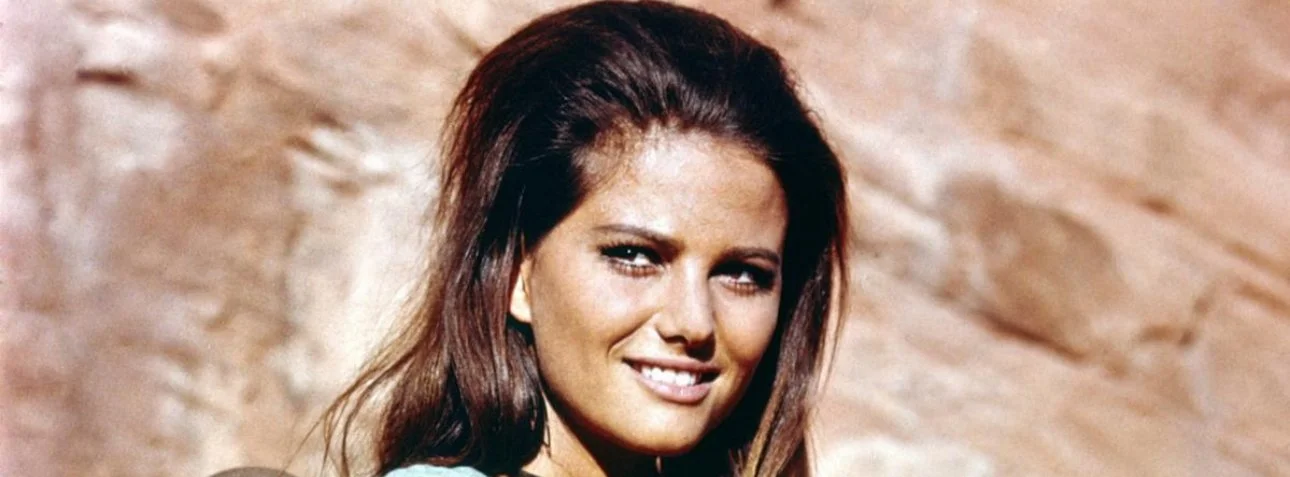
Claudia Cardinale, the Tunisian-born Italian actress whose career spanned over six decades and who became one of the defining faces of European cinema in the 1960s, has died at 87.
Cardinale was among the last living icons of postwar Italian film, working with Federico Fellini, Luchino Visconti, and Sergio Leone at the height of their powers. She had such striking screen presence, husky voice, effortless command, with both glamour and grit.
Her breakthrough came in Visconti’s “Rocco and His Brothers” and “The Leopard,” the latter of which paired her with Burt Lancaster and Alain Delon in a sprawling epic that captured the twilight of Sicilian aristocracy. She would go on to cement her place in the pantheon with Fellini’s “8½,” in which she played the dreamlike muse to Marcello Mastroianni’s tortured filmmaker.
Imagine just having these three films in your filmography and then calling it a day? You’d still be regarded as a legend.
Cardinale went on to move seamlessly between Italian, French, and Hollywood cinema. She co-starred opposite Peter Sellers in Blake Edwards’ “The Pink Panther,” then delivered perhaps her most iconic performance as the widowed Jill McBain in Leone’s “Once Upon a Time in the West.” That film, with its operatic style and Ennio Morricone’s score, remains unthinkable without her presence at its emotional core.
Though she never quite chased Hollywood stardom the way Sophia Loren did, Cardinale maintained a steady and diverse career, appearing in more than 100 films. Her later work, although not as iconic, included Werner Herzog’s “Fitzcarraldo,” where she somehow tried to hold her own amidst Klaus Kinski’s madness.
Cardinale’s death marks the end of an era. She was not just a screen goddess but a versatile actress whose best films—“The Leopard,” “8½,” “Once Upon a Time in the West,” “Rocco and His Brothers” —are absolute cornerstones of 20th-century cinema.

Still no distributor for "Bucking Fastard," "Alpha Gang," "The Last Photograph," "Closing Night," and "The Life and Deaths of Wilson Shedd." The issue seems to be quality more than a lack of willingness to buy.