

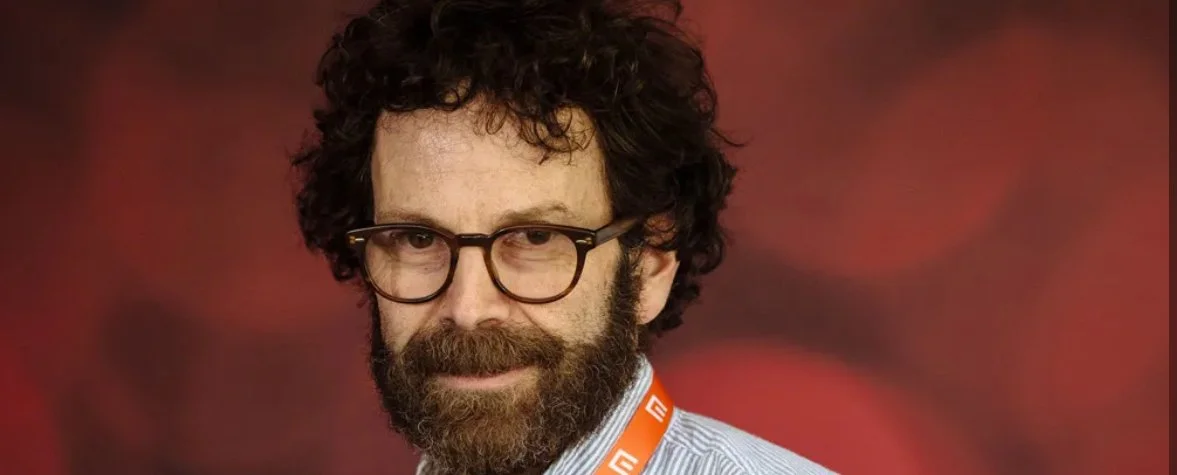
Charlie Kaufman, one of the most unique voices in modern American cinema, sounds like a man isolated and frustrated by the very industry that once hailed him as its most daring screenwriter.
In a new interview with The Guardian, the mind behind “Being John Malkovich,” “Adaptation,” “Eternal Sunshine of the Spotless Mind,” and “Synecdoche, New York” admits he’s stuck and doesn’t know what to do.
I’m having great difficulty. I’m not a person that people want to trust with their money. It’s very frustrating.
Earlier this year, he was in the middle of shooting a film, “Later the War,” starring Eddie Redmayne, but as I had reported, it collapsed mid-production in Belgrade. Kaufman still hopes it can be revived, but his tone is not one of confidence. This is the reality of a filmmaker whose reputation is highly respected among cinephiles but whose work terrifies financiers.
Kaufman’s commercial “fall” has been a long time coming. “Synecdoche, New York” (2008), his directorial debut, was acclaimed but a financial disaster. Kaufman remains proud of it—“I don’t care,” he insists—but the film’s box-office failure has haunted him ever since. Even now, he touts:
My films are well regarded and yet I’m constantly up against this wall of not being able to get financing. And I’m not asking for a lot.
The paradox is that Kaufman helped define the indie film explosion of the late ’90s and early 2000s. The run from ‘Malkovich’ (1999) through ‘Synecdoche’ (2008) was unprecedented—five boundary-pushing projects in less than a decade. That period made him “in demand.”
And yet, Kaufman is unwilling to sell out. He’s distraught by the “Hollywood machine” and its insistence to “remake the same five movies every 10 years. It’s why they have a formula for what a movie is.” He flatly admits in the interview having no interest to helm a franchise, no matter how high the paycheck might be.
The irony, of course, is that Kaufman’s very refusal to compromise is what keeps him marginalized. Hollywood doesn’t know what to do with someone who refuses to play its game. His films aren’t content machines or franchise starters; they’re puzzles, philosophical enigmas, and psychologically heavy.
So, where does that leave Kaufman’s career? Unless “Later the War” rises from the ashes, Kaufman may remain a filmmaker without funding. He’s part of a system dominated by formula — the very thing he seems most allergic to.

Marvel's "Ghost Rider" just hired one of the best cinematographers working today. Linus Sandgren will serve as DP on Shawn Levy's MCU flick, and, most notably, the project will be shot on film.