
The past three weeks have been a whirlwind of premieres, with Venice, Telluride, and Toronto offering a clear glimpse of what this fall at the movies might hold.
The good news? There’s plenty worth seeing. Yet what stood out most at TIFF was how much buzz revolved around the glowing reactions to “One Battle After Another” in New York and L.A.—sometimes more than the films actually screening in Toronto. That’s not to say Oscar contenders didn’t emerge; Chloé Zhao’s “Hamnet” is poised for a Best Picture nomination. Beyond that, it’s still too early to make definitive calls.
Having traveled to both Venice and Toronto this year, the highlights were abundant. I’ve compiled a list of 12 noteworthy films, not even counting the exceptional titles from Cannes, Sundance, and Berlin that screened at TIFF: “Sirat”, “The Mastermind”, “If I Had Legs I’d Kick You”, “Blue Moon”, “The Secret Agent”, “It Was Just An Accident”, “The President’s Cake”, “Urchin”, and “Nouvelle Vague”, among others.
Among the 12 films below, some were expected, while others came as a surprise. Think of this as a guide for other fall festivals—whether NYFF, or the upcoming regional festivals. I’m sharing the obvious favorites, while also shining a light on the hidden gems that deserve a fair shot.
“Blue Heron” (Sophy Romvari)
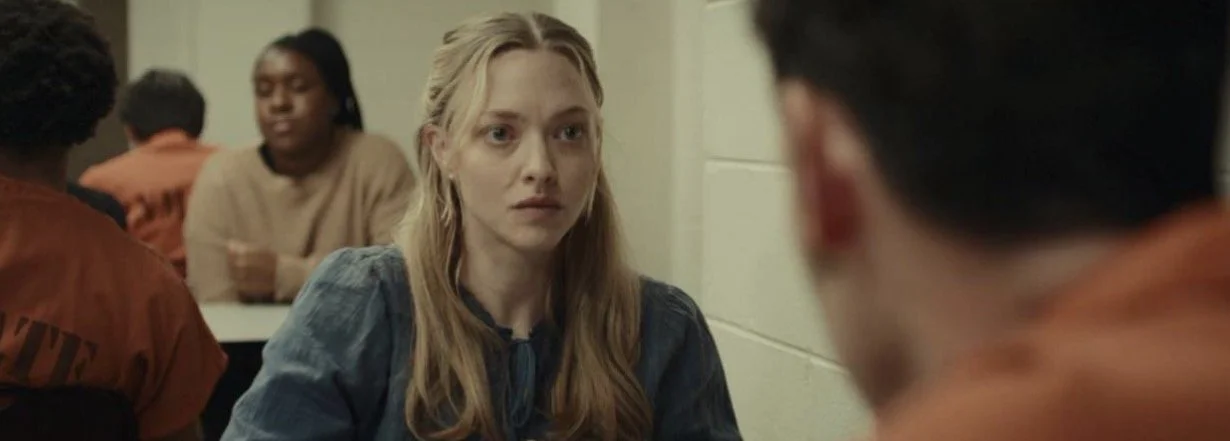
Initially screened at Locarno, “Blue Heron” created some subtle buzz at TIFF; a hauntingly intimate debut that’s an absolute example of personal cinema. Set in 1990s Vancouver, the film follows Sasha (Eylul Guven), a young girl in a Hungarian immigrant family, as she navigates the complexities of her troubled older brother, Jeremy (Edik Beddoes). Romvari’s direction is both delicate and immersive, capturing the nuances of memory and trauma. The film has a contemplative tone, but rewards patient viewers, offering a poignant exploration of family, identity, and the scars of the past. “Blue Heron” currently has no US distributor, but that’ll change very soon.
“Cover-Up” (Laura Poitras)
Here’s a masterclass in documentary filmmaking, offering a direct, magnetic encounter with Seymour Hersh, the 88-year-old journalist who has spent six decades exposing the truths the mainstream press would rather ignore. From My Lai to Abu Ghraib, Watergate, and CIA spying. Set amid his cluttered home office, the film pairs Hersh’s voice with stunning archival footage, creating an alternative history of America via the eyes of someone who never trusted the official story. It’s a riveting tribute to history, journalism, and a man who refuses to be silenced.
“Father Mother Sister Brother” (Jim Jarmusch)
The unexpected Golden Lion winner at Venice. A stripped-down, ultra-minimalist exploration of modern family dynamics. Composed of three loosely connected stories—sons and daughters with their fathers and mothers—the film thrives on pauses, absences, and awkward silences, turning what might seem like dead air into quietly compelling moments. Adam Driver, Mayim Bialik, Charlotte Rampling, and Cate Blanchett deliver understated performances that linger, even as the narrative deliberately avoids resolution. Not a major work in Jarmusch’s catalog, it’s still a strangely affecting, experimental piece that rewards patience and close attention.
“Hamnet” (Chloe Zhao)
An exploration of grief and creation, culminating in a transcendent finale that elevates the entire film. I’ve already set the record straight that the narrative occasionally suffers from uneven pacing, but the film’s closing moments transform personal tragedy into universal art, offering a haunting meditation on love and loss. It’s transcendent stuff. Jessie Buckley delivers an extraordinary performance as Agnes, a grieving mother, married to an absent Shakespeare, and I’d be very surprised if she doesn’t win the Oscar for her work here.
“Jay Kelly” (Noah Baumbach)
Noah Baumbach’s latest stars George Clooney as a movie star going through an existential crisis. Adam Sandler plays his manager. The film works because it’s anchored in performance, and because Baumbach, even at his most commercial, can still dig beneath the surface. It’s a screwball dramedy, yes, with all the flaws that implies, but the emotions somehow land. The film closes on a surprisingly moving note, dipping into legacy, family, ego, and the cost of a life wasted.
“Nirvana The Band The Show The Movie” (Matt Johnson)
A deliriously inventive comedy that blends time-travel absurdity, satirical mischief and absurdist stunts. When Matt and Jay’s latest stunt to book a gig at The Rivoli goes awry, they find themselves transported back to 2008, leading to a series of chaotic and self-aware escapades. The film’s mockumentary style and meta-humor is second to none, and given the low budget, the editing is incredibly clever. There’s so much going on in every frame; there’s rapid-fire pacing and endearing performances, the movie is above all else, uproariously funny, delivering the laughs in spades. Absolute manic energy.
“No Other Choice” (Park Chan-wook)
Park has long dreamed of adapting Donald E. Westlake’s novel, “The Ax,” calling it his “lifetime project.” “No Other Choice” may not define his career, but its standout scenes are breathtaking. The film follows Man-su (Lee Byung-hun), a paper factory manager fired after 25 years, as he fights to restore his family’s respect before losing his severance and home. Shot with dazzling precision, the film blends satire, thriller, melodrama, and farce, showcasing Park’s talents for the technical and acerbic storytelling.
“Obsession” (Curry Barker)
The biggest sell out of TIFF. Focus acquired Curry Barker’s feature debut, a thrilling horror-comedy hybrid that leaves you feeling very uneasy. Michael Johnston plays a shy teen whose wish-granting toy turns childhood crush Nikki (Inde Navarrette) into a deranged, obsessive force—her performance is equal parts hilarious and terrifying. Barker, a popular YouTuber, has a knack for inventive staging, atmosphere, and deft balance of horror and comedy — it makes for a messy but electric debut, establishing him as a filmmaker to watch. This one might have been worth the $15M Focus dished out.
“Roofman” (Derek Cianfrance)
A wonderful blend of charm, mischief, and melancholy, anchored by Channing Tatum’s magnetic turn as real-life criminal Jeffrey Manchester. Manchester’s polite, meticulous heists reveal a man as infuriatingly considerate as he is utterly reckless. The film’s playfulness, involving crimes and ingeniously conceived jail breaks, serve as a lens into his complicated character, but it’s his romance with Kirsten Dunst’s cautious, devoted single mother that gives the story its heart. This is a briskly paced film, and stylishly crafted at that; equal parts romantic comedy and tragedy. Many seem to have slept on this one, but it’s an irresistibly made gem.
“Rose of Nevada” (Mark Jenkin)
This is a haunting, time-bending enigma that defies genre and expectation. Set in a nameless Cornish fishing village, the film follows Nick (George MacKay) and Liam (Callum Turner), who join the crew of a mysteriously reappeared ship, the Rose of Nevada, only to find themselves transported back to 1993, assuming the identities of the original crew. Shot on grainy 16mm film, this is hypnotic, and disorienting stuff, blending psychological horror, supernatural elements, and working-class drama. A surreal experience.
“Silent Friend” (Ildikó Enyedi)
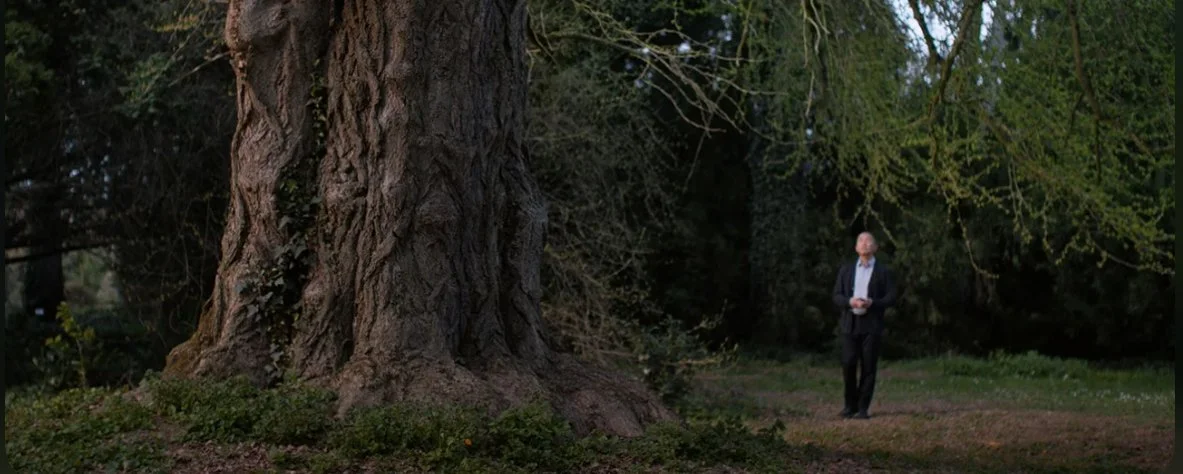
A cinematic marvel that blends time, science, and the quiet wisdom of nature. Set around a ginkgo tree in a German botanical garden, the film unfolds in that same location, near a University campus, through three distinct eras—1908, 1972, and 2020—each captured in a unique visual style. The film has meditative pacing, but its lush cinematography completely enthrals. It’s an immersive experience, visionary in it’s ambitions, and unlike anything I’ve ever seen before.
“Wake Up Dead Man” (Rian Johnson)
A clever, engrossing whodunit that mostly clicks, even at a sprawling 144 minutes. Josh O’Connor steals the show as Father Jud, an ex-boxer turned priest whose charm and complexity anchor the story, while Daniel Craig’s Benoit Blanc only arrives 45 minutes into the story. The ensemble cast—including Jeremy Renner, Glenn Close, and Cailee Spaeny—are severely underused. It’s mostly the O’Connor show. There’s Gothic flair this time around, sharp political overtones, and Johnson’s usual puzzle-box plotting. The film delivers plenty of surprises, though its last stretch bogs down in over-explained flashbacks. Entertaining and stylish, it’s a satisfying, if uneven, addition to the series.

Criterion's December lineup has some great additions to the library, but the title that jumped out at me is Werner Herzog's "Grizzly Man," which officially joins the Collection on December 8.