


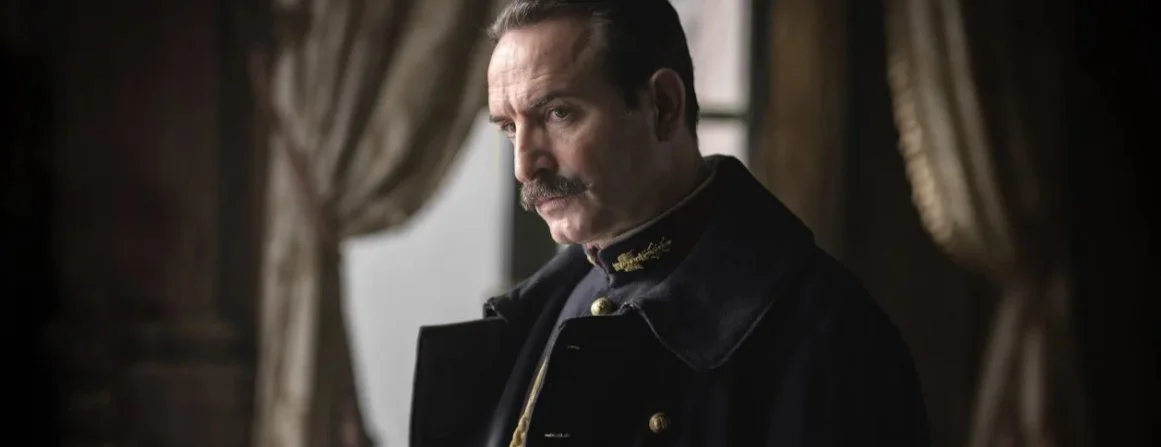
In 2019, Roman Polanski premiered “An Officer and a Spy,” one of the finest films of his career. It won the Grand Jury Prize at the Venice Film Festival and, a few months later, received 12 César Award nominations in France, ultimately earning Polanski the Best Director award.
Despite these accolades, and due to the filmmaker’s controversies, the film still hadn’t been theatrically released in the US. Now, six years later, “An Officer and a Spy” finally sees the light of day as the film has been released stateside at NYC’s Film Forum. It will be a two week limited engagement.
There’s still no word on whether the film will expand to other cities or receive its long-overdue streaming and physical media release. With that said, what was formerly one of the very best unreleased films of the 21st century, can finally be seen on the big screen here.
With that, come the reviews, which no surprise, have an ingrained bias. Separating the art from the artist is a tough proposition for some. I suggest you read Glenn Kenny’s 4-star review for RogerEbert.
The thing is that since he moved to France in the late 1970s, he has continued making films, some of them—most of them, actually—very good, and a couple of them better than very good. (One of the latter, “The Pianist,” in fact earned him a Best Director Academy Award.) “An Officer and a Spy” is one of Polanski’s finest pictures, which means it’s very fine indeed.
Meanwhile, you have The New York Times, and Indiewire, with the latter outlet using language that blends moral judgment with artistic criticism, and repeatedly linking the Dreyfus Affair parallels to Polanski’s legal history, often with a sarcastic tone. There’s a persistent focus on Polanski’s personal misconduct throughout the review.
“An Officer and a Spy,” which dramatizes the real-life Dreyfus Affair in late 19h-century France, is the real deal. Polanski crafted the film with surgical precision—only a true master could create something so atmospherically rich and texturally nuanced.
Shot with a poet’s eye by longtime Polanski collaborator Pawel Edelman, the film’s visuals are gorgeously composed and naturally lit. “An Officer and a Spy” functions as a cautionary tale about due process, and it resonates because the 19th-century authoritarian world it depicts feels disturbingly similar to our own. It’s a modern-day parable about the dangers of groupthink and mob justice.
Polanski has faced decades of controversy due to a 1977 case in which he pled guilty to unlawful sex with a 13-year-old girl and fled the U.S. before sentencing. Though he continued making acclaimed films, including “The Pianist,” his legal case and flight from justice have led to ongoing boycotts and his blacklisting.
American distributors have consistently passed on opportunities to screen the film at industry markets, so credit to Film Forum for taking the risk and finally bringing Polanski’s remarkable work to audiences.

Eight years ago, Ehrenreich, who was seen by many as a rising star, was blamed in some circles for “Solo: A Star Wars Story,” which led to a five-year break from acting. He is now back, and with a vengeance.