



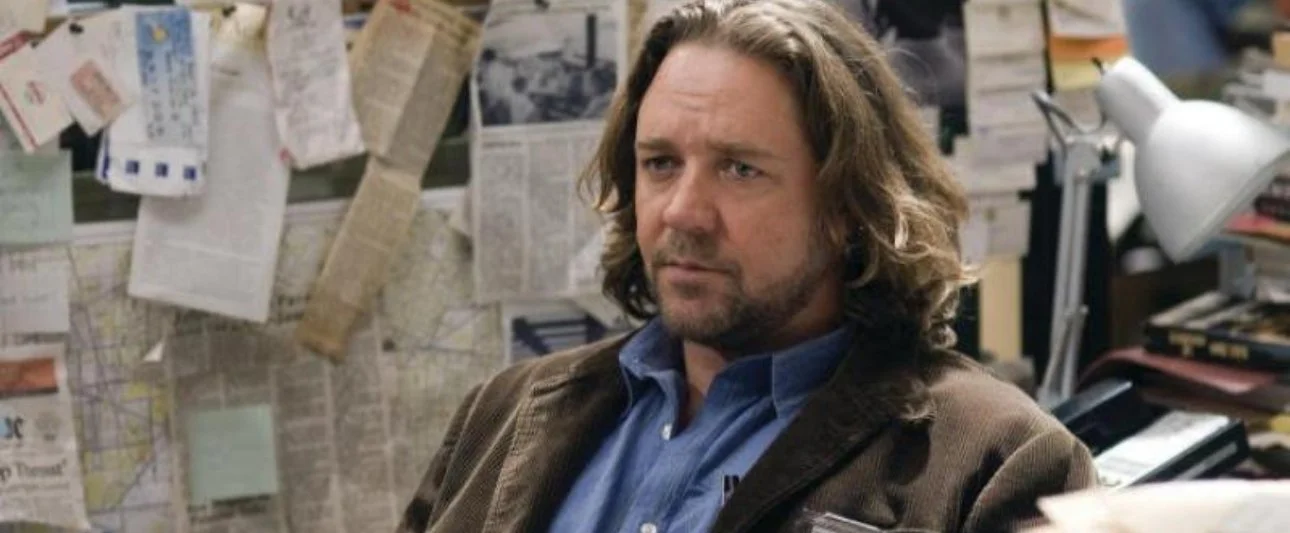
Released in 2009, “State of Play” isn’t really a film that gets talked about much, and for good reason — it was a fairly middling one.
This was a $60M-budgeted film, starring Ben Affleck, Russell Crowe, and Helen Mirre, tackling journalists and their investigation into America’s military-industrial complex. Reviews weren’t amazing, and at the box office it was a dud — pulling in just $88.8M worldwide.
The film was helmed by Scottish filmmaker Kevin Macdonald (“The Last King of Scotland”), who this weekend appeared at the Edinburgh Film Festival, where he offered a brief story about the film when discussing his Hollywood movies. He says (via Deadline):
I didn’t realize at the time, but looking back, that was a pivotal film in Hollywood, as well as for me, because it was sort of the end [of an era]. Donna Langley mentioned it too when she did Desert Island Discs. It was a turning point movie for her at Universal and the rest of Hollywood because it was conceived as an all-star, intelligent thriller for adults at $100 million. Can you imagine that today? It was the tail end of a certain kind of wasteful Hollywood filmmaking.
When looking at the death of the mid-budget movie in Hollywood, maybe a good starting point might be “State of Play.” Of course, it’s a point of contention that’s been debated among critics and industry elites for years. There isn’t one single “death blow,” but if you want to point to a symbolic moment where Hollywood’s appetite for mid-budget adult dramas collapsed, a lot of people look at “State of Play” … and another film:
“Duplicity” — also released in 2009– Tony Gilroy’s slick, star-driven, $70M romantic spy caper with Julia Roberts and Clive Owen. Universal gave it a big push, but audiences stayed away ($78M worldwide gross, barely breaking even at best).
However, 2009 really feels like the turning point. That’s when the MCU started, and studios pivoting to franchises, IP, and four-quadrant blockbusters after the mid-2000s. Then the recession hit, DVD revenues collapsed, and suddenly $50–70M adult dramas were seen as unsustainable risks.

Criterion's December lineup has some great additions to the library, but the title that jumped out at me is Werner Herzog's "Grizzly Man," which officially joins the Collection on December 8.