

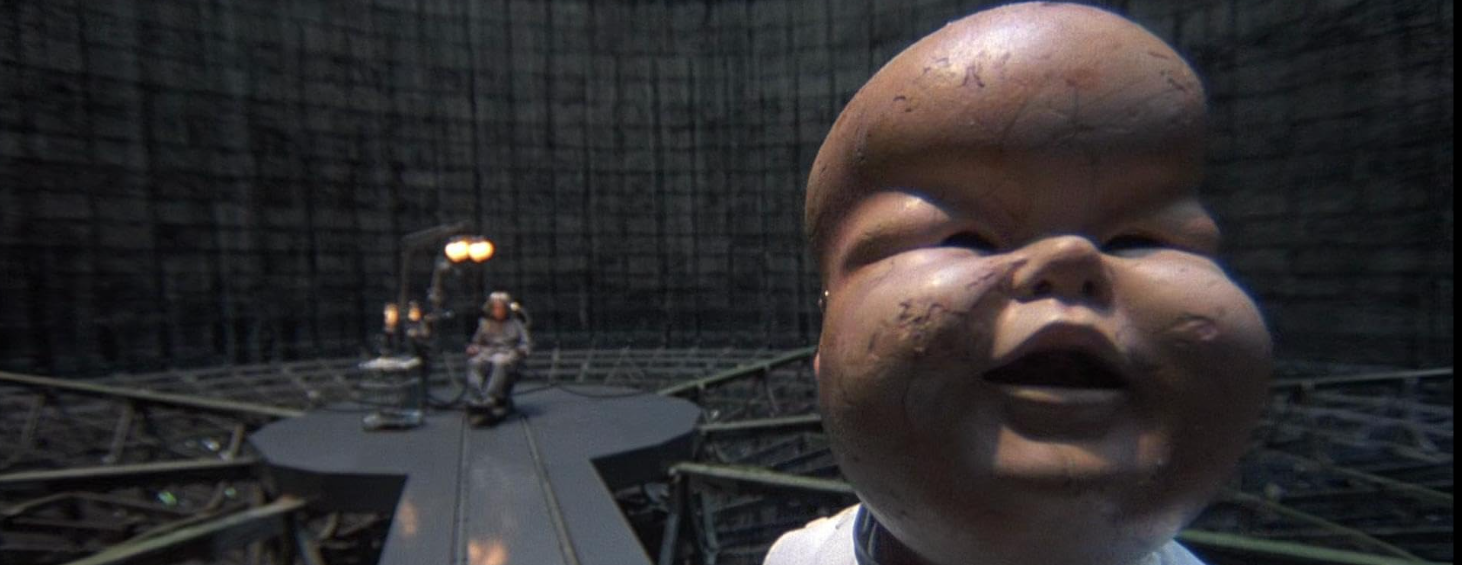
Forty years later, the films of 1985 feel like time capsules from a pivotal moment, caught between the auteur-driven grit of the ’70s and the high-concept, mass-market polish of the late ’80s. It was the year when Akira Kurosawa offered his operatic final masterpiece with “Ran,” while Terry Gilliam fought hard for final cut on his dystopian nightmare “Brazil.” Meanwhile, Hollywood was sinking deeper into franchising and formula, but compared to today, there were plenty of originals to chew on.
The Oscars chose “Out of Africa” as Best Picture, a sweeping prestige drama that beat out “The Color Purple” — both films haven’t aged well. Sydney Pollack’s film epitomized the mid-’80s Oscar film: literary, romantic, handsomely mounted, yet oddly airless. A decade later, it’s the kind of film everyone claims to admire but few actually revisit. On the other hand, Whoopi Goldberg’s performance in “The Color Purple” remains a revelation, but Spielberg was an odd fit for Alice Walker’s Pulitzer Prize–winning novel, and filled the frames with too much gloss.
Kurosawa’s “Ran,” a Shakespearean epic reimagined through the lens of feudal Japan, felt like the end of an era, a master working at full intensity, staging chaos with painterly images. It was the kind of film that Hollywood no longer made, and perhaps never could. Meanwhile, Gilliam’s “Brazil,” with its Orwellian satire and nightmarish production history, has only grown in stature, one of the decade’s most prophetic and visually audacious works (and my pick for best of 1985).
Internationally, Hector Babenco’s “Kiss of the Spider Woman” made waves—part political parable, part love story, anchored by William Hurt’s Oscar-winning performance. And Claude Lanzmann released his monumental “Shoah,” a nine-hour documentary of devastating, necessary historical reckoning of the holocaust. I’ve only seen the whole thing once, but since then, I’ve stumbled upon clips that reassure me that this one is indeed a masterpiece.
At the box office, “Back to the Future” was the year’s top-grosser, an ingenious blend of sci-fi and teen comedy that became an instant classic. “Rocky IV” turned Cold War tensions into spectacle. “Rambo: First Blood Part II” did the same, but with even more jingoism. “The Goonies” and “The Breakfast Club,” hooked teenagers.
Then there was “To Live and Die in L.A,” William Friedkin’s sun-scorched neo-noir, pulsing with paranoia and a killer Wang Chung score. Released to modest reviews, it’s now a cult classic that feels like a last gasp of ’70s filmmaking swagger, with only the synth-driven score feeling out of place.
The 10 Best Films of 1985
Brazil (Terry Gilliam)
Back To The Future (Robert Zemeckis)
After Hours (Martin Scorsese)
Witness (Peter Weir)
Ran (Akira Kurosawa)
Prizzi's Honor (John Huston)
The Purple Rose Of Cairo (Woody Allen)
Vagabond (Agnes Varda)
To Live and Die in L.A (William Friedkin)
Blood Simple (Joel & Ethan Coen)
HONORABLE MENTIONS: Mask, The Hit, Runaway Train, Mishima: A Life in Four Chapters, Pale Rider, The Falcon and the Snowman, Lost in America, The Breakfast Club, My Beautiful Laundrette, Day of the Dead, Pee-wee’s Big Adventure, Kiss of the Spider-Woman
A special mention. Elem Klimov’s “Come and See,” not widely known in the U.S. until many decades later, but easily one of the decade’s most harrowing films. It was technically never released theatrically in the U.S. and only gained notoriety after the collapse of the Soviet Union. Roger Ebert helped with its reappraisal by including it as a great movie in 2010.
What are your favorite films of 1985? Post your list below.

Marvel's "Ghost Rider" just hired one of the best cinematographers working today. Linus Sandgren will serve as DP on Shawn Levy's MCU flick, and, most notably, the project will be shot on film.