
Jean-Pierre and Luc Dardenne are back on familiar ground in “The Young Mother’s Home,” a quietly powerful film that finds the Belgian auteurs once again doing what they do best—observing lives on the margins with an honesty and emotional precision few can match.
After a string of more overtly melodramatic entries, which I found deeply involving, but critics felt otherwise, “The Young Mother’s Home” feels like a reset: stripped-back, deeply humane, and unmistakably Dardenne.
Its story tackles a mosaic of characters, but in effortless fashion. Set in a state-run home for teen mothers in Liège, the film weaves together a tapestry of young women facing pregnancy, new motherhood, addiction, abandonment, and the aching weight of generational trauma. The Dardennes present these stories with their usual documentary-like stillness and empathy. Every frame seems to ask for understanding, never pity.
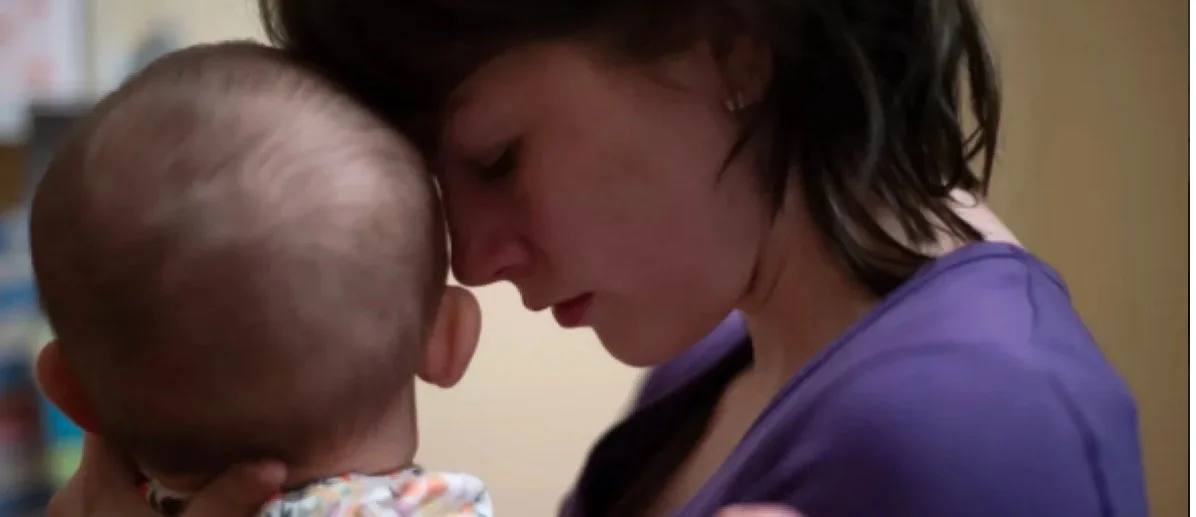
There’s Perla (Lucie Laruelle), already a mother to baby Noé and trying to navigate a relationship with the baby’s absent father; Jessica (Babette Verbeek), whose post-birth journey becomes entangled with her own unresolved childhood abandonment; Julia (Elsa Houben), a recovering addict, newly inspired by motherhood and love; and Ariane (a remarkable Janaïna Halloy Fokan), just 15, determined to give up her daughter, to her own mother’s horror.
Each of these women is trying to break a cycle. The Dardennes draw the parallels—sometimes gently, sometimes heartbreakingly—between mothers and daughters, past and present. And yes, the babies are everywhere—tiny, fragile symbols of both hope and repetition. Baby Lili’s smile hits especially hard, arriving at a moment where the emotional tension quietly explodes.
It all builds to a final scene featuring Apollinaire’s The Farewell, and it’s one of the most affecting Dardenne endings in years. A simple poem, a baby in arms, and the impossible choices of young women trying to choose love, survival, or both.
While the Dardennes’ signature naturalistic style has received less acclaim in recent years, the Belgian duo continues to produce socio-realist dramas, shot with handheld cameras, that portray the struggles of the working class. Their persistence has resulted in their most acclaimed work since 2014’s “Two Days, One Night.”
The brothers, who have already won the Palme d’Or twice — no director has ever won it three times — might have a contender here.

Still no distributor for "Bucking Fastard," "Alpha Gang," "The Last Photograph," "Closing Night," and "The Life and Deaths of Wilson Shedd." The issue seems to be quality more than a lack of willingness to buy.