



Author Stephen King’s assertion that “Babylon” will be viewed as a “classic” twenty years from now got me thinking about other maligned films from the last ten years that might enjoy the same positive fate. I can actually think of a few maligned titles that WoR readers namechecked in recent polls, such as “Babylon,” “Blonde,” and “Beau is Afraid.”
Then you have the wilder claims, which—who knows—might, one could say, come true. For example, “Death Stranding” creator Hideo Kojima has insisted that, “over the next 10 or 20 years,” Joker: Folie à Deux will see its reputation change. Or consider Variety’s Owen Gleiberman, who claims that Barry Levinson’s recent mob bomb “Alto Knights” is “built to last.”
I’d like to add some films that, although they garnered mixed-to-positive reviews, didn’t really get their due and might become classics: Roman Polanski’s “An Officer and a Spy,” Clint Eastwood’s “Richard Jewell,” Casey Affleck’s “I’m Still Here,” Joel and Ethan Coen’s “Burn After Reading,” Woody Allen’s “Irrational Man,” Trey Edward Shults’ “Krisha,” Evan Glodell’s “Bellflower,” and William Friedkin’s “Killer Joe.”
Jonathan Glazer’s “Birth” opened in 2004, and was met with terrible reviews (it’s still at 41% on Rotten Tomatoes)—an almost uncomfortable resistance. Critics, audiences, and culture at large seemed unsure what to do with it. How could something so elegant, so exacting, so modern, be so cold? However, time has done what the initial reception could not. Glazer’s film has been steadily reappraised, scene by scene, frame by frame, and now—with its newly announced release on Criterion—it’s being restored to the conversation it always belonged in. The film is a masterpiece.
I wrote an article for IndieWire many eons ago about films we now qualify as masterpieces, despite being poorly received during their initial releases. Revisiting it, I’ve added more context and films.
In Julian Schnabel’s Vincent van Gogh biopic, “At Eternity’s Gate,” a priest played by Mads Mikkelsen tells Van Gogh that his work, quite frankly, stinks and shouldn’t be considered “painting”—at least, not according to the standard definition of the 1880s. Van Gogh responds that he feels like he’s painting for people who haven’t been born yet.
This got me thinking about all the great cinematic artists who didn’t get their due until much later in life, or only after they passed away. It’s a very common phenomenon, so much so that I stumbled upon many classic films that were not liked by critics upon release.
“Psycho” & “Vertigo”
You could make the case for including many Alfred Hitchcock movies, but it’s the revered classics I’ve chosen. “Vertigo” and “Psycho,” both controversial for their depictions of violence and sexuality, were not well received by critics. “Psycho” especially got off to a rocky start, culminating in reviews calling it “gimmicky” and “tacky.” In a particularly infamous review, the New York Times said it had “not an abundance of subtlety” and was an “obviously low-budget job.” Judging by some other reviews I found, the Times review should be considered one of the kinder and gentler pans of the film.
Famously brushed off by Time magazine as “another Hitchcock-and-bull story,” Vertigo was largely overlooked by both audiences and critics upon its release. Frustrated by its poor reception—and perhaps uneasy with how much it exposed of his own fixations—Hitchcock withdrew the film from circulation in 1973. It wasn’t seen again until a decade after his death, when it was finally re-released, and eventually started topping prestigious critics polls.
“The Shining”
You could also make the case for every Stanley Kubrick movie. “A Clockwork Orange” was loathed and banned in the UK upon release. “2001: A Space Odyssey” famously bewildered Woody Allen back in 1968. Allen said of Kubrick’s masterpiece:
“When I first saw 2001, I didn’t like it. Three or four months later, I was with some woman in California, and I went to see it again, and I liked it a lot more. A couple of years later, I saw it again, and I thought, ‘GEE! This is really a sensational movie,’ and it was one of the few times in my life that I realized that the artist was much ahead of me!”
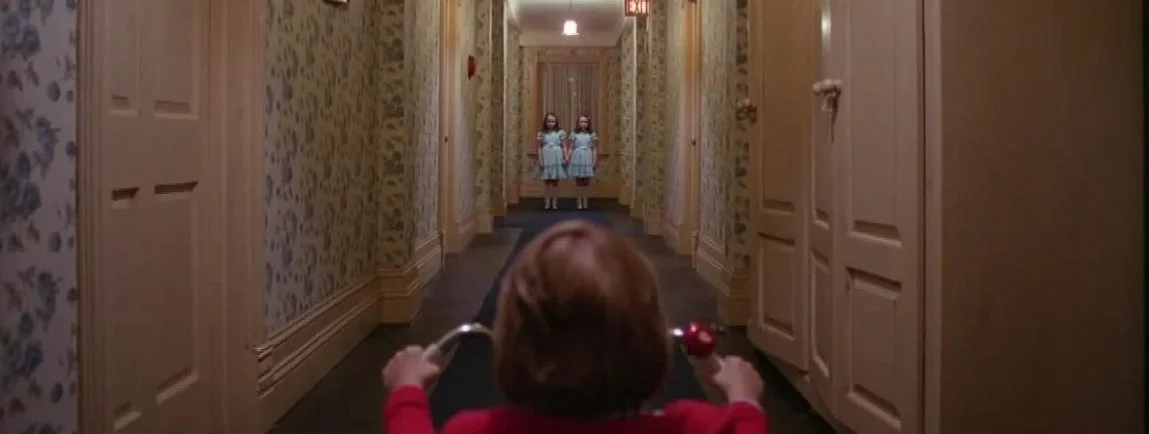
Even Kubrick’s astonishing “Barry Lyndon” had a rough time with critics, most of whom complained about the cold, detached nature of the film, or as the NYT described it, “the slow and self-conscious artistry on display.” “Eyes Wide Shut” is another Kubrick film that’s aged considerably well, finishing at #5 on our ‘90s critics poll and #1 on IndieWire’s list. However, most famous of all, “The Shining,” got him the worst reviews of his career, and even a Razzie nomination for Worst Director. Now it’s regarded as one of the greatest movies of the 1980s.
“The Night of the Hunter”
The only film Charles Laughton ever directed was such a bomb with critics and audiences that he would never direct another film. Ironically, it is now considered one of the most influential American films. Laughton’s masterpiece was a hybrid of genres that felt ahead of its time; its mix of magical surrealism and horror caught audiences off guard. Bosley Crowther of the New York Times called the film “weird” and said it “goes wrong.” Now, it’s a flat-out seminal statement. Cahiers du Cinéma recently named it the 2nd greatest movie ever made, and BFI’s Sight and Sound poll lists it as the 63rd greatest film of all time.
“Metropolis”
Perhaps the most famous example of critics and audiences getting a movie wrong is Fritz Lang’s classic “Metropolis.” It’s hard to believe, but the film was originally ill-received back in 1927. Most notably—and amusingly—author H. G. Wells (yes, that H. G. Wells) wrote a critical review of the film himself.
The studio invested a ton of money in “Metropolis” and, fearing a financial catastrophe, snipped the runtime so theaters could show the film more often per day and recover some of their investment. That’s why, until very recently, no “complete” copy of “Metropolis” had been available. The studio back then simply discarded the deleted scenes, thinking no one would ever care for them after the film’s initial run.
“Rules of the Game”
I’m not the only one who considers Jean Renoir’s French comedy of manners “The Rules of the Game” a masterpiece. This late-‘30s film, set in the bourgeois French countryside, was the most expensive French movie ever made at the time. Renoir was coming off a streak of critical successes, culminating with “La Grande Illusion.”
Why was “The Rules of the Game,” a scathing indictment of France’s bourgeoisie, so hated by critics? It doesn’t help that the film was temporarily banned by the French government. Upon release, it was also trashed by critics stateside—a New York Times review said that “the master has dealt his admirers a pointless, thudding punch below the belt.” Renoir later said that the film’s failure “so depressed me that I resolved to either give up cinema or to leave France.”
“Blade Runner”
When it comes to modern-era classics, it’s hard not to include Ridley Scott’s “Blade Runner.” Not only did it massively underperform at the box office, but critics were divided. In 1982, reviewers acknowledged its production values but criticized its slow pacing, noting it wasn’t the action film advertised in the trailers. Instead, Scott’s film delivered what most didn’t expect: a meditative sci-fi noir exploring what it means to be human. Eventually, Scott’s director’s cut prompted audiences and critics to re-evaluate the film. Since then, “Blade Runner” has been crowned one of the most important and best sci-fi films ever made.
“Possession”
The next example is Andrzej Żuławski’s 1981 horror masterpiece “Possession,” which features one of the 10 greatest female performances I’ve ever seen, courtesy of Isabelle Adjani. She’s an on-screen FORCE in “Possession.” This was Żuławski’s grueling meditation on marriage, written as a reaction to his own, which was also in its final days. “Possession” received very mixed reviews upon release but has since been reappraised as a classic—and for good reason: you’ve never seen a film quite like this one.
That might actually be what links all ten films on this list: upon their respective releases, critics and audiences were so taken aback by something they’d never seen before that they went into defensive mode. They seek the familiar, not the revolution.
Here’s another such example.
“The Thing”
Released in 1982 by Universal, John Carpenter’s “The Thing” was a critical and commercial bomb. The film starred Kurt Russell as a helicopter pilot at an Antarctic research base, where he and his team encounter a shape-shifting alien capable of perfectly imitating any living organism, leading to paranoia and deadly mistrust.
There was initial hostility toward its cynical, anti-authoritarian tone and graphic special effects. Critics hated it. Gene Siskel called it “the most unpleasant, sickening motion picture” he had seen. It’s now regarded as one of the greatest horror films ever made. Carpenter reflected:
I take every failure hard. The one I took the hardest was The Thing. My career would have been different if that had been a big hit ... The movie was hated. Even by science-fiction fans. They thought that I had betrayed some kind of trust, and the piling on was insane. Even the original movie's director, Christian Nyby, was dissing me.
Ultimately, the history of cinema is full of films that were misunderstood, dismissed, or outright panned when they first appeared, only to be celebrated decades later as masterpieces. From “Metropolis” to “The Thing,” “Psycho” to “Blade Runner,” these movies remind us that critical opinion is never set in stone —and that true artistry often requires time to be fully appreciated. Cinema, like art itself, is often ahead of its audience—and sometimes, greatness simply has to wait.

As expected, Snyder's latest is being torn apart by TIFF attendees. No mercy given. The film, which had its world premiere this evening, is being called by some one of the worst movies to ever premiere at the festival.