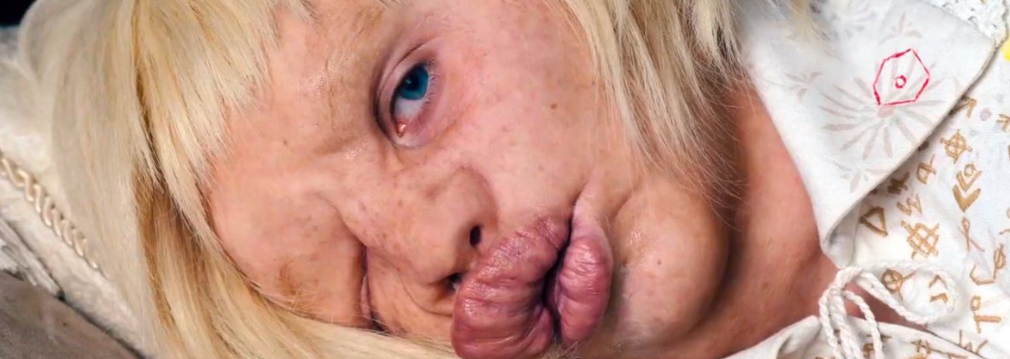
"The Irishman" producer on Scorsese using CGI to make De Niro look younger: "We’re still experimenting but saw a test and it looked extraordinary."

Image result for the irishman

On De Niro being given the CGI treatment

And you’re using CGI to reduce De Niro’s age for The Irishman?

"It’s a story that spans a lot of time, so some segments without prosthetics we’ll be able to get him to look like his Godfather, Part II part. Well, that age, anyway."

And you’ve tested it with him?

"Yeah. It won’t be a huge aspect of the movie, but sections. The technology can go from 20, 40, 60. Yeah. We’re still experimenting but saw a test and it looked extraordinary."


On Joe Pesci coming out of retirement


Are you still talking to Joe Pesci about coming aboard The Irishman?

"I know Bob is. Robert De Niro, that is. It’s in his hands now and I know he’s making an effort. There will be a time when we have to start that so I know he’s having those conversations with Joe and still trying to get him on board."

Courtesy of Collider

Where have all the exciting American filmmakers gone?

So let's play a little game here.

We all know the late '60s and all of the '70s brought forth some of the greatest filmmakers of our time: Scorsese, Coppola, Peckinpah, Altman, Spielberg, Friedkin, Waters, Malick, Cassavettes, De Palma, Eastwood, Allen, Nichols, and Romero just to name a few.

The early '80s gave us Lynch, Demme, Brooks, Cronenberg, and Gilliam, and then the indie movement started blossoming a few years later with Jarmusch, Coen, Lee, Van Sant, Sayles, Soderbergh, Tarantino, and Linklater.

Heading into the new century, some of the most promising filmmakers entered the fray: PTA, O. Russell, Anderson, Payne, Jonze, Fincher, Aronofsky, Nolan, Haynes.

And then between 2005 until to this day .... STAGNATION.


I want you to think about my reasoning here for a second. Think of an American director who had his film debut at the earliest in 2003, who has built a solid reputation and has had a legitimately important impact on cinema in the same vein as the names I just mentioned? Anyone? I can think of many directors born outside the United States: Dardenne, Glazer, Villeneuve, Joon-Ho, McQueen, Farhadi, Lanthimos, Chan-Wook, Refn, Mungiu, Weerasethakul, Wright, Arnold.

So what's the future of American cinema like? It looks bleak to say the least, but there are still some filmmakers starting to form impressive filmographies, despite the studio system not being interested in giving them any kind of creative freedom or room for original thought. Yet they have managed to find a way to showcase their artistic visions on the screen for us. I found 14 names that might give hope for the future of American cinema.

Damien Chazelle
"Whiplash," "La La Land"

Shane Carruth
"Upstream Color," "Primer"

JC Chandor
"Margin Call," "All Is Lost," "A Most Violent Year"

Jeremy Saulnier
"Green Room," "Blue Ruin"

Tom McCarthy
"The Station Agent," "Spotlight," "Win Win," "The Visitor"

Bennett Miller
"Capote," "Moneyball," "Foxcatcher"

Charlie Kaufman
"Synechdoche New York," "Anomalisa"

Jeff Nichols
"Shotgun Stories," "Take Shelter," "Mud," "Loving," "Midnight Special"

Ryan Coogler
"Creed," "Fruitvale Station"

Ava DuVernay
"Selma," "Middle of Nowhere," "13th"

Rian Johnson
"Brick," "Looper," "The Brothers Bloom"

Mike Mills
"Thumbsucker," "Beginners," "20th Century Women"

Cahiers Du Cinéma readers name their 10 best of 2016

Great list. Love all of these except for Bruno Dumont's "Ma Loute," which underwhelmed me at Cannes, ditto Pedro Almodovar's "Julieta," but that one's still recommended. It's minor Almodovar, but that still means it's better than 99% of the fare released here in the States. A few hidden gems that haven't gotten the recognition they deserve: "Aquarius" and "Un Jour Avec, Un Jour Sans" ("Right Now, Wrong Then"). Seek these out when you have the chance, they are one of the very best films I saw last year.

Scorsese on his long-delayed Sinatra biopic: "I think it's finally over. We can't do it."


Scorsese had previously mentioned that the Sinatra picture he wanted to make would feel like a combination of "Goodfellas" and "The Aviator." Well, it seems like that dream biopic will finally not be happening.

"We can't do it," Scorsese told The Toronto Sun. "I think it is finally over. [Sinatra's estate] won't agree to it. Open it up again and I'm there."

"Certain things are very difficult for a family, and I totally understand," Scorsese said. "But if they expect me to be doing it, they can't hold back certain things. The problem is that the man was so complex. Everybody is so complex – but Sinatra in particular."

"It's very hard [to write the script] because here is a man who changed the entire image of the Italian-American," he said. "And that's just one thing. Along with his political work, civil rights, the mob." 

"We can't go through the greatest hits of Sinatra's life," he said at the time. "We tried this already. Just can't do it. So the other way to go is to have three or four different Sinatras: younger, older, middle-aged, very old. You cut back and forth in time – and you do it through the music. ... So that's what we're trying for. It's very tricky."

Scorsese's longtime editor Thelma Schoonmaker has been on a bit of a campaign to get Bringing Out The Dead the "Recognition it never got"


"Bringing Out The Dead" is not for everyone. The movie's lack of a conventional narrative probably confused and alienated many viewers when it first came out in the fall of 1999. The way it uncompromisingly looked into the darkest corners of human nature with an unflinching eye probably didn't help it get any fans either, but these qualities are part of Scorsese's greatest films -- the confusion of "After Hours", the emotional indecision of "The Age of Innocence", the alienation of "Taxi Driver", the spiritual search of "The Last Temptation of Christ," "Kundun" and "Silence." "Bringing Out The Dead" is not easy to watch, and at times it's hard for the average viewer not to look away. But it's real, and it stays with you.

"Bringing Out The Dead" was the fourth collaboration between Scorsese and screenwriter Paul Schrader, based from the novel of Joe Connelly, and it touched on their familiar themes of faith, guilt, hope, and redemption. Using Frank (Nicolas Cage) as a lens to the dark and shady corners of New York's 'barrel of humanity', Schrader and Scorsese examined issues they tackled two decades earlier, in"Taxi Driver," such as decay, degeneration and the meaning of death and life in certain respects. Are these poor, miserable, drugged beings crawling the streets at night really alive. This time was New York of early '90s as opposed mid '70s in Taxi Driver.

Schrader's screenplay offers satisfying levels of complexity, so that ultimately, towards the end, when the main protagonist Frank, as played by nicolas Cage, does something totally unexpected and morally ambiguous, we understand exactly why he's doing it and can sympathize.

The film also feels like the last of something in terms of Scorsese's career. It came out in 1999 and felt like a final statement before the clock finally hit midnight into the new century. After "Bringing out the Dead", Scorsese went on to make 6 consecutive Hollywood epics ("Gangs of New York," "The Aviator," "The Departed," "Hugo," "Shutter Island," "The Wolf of Wall Street" and "Silence") which had him losing touch with the minimal character studies that defined a big portion of his earlier work. You see, I love my Scorsese films in many shapes, sizes and genres, but many forget that, beyond the mob movies and historical epics, he's a master at making these small, intimate, perfectly-toned, pitch black character studies. "After Hours," "The King of Comedy," "Taxi Driver," and, of course, "Bringing out the Dead" feel like a quadrilogy of alienation.

These films will stand the test of time and become more resonant as we continue to further isolate ourselves from the world around us and bury ourselves in the latest batch of gadgets and social networks that come our way. "Bringing out the Dead" feels, 17 years since since its release, like a prophetic wake-up call, a warning for the next generation, a call to stop the madness, take a deep breath and .... reflect.
Long-time Scorsese editor-extraordinaire Thelma Schoonmaker seems to agree with me as far as "Bringing out the Dead" goes. While promoting her work for Marty's latest picture, "Silence," she's also been, slyly might I add, talking about "Bringing out the Dead," which, it turns out, is one of her very favorite Scorsese films.
First up we have her mentioning the 1999 film to Den of Geek:

[Bringing Out the Dead] is the only one of his films, I think, that hasn't gotten its due - it was a disaster at the box office, as was King Of Comedy, as was Raging Bull. A lot of our movies!

I think there's a cult following for it - it sounds like you're one of them, which is great. But there's a following building. But what happened was, that film was about compassion, and it was sold, I think, as a car chase movie. When I saw the trailer I said, "Wait a minute! That's not what the movie's about!" I think people were made nervous by the theme of it, which I think is beautiful. I think it'll get its due.

Maybe if this film is digested by a lot of people, maybe that will allow it to come back - there are similar themes in it. We made [Bringing Out The Dead] after Kundun, and of course the Dalai Lama's big thing is compassion - it's a word he uses in almost every sentence. And so it's a beautiful film, but it was hard for people to take, I think. Unexpected. But I think it's great..

Then she continued her campaigning by speaking to Uproxx about the film:

“That is the one that has never gotten recognition. But I can’t tell you how many people talk to me about that movie. There is a ripple that’s going on. Bertrand Tavernier, the really wonderful French director, just wrote a review of it again. I have friends, when they have friends over for dinner, they make them watch it. It never got its due because it’s about compassion. That’s why.”

The film was also marketed poorly, she says. It was sold as a sort of car chase film and likely, therefore, courted a viewership that expected something completely different. “The wrong audience went to it first and that was it,” Schoonmaker says. “We were done.” But that’s something she and Scorsese have become accustomed to, she says: the work not being appreciated in its time.

“Everybody hated ‘Casino,'” she reminds. “They would say, ‘It’s not ‘Goodfellas.” That’s right. It’s not. It’s Las Vegas. It’s not ‘Goodfellas.’ And now everybody loves ‘Casino.’ Now it’s a big cult film. ‘Raging Bull’ was a disaster and wasn’t recognized for 10 years. ‘King of Comedy’ was a disaster, now everybody loves ‘King of Comedy.’ This happened to so many of our films. But the one that’s never, ever come back is ‘Bringing Out the Dead.'

Is it time to give Terrence Malick another shot with his latest entitled SONG TO SONG?

song-to-song-ryan-gosling-rooney-mara-michael-fassbender

What we do know about Terrence Malick's latest, which was called "Weightless, but is now called "Song to Song":

Running Time: 145 Minutes

Cast: Ryan Gosling, Christian Bale, Cate Blanchett, Rooney Mara, Haley Bennett, Natalie Portman, Michael Fassbender, Val Kilmer, Benicio Del Toro, and Holly Hunter.


Plot: "Two intersecting love triangles. Obsession and betrayal set against the music scene in Austin, Texas."
Some sequences were filmed during the Austin City Limits festival a few years back, the actors performed in the midst of concerts by Arcade Fire, Iron & Wine, Fleet Foxes, Black Lips, and Patti Smith. 

How some cool silent film effects were done

Related image


Thanks Auir2Blaze

"The craziest thing about silent movie effects is that everything basically had to be done in camera.
If you were filming multiple elements to create a complex shot that contained multiple elements and you messed up one part, the whole piece of film would be ruined."

"There are a lot of other cool techniques that I didn't include. Maybe the most cutting edge one was the Schufftan process, which Metropolis was the first film to use."

"Another simple, but very effective trick, was suspending miniature models in front of the camera. These huge machines from Modern Times were actual models hung carefully in front of the camera to create a trick of perspective."

"And maybe one of the most famous special effects shots of the silent era, the parting of the Red Sea in the Cecil B. DeMille's original version of the Ten Commandments (1923) was actually pretty straight forward: Water was poured into a gelatin mold made to look like the sea, and the result footage was reversed to make it look like the water was rushing out."


[–]nc863id 524 points  
Another simple, but very effective trick, was suspending miniature models in front of the camera. These huge machines from Modern Times were actual models hung carefully in front of the camera to create a trick of perspective.
Is this to say that these shots were done in a single take using forced perspective? If so, I'm trying to wrap my head around how much depth of field these shots are exhibiting, considering how much closer the models would have to be to the lens than the action going on...which then makes me think of how small an aperture the lenses must have...which then goes on to how much light must have been needed to get a proper exposure, especially with film that must have been rather insensitive by modern standards...which then spins off onto a semi-related tangent about how difficult it must have been to properly and consistently light the model and the background separately.
Holy shit.

Carrie Fisher's Urn is a Huge Prozac Pill


Could it really end any other way? 

Staying badass, even after her tragic passing, Carrie Fisher has been ushered in an urn shaped like a giant Prozac pill.


Todd Fisher, Carrie's brother, explained the choice of urn to ET Online, saying it was his sister’s “favorite possession.”
“We couldn’t find anything appropriate. Carrie would like that,” he continued. “It was her favorite thing, and so that’s how you do it. And so they’re together, and they will be together here and in heaven, and we’re OK with that.”
“Carrie’s favorite possession was a giant Prozac pill that she brought [sic] many years ago. A big pill,” Fisher said. “She loved it, and it was in her house, and Billie and I felt it was where she’d want to be.

John Lee Hancock's The Founder

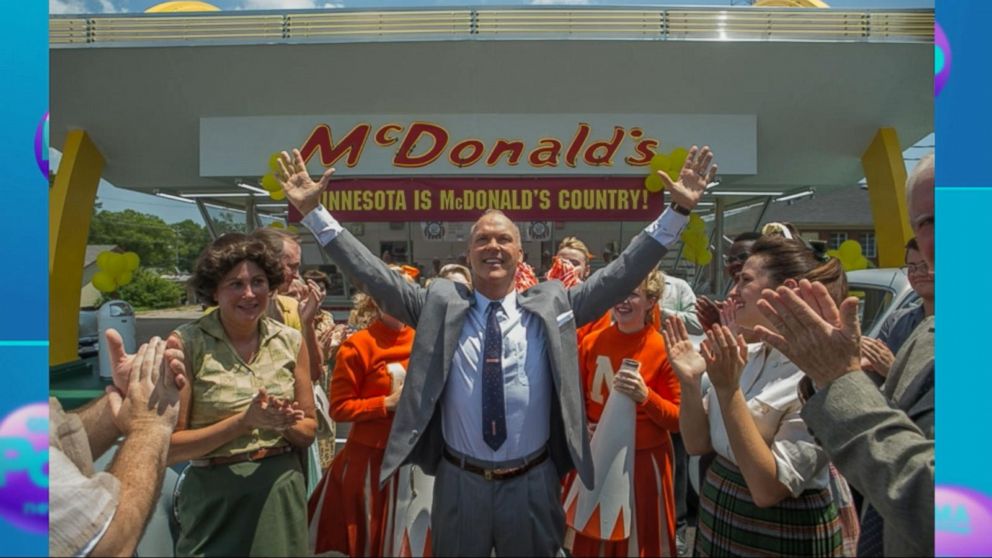
Image result for michael keaton ray kroc

I'm actually quite surprised that John Hancock's "The Founder" hasn't had any kind of traction this holiday season. It's a well-done and gripping portrait of the greed the seeps through the cracks in this country. Ray Kroc (Michael Keaton) plays the titular "founder," more of a schemer that found his way to stealing the labor of love built by the McDonald brothers in San Bernandino, California. They didn't want to franchise due to keeping their integrity intact and that, well, quality control when you franchise fast food is almost impossible. Kroc didn't listen to them, although he convinced them to have him open up another McD's location in a small Illinois town, he expanded. 19 States. Then he decided to replace ice cream-based milkshakes with powdered milkshakes, which got the brothers fuming and then he decided to real-estate McDonald's locations and the rest is, as they say, history.

Keaton deserves all the awards love for his portrayal of Kroc. He's been having quite the comeback lately, but this performance, just like the film itself, has been ignored by most, if not, all end-of-season awards. It's career-best work for Mr. Keaton. Yes, Hancock's film follow a familiar trajectory, but the story itself is fascinating nonetheless. There is plenty of stinging cynicism is Robert Spiegel's (Big Fan, The Wrestler) screenplay, the satirical aspects of the script are not far off from the times we live in today. The American dream, although a beautiful and resonant idea for the values of this country, can produce toxicity of the highest levels as seen here. If anything, I'd say the weak spot of the film is Hancock's direction, which just lies there and doesn't really do much in the way of augmenting the fascinating story at hand, but maybe that's what the film needed, a by-the-books, just-tell-the-story kind of approach.

So with all that being said, why has this film, but, more importantly, Keaton's performance, not gained any traction during awards season? Well, firstly, they didn't screen the damn thing for press here (Boston) until this week. How do you build buzz if no critic sees it. They only limited screenings of it to the major critics group members, but that's not enough to build buzz. At the moment Keaton is on the outside lookin' in for a possible Oscar nom, but he is well-loved and if enough industry people catch the film they will vote for him. I know it. His performance is better than most of the would-be contenders in the category.

David Fincher's Advice To Young Filmmakers Is Just General Good Advice For Life

David Fincher's Advice to Young Filmmakers

"I always wanted to give a lecture at film schools. You go in and you see all these fresh faces, and you say: 'You! Stand up, tell me your story. Tell me what your film is going to be about.' And they start, and you go: 'Shut up and sit the fuck down!' And if they do, you go: 'You're not ready.' Because the film business is filled with shut-up and sit-the-fuck-down. You got to be able to tell your story in spite of sit-down and shut-the-fuck-up. If you are going to let something like that derail you, what hope do you have against transportation department? What hope do you have against development executives?"

This is from a book passage which can be found HERE