
The never-ending question about Steven Spielberg: Is he an "auteur"?


I actually find Spielberg became a better and more mature filmmaker over the years. The craft and masterful storytelling between 1998 and 2006 ("Saving Private Ryan," "Munich," "Minority Report," "Lincoln," "AI," "Catch Me If You Can" and  "War of the Worlds") far exceeds his, sometimes, stumbling work from the '70s and '80s (although I do love "Close Encounters," "Raiders of the Lost Ark," "Jaws," "The Sugarland Express" and "Duel"). I despise with a passion "The Color Purple," "Empire of the Sun," "1941" and "Hook." If anything, I'd say the recurrent flaw with Spielberg is that he can never close the deal in a movie, his endings always fall short. He always overreaches. Also, since 2008 and his failed attempt to revive Indiana Jones he has been very inconsistent and can't seem to find a groove with his films (with the exception of "Lincoln.") With all that being said my favorite film of his will always be "Schindler's List," I just can't see him ever topping that film. 

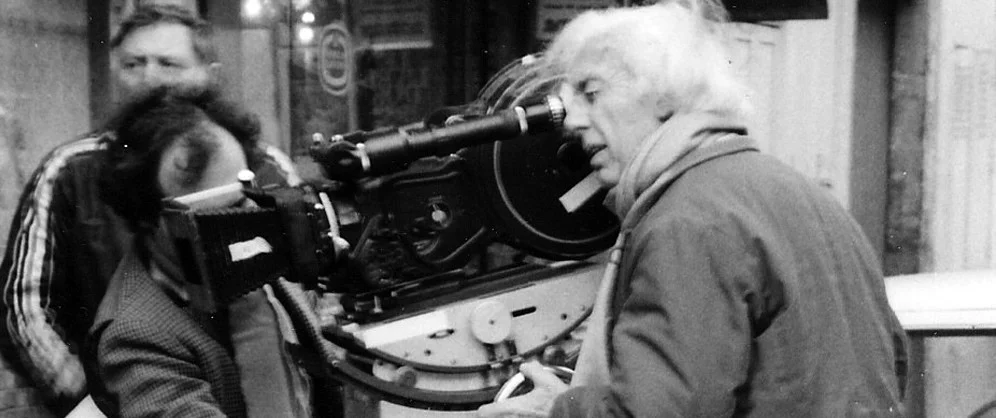
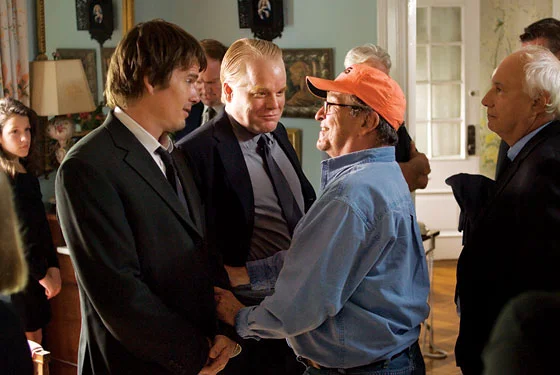
Now to answer the "never-ending" question, is he an auteur? There is something to be said by the mere fact we can discuss Spielberg as an auteur, although his themes are fairly difficult to pinpoint. His themes on universal goodness, and the fantastic existing in reality if you know where to find it, are more obvious in his harshest movies (Saving Private Ryan, Amistad, A.I.) and find their way into his technique: whatever the moral (or lack thereof) a lot of people like them, and watch them, over and over again, because they're unassuming. His use of the medium can be impressive - impressive enough that the majority of people don't think about it, and they can enjoy his films regardless. 


His technique looks simple, yet it's incredibly effective. When I re-watch his classics, the way he edits, shoots, and lets scenes breathe is pretty fascinating. He loves his long shots. Not many directors gets to achieve such mainstream success and then have their movies studied over and over again, by countless individuals. Now for the ultimate auteur theory test: Would I know a film was directed by Steven Spielberg if I didn't know anything about it (including who its director was) going in? You bet your ass I would. The daddy issues, the streams of light, the John Williams scores and, of course, there's these recurrent shots he keeps using (HERE).

The Brilliant NEON DEMON Credits Scene


I just caught up with "The Neon Demon" again. Is there a better movie to watch on Christmas than this one? Required viewing for all you nihilists out there. Nicolas Winding Refn's film felt immensely abrasive when I first caught it at Cannes earlier this year. Refn keeps upping the ante with every scene in such carefully crafted and precise ways. The attention to detail is so obsessive and meticulous, he's like a sick, twisted version of Wes Anderson.

You could put your TV on mute and still get caught up in its sumptuous visual imagery. Refn should have shot it as a silent film. His images feel so controlled and calculated. I know many at Cannes were headed towards the exit as the film rolled along, up until its climax, which is so jaw-dropping and in your face that I couldn't help, but be delighted by its in-your-face, middle finger wagging gesture at the audience member.

One of those surreal moments happens when the end credits occur, they totally catch you off guard. I loved it though, and watched them all the way through whereas I'm normally one of those people who leaves when the credits start rolling. 

First Official Image from Pixar's next movie 'Coco'


"At the center of Pixar’s next original film, Coco, is a 12-year-old boy who’s breaking all the rules — or at least his family’s. Miguel, voiced by newcomer Anthony Gonzalez, is a member of the shoemaking Riveras, your average Mexican family that’s completely banned music for generations. So, maybe not so average. Ever since his great-great-grandmother Imelda was left alone by her husband (who abandoned his family to pursue a life hitting high notes), there’s been a strict no-music ban in the Rivera household, upheld primarily by Miguel’s Abuela (Renee Victor). That won’t stop Miguel from pursuing his passion, having grown up idolizing the music and advice of the late singer Ernesto de la Cruz (Benjamin Bratt). In fact, it’s his worship of De La Cruz—and a shocking discovery about him—that’s brought Miguel to the singer’s grave…and you, reader, to EW’s exclusive new first look at Coco. In the shot above, you’re catching Miguel in a beautiful, pivotal moment: He’s just committed a literal grave act and borrowed — just borrowed! — the guitar hanging in De La Cruz’s tomb. Unfortunately, it’s Dia de Muertos, and Miguel’s well-intentioned deed of grave robbery is badly-timed, and he’s about to be inadvertently sent to the Land of the Dead, where he’ll come face to face with the same great-great-relatives who banned music in his family. Just guess how happy they’ll be when they find out how he got there."

As an added note I ranked the Pixars earlier this year. That can be found right HERE.

After careful analysis, we can conclude 2002 was the year Robert De Niro stopped caring [Infographic OC]


I always believed, and still do to this day, that Robert De Niro still has a few great screen performances left in him. He showed shades of greatness as the obsessive-compulsive dad in "Silver Linings Playbook". That performance was the De Niro we knew as an actor, filling that role with layers of emotions and comedic insight. That film earned him the seventh Oscar nomination of his career. Safe for that David O. Russell film, what else has he done these last 15 years or so that would merit a mention?

Although I'm a diehard fan of his earlier work, and have been disheartened by the projects he's chosen the last two decades or so, that hasn't stopped me from following whatever projects he signs on to next because, well, I'm hopeful and know he still has it in him to deliver something special. Again, look what he did with "Silver Linings Playbook," such a comic, resonant and touching performance which earned him well-deserved praise.

The good news is that his next film will start shooting this spring and that it teams him up with Martin Scorsese, a director who has always brought out the best in De Niro ("Goodfellas," "Raging Bull," "Cape Fear," "The King of Comedy," "Mean Streets," and "Taxi Driver")

What has been your favorite post-2000 De Niro role?

These five come to mind for me: "Meet The Parents," "Silver Linings Playbook," "The Score," "Stone," and "Being Flynn."  Yes, these performances show that De Niro can still care about his craft, but they all pale in comparison to his work from the '70s, '80s and '90s.

The great modern-day Actor/Director partnerships

Image result for scorsese dicaprio

It seems harder and harder for a director to have himself an acting muse in this day and age of cinema. Gone are the legendary collaborations: Scorsese/De Niro, Wilder/Lemmon, Hitchcock/Stewart, Fellini/Mastroianni, Kazan/Brando, Brooks/Wilder, Kurosawa/Mifune, Ford/Wayne, Bergman/Ullmann, Herzog/Kinski, Leaud/Truffaut, Dietrich/Von Sternberg. What modern-day actor/director partnership could one day be deemed worthy of the 11 mentioned? Here are a few that have contending potential.


Martin Scorsese/Leonardo Dicaprio
Gangs of New York (2002), The Aviator (2004), The Departed (2006), Shutter Island (2010), The Wolf of Wall Street (2013)

Wes Anderson/Bill Murray
Rushmore (1998), The Royal Tenenbaums (2001), The Life Aquatic with Steve Zissou (2004), The Darjeeling Limited (2007), The Fantastic Mr. Fox (2009), Moonrise Kingdom (2012), The Grand Budapest Hotel (2014)

Steve McQueen/Michael Fassbender
Hunger (2008), Shame (2011), 12 Years A Slave (2013)

Paul Thomas Anderson/Phillip Seymour Hoffman
Hard Eight (1997), Boogie Nights (1997), Magnolia (2000), Punch-Drunk Love (2002), The Master (2012)

Joel and Ethan Coen /John Goodman
Raising Arizona (1987), Barton Fink (1991), The Hudsucker Proxy (1994), The Big Lebowski (1998), O Brother, Where Art Thou? (2000), Inside Llewyn Davis (2013)

James Gray / Joaquin Phoenix
The Yards (2000), We Own the Night (2007), Two Lovers (2009), The Immigrant (2013)

Michael Haneke /Isabelle Huppert
The Piano Teacher (2001), Time of the Wolf (2003), Amour (2012), Happy End (2017)

Richard Linklater/Ethan Hawke
Before Sunrise (1995), Tape (2001), Waking Life (2001), Before Sunset (2004), Fast Food Nation (2008), Before Midnight (2013), Boyhood (2014)

Jeff Nichols/Michael Shannon
Shotgun Stories (2000), Take Shelter (2011), Mud (2013) Midnight Special (2016), Loving (2016)

Quentin Tarantino/ Samuel L. Jackson
Pulp Fiction (1994) Jackie Brown (1997) Kill Bill: Volume 2 (2004) Inglourious Basterds (2009, uncredited) Django Unchained (2012) The Hateful Eight (2015)

Kelly Reichardt/Michelle Williams
Wendy and Lucy (2008), Meek's Cutoff (2011), Certain Women (2016)

Lars Von Trier/Stellan Skarsgard
Melancholia (2011), Nymphomaniac (2014), Breaking the Waves (1995), Dogville (2004), Dancer in the Dark (2000)

Tim Burton/Johnny Depp
Edward Scissorhands (1990), Ed Wood (1994), Sleepy Hollow (1999), The Corpse Bride (2005), Sweeney Todd (2007)

Mike Leigh/Timothy Spall
Life is Sweet (1991), Secrets and Lies (1996), Topsy-Turvy (1999), All or Nothing (2002), Mr. Turner (2014)

Pedro Almodovar/Penelope Cruz
Live Flesh (1997), All About My Mother (1999), Volver (2006), Broken Embraces (2009), I'm So Excited (2013)

Wes Anderson and Owen Wilson exiting Columbia Pictures offices after signing deal to make Bottle Rocket, November 1994


The duo turned up for a meeting at producer James L. Brooks' office wearing white shorts. They ended up penning a $5 Million deal to make "Bottle Rocket," which also included an editor, cinematographer, tech crew etc. The above photograph is them jumping for joy leaving Brooks' office that very day. 

According to Konbini the duo met “doing a playwriting class together: this thing where everybody, about nine of us, sat around a table and discussed plays. And I always sat in one corner, not really at the table, and Owen always sat in another corner, not really at the table, and we never spoke the whole semester.”

Expanded thoughts on ROGUE ONE

Image result for rogue one

Earlier last week I shared my brief thoughts about "Star Wars: Rogue One," let me add more now.

You'd think that based on the social media reaction after the Hollywood premiere it would be a fantastic film. You see, that's where you're dead wrong. Yes, the battle scenes pique your interest, for the most part, but that's just the problem. It's all out war and just war. At some point you just become numb to it all and wonder where has the character development gone. For all the crying and moaning I've heard about "The Force Awakens," at least that film developed its characters well enough for you to actually care about their outcome in its finale. "Rogue One" wants to be an action film, but ends up being stale, non-involving, beautiful to look at mind you, but, nevertheless, inconsequential.

There's also the fact that the inconsistent tone must be due to Tony Gilroy taking over, unofficially, the director's chair for reshoots. There are some moments when the tone and style switches and it does feel like it was directed by a different filmmaker. This is overall just a mess of a film and many of the positive reviews you will read will come from critics, bloggers etc. that bought the hype and, for good reason, were on an endorphin high seeing it in advance of everybody else. That's the Disney brainwash machine for you. Make sure nobody knows anything, the critics see it in advance and the hype is almost too immense to contain. Even film critics can be fooled sometimes. I couldn't find a single negative opinion from the Hollywood premiere, but now that the high has calmed down a bit you are starting to see some people come back down to earth. I was starting to think I'd be the only one disappointed by this film, but clearly there are many more with mixed feelings out there.

Felicity Jones is commendable in the lead role of Jyn, I adore Jones as an actress, she teams up with the rebels to get her dad, a brilliant man being forced against his will, to stop building the "death star," a powerful weapon that can destroy planets. Many of the winks to the earlier films in the franchise are playful and the use of CGI on a few older characters from "A New Hope" is well realized although a bit frosty on the emotional side. 

The film is meant as a precursor to the events that start "A New Hope," in which Princess Leia gets her hands on the "Death Star" plans and hides it inside R2D2. That 1977 movie was the beginning of the end for auteur cinema in Hollywood, ever since then the movies have been about making the bigger bigger, the profits more profitable and director's totally at the mercy of the studios. It's a funny thing seeing highly established film critics fawning over the next Star Wars movie when it is well known that this very franchise ruined the high of the maverick 70s era. Of course, it wasn't just Star Wars, but it did have a major impact and so did Michael Cimino whose film "Heaven's Gate" was a colossal flop.  We would never see such big-budgeted, creative freedom bestowed on a Hollywood director ever again.

Suffice to say, the real high of the film comes in the final few minutes when everything comes together and "Rogue One" ties up quite cleanly to "A New Hope." In fact, next time I watch the 1977 film, don't know when to tell you the truth, I will most probably watch the final 20 minutes of "Rogue One." It really is well done and respectful of the source material, sadly I was just not as taken by some of the other stuff in the film, but it is somewhat watchable and I can't say I was really bored. I just much prefer the nostalgia-driven emptiness of "The Force Awakens."

Poster for Lars Von Trier's THE HOUSE THAT JACK BUILT

the-house-that-jack-built


The Playlist has the synopsis as follows:

Set in Washington during the ’70s and ’80s, and stretching out across twelve years, the story will be told from the point of view of Jack (played by Matt Dillon), and chronicle his development into a serial killer, all while he tries to finish his “masterpiece” as he eludes capture. So far, the only other cast member is Bruno Ganz, but there are four prominent female roles that are yet to be cast, and hopefully we’ll hear about those soon.

This will surely be Cannes-bound in 2018 as production will start shortly in Scandinavia. 

Favorite Von Trier films?

1) Breaking the Waves
2) Dancer in the Dark
3) Melancholia
4) Antichrist
5) Dogville
6) Nyphomaniac

Ben Stein's quote about 'Ferris Bueller's Day Off' will make you see the movie on a whole deeper level.

Image result for ben stein bueller

For those of you who don't know, Stein played the Economics teacher in the movie. His quote is as follows:

"This is to comedies what Gone with the Wind (1939) is to epics", Stein said. "It will never die because it responds to and calls forth such human emotions. It isn't dirty. There's nothing mean-spirited about it. There's nothing sneering or sniggering about it. It's just wholesome. We want to be free. We want to have a good time. We know we're not going to be able to all our lives. We know we're going to have to buckle down and work. We know we're going to have to eventually become family men and women and have responsibilities and pay our bills. But just give us a couple of good days that we can look back on."

He basically nails the timeless nature of the film and why it has stood the test of time. There aren't many films from the 80s that have the rewatchability of "Ferris Bueller's Day Off." Funny how critics basically panned the film when it came out, but, over time, it has become one of the more beloved films of my generation. Richard Roeper's favorite movie of all-time, by the way!

Composer John Williams: Never seen a STAR WARS movie

Image result for john williams star wars

I am not a die-hard "Star Wars" fan, but John Williams' "Star Wars" score is as iconic as they get. He's scored all 8 films of the saga and basically made a career out of it, although his 1975 score for Spielberg's "Jaws" is, for my money, is as good as anything ever composed for a "Blockbuster" movie.

He spoke to The Mirror recently and revealed that, shock, he's never seen any of the "Star Wars" movies.

“I let it go. I have not looked at the ‘Star Wars’ films and that’s absolutely true. When I’m finished with a film, I’ve been living with it, we’ve been dubbing it, recording to it, and so on. You walk out of the studio and, ‘Ah, it’s finished,’ Now I don’t have an impulse to go to the theater and look at it. Maybe some people find that weird, or listen to recordings of my music very, very rarely.”

So there you go. It's not the only iconic score he's done. Remember, he has scored practically every Spielberg since "Jaws." I'd say the best work he's done is the following: "Schindler's List," "Jaws," "Raiders of the Lost Ark," "Harry Potter," "E.T," and "Superman." 

12 Great films made by directors over 80

1) L'Argent (Robert Bresson, 82)

Robert Bresson, L’Argent

Robert Bresson won the director's prize at Cannes for this stinging indictment of poverty and crime in France as a fake 500 Franc bill gets passed around from person to person until an unlucky delivery man tries uses it buy some food and gets caught by the police. He passes through a flawed legal system, holding no mercy for the poor, and eventually resorts to a life of crime to support his struggling family. "L'Argent" is a compelling morality tale that holds no prisoners and works on layers of social issues as its protagonist's innocent soul, slowly, but surely, turns into black ink by its conclusion. This would be Bresson's swan song as he would go on to live the last 16 years of his life in retreat.


2) Before the Devil Knows You're Dead" (Sidney Lumet, 83)

Before the Devil Knows You’re Dead, Sudney Lumet

Post-1988's "Running on Empty," Sidney Lumet was struggling to regain his voice as an artist. The '90s weren't very kind to the man known as "The Prince of New York," with "A Stranger Among Us," "Guilty as Sin," "Critical Care," and, especially, "Gloria" burying his career down to the abyss. It wasn't until his final film, 2007's "Before the Devil Knows You're Dead," that Lumet pulled out his final great statement. In a career that spanned more than five decades and dozens of classics ("12 Angry Men," "The Verdict," "Prince of the City," "Network," "Dog Day Afternoon," "Serpico") Lumet put his old-school directorial chops to good use and his familiarity with crime genre. I wrote back in 2007 "It'd be a real shame for young filmmakers to not watch, study and ponder Lumet's film. It might feel small-scaled and simply rendered, but there's an artistry to the way the story is told that just doesn't exist in today's Hollywood and that, I fear, is going extinct." Sadly, I feel like that is exactly what's happened. 


3) I'm Going Home (Manoel De Oliveira, 94)

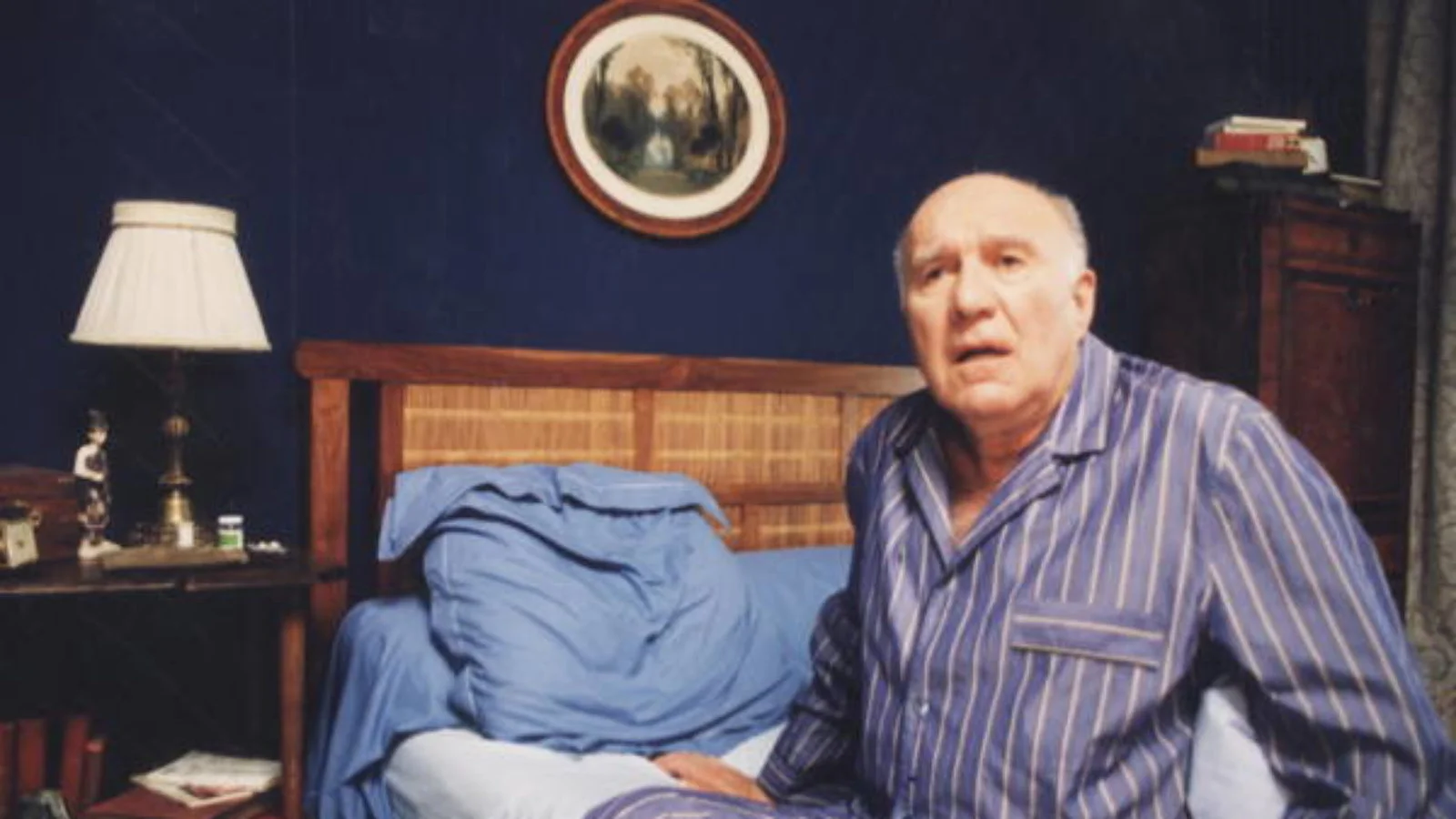
This is another low-key yet compelling latter-day offering from the indefatigable Portuguese film-maker; given that it deals with a famous but ageing actor (Michel Piccoli once again) who decides to give up his boots, it was probably meant as such by Oliveira himself – though he was still going strong years later, having not only made some half-a-dozen other films in the interim but, at nearly 106, had two more productions already lined up before his death. "I'm Going Home" was, by far, the most accessible and approachable film the director made in his latter-day "renaissance," with a naturalism and emotional resonance that harkens back to the golden-age of European cinema in the 60s.


4) Blue Jasmine (Woody Allen, 79)

blue-jasmine.jpg

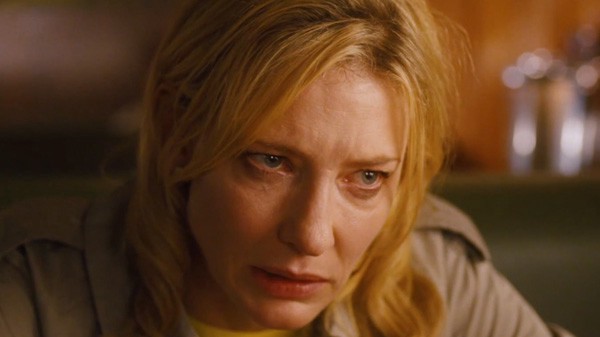
Yes, I'm cheating a bit here. Woody Allen was 79 years of age when "Blue Jasmine" was released in the summer of 2013, but we can all recognize that the film was an exemplary showcase of how the Woodman's still got it. I could have also included "Irrational Man," an underrated stunner from 2015 that had him dealing with the darkest of themes, and more importantly, with death itself. "Blue Jasmine" is the crowning performance of Cate Blanchett's career. Here she plays a Xanax-popping, middle aged New York bourgeois whose husband divorces her, sending her in a state of suicidal, depressive panic. I don't think I'd be stretching it by calling it Allen's best film since 1989's similarly themed "Crimes and Misdemeanors."


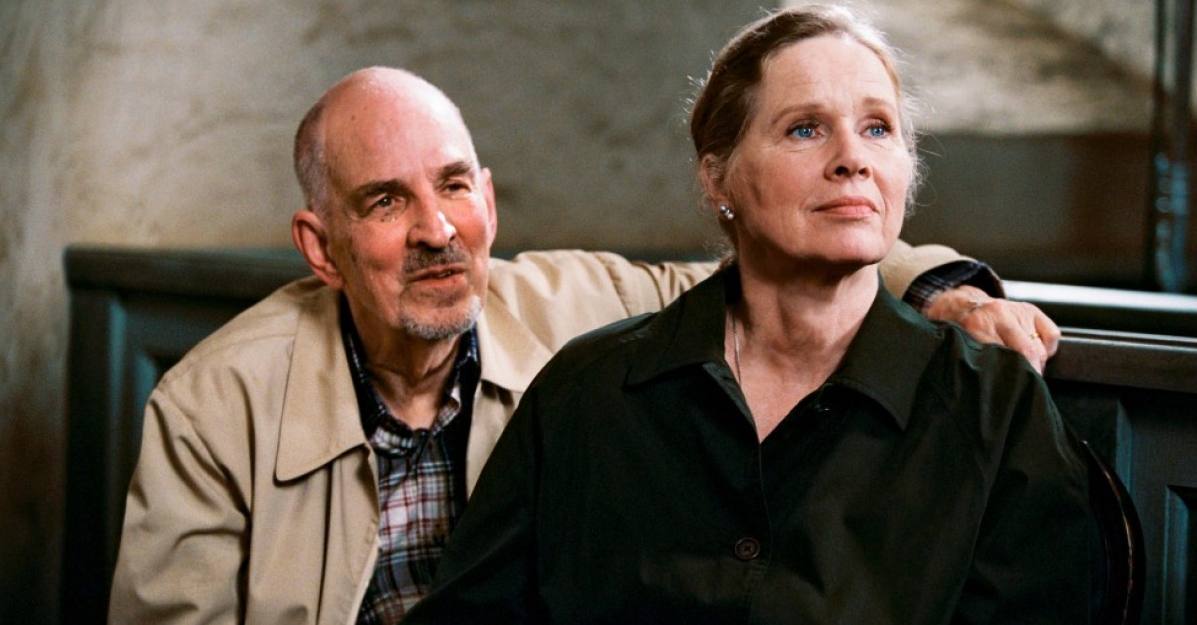
5) Saraband (Ingmar Bergman 85)

It'd be crazy to think that "Saraband" belongs in the same company as "Cries & Whispers," "Persona," "Through the Glass Darkly," "The Silence," "Wild Strawberries," "Scenes From A Marriage,"  "The Seventh Seal" and "Fanny & Alexander." However, what exactly is as good as these films? The impressive filmography Ingmar Bergman built over his long-storied career is the stuff of legend and, yet, here he was in his mid 80s making a film as luminous as "Saraband." It's a final roar from a master of cinema. as he revisits the characters of 1973 "Scenes from a Marriage" thirty years older, with Marianne sharing the dramatic and complicated relationship of John's family. 

The film is vintage Bergman with revealing close-ups, emotionally intense dialogue, an old-fashioned style of film-making, and a surfeit of bitterness about the human condition.


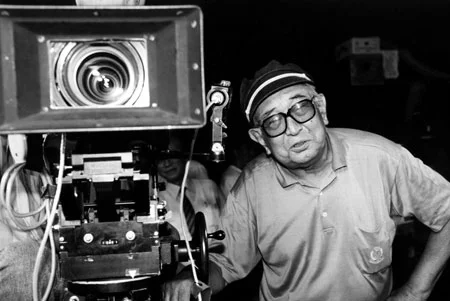
6) Madadayo (Akira Kurosawa, 83)

akiro-kurosawa.jpeg

The thirtieth and final film of Akira Kurosawa's career shows that he had plenty left in the tank before passing on. The film is a profoundly moving treatise on facing death with dignity and honor. The college professor in the film is entering the final years of his life, but he is always surrounded by fellow peers and students who have the most adhering of respects for him. As the birthdays pileup, so do the celebrations and the beers, which he always manages to drink down to the final gulp. There are tears, there are toasts, there is song — it's a celebration of life. The expressionistic simplicity and themes make it a heartbreaking swan song for one of the greatest cinematic directors we will ever see. 


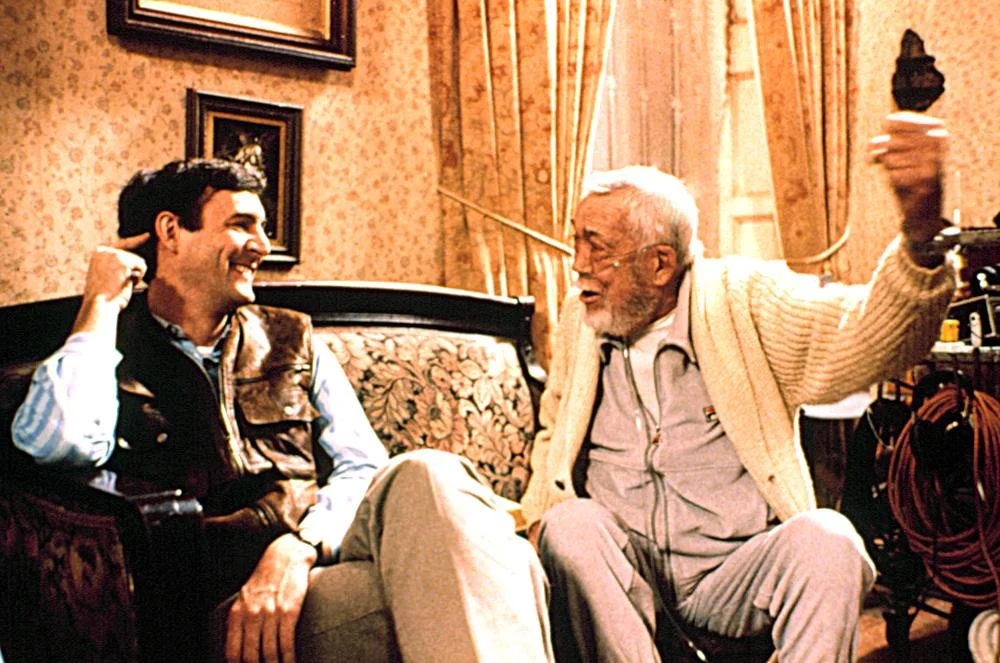
7) The Dead (John Huston, 81)

the dead.jpg

According to Pauline Kael, John Huston directed "The Dead" at eighty, from his wheelchair, "jumping up to look through the camera, with oxygen tubes trailing from his nose to a portable generator." If that wasn't enough, most of the time, he had to watch the actors on a video monitor outside the set and use a microphone to speak to the crew. And yet, what grand, masterful statement "The Dead" is, from one of the immaculate American directors of our time. He contemplates his own death through the story of a family gathering and the mistakes that haunt their pasts. The message of the film is simple, yet retains a heartbreaking sentiment: No matter how long they have been in their graves, the dead will always influence the living. Huston is proof of that.


8) Prairie Home Companion (Robert Altman, 81)

robert altman.jpg

In a career that spanned dozens of classics ("Nashville," "The Player," "MASH," "McCabe and Mrs. Miller," "The Long Goodbye," "3 Women," "Shortcuts," and "California Split") nothing could prepare us for this kind of swan song from Robert Altman. "A Prairie Home Companion" is one his simplest, lightest affairs. It's a cinematic valentine to the radio, one that rivals Woody Allen's own "Radio Days" as a depiction of a simple, melancholic, diverse, but bygone era. Just like many of the other films on this list, it's a meditation on death, and yet, what joy that there is in every frame. Altman refuses to eulogize, and he instead dares us to think of the end while humming A Prairie Home Companion's most insanely catchy tunes imaginable.


9) Wild Grass (Alain Resnais, 86)

wildgrass.jpg

As if Alain Resnais didn't mess with our heads enough in his legendary five decade career as filmmaker ("Last Year at Marienbad," "Hiroshima, Mon Amour"), he pulled one final rabbit out of the bag with "Wild Grass." Time's Richard Corliss said the film was a tribute to the "con-artistry" that enveloped his career. Resnais has rejected cinematic naturalism all throughout his career, so why would he embrace it now? You might be tempted to say he riffs on David Lynch's "Mulholland Drive" here, until you realize that Resnais actually influenced Lynch in the first place. The surreal landscape he creates in "Wild Grass" isn't far off from the Twin Peaks valleys that have invaded Lynch's own filmography. As a character in the film states: "After the cinema nothing surprises you. Everything is possible."


10) The Last of the Unjust (Claude Lanzmann, 87)

claude lanzmann.jpg

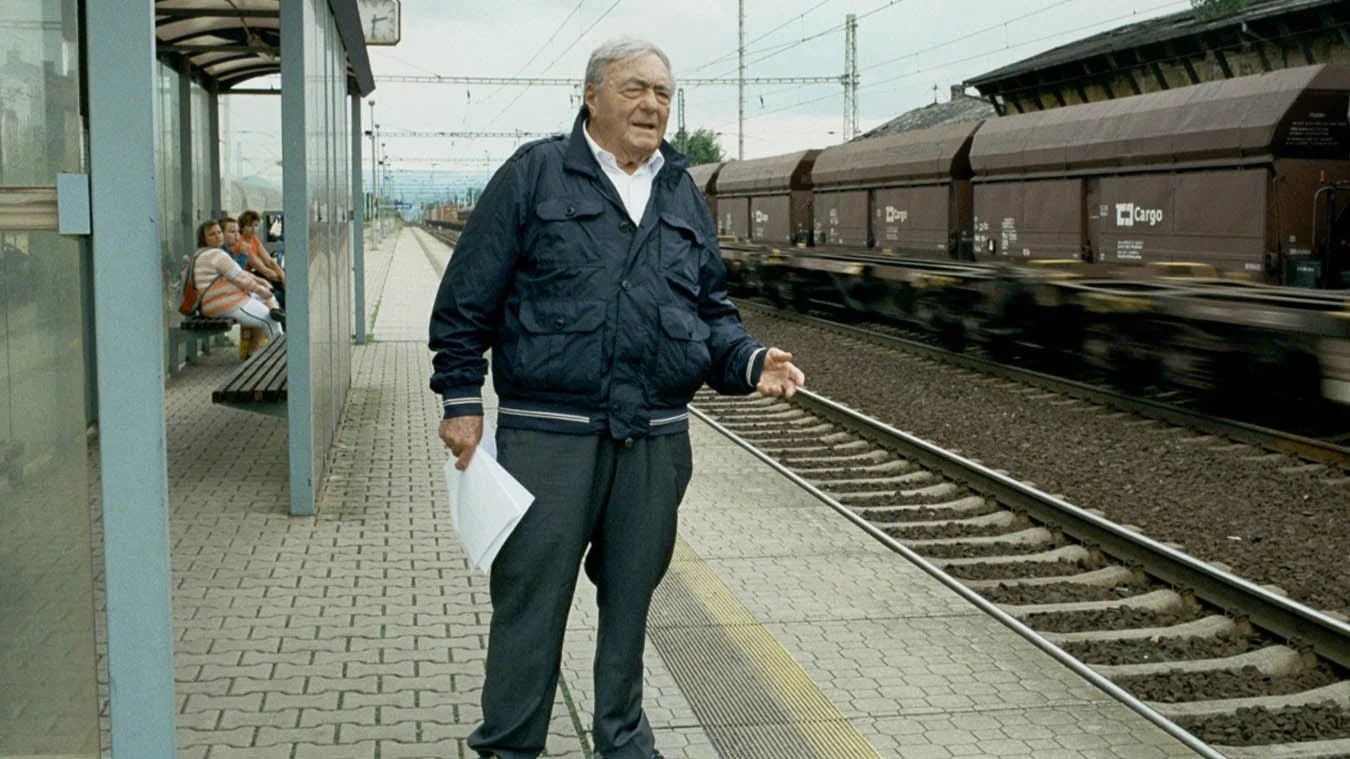
Claude Lanzmann has had a fascination with the holocaust his entire life. His seminal eight-hour 1985 documentary "Shoah," is the final statement on the tragedy. No offence to Steven Spielberg of course. "The Last of the Unjust" is a spiritual sequel to "Shoah," a series of interviews Lanzmann concocted over the years, some that didn't make "Shoah" and others that were never even thought to have existed.  At 87, Lanzmann is still haunted by the genocide that killed six million Jews, so much so that it's become an obsession, a seeking of the truth and a way for him to release all the tension and demons that have lured inside him.


11) Goodbye to Language (Jean-Luc Godard, 84)

Jean-Luc Godard

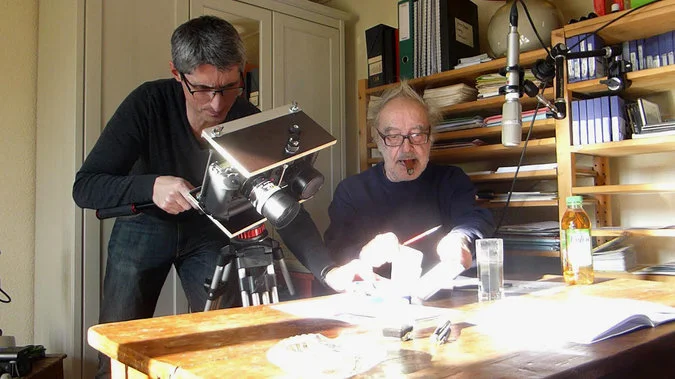
One may believe that Jean-Luc Godard long ago jumped onto the bandwagon of cinematic insanity, at least since 1967's "Weekend," which many recognize as the last great, relevant statement of his career. Yet, you might have missed the true gem of his twilight years: "Goodbye to Language." Yes, it still has the odd political quote and name-dropping he has been known for churning out these last 30 odd years, as well as the fragments of thoughts that have invaded his post-'60s radical filmmaking, and the patchiness of his narratives. The man is, after all, Jean-Luc Godard, and with any film he makes comes a well-recognized package of ideas and metaphors and images that the cinephile, if he feels like doing so, tries to scramble together. Sometimes it does gel and other times it just doesn't. In "Goodbye to Language" it's the former that happens, but no thanks to the 3D, which stands as one of the best uses of the technology I have ever seen. It sustains a story that polarizes, but feels right given the the dazzling, brilliantly-colored images on display. Here's to hoping he shoots his next movie this way again. 3D and Godard go hand in hand. Who knew?


12) Sully (Clint Eastwood, 86)

eastwood.jpg

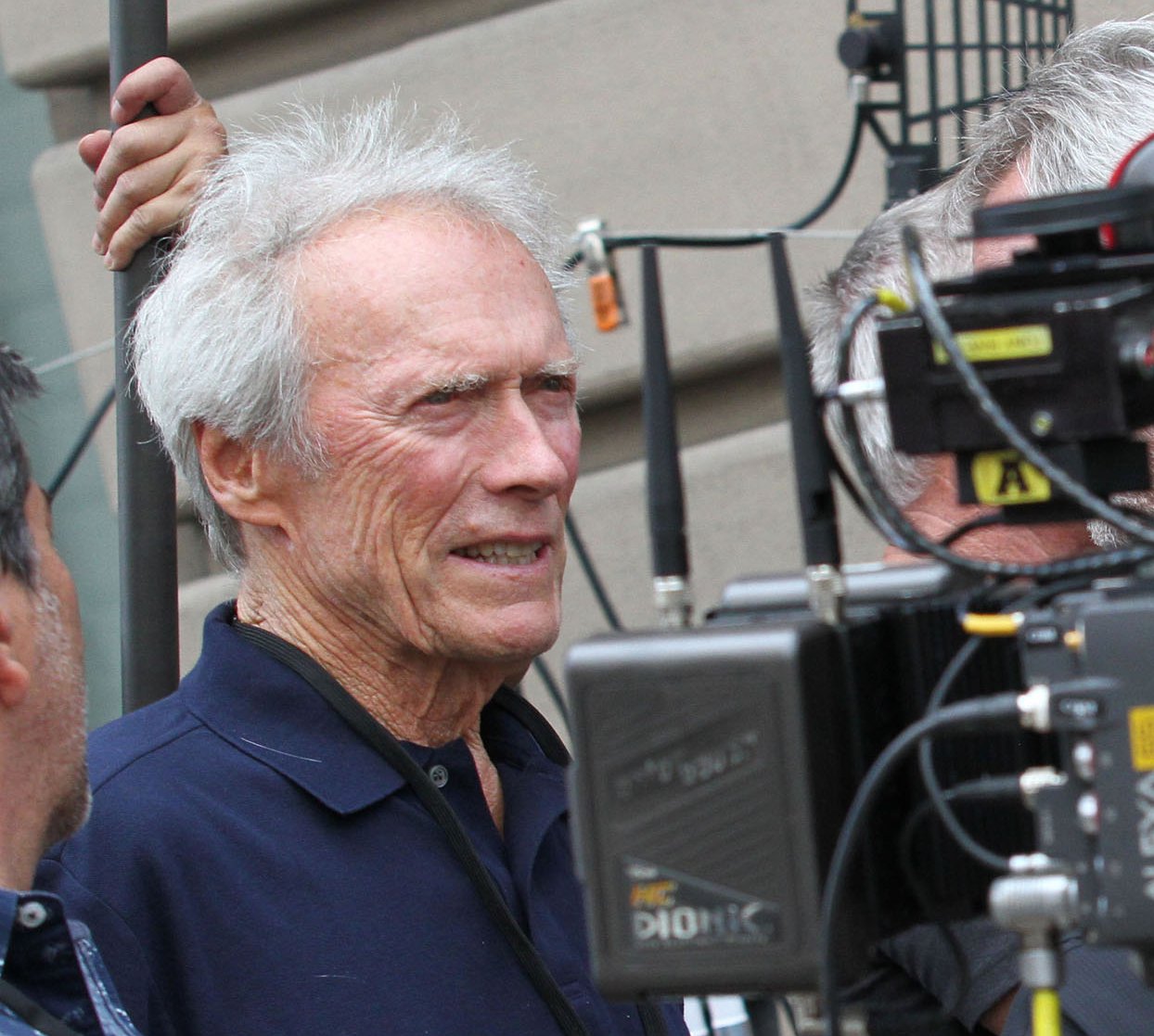
Clint Eastwood is still making vital and relevant films in the twilight of his career. Case in point these two gems: "American Sniper" and "Sully." Both have the classicism of old-school Hollywood directing, and yet, they feel vital and current. The resonant theme that binds both is the cost of hero worship. Both films have male characters who feel isolated and flawed, despite being deemed heroes by those around them. In a career that spans more than 50 years in the director's chair, Eastwood proves yet again that he is a master at the game, honing his craft and, as Time's late great Richard Corliss would say, he makes it seem "as if the story is telling itself." Who else can pull that off these days?

"Patriots Day" earns its stripes


"Patriots Day" is a fervently patriotic, but solidly made thriller from director Peter Berg. At first, I was ready to dismiss this picture as another America-rah-rah kind of film and the trailer did hint at that being the case. What I wasn't expecting was how cinematic Berg's film would be. The electrifying manhunt for the two terrorist suspects that concocted the tragic Boston Marathon Bombings back in 2013 is more than enough to sustain your attention throughout this 133-minute film. The way Berg does business here is blunt and effective, he doesn't hold back and just lets the story take over you.

The bombings, which caused 3 deaths and injured 264, led to a massive manhunt, but the film doesn't only focus on that. It also focuses on the heroic tales of simple folks that tried to make a difference that day. The extensive research that Berg and company made does show, the professionalism at hand leads to a hard-earned film that does the city proud. I would know, I now live in Boston and at the press screening for the film, more than a few week ago, there weren't many dry eyes in the house. Mark Whalberg's, fictionalized, Sergeant Tommy Saunders might be the main hero of the film, but it's the people of Boston that come through in being the heart and soul of the film.

Shuttling through an array of characters and storylines, "Patriots Day" is a messy film, it sometimes over-excitingly gets over-cooked, but there is something to be said about a film with this much heart. The sappy sentimentalism is there, so is the need to oversimplify its message of good vs evil and the much-feared "America rah-rah" is there, but when Berg sticks to investigative chaos and action sequences we are sucked right back into its frames. None more immersive than the Watertown confrontation between Boston Police and the two terrorists. In the blink of an eye this seemingly quiet neighborhood gets turned into hell on the streets, as bombs explode, artillery gets used and horrific screaming occurs with every jolt. It recalls the very best of Paul Greengrass, who is an obvious influence for Berg here, and catapults you right into the thick of things in that historic day [B]

New R rated image from ALIEN: COVENANT


Ok who put the Gallon jar of Strawberry Sauce in the microwave? Could you not??? Some poor Janitor is going have to clean this mess up.

There is a rumor that a trailer is supposed to happen today, so I'll keep an eye out for that. In the meantime, we have this lovely new image from Ridley Scott's much anticipated sequel to "Prometheus."

Emma Stone Says Directors Have Given Her Improvised Jokes to Male Co-Stars


If you haven't yet seen "La La Land," PLEASE go and catch it, if anything, for Emma Stone's career-peak performance. The film is a knockout, but she carries it with the raw, amicable talent of a true movie star. She will, most probably, win the Best Actress Oscar and you won't hear any complaints on my end about it (although, if this were a fair and just world, Isabelle Huppert would win it hands down for "Elle," but Oscar voters don't usually warm up to a film that has, oh the horror, subtitles.

In a new cover story/interview with Rolling Stone, Stone reveals some of the more upsetting behavior she's encountered as a woman on a movie set.

If the rumors that actresses get paid considerably less than their male co-stars is accurate, and I do believe it is, I think it's okay to be pissed when you're providing extra value that your male co-star isn't or isn't capable of.

"There are times in the past, making a movie, when I've been told that I'm hindering the process by bringing up an opinion or an idea," she said. "I hesitate to make it about being a woman, but there have been times when I've improvised, they've laughed at my joke and then given it to my male co-star. Given my joke away."
 
"Or it's been me saying, 'I really don't think this line is gonna work,' and being told, 'Just say it, just say it, if it doesn't work we'll cut it out,'" she continued. "And they didn't cut it out, and it really didn't work!"

On a lighter note, I do like this paragraph from the RS interview:

"Drinking helps. "Do you want sake?" she asks. We get a bottle and Stone pours me a glass, per Japanese custom. I return the favor, mentioning that I once discussed this bit of etiquette with a chef in Tokyo, who likened filling one's own sake glass to public masturbation.

"Masturbation? I've only heard it's bad luck!" Stone says, laughing. When I finish my glass a few courses later, I space-out and absentmindedly refill it myself. She gasps: "You just jerked-off on the table."
I apologize and pour her some more. "Go ahead, please," she says. "Jerk me off, too."

Read Rolling Stone's full interview with Stone here.