

REVIEW: "Blue Jay" #TIFF16

Blue Jay 1
Sometimes you just can’t escape the past. Moments that have shaped you and made you who you are today can happen at any time without you even knowing it. They could occur when you’re just a kid or even when you’re way past adulthood.

In director Alex Lehmann’s slight, but competently made Blue Jay, a chance meeting between two former high school sweethearts (as played by Mark Duplass and Sarah Paulson) is all about past wounds that haven’t seemed to escape either of their lives.
The chance encounter occurs in a grocery store in the small California town of Crestline. Jim (Duplass) and Amanda (an excellent Paulson) haven’t spoken in more than twenty years. An invitation for a simple cup of coffee will turn into a night of verbal fireworks and unhealed wounds.
A few beers later and they are indoors in Jim’s late mother’s house, which is for sale and the reason that brought him to town. Jim seems to still be searching for himself, bouncing from one girl to the next and not being able to keep a stable job. Amanda is unhappy about her marriage and unprepared with the responsibility that came with having kids and, yet, the fire still sparks and the chemistry is still there.
Blue Jay is Lehmann’s debut as a director and he shows a tremendous assurance in his craft. He builds up claustrophobic moments that can tell a world of emotions with such few words. The mid-life crisis that these two characters face is universal, and the questions of purpose and fate are as well. Instead of filling his frames with ceaseless dialogue, which has become a staple in most indies featuring Duplass, Lehmann is unafraid of having moments of pure silence. He also focuses his lens of Paulson’s ever-changing eyes, filled with both longing and resentment. Her character Amanda has gone through life’s toughest obstacles and endured, but not without her fair share of scars in the process.
For Duplass, the role of Jim is an emotionally demanding one that he doesn’t quite measure up to, particularly compared to Paulson. He has fared better in other films that have been more relaxed, here seemingly struggling with the bigger emotions he’s asked to contend with.
Blue Jay 2
Shot in beautiful black-and-white cinematography by Lehmann himself, from a script by Duplass, it adds an extra layer of sadness to the story’s resistant and detached tone. It’s always a risk deciding to shoot a film this way, being called out on your own pretensions, but Blue Jay’s downer themes do fit well with this stylistic decision.
The story is a simple one, and sometimes it might feel a little too slight for it own goo, but Paulson carries it all the way through with bravado acting. She fills up the layers that might have been otherwise lacking in Lehmann’s somewhat conventional screenplay.
Blue Jay poses important questions about adulthood without delving too far into concrete answers. That can be frustrating at times, but having its characters self-question and contrast themselves is a smart decision. How different am I from twenty years ago? What has changed? Have I learned anything? And, really, who hasn’t tried to ask that about themselves at some point in their lives?

B-

REVIEW: "Barry" #TIFF16

Barry 1
During his college days in New York, Barack Obama used to be called “Barry.” At that point in time he hadn’t fully embraced his African American roots yet, but was headed towards a journey of self-discovery that would change him forever. That is at least what writer-director Vikram Gandhi tries to show us in compelling drama Barry, which captures the tumultuous first few college days of the future U.S. president at Columbia University.
This is the second film about Obama to arrive this year after the Sundance hit Southside With You, which took place around 10 years later in Chicago. In Barry, Devon Terrell – an uncanny lookalike delivering a great performance — plays Obama with all the features and characteristics that we have come to know of the 44th U.S. president. He doesn’t just deliver a good impersonation of a 22-year-old Obama, but gets the humanity right as well. The performance is a fully sketched immersion that feels and looks like the real thing.
The swift wind of change that would invade Obama’s life happens within his first day on campus. He gets racially profiled by a police officer who thinks he is trespassing school property. The officer wants to hear nothing, not even a plea from Barry that he is in fact studying there and not an intruder.
One evening he decides to attend a party in Harlem with a crowd that seems to be foreign to him even though he shares the same skin color as them. The black side of his family, his distant Kenyan father whom he claims to have met only once, has been absent and uninvolved in his life. It his white mother, beautifully played by Ashley Judd, that has set Barry on the right path. Their relationship is carefully drawn out and reveals where the encoded free-thinking spirit of Barry’s might have come from.
As the film moves forward, Barry starts to feel more and more like he doesn’t belong, and what’s revealed seems almost too pertinent and relevant for the current social and racial climate in the United States. He starts dating a white girl, Anya Taylor-Joy (The Witch), a bright student that cares about him, but even that relationship becomes problematic. Barry is all too aware of how different his experience on and off campus is compared to hers. She doesn’t understand his frustration, but that seems to be his exact point. One cannot understand the black experience in America unless you step into their own shoes.
The racial tension in Adam Mansbach and Gandhi’s script is voyeuristic by simply, and smartly, showing us more than is explicitly said. Barry wants to be accepted, but he fears the path to acceptance will not come without major change in his country. He sees his brothers and sisters suffering daily, but is frustrated that he can’t do anything about it. A major decision for him would be to live outside of campus on West 109th, which would end up having him converse with black people on a daily basis, something he might not have previously done.
Whereas the aforementioned Southside With You was a calm, romantic watch, this is a serious and refined drama which has the feel of a political firecracker. Ending with his decision to not be called Barry anymore, but Barack instead, his transformation is complete and his investment into major political topics — such as race in America — is about to invade his persona and political life. In attempting to make the case that Obama’s racial experiences in 1981 at Columbia as what triggered and bustled him to the forefront of the political conversation for the years to come, Gandhi has succeeded.

B

REVIEW: "Denial" #TIFF16

denial-3


There’s often a genuine dramatic pull to films in the courtroom drama genre, yet they’ve suffered the last few decades because of the conventional tropes that can come with it. How do you reinvent such a genre to become less predictable and less by-the-books? While Denial doesn’t do anything new on a technical side, it is fully aware of its gripping plot, one that welcomely avoids pushing its inherent clichés to the forefront of its story.
The true story centers around the legal battle David Irving (Timothy Spall) and Deborah Lipstadt (Rachel Weisz) questioning the historical validity of the holocaust. Yes, the story might sound oddly over-the-top, but it did happen. Irving, a man who considers himself a historian, believed the holocaust was a complete hoax. So much so that he decided to bring Lipstadt to court over her book Denying the Holocaust, which he deemed insulting and filled with lies. Lipstadt decided to hire a top-notch legal team, headed up by Richard Rampton (Tom Wilkinson), with the financial help of Steven Spielberg among many other celebrities, to prove that Irving was not just a fraud, but a racist man that was filled with hate and craved public attention.
Directed by Mick Jackson, from a screenplay by David Hare, the film doesn’t try to reinvent the genre or break new ground, rather telling the story justly without any stylistic interference. The events that occurred were almost too outrageous, with Irving defending himself without a lawyer, that this simple visual style that lets the story speak for itself.
A number of unspeakable moments happen throughout the trial, including the debate of whether gas chambers even existed in Auschwitz. Revisionist history is nothing new, but having it debated and questioned in the court of law was almost unheard of. The film implies that the media might have contributed to the toxic reaction that came along with it as Neo-nazis went to the streets to celebrate Irving and conversation started to shift towards Irving actually having the possibility of winning the case.
denial-2
Spall, a Mike Leigh regular, brings dimension to his role of an evil man that truly believes what he says and seems to soak up all the attention he can get. Weisz, despite a distracting wig, is fantastic with her portrayal of a woman that won’t give up and risks a life’s work for a court case many in the U.K were taking a little too seriously. Both actors make Denial much easier to swallow, even when convention hits and familiar ground is met.
In the current political climate which has people constantly trying to sell lies as truth and truth as lies, Denial hits a poignant spot that feels regrettably timely. To see it to be reminded, as Bruce Springsteen once so eloquently put it, “Trust none of what you hear. And less of what you see.”

B

REVIEW: "Wakefield" #TIFF16


Bryan Cranston’s Howard Wakefield seems to have a great life. He is a successful New York City lawyer, is married to a loving wife, has two teenage girls, and owns the ideal house. However, problems do lurk beneath his psyche and, before we could even get to know him a little better, he decides to disappear from his own life. He hides in the attic, where his family never really cares to go, and observes how his loved ones deal with his disappearance.
Writer-director Robin Swicord isn’t interested in just the act itself, but more importantly in what led to it happening in the first place. Swicord adapts a short story by E.L. Doctorow into an original and thoughtful gem of a movie Wakefield.
While it’s not a reasonable and intelligent way to deal with life’s problems, walking away from it all is a feeling most have at least a few times in their life. It is a selfish act and Swicord goes to great lengths to tell us that Howard is a selfish person and that most of the problems he had in the first place had to do with this selfishness.
wakefield-2
Howard’s rocky relationship with his wife Diana (Jennifer Garner) acts a as catalyst for the decision. While hiding, he observes her every move, trying to study her emotional state and if he really matters to her. When the family leaves for work and school he sneakily goes into the house and steals whatever food he can get without leaving a trace of suspicion — if there is time, he will even add in a shower.
By walking out on life, Howard becomes a street prowler, picking garbages for any food or clothes. As time passes, he starts to grow a beard, have torn-up clothes, and looks for heat in cold winter evenings. He even purposely passes by his wife in the neighborhood, but he has become so unrecognizable that she doesn’t turn back for a second to get a closer glimpse.
Swicord also adds a couple of flashbacks to try and show us what might have prompted Howard to pull the plug on his existence. Those scenes are somewhat strained compared to the present-day sequences involving the state Howard finds himself in which feel fresh and fascinating.
wakefield-3
In fact, Wakefield would not be as fascinating if its central performance wasn’t as fully fleshed out as Cranston makes it. In the best performance of his career on the silver screen, it’s made even more impressive by the fact that he is mostly alone for the majority of the film, but what he does is never less than riveting. He infuses his character with humor, heartbreak, and scathing cynicism. His Howard Wakefield is not necessarily a man one is supposed to like and, in many ways, he represents a kind of anti-hero that not many actors could pull off.
Swicord, mostly known for her screenplays such as The Curious Case of Benjamin Button and Little Women, shows a surprising amount of restraint as compared to her previous works. Here she makes a film stripped of artifice designed to ponder deep, humane questions about existence. With an ending meant to spark debate and cause both anger and provocation in its audience, Wakefield fights formula and creates its own unique cinematic language.
Wakefield premiered at the Toronto International Film Festival.

B+


"My Entire High School Sinking Into the Sea" #TIFF16

Wildly bizarre and imaginatively alluring, if not occasionally slight, the animated movie, “My Entire High School Sinking Into the Sea,” is an engaging surrealist take on the disaster movie. It’s a film steeped in metaphorical analogies, especially in its depiction of surviving high school and escaping it unharmed.

Featuring the voices of Jason Schwartzman, Lena Dunham, Maya Rudolph and more, “My Entire High School Sinking Into the Sea” is acclaimed graphic novelist Dash Shaw‘s feature-length directing debut and he renders the entire weirdo affair as if the viewer is reading a graphic novel and turning page after page. And what this film accomplishes is reaffirming what a true original artist Shaw really is.
In the opening moments of the film we are introduced to Shaw (Schwartzman) and Assaf (Reggie Watts), best friends, journalism enthusiasts and sophomores at Tides High. They are in charge of the high school newspaper along with their editor Verti, a funny Rudolph. She’s a girl who develops a crush on Assaf, much to Shaw’s chagrin and the “friends” end up betraying one another — the spurned boy casting aspersions on the other in jealousy.
But the true story takes hold once Shaw finds papers that suggest the newly built high school gymnasium does not pass the city’s earthquake safety codes. In a state of panic Shaw tries to warn everyone, but most don’t listen or shrug him off. Bad mistake. Given the film’s outrageous title you know what happens next. All hell breaks loose in this mix of disaster movie and high school comedy that deals with love, friendship and overcoming differences.
myentirehighschoolsinkingintothesea_02Shaw, the director, not the character, doesn’t hold back in the destruction. Jellyfish attacks, electrocutions, sharks ripping people to death — this isn’t a kiddie movie. His effort seeps through in every carefully constructed frame and the director employs crayon and pencil drawings mixed with paintings, comic book sketches and silhouettes among many tools to deliver something strangely beautiful and almost like something you’ve never seen before.
As colors pop out on the screen there is a lovely interlude that won’t be spoiled here, but it is well worth seeing the movie for just this sequence alone. Yet, as vibrant as ‘My Entire High School’ is at times, the novelty of the animated style does wear off eventually and the film’s loose, free-spirited, deliberate B-movie plot starts to drag and show its flaws. The good thing is the film is just 72 minutes long and doesn’t entirely overstay its welcome.
A shout-out must be made to Rani Sharone‘s manic soundtrack which plays an integral plot to the film’s loony mix of humor and seriousness. Its carnival-like sounds compliment the many crazy different styles that the director plays around with as well with his art.
As a side note, “My Entire High School Sinking Into the Sea” begins with a title card that says “Warning: This film uses stroboscopic effects that can be dangerous for people with photosensitive epilepsy.” Some of the audience chuckled while others were left wondering if this was really a joke. You should believe Shaw was sincere in putting this title card before his picture started because the animation he uses does tend to have a dizzying-like effect on the viewer. So photosensitive epileptics you’ve been warned.
Although “My Entire High School Sinking Into the Sea” itself is a weird, gorgeous movie to look at and has a painterly effect on the eyes there are limits to its craft. The limitations of the drawings stem from the fact that they prevent us from being entirely involved within the meager, a little-bit-thin story. On a scene by scene basis the visuals are terrific, but the overall effect of all these disparate animation techniques has the feel of a ubiquitous fog. ‘My Entire High School’ is a technically impressive feat, but emotionally, it’s hard to sink too deep into its animated waters. [C-]

Review: Lion #TIFF16

lion-2

Garth Davis‘ directorial debut Lion is based on a true story. The film makes sure to tell us that at the very beginning of the movie — just to remind us that whatever we’re about to see in front of us were real events inspired by real people. We first see the main character of the film, Saroo, at all but five years old, wandering the streets of central India by helping out his mom, a rock carrier, and his brother, the man of the house. In a random, but realistic, turn of events Saroo ends up on runaway train and gets lost thousands of kilometers away in the streets Calcutta. The first half, all in Hindi and Bengali with English subtitles, is dynamite, encompassing an exotic world far away from us that nevertheless feels all too intimate and relatable. Saroo is a tiny fella and he ends up surviving many dilemmas by simply doing what he does best: running.

After a stint at a nasty, abusive Calcutta Orphanage, Saroo ends up adopted by an Australian couple in Tasmania. The film goes forward 25 years later, the memory of Saroo’s real family still looming in his head, he opts to find them by using something as simple as Google Earth, and this is where the drama starts to struggle. If the first half is an indelible treat and gives one high hopes that a film delicately placed in the awards season will in fact meet its steep expectations, the second half is troublesome and falls flat.
Sara’s adoptive parents are played by Nicole Kidman and David Denham in roles that feel formulaic and cliched. Dev Patel plays the grown-up Saroo, but his performance is overshadowed by Sunny Pawer, the actor playing his younger self. Pawer, a first-timer, is exceptionally natural and carries the film admirably well in the first hour.
Back to present day, Patel’s Saroo falls for Lucy a wide-eyed beauty as played by Rooney Mara in an underwritten role that doesn’t take advantage of her exceptional talent. Fitting all too comfortably in The Weinstein Company mold of awards-geared dramas, the film follows a conventional family drama trajectory in its second half. The psychological dilemma Saroo faces takes up much of the remaining running time, but it never feels urgent. Sure, it’s hard not to feel something by the film’s conclusion, but the manipulation involved seems rather pedantic, never fully investing us in the plight of Saroo.
lion-1
After stunning work on Top of the Lake, Davis’ talent feels hammered down by Luke Davies‘ screenplay adaptation that ultimately meanders around until it comes to a lackluster halt. His direction is nevertheless stellar and somewhat elevates the formulaic material, aided by one of the today’s great cinematographers, Greig Frasier (Zero Dark Thirty, Foxcatcher, Killing Them Softly), who uses the stunning exterior locations to his advantage.
This is no doubt a fascinating story to tell in Lion, but the potential is never met. Despite its promise, the drama ends up feeling like one big Google Earth advertisement with no sense of culture whatsoever. If anything, pending stronger material, it does prove the director has a bright future ahead of him.
Lion is currently playing at the Toronto International Film Festival and opens on November 25.

Review: The Promise #TIFF16

Terry George‘s The Promise begins with a title card that appears on-screen stating that 1.5 million Armenians were killed by the Turkish government during World War I. It’s a tragedy that has been depicted before in film, perhaps most notably in Atom Egoyan’s underwhelming Ararat, with ample room still made available to deliver the definitive version. Despite formidable talent on both sides of the camera, unfortunately we’ll have to wait longer for such a drama to arrive.
The film takes place on the brink of World War I in Turkey. Michael (Oscar Isaac), an intelligent, compassionate Armenian, decides to settle down and marry a girl (Angela Sarafyan) that he’s not completely smitten by, but claims that with time he will indeed love her. He lives in Armenia, but opts to journey to Turkey, without his wife, to study medicine at the Imperial Medical School and become a doctor within two to three years. He promises his wife he will be back. That promise will drive the core narrative of the film, but will also provide its one major flaw.
The Promise 2


In Turkey he stays with his uncle Mesrob (Igal Naor) whose beautiful daughter Ana (Charlotte Le Bon) is in a relationship with Associated Press journalist Chris (Christian Bale). However, Ana catches Michael’s eyes and they embark in a secretive affair. Meanwhile a genocide is happening as Armenians are being rounded up and killed all across the country. Michael is captured and thrown into prison, but a tension-filled escape sets him free as he embarks to return home.
Terry George, whose Hotel Rwanda also dealt with a historical genocide, shoots the film with visual care. With the help of cinematographer Javier Aguirresarobe (Vicky Cristina Barcelona, The Road), he sets the scene capturing a vast, alluring Middle Eastern landscape, filled with deserts and mountains. The battle scenes are also immaculately shot by George, giving the film a grit that might be hiding under Aguirresarobe’s romantic photography. Somewhere in here lies a great war movie, but the screenplay, by George and Robin Swicord, hits more than a few rough patches when focusing on Michael and Ana’s affair. These inconsistencies as it pertains to an rudimentary love story bog the proceedings down.
The Promise
Isaac is fabulous in the role of Michael, a man caught up in the midst of a violent war that cannot be escaped and will eventually turn into genocide. His eyes tell a world of forbidden emotions that his character keeps knitted deep inside him throughout. The Guatemalan-born actor, who initially built his career on these sorts of epics, from Agora to Robin Hood, sports a spot-on Armenian accent with finely tuned mannerisms to sketch out his character.
Bale is limited with his role which has his Chris passionately fighting for the lives of Armenians, but also for Ana’s love, which is slowly escaping him. Despite the lackluster romantic plot, the chemistry he shares with Isaac onscreen is potently conveyed and creates tension that rarely lets up. They both respect each other, but also have a mutual distaste due to sharing the same affection for a woman.
One can feel the importance of retelling these events when it focuses on the right circumstances, but when The Promise sags with cluttered, obvious tropes that have similarly downgraded countless war movies before it, it’s a disappointment. If George set his sights on capturing the effects of this tragic stain in history rather than love-making, we might have gotten a drama worthy of the talent involved.
The Promise is currently playing at the Toronto International Film Festival.

C+

Review: Deepwater Horizon #TIFF16

Full The Film Stage review HERE
pp092016-deepwaterhorizon02
The 2010 oil rig explosion in the Gulf of Mexico was a disaster beyond belief, not only causing the deaths of workers, but ecologically setting our planet back with the biggest oil spill in U.S. history. Many still haven’t fully grasped what it must have been like to be on the ship at the time of the tragedy. Enter a Lone Survivor reunion for Peter Berg and Mark Wahlberg with Deepwater Horizon, a well-made attempt at revisiting the tragedy, giving an action-oriented cinematic face to what actually happened on that fateful day.
Wahlberg plays Mike Williams and Kurt Russell is Jimmy Harrell, a pair of frontmen whose job is ensuring their workers are safe. But money talks: their boss is Jimmy Vidrine (an excellent John Malkovich), a man who always asks for the bottom line and puts safety second, until it comes back to bite him in the behind.


deepwater-horizon-1
It is April of 2010 and we’re introduced to the Deepwater Horizon drilling unit, which is not too far from southeast Louisiana, off the Gulf Coast of Mexico. The British Petroleum execs, as headed by Vidrine, want to get the drilling going, but Williams and Harrell are uneasy about it and would like to run more tests to gain conclusive evidence that their workers will be safe.
The set-up is constructed rather tepidly; Williams bidding adieu to his wife (an underwritten, useless role for Kate Hudson) as he embarks on a three-week work duty on the Deepwater Horizon. Once on the ship, we get to meet the men that will eventually have to deal with the chain of events — all blue-collar, hard-working folks that seem to be walking clichés. It isn’t until tragedy strikes that the movie hits its stride to depict the incident and its flaws, apparent at the start, somewhat fade away.
The BP incident was the largest oil spill in U.S. history and one of the world’s most devastating man-made environmental catastrophes. However, none of the environmental consequences are really mentioned by Berg and company, excepting one scene where a disgruntled bird, clearly affected by the spill, manages to get inside the boat and manically flies in every which direction, eventually colliding itself to death on a glass window.
deepwater-horizon-1-2
Berg is interested in the visceral experience more than the actual post-tragedy consequences. Which is not to take away from the fact that Deepwater Horizon does succeed in what it intended in the first place: putting us on the edge of our seats. The action is relentless, with a primal use of special effects to get us smack dab in the middle of a life-or-death situation with these men. ThinkTitanic, but with flames instead of water. Lots and lots of flames.
The Coast Guard gets called in to help out, but the fire seething through every corner of the ship makes it impossible for them to do anything other than set up lifeboats and hope the workers make it out alive. Mike Williams comes to save the day, portrayed as a heroic action figure by Wahlberg. Following the action in Lone Survivor, Berg reasserts his gift for bracing set-pieces. As the Deepwater Horizon bursts into flames and crumbles into oblivion, Berg’s camera moves furiously, but we are always alert to what’s at stake.
In a film that has so much going on, action-wise, it would have been nice if Berg slowed down the visceral aspect and tried to build some kind of personality to his characters. Many go on and off screen with little provided background, the likes of which is saved solely for Wahlberg’s Mike and Russell’s Jimmy. If anything, Deepwater Horizon reminds us just how talented an action director Berg is and how often substance becomes a second thought for the director.
Deepwater Horizon premiered at the Toronto International Film Festival and enters a wide release on Friday, September 30.

C+

Blair Witch #TIFF16 review

Full The Film Stage review HERE
It’s been more than 17 years since The Blair Witch Project arrived in theaters and changed the way Hollywood viewed horror, and filmmaking in general, for better or worse. Its low budget and hand-held camera style revolutionized the way studios would think — particularly after they saw their return on investment — in an effect felt all the way up to today. Equally ground-breaking in its successful and smartly marketed internet campaign, Eduardo Sanchez and Daniel Myrick’s feature was the sort of viral sensation simply not achievable in today’s saturated marketplace. After a quick sequel with none of the original’s imagination or creative freedom, 16 years later, enter directorAdam Wingard’s Blair Witch. It’s a film that not only goes back to the basics, but seems to deliberately steal much of what made the original such a horrific treat.
blair-witch-1

The film tracks James Donahue (James Allen McCune), a college student whose sister Heather went missing twenty-two years ago. He believes her disappearance had something to do with the woods she had visited, but more specifically the Blair Witch. His friends Lisa (Callie Hernandez), Ashley (Corbin Reid) and Peter (Brandon Scott) tag along as moral support not knowing what is about to happen to them. They also get local witch experts and YouTube bloggers Talia (Valorie Curry) and Lane (Wes Robinson) to venture along with them to the spooky Black Hills in Maryland.
The film doesn’t opt to reboot the franchise as much as go back to its minimalist founding roots with a small cast and the crutch of a handheld camera. There aren’t many surprises in store for the audience, but that doesn’t mean the scares are not present. As they say, “If it ain’t broke, don’t fix it,” and it is with that state of mind that one should delve into this movie.
As our gang travels further and further into the woods they collide with a series of strange occurrences that might just have to do with the very thing they seek, yet there’s a lingering sense of déjà vu with the whole experience. Rather then genuinely making something new, some scenes will feel all too familiar to anyone who has seen the myriad similar horror features we’ve gotten since the 1999 original.
blair-witch-2
Instead, what distinguishes this film’s rightful place in the franchise is the moment our main characters finally find what they’ve been looking for, and embark on one of the most surreal and nightmarish horror house sequences in recent memory. Of course, there are cuts, but Wingard goes for a one-take manner and the fluidity of the camera during these horrific moments had the packed house ducking under our seats.
Wingard, known for You’re Next and The Guest, has already proven himself to being an excellent craftsman in the genre. He was certainly the right choice to reinvigorate this franchise, but if his previous films followed unpredictable trajectories that made them unique and memorable, here he sticks to a tried-and-true winning formula. Considering the full-on scares produced, there’s nothing inherently wrong with that.
Blair Witch premiered at the Toronto International Film Festival and opens on September 16.

B-

"Leia and the Resistance" -- Deleted Scene -- Star Wars: Episode VII The Force Awakens


This was the most Carrie Fisher-esque that Leia has ever been.

Even without seeing this, you have got to figure think that there was something with this character that was missing from the movie. They make a point of focusing on her when Starkiller's base blows up the Republic worlds, but there's zero explanation on who she is or why she is even there. I believe she's a fairly big character in one of the novels, so we were probably supposed to care when she dies.

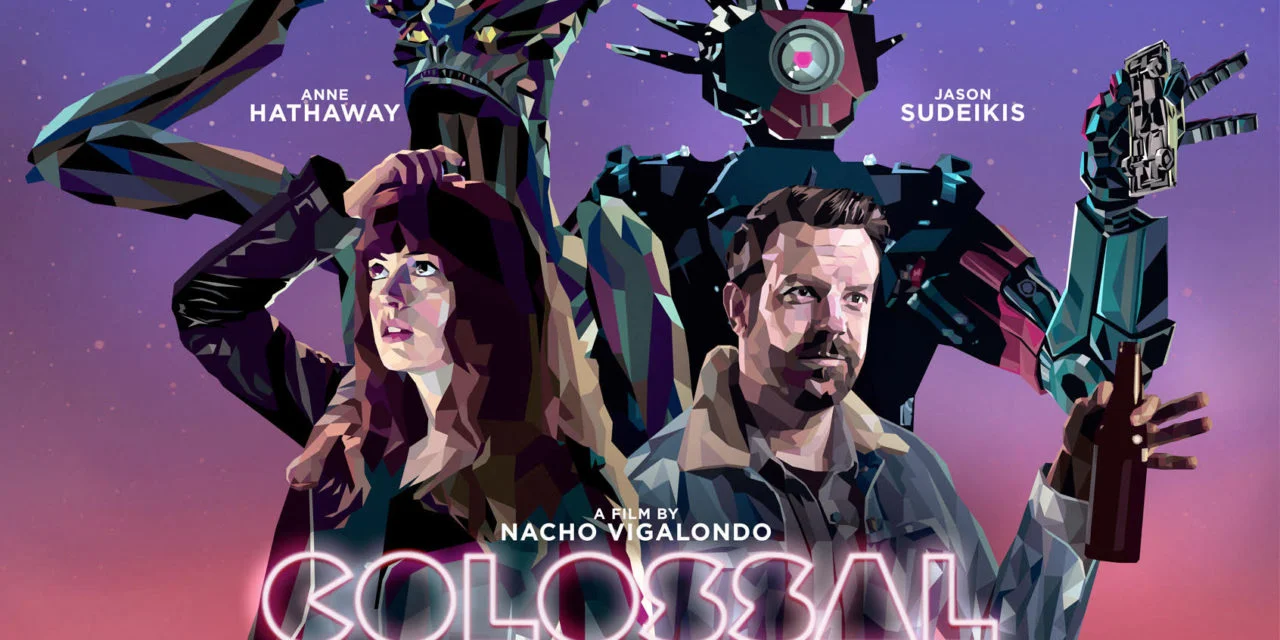
Interview: Anna Hathaway and Jason Sudeikis for "Colossal"

colossal

It’s not hard to see why having Anne Hathaway and the Kaiju genre might not sound right in the same sentence. Hathaway, a pristine, highly talented, Oscar nominated actress has never really delved in the monster genre. And yet, in director Nacho Vigalondo‘s “Colossal” the mix turns out wondrous results (here’s our review from TIFF). The 33 year-old actress plays a woman who suspects that her mental breakdown might be the reason why apocalyptic events are happening in Seoul. It’s an original and memorable Kaiju movie that has Hathaway surprising us with geek-mode range we never thought existed in her. Oh, and did I mention this movie is certifiably nuts?
You can read the FULL Interview HERE

My coverage of "The Birth of a Nation" #TIFF16 press conference

More of my coverage can be read HERE
[TORONTO] “This is not the Nate Parker story, this is the Nat Turner story,” so said “The Birth Of A Nation” actress Penelope Ann Miller at the Toronto International Film Festival to a packed house at the Fairmount Hotel. That was the theme of the “Birth Of A Nation” press conference throughout its hour-long discussion on the film, but also the political climate in America.
Winner of the top prize at this year’s Sundance Film Festival, the film was seemingly destined for many Oscar nominations due to its urgent and relevant topic and the rising star of its writer director Nate Parker. But controversy arose over a month ago, when a past 1999 rape allegation concerning Parkers and Jean Celestin, who gets a story credit in the film, during his Penn State days re-emerged in the spotlight, followed by the news that his accuser had later committed suicide.
The mood was awkward at today’s press conference, as Parker kept dodging questions concerning his past. “This is a forum for the film, the people sitting on the stage, I don’t want to hijack it with my personal life,” he said when asked why he hadn’t yet apologized to the family of the woman at the centre of the case. “Respectfully I want to continue to celebrate the people that are in front of us today.” His outspoken co-star Gabrielle Union concurred, “There is the art and there is the artist, these are two different things … To those that want to stay home I tell them whatever issue you have bring it to the theatre and judge for yourself.”
Parker seemed content with having his cast answering some of the more pertinent questions, but stepped in to confirm that the release and awards push are continuing on as planned. “I can’t speak for the [distributor] Fox [Searchlight]. We are still moving forward as planned with everything.” He went on to elaborate “I don’t pretend to be an expert on people’s reactions. I’m a filmmaker. I am going to stand in that lane and stay there.”
That was the overall vibe of today’s press conference: the dodging of controversial questions about the case. But the case and crew were more forthcoming when it comes to the film’s political themes, around racial issues in America. “America is dealing with an identity crisis. Who are we as a country. What is out past?” Union added. “The stain of white privilege has been ingrained in American culture. We devalue and dehumanize ourselves when we refuse to accept that … we have not created a movie, we have created a movement, this isn’t just about one person. This is about everyone.”
Personal issues took a backseat for the actual movie itself which depicts the life of Nat Turner, a literate slave that was also a preacher and who orchestrated the single biggest southern slave uprising known in American history. “Detail was critical for us,” Parker added, “this was not the only revolt. There were hundreds and hundreds of revolts.” The bigger picture for the director is the hope that people will deal with his art separately from his past personal issues “For anyone that’s listening who’s thinking this movie could deal with trauma of African Americans, it cannot. The reality is we’ve all been traumatized as people. We have all been held back and scarred, oozing puss and injuries. This movie is a rebellion against extrication.”
Aunjanue Ellis, who plays Turner’s wife Nancy in the movie, went on to state that the film was more than just Parker’s, it was the collective whole. “We own the film this is our film we brought blood sweat and tears. This movie is the communication that we have when we get beaten down by a baton.” Aja Naomi King, who plays Cherry in the movie, went on to say “slavery is not a stain in American history, it IS American history … there is nothing more patriotic than resistance in America.” She added, “this film is meant to galvanize us shock us into action. All of us must stand and do something. The movement Nat Turner started continues today.”
Bothered again by another question on his past, this time by The New York Times asking if his upcoming promo visits to American campuses this fall for the film might have him also dealing with the topic of sexual abuse in college campuses throughout the country, Parker replied “I want to give young people some kind of way in with the material at hand, but I have talked specifically with Gabrielle [who recently spoke out with a powerful piece about her own sexual assault years ago] about dealing with the issues facing me in the proper way.”

#TIFF16 Review: "The Secret Scripture" [D]

taken from my original review from The film Stage, which can be found HERE

Secret Scripture


Writer-director Jim Sheridan has built a career off the plight of the Irish working class, with his best films (My Left Foot, In the Name of the Father, and The Boxer) all starring Daniel Day-Lewis. Lately, without Day-Lewis, Sheridan has been stuck in a rut of average American films (Get Rich or Die Tryin’, Brothers, Dream House) and yet I still had somewhat decent expectations for his newest work, The Secret Scripture. It does, after all, star one of the very best actresses working these days, Rooney Mara. As evidenced in Carol, Ain’t Them Bodies Saints, Her, The Social Network, and more, she can detail a world of emotions with just a glance at her piercing green eyes.

The Secret Scripture has Mara playing young Roseanne McNulty, a free-spirited Irish woman whose beauty lures every man in her small town, even Father Gaunt (as played by Theo James), who seems to want to relinquish his priesthood for a shot at love with Roseanne. She doesn’t want anything to do with it and instead falls for wounded soldier Jack McNulty (Aidan Turner). She shelters the wanted man as authorities search for him. Gaunt, knowing of McNulty’s presence, advises authorities, who then come to arrest Gaunt and kill him. That’s not all though: Gaunt also writes a letter to the looney bin, with the recommendation that Roseanne go to a mental ward due to “nymphomaniac” tendencies. Roseanne’s 40 year stay at the mental facility will be filled with abuse from nurses, a failed escape, and the supposed death of her newborn baby (which is Jack’s).
Secret Scripture
As the film jumps back and forth in time, accompanying the aforementioned Mara storyline — which is set at the turn of the 20th century — Vanessa Redgrave plays present-day Roseanne. A woman in her 80s, she ends up being visited by the chief psychiatrist of the hospital, Eric Bana, a man that tries to put the pieces of her puzzled story together. The plot structure is convoluted and all-too familiar, leaving almost no trace of originality or curiosity at the table.
With all that to consider, you’d also think Sheridan and Mara teaming up for The Secret Scripture, an adaptation of Sebastian Barry‘s beloved novel of the same name, could be a recipe for success. However, the result falls flat and all too conventional for the talent involved. The problem lies more in Sheridan’s direction than in Mara’s acting, which is to say that she does deliver another good performance here, but everything else does her talent a major disservice. Redgrave is also a stand-out, but the film feels like an Irish soap opera filled with moments that forcefully demand the audience to cry, get mad, and get riled up, and as a result, it perpetrates one of the biggest sins you can make when creating a feature film: a lack of subtlety. The end result is an experience that feels all too tidy and gift-wrapped.
To make matters worse, a last-minute twist does nothing to help the film’s impending fate. It worsens it, in fact, by being one of the more implausibly ludicrous turns to come around in eons. As if this misbegotten movie needed more flaws, it ends with a Kelly Clarkson song that puts a toxic exclamation mark for what we had endured for the past 100 minutes. It’s a mess that might seem genuine and well-intentioned, but gives out the feeling that its creators have lost touch with what made Barry’s book praised in the first place. One should not give up on Sheridan, but in making The Secret Scripture, he puts another nail in the coffin of his once illustrious career and does a grand disservice to honorably old-fashioned, tastefully artful novel.

D


#TIFF16 "Arrival" is Denis Villeneuve's most Nolan-esque film.


Is that necessarily a bad thing? In this case no. The film is imaginative and contemplative. Nolan haters will, yes, hate it, but the rest of us will dissect it for the years to come. This movie will inch him closer to Nolan's throne. What Villeneuve is doing is building up a strong fanbase that will follow him in any project he embarks on. Did I mention he's going to be doing "Blade Runner 2" as his next film? Expect "Arrival" to surprise the industry with the box office it is about to get. Villeneuve is for real.

#TIFF16 Review: Tom Ford's "Nocturnal Animals"


To go into Tom Ford`s "Nocturnal Animals" with expectations would be doing the film a major disservice. It is not high art, but it does maintain your interest throughout. It is schlock with class. At least for the better part of its 116 minutes it is an exercise in style, just like Ford's first film "A Single Man," except here there is more to chew on, more thrills, more overall everything. "Nocturnal Animals" has Amy Adams' art gallery owner Susan (when is she ever bad?) suffering through a nasty marriage with a husband (Armie Hammer) that is cheating on her. She also has a ex-husband Tony (Jake Gylenhaal), a failed writer. She fucked up with Tony, her mother's bourgeois influence getting the best of her, and also the fact that she found him too sensitive, too weak to truly satisfy her and her youthful energy. Now an adult and realizing what life and love really is about, she is filled with regret. Lo and behold a package comes in the mail. It's a new novel by Tony and it hits her hard. It's violent and filled with unspeakable acts. To reveal more would be sinful because part of the pleasure of watching Ford's film is to be surprised by its ludicrousness. It's a movie movie filled shocks and awes and highly stylized costume and set designs. The film's balance of B-movie thrills with more subtle nuances can be shaky at times, but to not give in to Ford's delicious mind-teaser would be a cinematic sin [B+]

#TIFF16 Review: "The Magnificent Seven"

Image result for THE MAGNIFICENT SEVEN

The question that must first be asked when discussing Antoine Fuqua's misbegotten "The Magnificent Seven is simple: why? Why remake the much celebrated original with its pristine Elmer Bernstein score and John Sturges' crisp direction. Sure Denzel Washington and Chris Pratt have charisma to burn and a loyal fanbase that will churn out hard earned dollars for anything new they release, but why even attempt to recreate the majesty of the 1960 original, no masterpiece by the way, and why hire Fuqua, a hack as far as I'm concerned, to direct? Has he done anything of value since "Training Day"? The answer is no,  but with that 2001 movie he scored two acting nominations for Ethan Hawke and Denzel Washington, who would end up winning and making history in front of Sidney Poitier as the first leading black man to win a coveted Oscar statuette.

Those days are gone. Now Washington has some kind of genuine affection for Fuqua. "The Magnificent Seven" is their third partnership together, but it's also their worst one. The cast is starry: Denzel, Pratt, Ethan Hawke, Vincent D'Onofrio, Peter Sarsgaard and the action is relentlessly assaultive, but in some fashion satisfying and yet, the rest is abysmal and showcases Fuqua's lack of coherence in his pacing, shot selection and overall artfulness.


Denzel, Ethan Hawke and Chris Pratt at TIFF premiere of "The Magnificent Seven"

And what about Washington all scruff-ed up and badass. We first see his Chisolm entering an old west town full of white folks with a horse, it almost makes you think about "Django Unchained" and that famous line I will not utter.  There is not one mention in the movie about his skin color, which in fact should be an issue. Racial injustice in America at that time was brutal, yet when Chisolm struts into town he only gets stares, nothing else. Saving his wholesome public image? The film has no balls to tackle race.

The classic story goes that seven gunmen come together to save a town from thieves that have invaded and taken ownership of it. You know where this is going. The opening hour has Washington's Chisolm rounding about the troops one by one. The setup is recognizable because it has been done many times at the movies. This is not new territory by any stretch of the imagination. It could work, but it doesn`t because Fuqua lacks the talent and the cinematic chops to pull it off. What he does lack in narrative he can almost make up in action sequences. There are two grandiose action set-pieces that work wonders. Just like he did in "Shooter," "Training Day" and "Southpaw" Fuqua gives us a visceral reminder of his knack for great shoot 'em up style cinema, but the substance is non-existent. [C+]