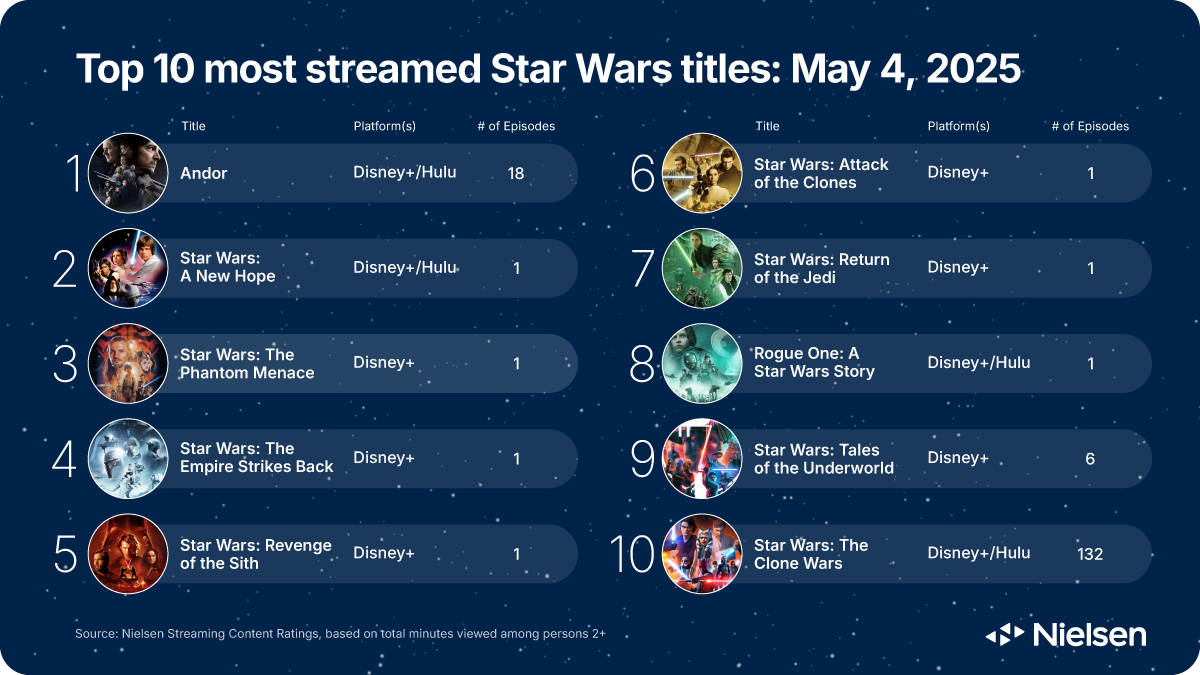
Star Wars fans celebrated May the 4th, which has become an unofficial holiday for millions worldwide. What started as a pun has turned into a yearly ode to a galaxy far, far away. In honor of all that, Disney decided to release its list of the 10 most-watched Star Wars titles in 2025.
Firstly, over the last year, U.S. audiences logged over 33 billion minutes of Star Wars viewing across TV and streaming, with the vast majority coming from streaming. Disney+ has effectively become the central archive at this point—films, shows, all of it in one place—so it’s where much of that time is spent.
As for what people kept watching, that’s where things get interesting.
No surprise, “Star Wars: Episode IV – A New Hope” pulled in the most minutes overall, which says a lot about its staying power. However, right behind it was “Star Wars: Episode I – The Phantom Menace,” which continues the noticeable prequel resurgence, and “Rogue One: A Star Wars Story,” which, as I’ve stated time and time again, is the best Star Wars movie released in the Disney era.
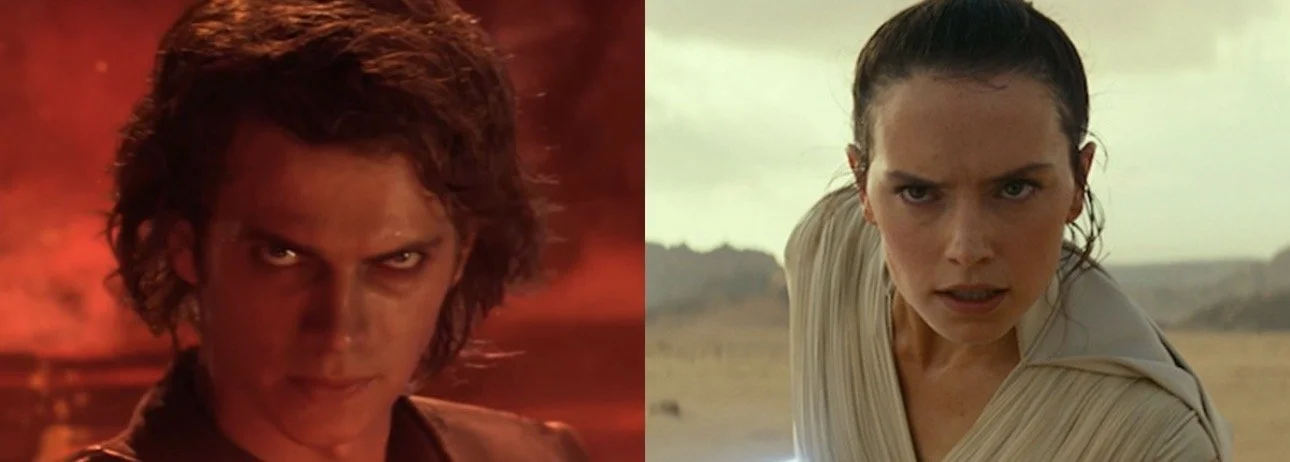
At first glance, the release of these viewing metrics appears to be a clear PR move from Disney, a way of highlighting how massive Star Wars streaming engagement remains. And yet, something more significant can be read in the numbers: Disney’s much-divisive sequel trilogy, led by Daisy Ridley’s Rey, may have permanently fractured the Star Wars fandom—none of the three films released managed to break into the Top 10.
We all know how the story goes. J.J. Abrams’ “Star Wars: The Force Awakens” was a safe, nostalgia-driven trilogy opener in 2015, resulting in a massive hit for Disney and setting the stage for Rian Johnson’s follow-up, “The Last Jedi.” That’s when the backlash erupted. For a large portion of the Star Wars fanbase, Johnson’s “The Last Jedi” crossed a line they never believed the series would approach. Johnson’s bold subversions—Luke Skywalker rejecting the Jedi legacy, the handling of Rey’s parentage, the treatment of legacy characters, and the film’s apparent dismissal of long-held lore—felt like a betrayal rather than a reinvention. The backlash was very real. This led to the trilogy capper, “The Rise of Skywalker,” falling flat.
And yet, here we are, and George Lucas’ originally maligned prequel trilogy, which includes “The Phantom Menace,” “Attack of the Clones,” and “Revenge of the Sith,” has now been fully embraced by Star Wars fans. All three films appeared in the Top 6 most-streamed titles in 2025. Hell, “The Phantom Menace” was more watched than “The Empire Strikes Back” in 2025.
Lucas’ prequel trilogy is now being actively revisited and reappraised, with outlets like NPR explicitly framing the movies as something audiences are returning to “20 years later…to reevaluate…everything about them.” Slashfilm highlights a broader cultural cycle in which the prequels went from being “reviled” to “hugely popular again.”
Why the sudden change? Is it possible that many fans were so genuinely dissatisfied with Disney’s Rey-led sequel trilogy that it led them to repeatedly revisit George Lucas’s prequels for pure nostalgia and comfort? That’s my theory, and it makes sense.
Whatever the case, Lucas’ prequels are no longer treated simply as failed blockbusters but as culturally significant texts undergoing sustained critical and fan-driven reevaluation, while the final Disney trilogy is being more openly contested in real time—maybe it too will get reevaluated 20 years from now, although I remain skeptical.

Snyder has mentioned in the past how “Sucker Punch “never really got finished correctly,” and that it was “not really the correct cut.” The extra footage is actually already shot.