

UPDATE: With “Disclosure Day” set for release in exactly a week, it’s a good time to bump this post and continue the conversation about Spielberg’s output over the last 20 years.
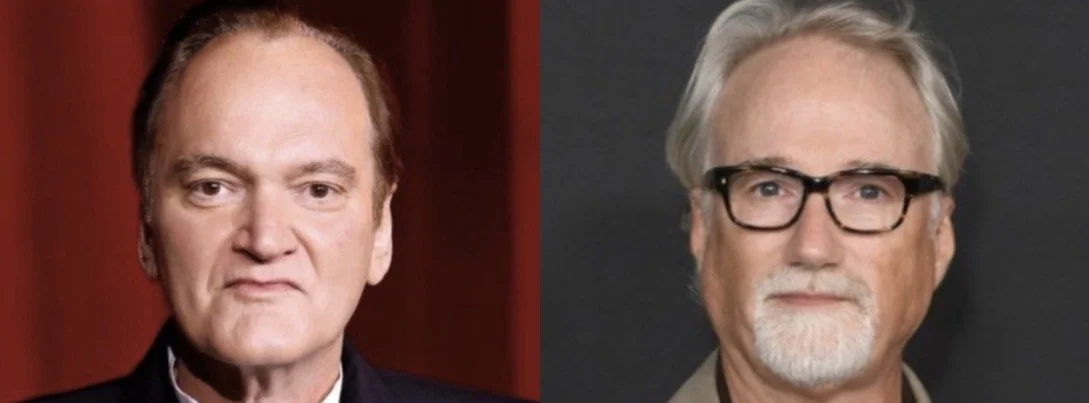
EARLIER: As you might have already heard, Quentin Tarantino came up with his 20 best films of the 21st century. I want to take a moment to dissect something Tarantino mentioned about one of the films he selected — Steven Spielberg’s “West Side Story,” which also happens to be the most recent entry on his list and, in his view, a major late-career statement.
Tarantino praised “West Side Story” for being the film that re-energized Spielberg as a filmmaker. Tarantino added: “This is the one where Steven shows he still has it. I don’t think Scorsese has made a film this exciting [this century].”
There’s a lot to unpack there, and I suspect few would agree with that assessment. “West Side Story” more exciting than anything Scorsese has released this century? Tarantino goes on to admit he wasn’t a big fan of most of Spielberg’s output over the last 20 years, and that “West Side Story” “revitalized” his filmmaking. The filmmaker and host Bret Easton Ellis also agreed with a theory I’ve noticed some people have been floating in recent years: that Spielberg hasn’t released a great film since “Munich” in 2005.
A glance at our critics poll—where participants were asked to name Spielberg’s best films—suggests the “Munich” theory may have some merit. The Top 12 is stacked with great titles, yet the most recent entry is “Munich,” released more than 20 years ago. The next closest film doesn’t appear until #13, which is 2012’s “Lincoln.”
I actually find that Spielberg hit his technical peak and became a more refined filmmaker at the turn of the century. The craft and storytelling between 1998 and 2005 — with films like “Saving Private Ryan,” “Minority Report,” “AI,” “Catch Me If You Can,” “Munich,” and “War of the Worlds” — were stronger than during his brilliant period from the ’70s and ’80s, although I don’t believe he’s ever topped landmarks such as “Close Encounters,” “Jaws,” and “Schindler’s List.”
Regardless, there was real excitement in those ’98–’05 films, and a lot of creative risk-taking. However, something changed post-2005, as Spielberg consistently shifted his style from film to film, with many veering into more talky, slow-burning dramas. He seemed to be aiming for old-fashioned Hollywood craftsmanship. I like to think of this as the Victor Fleming/Howard Hawks phase of his career, paying homage to both of his cinematic idols.
Things got a bit dicier for Spielberg after “Munich” and “War of the Worlds,” both released in 2005. I think that’s also when he started to lose some of his audience, entering the most divisive part of his career — in the last 17 years, he’s only had one film hit the $400M+ mark (“Ready Player One”), which is why many have been hesitant to select this coming summer’s “Disclosure Day” in their 2026 box office drafts. Does the Spielberg brand still matter to audiences?
Yet he has continued making good films, though not many that enter the zeitgeist the way his earlier work did. Spielberg has transitioned from an exciting, daring filmmaker to an expert craftsman producing “mature,” old-school crafted movies: “Bridge of Spies,” “Lincoln,” “War Horse,” “The Post,” and “The Fabelmans.”
There have also been slight returns to more commercial fare, but with mixed results: “Indiana Jones and the Kingdom of Crystal Skull,” “The Adventures of Tintin,” “The BFG,” and “Ready Player One” — the latter of which I find to be the best of the lot and curiously underrated by many (take another look at it if you can). Steven Soderbergh recently confessed that “most directors” he’s spoken to “don’t understand how [Spielberg] pulled off ‘Ready Player One.’”
With the upcoming “Disclosure Day” being promoted as Spielberg’s “return to his roots,” and a “Bullitt” remake starring Bradley Cooper in the works, Spielberg might finally be going back to what made him such an exciting filmmaker in the first place.

Amazon/MGM Studios has dated the live-action/CGI hybrid, starring Dwayne Johnson and directed by Benny Safdie, as a family-friendly holiday movie for December 25, 2027.