



It’s been exactly three years since Andrew Dominik’s “Blonde” was released on Netflix, and the wounds from its critical reception still feel raw. Where Andrew Dominik has been since then, save for the odd Bono doc, remains unclear, though some speculate he may be in a kind of director’s jail.
From the moment it premiered at Venice, Dominik’s NC-17 psychodrama about Marilyn Monroe became the lightning rod of 2022 cinema, attacked for its relentless depiction of Monroe as a victim rather than a feminist icon. Critics accused Dominik of misogyny, countless think-pieces branded the film regressive, and the culture at large seemed angry about a work that refused to treat Monroe within the bubble of female empowerment.
The backlash was swift and severe. “Blonde” was showered with derision, even earning Worst Picture at the Razzies—a judgment that, in retrospect, looks more like a pile-on than a fair assessment. And yet, amid all the scorn, Ana de Armas’ performance as Monroe cut through the noise. She, somehow, was nominated for Best Actress at the Oscars, securing more votes than both Viola Davis and Danielle Deadwyler, who were widely expected to make the lineup. Cries of “racism!” were thrown at the Academy.
The paradox of “Blonde” is that while it became one of the most hated films of its year, it also inspired a loyal, passionate following. On this very site, readers voted it the ninth-best film of 2022, and admirers like Pedro Almodovar and Paul Schrader publicly sung its praises.
Dominik himself didn’t help matters during the press tour, where his controversial interviews stoked the fire. Who can forget his infamous exchange with Sight and Sound’s Christina Newland? Newland pressed for a Monroe story centered on female empowerment, while Dominik pushed back: “Blonde,” he insisted, was not about liberation but self-destruction. “It’s about a person who is going to be killing themself. So it’s trying to examine the reasons why they did that.” To many critics, that read as an evasion. To others, it was a bracing reminder of the film’s intent: psychodrama.
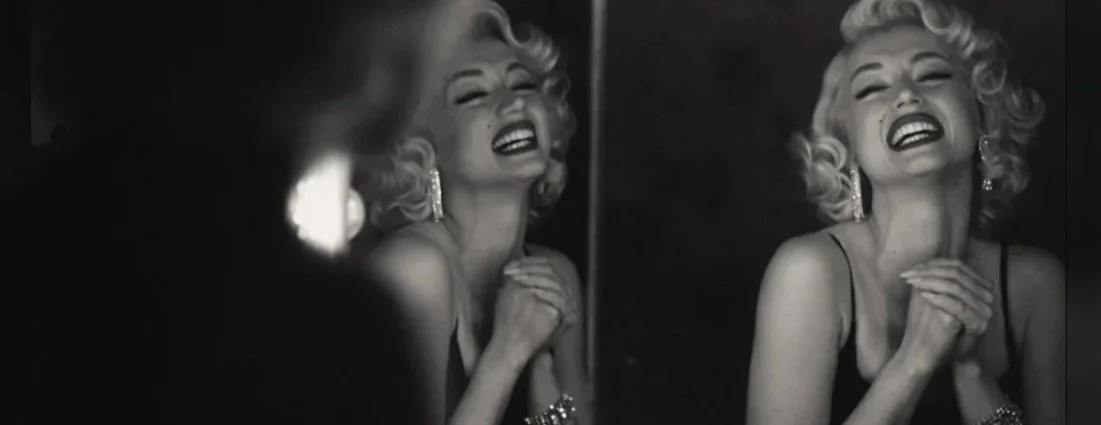
Watching “Blonde” even now, it’s hard to deny some of its powerful stretches. The first two hours are hypnotic, plunging the viewer into Monroe’s inner torment, before faltering in its closing stretch. De Armas is magnetic, anchoring Dominik’s nightmarish vision of Monroe’s life as an endless barrage of horny men, betrayals, and humiliations. The film positions her as a martyr of the 20th century—“The Passion of the Marilyn,” as some have dubbed it—beaten down by forces she could never escape.
At 165 minutes, it unfolds in passages that chart Monroe’s tragic life, though not in any conventional, fact-based sense. The film adapts Joyce Carol Oates’ 700-page novel. What Dominik presents is Monroe as a woman relentlessly broken down—by her mother’s abuse (Julianne Nicholson), a brutal rape by a studio executive known only as “Mr. Z,” her volatile marriage to Joe DiMaggio (Bobby Cannavale), her intellectual but doomed relationship with Arthur Miller (Adrien Brody), and her objectification at the hands of JFK, portrayed here as a predator who reduces her to “his little whore.” Threaded throughout are Monroe’s miscarriages, abortions, and growing dependency on pills and alcohol, which ultimately consume her.
At times, it’s dazzling. At others, it borders on self-parody—whether it’s a talking fetus or a POV shot from Monroe’s vagina, Dominik never resists the urge to provoke. The film often feels more like a series of fragmented dream-states than a narrative, heavy on vibes and light on plot. But even in its imperfections, it’s bracingly alive—a piece of agit pop-art that refuses to bend toward audience expectations.
That singular approach is why Blonde remains so divisive. For its detractors, it is unrelenting misery, a grotesque portrait of a woman flattened into a victim. For its admirers, it is the most hauntingly honest attempt yet to capture Monroe’s inner psyche.
The Razzies may have sneered, but over time, their Worst Picture award will age like milk. Whatever else you can say about “Blonde,” it is certainly not my idea of the worst film of its year. Three years on, its reputation is still fiercely contested, but maybe that’s the point. Like Monroe herself, “Blonde”is destined to be misunderstood, torn between projection and reality, martyrdom and myth.

As expected, Snyder's latest is being torn apart by TIFF attendees. No mercy given. The film, which had its world premiere this evening, is being called by some one of the worst movies to ever premiere at the festival.