


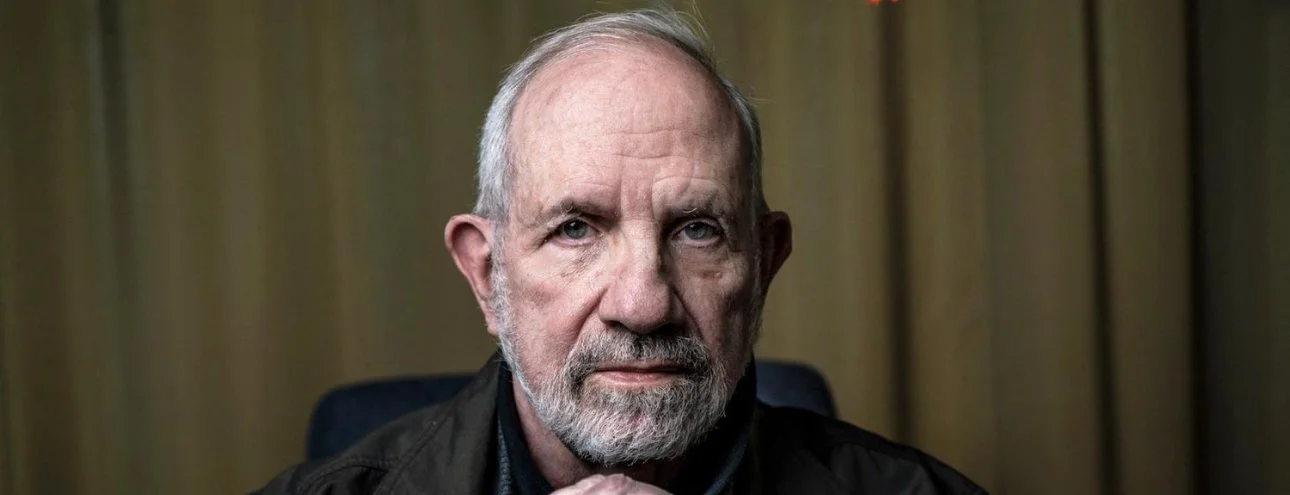
Whether Brian De Palma is officially retired or not—and he did recently tell Vulture about “one other film I’m planning to make”—there’s no denying his immense impact on cinema.
De Palma turned 85 yesterday. In celebration, what do you think his best film is? It’s certainly not his last one, 2019’s “Domino”—which, like much of his 21st-century output, was a critical and commercial failure.
After “Domino,” he immediately went to work on two projects. Both had scripts ready, and financing had been secured. Sadly, the insurance “wasn’t budging” given his health. Here’s hoping he gets to make one last one.
As far as I’m concerned, a new one from him is always welcome, and that’s despite the late career lulls. I’ll always abide by his “church of De Palma.” He hasn’t necessarily gotten his due over the years, especially compared to his higher-profile ’70s peers—Scorsese, Coppola, Spielberg. Noah Baumbach directed a wonderful 2015 documentary, “De Palma,” which set out to reassess his career and reintroduce him to a new generation of moviegoers. I highly recommend it.
Quentin Tarantino seems to agree with the assessment. Just last year, he went so far as to imply that De Palma was “more important a filmmaker than Scorsese and Spielberg.” Strong words.
Throughout his career, De Palma was deemed heir to Hitchcock. You could instantly tell when you were watching one of his films. He’s indelibly known for unusual camera angles and compositions—particularly his use of split-screen, tracking shots, slow motion, and the 360-degree camera pan.
As for my favorite film of his, I hardly know where to start: “Carrie,” “Dressed to Kill,” “Blow Out,” “Scarface,” “Carlito’s Way,” “Body Double,” “The Untouchables,” “Casualties of War,” “Phantom of the Paradise,” “Mission: Impossible” … take your pick.
UPDATE: Fine, I’ll budge. “Blow Out” is De Palma at the height of his powers, one of the best films of the ‘80s, a masterclass in suspense and style that mixes political paranoia with tragedy. It’s the purest expression of his Hitchcockian influences, but filtered via his own obsessions: surveillance, voyeurism, the question of truth. John Travolta has never been better, and the film’s haunting final scene is as bleak and unforgettable as American cinema gets. If one movie proves why De Palma belongs in the pantheon, it’s this one.

As expected, Snyder's latest is being torn apart by TIFF attendees. No mercy given. The film, which had its world premiere this evening, is being called by some one of the worst movies to ever premiere at the festival.