

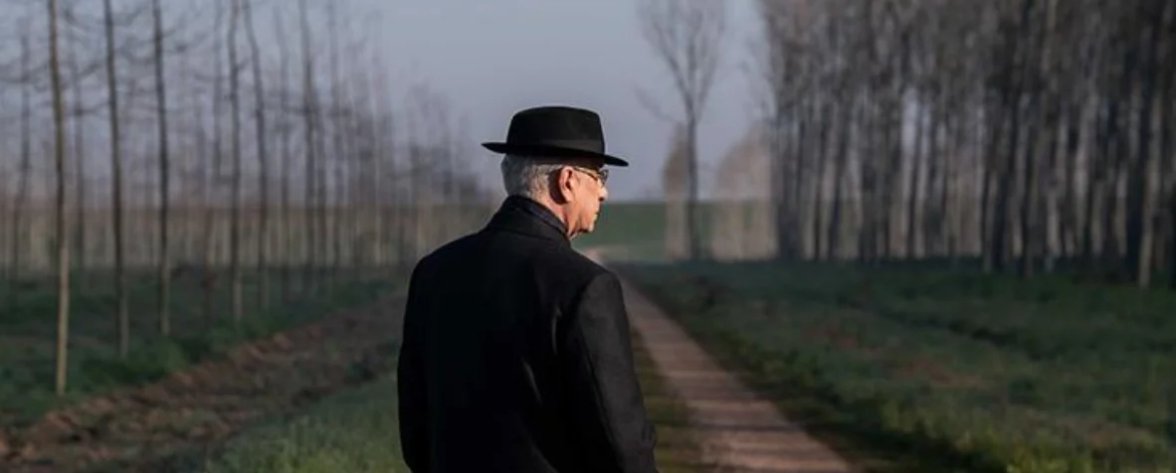
The 82nd Venice Film Festival kicked off tonight with Paolo Sorrentino’s “La Grazia,” which reunites the Italian filmmaker with acting muse Toni Servillo.
Sorrentino is coming off the timid reception his “Parthenope” received at last year’s Cannes Film Festival. He won the Cannes Jury Prize in 2008 for “Il Divo.” At Venice, he won the Silver Lion for Best Director in 2021 for “The Hand of God,” and “The Great Beauty” also won the Best Foreign Language Film Oscar in 2014.
For once, I’m in agreement with IndieWire and The Film Stage that “La Grazia” is stilted and dull. That said, some critics seem to really like Sorrentino’s approach here, including The Guardian, Variety, and THR.
Sorrentino has always walked the line between the poetic and the pretentious, the philosophical and the solemn, leaving his films with a baroque sense of beauty and decay. In “La Grazia,” he keeps his philosophical and aesthetic approach, never offering clear answers to life’s big questions, but here, it doesn’t fully work.
The film follows a fictional Italian president (Servillo) in his last months in office, dealing with time-sensitive decisions about pardons and euthanasia, while also haunted by the memory of his late wife. The film is supposed to explore doubt and ambiguity—“grace is the beauty of doubt,” says Servillo in one of the film’s serious, Sorrentino-style moments. However, the movie lacks the usual poetic and visual brilliance we’ve come to expect from him. It’s a rather stale affair.
One of Sorrentino’s strengths is how he connects his characters to their surroundings, making those spaces feel like part of the story — best example is “The Great Beauty”. In “La Grazia,” that doesn’t happen. The Italian presidential palace feels more like a prison than a home, with the corridors emphasizing isolation rather than character. Sorrentino ends up directing with a heavy, plodding fashion, and the film’s solemn style sometimes tips into pretension rather than depth.
The narrative itself is too stiff, repeating the same ideas in slightly different ways. Scenes change visually, but not emotionally or thematically, making the film feel mechanical. There are moments of striking contrast and beauty, but overall, “La Grazia” is less a fully lived-in Sorrentino and more an overly explicit summary of ideas. It’s not bad, but it doesn’t come close to reaching the heights of his best work.
Tomorrow is shaping up to be a big day at Venice with screenings of Yorgos Lanthimos’ “Bugonia,” Noah Baumbach’s “Jay Kelly,” and Luca Guadagnino’s “After the Hunt.”

As expected, Snyder's latest is being torn apart by TIFF attendees. No mercy given. The film, which had its world premiere this evening, is being called by some one of the worst movies to ever premiere at the festival.