

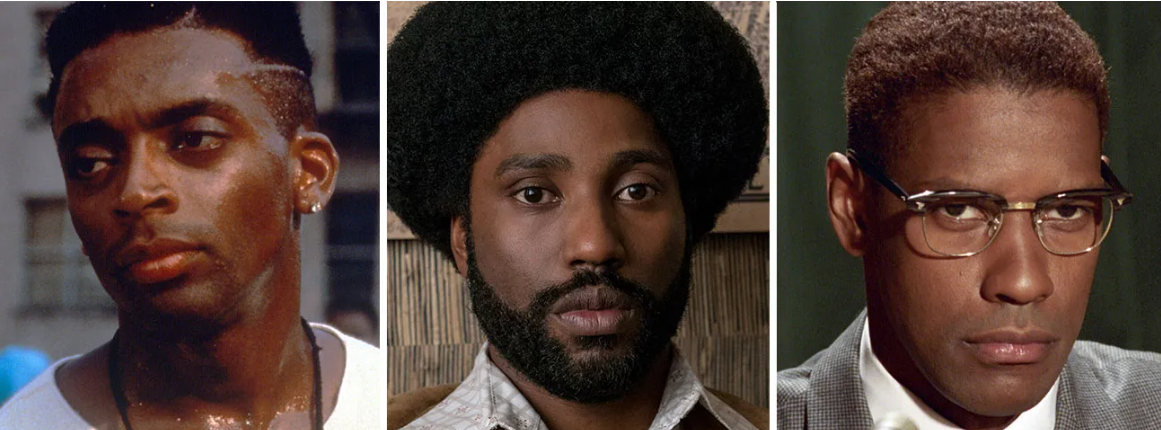
With his latest film (“Highest 2 Lowest”) hitting theaters this Friday, Spike Lee, 68, remains a vital voice in American cinema. Over nearly four decades, Lee has built a body of work that’s both politically charged and endlessly inventive.His modus operandi has always combined social commentary with bold visual style—oh, and plenty of indulgence, which has sometimes been to the detriment of his work. But hey, that’s what makes Spike, well, Spike.
Regardless, Lee’s range is impressive— moving effortlessly from sprawling historical epics to intimate New York dramas, concert films, and genre exercises — yet his films, no matter the quality, and he’s surely had some clunkers, are unmistakably his own.
Lee has released 25 feature films, 13 documentaries and helmed 7 stage plays. His career hasn’t been perfect, there have been clunkers, I’m thinking particularly of “Da Sweet Blood of Jesus,” “Oldboy,” “Miracle at St. Anna” and “She Hate Me,” but he’s never once sacrificed his artistic voice for studio compliance.
It’s worth noting that one of Lee’s greatest achievements, “When the Levee Breaks” — a four-part, 255-minute documentary on the aftermath of Hurricane Katrina — premiered on HBO to widespread acclaim, but doesn’t appear on this list. That project sits alongside his narrative work as one of the most important documents of Bush-era America.
Here’s my ranking of Spike Lee’s ten best films:
1) Do the Right Thing (1989)
Lee’s magnum opus — a scorching, day-in-the-life portrait of Bed-Stuy that simmers with racial tension until it explodes — feels as combustible today as it did 36 years ago. The film’s color palette blazes with heat, the music pulses with neighborhood rhythm, and the sprawling ensemble cast, which includes Danny Aiello, Ossie Davis, Ruby Dee, brings every corner of the block to life. A flat-out masterpiece.
2) 25th Hour (2002)
Lee’s post-9/11 New York is haunted, aching, and alive in every frame. Edward Norton delivers one of his career-best performances in this melancholy countdown to incarceration — a film about choices, regret, and the city itself as a living, breathing character. The infamous bathroom mirror rant, a Spike signature in its raw monologue form, remains one of the boldest character dissections of the 2000s. The film was dumped in late 2002, but has been reappraised as one of the best films of that decade.
3) Malcolm X (1992)
A biopic that earns every one of its 201 minutes. Denzel Washington’s transformative performance is the heart of a film that moves from personal struggle to sweeping historical portrait without losing its intimacy. Lee stages moments of both intimate reflection and large-scale grandeur, from the Nation of Islam rallies to the pilgrimage to Mecca, with a confidence that cements this as one of the great American epics.
4) Jungle Fever (1991)
A raw, uncompromising look at interracial romance, and addiction. Wesley Snipes and Annabella Sciorra are excellent as lovers navigating both familial and societal disapproval, but it’s Samuel L. Jackson’s supporting turn as crack addict Gator that makes your jaw drop— a performance so electric it won him a special jury prize at Cannes. I don’t think Jackson’s ever given a better performance in his career than he does here.
5) Summer of Sam (1999)
Highly underrated. Lee captures the paranoia, chaos, and cultural shift of a sweltering 1977 New York summer as the Son of Sam murders grip the city. Mixing crime drama with a deep dive into disco, punk, and the city’s social fabric, the film feels like a fever dream. Its restless energy, rapid editing, and period detail make it one of Lee’s most unsung achievements.
6) Bamboozled (2000)
A biting media satire that’s aged like a prophecy. Damon Wayans plays a disillusioned TV writer who creates an intentionally racist show to get fired — only to watch it become a hit. Its final montage of blackface imagery from film history is still among the most gut-punching sequences Lee has ever assembled, and the film’s rough edges only add to its righteous anger. Panned 25 years ago (54% on RT), the film is now part of the Criterion Collection.
7) Inside Man (2006)
Lee’s most purely entertaining movie — a twisty, stylish bank-heist thriller with Clive Owen and Denzel Washington sparring through a cat-and-mouse game that doubles as sly social commentary. Jodie Foster’s mysterious fixer and the film’s non-linear structure give the story extra muscle, proving Lee could nail a Hollywood genre picture without sacrificing his voice.
8) BlacKkKlansman (2018)
A stranger-than-fiction story about a Black police officer infiltrating the KKK, told with wit, anger, and stylistic verve. John David Washington and Adam Driver’s unlikely partnership drives the narrative, but it’s the juxtaposition of slapstick absurdity and real-world horror that makes the film work so well. Alongside “Inside Man,” it’s Lee’s most purely entertaining film.
9) American Utopia (2020)
Lee turns David Byrne’s stage show into a transcendent cinematic experience. More than a concert film, it’s a celebration of connection, creativity, and humanity itself, with Byrne’s music reframed via Lee’s camera movements and precise staging. It’s joyous, but never naive — politics, activism, and empathy pulse through every beat. Lee’s use of wide shots, and the dizzying choreography, make this a clear ode to Demme’s “Stop Making Sense.”
10) He Got Game (1998)
Father-son tension via the lens of high-stakes basketball. Denzel Washington is magnetic as a father trying to sway his prodigy son (Ray Allen) while Lee’s vibrant visuals and pulsing score highlight the clash between family, fame, and ambition. Not flawless, but emotionally resonant and visually striking.

Edward Berger seems to have settled on what comes next. His Lance Armstrong biopic, starring Austin Butler, is now holding casting calls, with production eyed for January.