




UPDATE: Reviews are positive via Variety, Vulture, Screen, The Guardian, Deadline, and THR
Kelly Reichardt deconstructs the heist genre in “The Mastermind” — gently stripping away its polish to reveal something more human underneath. In this anti-heist film, Reichardt does what she does best: subverting cliches.
“The Mastermind” is also Reichardt’s most entertaining film due to its subversively comic nature, and its also a compelling character study. It’s quietly gripping, distinctively melancholic, never dull, and breezy in execution.
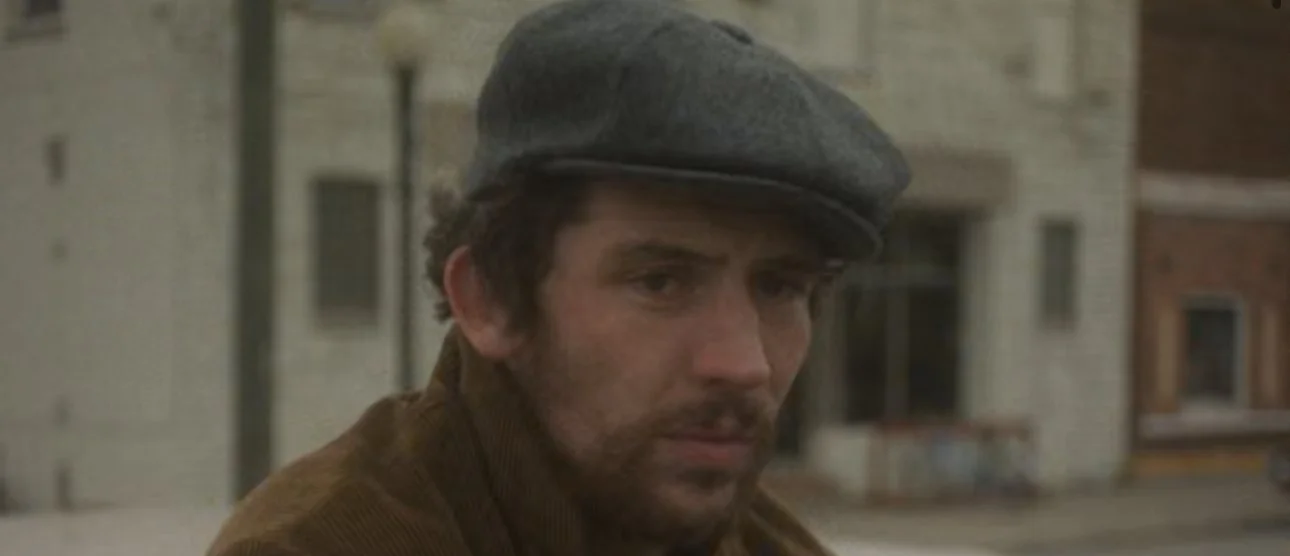
Set in 1970s Massachusetts, Josh O’Connor plays maybe the least likely criminal in Cannes this year — a laid-back, beardy burnout who dreams up a plan to swipe four abstract paintings from the local gallery he visits with his kids. That’s the low-stakes setup for Reichardt’s film.
His plan is flimsy, his crew cobbled together, and even before the theft, he was already struggling to hold together his marriage, his father’s respect, and his own sense of worth. O’Connor gives a performance that feels lived-in and quietly heartbreaking. He doesn’t shout or rage — he simply tightens, like a rope stretched too far. His silences are amazing.
As the film progresses, Reichardt shifts from the heist setup into something quieter and sadder: a study of a man who’s too passive to change and too proud to admit defeat. The episodic misadventures that befall J.B, as he improvises escape after escape, is tragically comic. Rob Mazurek’s score drives this, all jazz percussion and sly groove, giving the film a skip in its step, nodding to the 1970s cinema it quietly echoes.
Shot with gentle grain and framed in soft, natural light by cinematographer Christopher Blauvelt, the film evokes the feel of a polaroid photograph. The period details are impeccable, but Reichardt doesn’t indulge in nostalgia. The Vietnam War plays out in the background on radios and televisions, not as a thematic hammer but as a persistent hum of a country unmoored.
As in her earlier films, Reichardt isn’t interested in narrative momentum so much as emotional accumulation. After the heist falls apart, J.B. drifts — from house to hideout, from one half-thought-out plan to another. There’s a sense of doom to every step, yet the film observes, with deep empathy and often surprising humor, how a man slowly loses the illusion that he was ever in control.
Reichardt’s films prioritize mood, atmosphere, and character over traditional plot structure or dramatic action. Her minimalist style—marked by long takes, sparse dialogue, and slow pacing—asks for patience and close attention, which can feel uneventful or tedious to those expecting conventional storytelling. In “The Mastermind” she’s found the perfect story for her style, and in the way it utilizes the heist genre, and a deeply fascinating character, it turns out to be the most accessible film of her career.

Paul Greengrass’ "The Uprising," starring Andrew Garfield, opened to $3.2M from 2,068 theaters this weekend. Yikes. The budget hasn’t been disclosed, but is said to be in the $20-$30M range.